Restaurant bills have a way of quietly doubling a trip’s budget. You book a hotel at a fair nightly rate, then realize two people eating out three times a day can easily spend more on food than on the room itself. That’s when the idea of hotels with kitchens starts to look less like a compromise and more like a smart travel strategy.
But does a kitchenette actually save money, or does the higher room rate cancel out the grocery savings? The honest answer: it depends on how long you stay, where you travel, and how you shop. This guide walks through the real math, which room types and trip lengths make a kitchen worth it, what to check in the listing before you book, which destinations reward self-catering most, a simple grocery strategy for eating well on a few dollars a meal, and the hidden costs and trade-offs you should weigh before clicking reserve.
When Hotels with Kitchens Actually Save You Money
Food is the line item most travelers underestimate. In most European and North American cities, eating every meal out costs roughly $40-70 per person per day, and for a couple that adds up faster than any upgrade or excursion. A kitchenette typically adds 10-25% to the nightly room rate, which sounds steep until you compare it against even one skipped restaurant dinner.
For two travelers, the break-even point usually arrives around 3-4 nights. Cook breakfast every morning and swap two dinners for simple home-cooked meals, and the kitchenette premium is already paid for. Everything you save after that is pure budget relief, often $30-50 per day.
Solo travelers and families: different math
Solo travelers need longer stays to make the numbers work, often 5-7 nights. One person simply spends less on restaurant meals than a couple, so the kitchenette premium takes more nights to offset. If you travel alone for a week or more, though, a kitchenette usually wins comfortably.
Families of four see savings fastest of all. A single home-cooked dinner replaces a restaurant bill that easily runs $100-150 for two adults and two kids, especially once drinks and tips are included. One pasta night in the room can cover several days of kitchenette premium on its own, and a second cooked meal puts the family firmly in savings territory.
Trip Length and Stay Types That Make a Kitchenette Worth It
The single biggest factor in whether a kitchenette pays off is how long you stay. Weekend trips of 1-2 nights rarely justify one: you pay the premium for a kitchen you might use once, and two restaurant dinners don’t cost enough to close the gap. If your trip is short, book the cheapest comfortable room and enjoy eating out.
For stays of a week or more, the picture flips completely. Seven days of self-catered breakfasts and a few home-cooked dinners overwhelm the nightly premium with ease, and the longer you stay, the more the savings compound.
Where to find rooms that actually have kitchens
Extended-stay hotels and aparthotels are the sweet spot for kitchen-equipped rooms. These properties are built for longer visits, and bookings of 7+ nights often unlock weekly-rate discounts of 15-30% on top of the grocery savings. That combination is what turns a good deal into a great one.
Resorts and full-service city hotels rarely offer real kitchens, so don’t assume a “suite” means you can cook. Use the filters for “kitchenette” or “in-room kitchen” when searching, then verify the setup in the photos before booking. A room described as a kitchen suite that only contains a mini-fridge will wreck your entire budget plan, so it pays to confirm rather than assume.
What to Check Before Booking a Room with a Kitchen
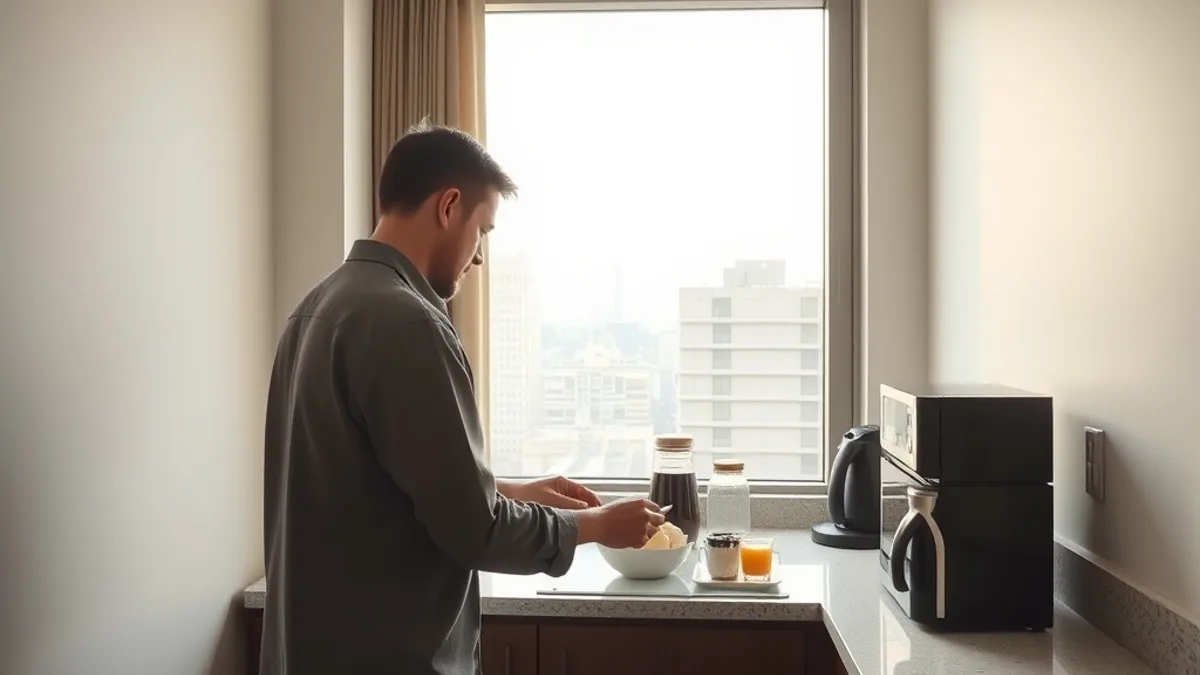
Not every listing that says “kitchen” actually delivers one. Before you book, scroll through the photos carefully: a full kitchen has a stove and a sink, while some kitchenettes offer nothing more than a fridge, a microwave and a kettle. That setup handles leftovers and morning coffee, but it won’t produce the home-cooked dinners your savings plan depends on. If no photo shows a stovetop, message the property directly or filter for “full kitchen” instead.
Also confirm whether cookware, dish soap and a sponge are provided. Many apartment-style hotels stock them, but some supply an empty kitchen or a minimal starter set. If the listing is vague, plan to pick up a few basics after you arrive, usually for a modest sum. A pan, a spatula and dish soap cost little, but discovering a bare kitchen after check-in is frustrating and eats into your first grocery budget.
Finally, think about washing up. A dishwasher makes daily cooking far more pleasant, and enough plates, glasses and cutlery for your whole group matters more than you’d expect when four people eat breakfast together.
- Count the burners: two-burner stovetops are common in aparthotels and fine for simple meals, but a single hot plate limits you to one-pot cooking, which changes what you can realistically plan.
- Check the fridge size: an under-counter fridge holds a couple of days of groceries, while a full-size fridge lets you shop once for the week and skip repeat grocery runs.
- Look for basic extras: a kettle or coffee maker, a toaster and a cutting board are small conveniences that decide whether cooking feels easy or like a chore.
- Ask about tableware for your group: some units are stocked for two even when they sleep four, which means washing plates between courses or buying disposable ones.
Choosing Destinations Where a Kitchenette Pays Off Most
A kitchenette only pays off if eating out is expensive in the first place, so destination choice matters as much as trip length. In high-cost cities like Zurich, Oslo, New York and Reykjavik, restaurant meals often run $25-50 per main dish. When a simple lunch costs that much, cooking dinner twice in your room can cover a meaningful chunk of the room-rate premium on its own.
Where a kitchenette works hardest
Coastal and lake destinations are another strong match, but for a different reason. These are places people visit for long, slow stays rather than packed sightseeing. Self-catered breakfasts on the balcony and casual terrace dinners replace three daily restaurant visits, and honestly, many travelers find that routine more relaxing than dressing up every night.
One clear exception
Wine and food regions flip the logic. If you are traveling somewhere precisely for its dining culture, a kitchenette can still be useful for breakfasts and one light daily meal, but you should budget properly for eating out. Skipping the local restaurants in a region built around them saves money while cutting out the main reason you came. A trip planned around vineyards and regional cuisine, like the stays described in Mendoza wine-country stays with vineyard mornings and scenic silence, works best with a mixed food budget rather than a fully self-catered one. Match the kitchenette to the trip’s purpose, not just the price.
Grocery Strategy: Eating Well for $3-6 a Meal
A kitchenette saves money only if you actually use it, and that depends heavily on logistics. Plenty of travelers book a room with a cooking area, then eat every meal out because the nearest supermarket turned out to be a twenty-minute taxi ride away. Before you book anything, treat grocery access as a hard requirement rather than a nice-to-have, then plan your food day around a simple rhythm that keeps effort low and savings high. The good news is that this routine quickly starts to feel like a normal part of the trip rather than a chore, especially when you build it around local markets and the specific meals that are easiest to handle in a small kitchen. Here is how to make it work in practice:
- Check grocery access before booking. Look at the map and confirm a grocery store sits within a 10-15 minute walk of the hotel. A kitchenette without nearby shopping quickly loses its value, because taxi runs to a distant supermarket erase your savings and eat your evening.
- Plan breakfasts at the room, every day. This is the easiest win. A grocery breakfast costs about $3-6 per person, while a hotel buffet typically runs $15-25, so a family of four saves real money before 9 a.m.
- Cook one dinner per day. A simple pasta, a stir-fry or a grill on a terrace covers the second big meal. Cooking once daily keeps effort low while cutting the largest restaurant bill of the day.
- Keep one restaurant meal as the daily highlight. Do not cook every meal. Holding onto one lunch or dinner out preserves the trip’s food experience and gives you a natural plan for each day.
- Shop like a local, not like a tourist. Bakery bread, seasonal produce, local cheese and deli items make grocery meals genuinely good rather than just cheap, and they often cost less than imported staples.
Follow this rhythm and your food spending drops dramatically without feeling like a sacrifice. The meals you cook become part of the trip, and the one restaurant you choose each day becomes something you actually look forward to instead of a default. If you shop on arrival day and again every second or third evening, you will rarely spend more than twenty minutes on groceries, and washing up stays manageable. The result is a trip where food costs shrink noticeably, yet you still come home with a list of restaurants worth remembering.
Hidden Costs and Trade-Offs to Weigh
Kitchenette pricing looks straightforward until you read the fine print. The premium over a standard room is modest on paper, but the final bill often includes charges that never appear in the search result. Before comparing options, add up the full stay cost, not just the headline number. Booking sites frequently show a tempting per-night rate, then tack on mandatory extras at checkout, and those extras can quietly erase the savings you calculated. Keep the following in mind:
- Cleaning fees on apartment-style bookings. These can add $30-80 per stay, and because they are charged once rather than per night, they hit short stays hardest and shorten your break-even window.
- Lost housekeeping and room service. Most kitchenette rooms are cleaned weekly rather than daily, and there is no one to deliver dinner, so expect to spend 10-15 minutes washing up after each cooked meal.
- Resort fees and city taxes. These apply to kitchenette rooms exactly as they do to standard rooms, and they can quietly change which option is cheaper once the total is tallied.
- Deposit and damage policies. Some apartment-style properties place a temporary hold on your card at check-in, which is usually refunded but can affect your travel budget and card limit.
The practical habit is simple: before booking, run the complete total for your entire stay, including cleaning fees, taxes and any mandatory charges, and compare that figure against a standard hotel room at the same destination. Do this on the hotel’s own website as well as the booking platform, since totals sometimes differ between the two. The kitchenette often still wins, but occasionally the numbers flip, and it is far better to discover that at your desk than at the front desk.
The Kitchenette Math in Short
So, does booking a room with a kitchenette actually save money? It can, but only when a few conditions line up. Your stay needs to run at least 3-4 nights, your destination should be pricey enough that restaurant bills sting, and you need easy access to somewhere to shop for food. If any of those pieces is missing, the savings tend to evaporate.
Before committing, look closely at the room photos to confirm the kitchen is what the listing promises, and compare the full price of your stay including fees, not just the nightly rate. Once you arrive, aim for a simple rhythm: cook breakfasts and most dinners, and keep one restaurant meal a day as your trip’s food highlight. That mix keeps things affordable without making your vacation feel like homework.
If this section helped you plan, leave a comment below or share the article with a fellow traveler who’s weighing the same decision.