Most travelers assume a pool is a pool: book a room with one, pack a swimsuit, and the swim experience takes care of itself. That assumption falls apart fast once you compare hotel pools vs resort pools. A lap pool tucked into a city hotel basement and a sprawling lagoon at a beachfront resort offer completely different experiences, from how far you can actually swim to who is allowed in the water and what rules govern your afternoon. Size, access, and house rules vary far more than most booking photos suggest.
This guide breaks down those differences so you know what to expect before you check in. We’ll look at what actually sets the two pool types apart, how size and layout compare, and how access rules and guest tiers can limit where you swim. We’ll also cover hours, lifeguards, and common rules, the best timing to avoid crowds, and how to choose the right pool setup for your trip.
Hotel Pools vs Resort Pools: What Actually Sets Them Apart
Walk up to the pool at a city hotel and you’ll usually find one thing: a single rectangular basin, often lap-pool sized, ringed by a narrow strip of deck. It exists so travelers can squeeze in a few laps before breakfast or cool off for twenty minutes between meetings. There’s rarely much reason to linger, and that’s by design.
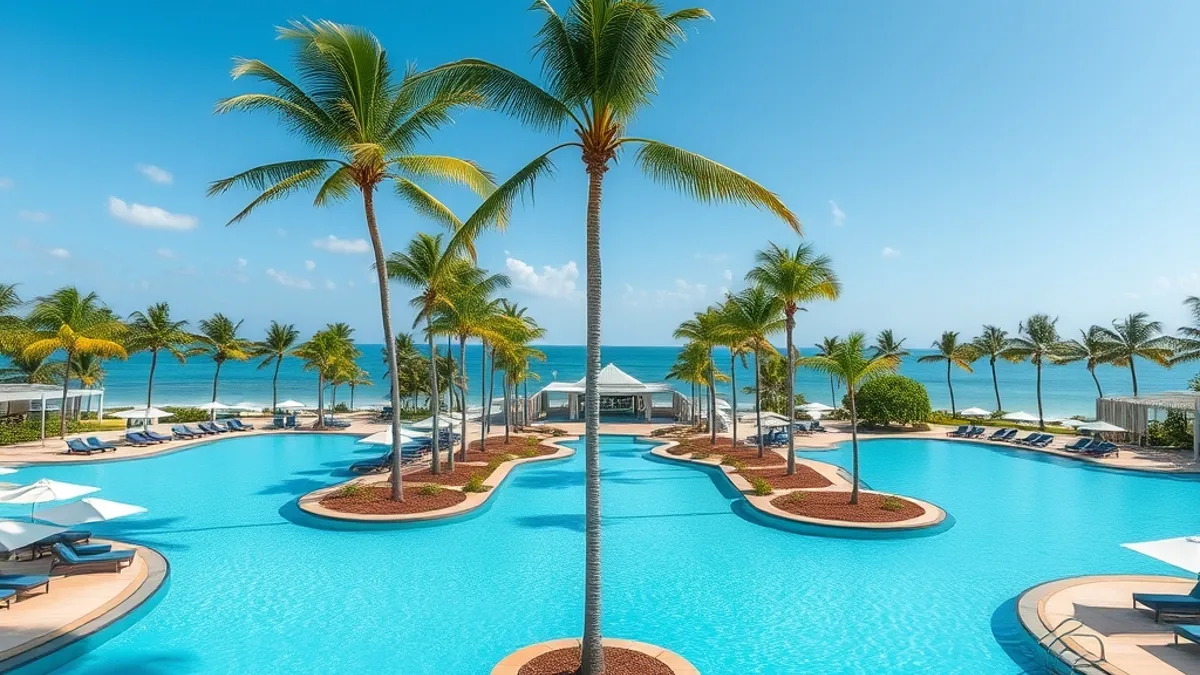
Resort pools flip that logic entirely. Instead of a basin you visit, the pool becomes a place you stay. Think lagoon shapes that curve around planted islands, swim-up bars with submerged stools, shallow beach-entry edges, and waterfalls connecting one section to the next. Large resorts often spread the experience across several basins, so a single property can feel like a small water park without the lines.
One pool serves a stay, the other is the stay
The core difference comes down to purpose. A hotel pool is an amenity for overnight guests who are mostly passing through, so it’s built for convenience: easy to find, quick to use, simple to maintain. A resort pool anchors the entire vacation. Families may plan whole days around it, from morning swims to poolside lunches to evening dips under the lights.
That shift in purpose explains almost everything else about the two. When the pool is the destination, it justifies more space, more staff attention, more varied features and stricter organization. When it’s a bonus, simplicity wins. Keep this in mind as you compare the details below, because size, access rules and crowd patterns all flow from whether a pool is meant to be used or meant to be lived in.
Size and Layout: Lap Lanes vs Lagoon Scale
The size gap between a city hotel pool and a resort pool is enormous, and it shapes everything else about the experience. A typical city hotel pool runs 15-25 meters in length, which is genuinely useful if you want to swim proper laps before breakfast. The trade-off is deck space: often just a narrow strip of tile around the water, with limited room to spread out beyond a morning swim.
Resort pools play a different game entirely. Common designs span 1,000-3,000 square meters, including sprawling lagoon-style layouts that curve around islands, bridges and swim-up features. Rather than one basin, many resorts split the water into 2-5 separate pools: a lively main pool, a shallow kids’ area, a quiet adults-only basin and sometimes an infinity edge aimed at the sunset.
Why deck ratio matters as much as water
Pool size alone doesn’t tell the story; the ratio of deck to water does. At a city hotel, you might find a handful of loungers lined up along one wall, and on a busy afternoon you could be choosing between a towel on concrete or no seat at all. That’s fine for a quick dip, less fine for an afternoon of reading.
Resorts plan for people to stay all day. Expect dozens of loungers, tiered sun decks, shaded pergolas and rentable cabanas with fans, curtains and food service. Shaded zones matter more than most travelers realize, especially with children, so it pays to study property photos and satellite views before booking to see how much deck actually surrounds the water.
Who Can Swim: Access Rules and Guest Tiers
At a standard hotel, pool access is refreshingly simple: if you have a room, you can swim. Most properties ask for your room key at the front desk or pool entrance, then let you come and go as you please on a first-come, first-served basis. There are usually no reserved spots, no wristbands and no questions about which room category you booked.
Resorts work differently. Because a large property can have several pools, management often splits access by guest tier. Standard room guests share the main pool, which tends to be the liveliest spot with the most amenities, while club-level and villa guests get quieter, more exclusive basins of their own. This tiering is one of the clearest ways resorts differ from hotels, and it is worth understanding before you book.
Some large resorts go further and restrict certain pools by category or age. Adults-only pools are common at bigger properties, and a few limit infinity or villa pools to guests who booked a specific room type in advance. If a particular pool is the reason you chose a resort, confirm your booking includes access to it.
A few access details worth checking before arrival:
- Wristbands or room cards: many all-inclusive and large resorts issue wristbands or colored key cards that show which pools you may enter, so keep them on you at all times.
- Club-level perks: upgrading to a club room or suite sometimes unlocks a private pool with better loungers and shorter waits, which can matter during the 11 am to 4 pm peak.
- Non-guest policies: a handful of city hotels sell day passes to outside visitors, which can add weekend crowds even if you are a room guest.
- Children’s restrictions: adults-only basins usually enforce a minimum age, and some resorts restrict kids from certain deep or infinity pools for safety.
Hours, Lifeguards and House Rules Compared
Hours are one of the clearest divides between the two pool types. Hotel pools typically run from 6 am to 10 pm, which covers early laps and a post-dinner dip but little else. Resort pools often stay open longer, commonly from 7 am to 11 pm, so you can swim under the lights after the evening rush has faded.
Lifeguards and supervision
Most city hotel pools have no lifeguard on duty, and the “swim at your own risk” sign is the only supervision you will see. Staff may enforce quiet-hours rules in the evening, especially in properties with rooms close to the pool deck. Resorts usually take a more structured approach: kids’ pools are often supervised during peak hours, and house rules are posted on boards around the deck. Expect clear policies on inflatables, glass containers and poolside behavior, enforced by attendants rather than a single front-desk clerk.
Towels and small logistics
Towel service is standard at resorts, with attendants handing out fresh towels and collecting them at the end of the day. Many city hotels skip the attendant entirely and instead ask for a room key or a small deposit at the desk before handing over towels. Neither system is better, but it helps to know in advance: if you arrive at a hotel pool at 7 am expecting towel service and find a locked cabinet instead, you may need to wait for the desk to open. A quick question at check-in settles it.
Crowds and Timing: When Each Pool Type Feels Best
Timing changes everything about how a pool feels. Both hotel and resort pools peak between 11 am and 4 pm, when the sun is strongest and everyone has the same idea. If you want space, swim outside that window.
Early birds and lap swimmers
Early mornings suit lap swimmers at hotels, when the 15-25 m basin is usually empty and the water is at its calmest. Arrive at opening time and you can often have the whole pool to yourself for a proper workout before breakfast.
Resort pools: lunch lulls and golden hour
Resort pools empty out at lunch, when guests drift toward restaurants and buffets, and again after 5 pm, when day-trip families thin out. The late-afternoon stretch is often the most atmospheric: the harsh midday light softens, pool lighting switches on, and swim-up bars get their evening crowd. If your resort allows outside day visitors, expect the deck to feel noticeably fuller mid-morning and mid-afternoon.
City hotel patterns
City hotel pools are busiest on weekend afternoons, when locals and leisure travelers compete for the same handful of loungers. Business-focused properties calm down from Friday to Sunday as corporate guests check out, which makes them a smart pick for a relaxed weekend swim. In resort destinations, quieter properties can offer a similar escape, like the Marbella sanctuaries with sea breezes and private poolside calm, where the pool deck stays peaceful even in high season.
Choosing the Right Pool for Your Trip
The right pool depends less on the water itself and more on what role swimming actually plays in your trip. A pool that is perfect for one traveler can be a letdown for another, even at the same property. A quick self-check before booking saves disappointment later, so work through these steps in order before you commit to a rate.
- Decide the pool’s role. If swimming is a bonus, pick a hotel pool: it suits short stays, city sightseeing and morning laps before breakfast. If the water is the holiday, pick a resort pool, especially for multi-day stays with kids, cabana days and poolside dining. Be honest with yourself here, because this single answer shapes everything else.
- Study the photos for deck space. A beautiful basin with two rows of loungers will feel cramped fast on a busy afternoon. Look for wide decks, shaded zones and, at resorts, cabanas if you plan to spend full days poolside. Zoom in on guest photos rather than marketing shots to see the real layout.
- Ask about access tiers. Some resorts restrict certain pools to adults only or to guests of specific room categories booked in advance. Confirm whether your room type includes the pool you actually want, and whether club-level or villa pools are worth the upgrade for you. Get the answer in writing so there is no debate at check-in.
- Confirm hours in writing. Ask the property to confirm opening times and seasonal closures by email before you book. A pool under renovation or closing early in the off-season can change the whole character of a stay, particularly if you chose the hotel for the water in the first place.
Once you know whether the pool is a supporting act or the main event, the booking decision usually becomes obvious. Ten minutes of emails and photo-scrolling now beats arriving to find a lap basin where you expected a lagoon. Match the water to the trip’s purpose, and you will rarely regret the choice.
The Bottom Line on Pool Size, Access and Rules
So the pool you picture when booking is not the pool you necessarily get. Hotel pools are compact, simple and open to all guests, while resort pools are large, layered and access-tiered, sometimes splitting into main, kids and adults-only basins. Hours, towel service and crowd patterns differ just as much as size, and those details shape your day more than the water itself.
The fix is simple: match the pool to the trip’s purpose. If swimming is a bonus on a city stay, a hotel pool does the job. If the water is the holiday, a resort delivers the scale and service to match. Once you know which experience you want, the choice makes itself. If this helped you compare the two, leave a comment or share the article with a fellow traveler.