Many safari guests don’t realize that stepping outside their tent after dark without an escort is the single most dangerous thing they can do at a wildlife lodge. Walking between tents at night feels harmless on a calm evening, but camp grounds change completely once the sun goes down, and the animals that move through them are rarely visible until it is too late.
This guide explains how to handle the hours between dusk and dawn at a safari camp. We cover why armed escorts are non-negotiable, how the escort system actually works at the lodge, what torch to keep by your bed and how to use it politely, the camp rules that apply after dark, when you can move around more freely in daylight, and how to choose a lodge where night safety feels effortless. A short recap at the end pulls the essentials together.
Why Walking Between Tents at Night Requires an Escort
After dark, a safari camp becomes part of the landscape rather than a place apart from it. Lions, leopards and hyenas patrol the same paths you walked at lunch, and it is not only predators that matter. Buffalo and hippos cause more after-dark incidents near camps than big cats, partly because both animals travel through camp grounds at night and are extremely hard to see. A hippo grazing between two tents looks like a rock in the dark; a buffalo standing beside the dining area can be mistaken for a bush until you are a few steps away.
What an escort actually knows
Armed escorts do more than carry a rifle. They know which animals have been moving through camp that day, where a lion pride was heard calling, and which trail a hippo used to reach the river. They can read warning signs that guests would walk straight past: an alarm call from a francolin, fresh tracks pressed into the sand, a sudden silence from the bush. That knowledge is what turns a risky stroll into a routine walk.
This is why unescorted night walking is treated as a serious camp rule rather than a friendly suggestion. Most camps enforce it strictly, and guests who ignore it can have their stay ended on the spot. It sounds harsh until you understand that one person wandering alone can put the entire camp, staff included, at risk.
How the Escort System Works at Safari Lodges
Requesting an escort is one of the easiest routines at any safari lodge, and staff expect it many times each evening. Guests heading to dinner, back from the fire pit, or simply returning from a bathroom trip all use the same simple system. If you are staying at a quieter property such as the Nanyuki homesteads near safari country with spacious calm, the same principle applies: nobody walks alone after dark. The good news is that the process takes almost no effort once you know how it works.
- Request the escort at dinner or by radio. Tell your waiter before you finish your meal, or use the radio in your tent if you need to move at another time. Staff usually accompany you within minutes, so there is rarely a long wait.
- Let the escort take the lead. Escorts typically walk slightly ahead with a red-filtered torch that disturbs wildlife less than a bright white beam. Their position is deliberate, so stay behind them.
- Walk single file and stay quiet. Conversation in low tones is fine, but loud talking masks the sounds an escort is listening for and can draw attention to the group.
- Follow the exact route given. Even if it seems longer than your short cut, the route is chosen for what has been moving through camp. Escorted hours generally run from about 18:30 until sunrise.
The whole process adds a few minutes to your evening and quickly becomes second nature. Most guests find that after the first night, requesting an escort feels as normal as ordering another drink. It also gives you a chance to chat with the guides, who often share sightings from that day and point out animal sounds you would otherwise miss on a solo walk.
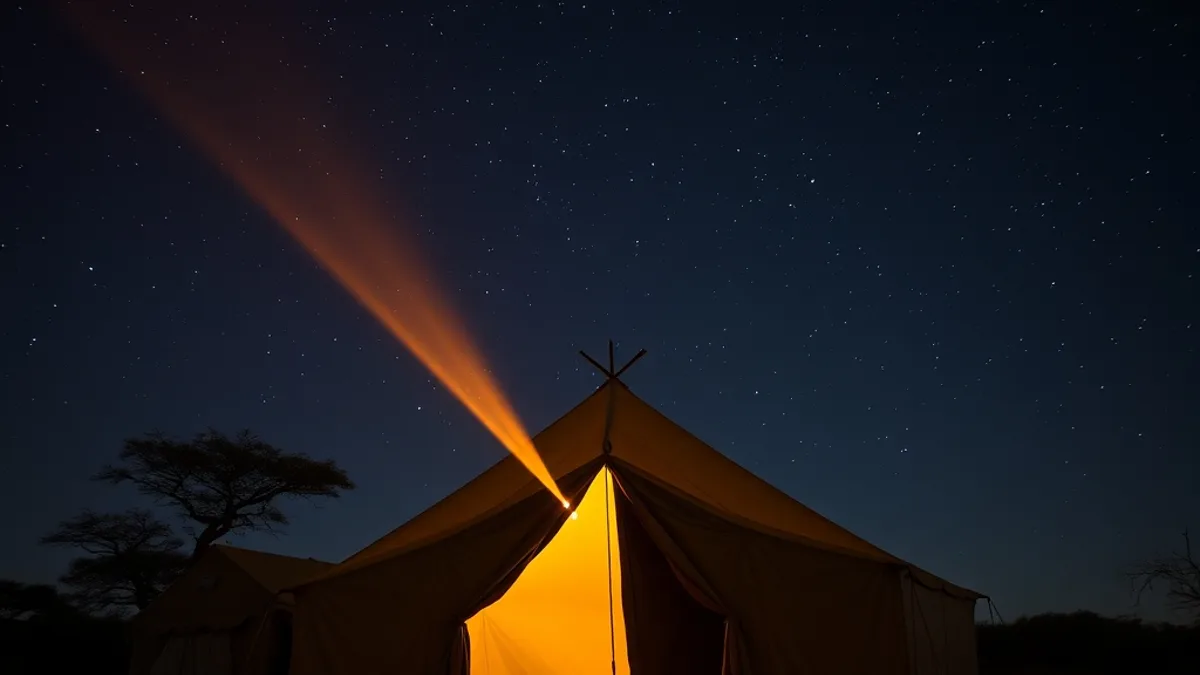
Torch Etiquette and Gear to Keep in Your Tent
Your torch is the piece of gear you will rely on most between dusk and dawn, and how you use it affects everyone else in camp. A light left buried in your luggage is useless when you wake at 2 am needing to find your water bottle or the bathroom. Keep a torch by your bedside, within easy reach, so an unexpected night need never becomes a reason to stumble around in the dark.
Make battery checks part of your dinner routine. Camps advise checking torch batteries at dinner, before returning to your tent, so you are never caught with a dying light halfway through the night. Most camps stock spare batteries at reception if yours run low, but it is worth carrying your own set as well.
- Beam direction matters. Never shine torches toward other tents, the dining area, or animals on the camp perimeter, as a bright beam can wake other guests and disturb wildlife that is settling near camp.
- Use red-filter or low-light modes. These settings preserve night vision for everyone in camp, including staff who need their eyes adjusted to work safely after dark.
- Point the beam at the ground. A torch angled at the path ahead lights your footing without throwing light into the bush, where reflective eyes belong to animals you have no wish to alarm.
- Carry a spare or headlamp. A small backup light in your daypack covers you if your main torch fails or you need both hands free.
Treat the torch as camp equipment with rules attached, not a personal toy. Used well, it keeps you safe without spoiling the darkness that makes a night at a safari camp so memorable.
Camp Safety Rules That Apply After Dark
Once the sun goes down, your tent becomes the safest place in camp, and a few simple habits keep it that way. The most important one is timing: zip every flap and close all windows fully by dusk, before the animals that move at night become active. Baboons can work a zipper or a loose flap with surprising patience, and hyenas have been known to push through screens left even partly open.
What you keep inside your tent matters just as much as how you close it. Food, sweets, and even scented lotions can draw curious noses right to your pillow. A wrapper left in a jacket pocket or a fruity lip balm on the bedside table has been enough, in some camps, to invite a nighttime visitor.
If something does go wrong after dark, resist the urge to shout or run. Noise and sudden movement can startle an animal or make it harder for staff to locate you quickly. Most camps place a whistle or radio in each tent for emergencies, and staff are trained to respond to them immediately.
Finally, treat the paths between tents as the only roads that exist. A short cut through the bush might save you thirty seconds, but that is exactly where encounters happen, because animals use the same unlit ground you would be crossing.
- Keep shoes inside the tent and shake them out in the morning, since scorpions and spiders sometimes shelter in footwear left on tent floors overnight.
- Charge headlamps and cameras before dusk, because fumbling at a zipper in the dark with a dead headlamp is both frustrating and noisy.
- If you hear something moving close to your tent at night, stay inside and quiet rather than peeking out, since most animals pass through without interest in the fabric walls.
- Report any animal sighting near camp to staff right away, even in daylight, so escorts know what has moved through the area before nightfall.
Daylight Hours: When You Can Move Around More Freely
Daylight changes the rules considerably. During the day, most camps let you walk unescorted as long as you stay within roughly 20-30 meters of your tent. That means you can stroll to the dining area, visit a neighboring tent, or sit on your own deck without calling for an escort, which makes the middle of the day feel pleasantly relaxed after the strictness of the night.
The exact boundary, though, is not the same everywhere. At check-in, ask staff to show you precisely where the unescorted zone ends, because it varies with the terrain, the layout of the tents, and whether a river or waterhole sits close to camp. Some camps paint stones, lay out clear paths, or mark limits with small signs; others simply explain the boundary verbally, so it pays to ask rather than guess.
Daylight Is Not a Guarantee of Emptiness
Even within your allowed zone, keep scanning the ground and the bushes ahead of you. Buffalo and elephants can appear near camp even at midday, and both are far more dangerous than they look when they feel surprised. Walk with your eyes up, give any animal a wide berth, and let staff know what you saw. Daytime freedom works best when you treat it as relaxed, not careless.
Choosing Lodges Where Night Safety Feels Effortless
The level of freedom you enjoy after dark depends heavily on the type of camp you book. Fenced lodges let you walk between the main area and your room in the evening without an escort, which suits families and travelers who feel uneasy about the dark. The trade-off is atmosphere: an electric fence, however well disguised, reminds you that you are on the outside of something. Unfenced camps offer total immersion, with animals free to wander through at any hour, and in exchange they enforce stricter rules, including the escorted night walks.
Neither option is better in absolute terms. What matters is matching the camp to your comfort level, and that means asking specific questions before you confirm a booking rather than discovering the policy on your first night.
If night walks make you nervous, look for camps that soften the experience with good infrastructure. Some safari lodges run a 24-hour escort service, equip every tent with a radio, and light the main walkways after dusk. These features do not remove the wildlife, but they do remove the uncertainty, which is often what makes people anxious in the first place.
- Ask whether escorts are armed and how quickly staff typically respond to a radio call, since response times can vary between a small camp and a large lodge.
- Check whether the fence, if there is one, is electric and whether it is switched on around the clock or only during certain hours.
- Find out if walkways are lit all night or only at set times, because a lit path at dinner may go dark by the time you head back to your tent.
- Ask how tents are positioned relative to the dining area, since a tent a short walk from the main lodge feels very different from one at the far end of camp.
- Confirm whether children are allowed to move unescorted within the fenced area, as policies on this differ from lodge to lodge.
Walking Between Tents at Night: The Essentials in Brief
Most safari camps treat the hours between dusk and sunrise as escort-only time, and for good reason. Buffalo and hippos cause more after-dark incidents near camps than big cats, and they are nearly invisible once the light goes. Camps typically pair guests with an armed escort from roughly 18:30 until sunrise, so plan your evening around that window rather than testing it.
The rest of the routine is refreshingly simple. Check your torch batteries at dinner, zip your tent flaps and close the windows by dusk, and stick to marked paths between tents. If something feels wrong during the night, use the whistle or radio provided in your tent instead of stepping outside.
Finally, decide what kind of evening experience you want before you book. A fenced lodge gives you more freedom to move around after dark, while an unfenced camp offers a wilder atmosphere with stricter rules. Ask the camp directly about its after-dark policy at booking, and you will know exactly what to expect. If this helped you plan your stay, leave a comment or share the article with a fellow traveler.