You’ve found it: the villa with the infinity pool, the teak furniture, the sunset shot that made you stop scrolling. But villa photos can look flawless online, yet the reality often hides behind wide angles, vague maps, and cherry-picked reviews. That gorgeous bedroom might be half the size it appears, and “steps from the beach” can mean a hot fifteen-minute walk.
The good news is that you can inspect a villa before booking without ever setting foot in it. This guide walks you through a simple routine: reading photos the way an inspector would, verifying the exact location on satellite view, and filtering reviews for honest signals instead of vague praise. We’ll also cover when to book, what to confirm in writing before you pay, and the red flags that should make you close the tab and keep looking. A little structure removes most of the guesswork.
Why Photos Alone Can’t Tell You If a Villa Is Right
Photography is marketing, and villa listings are some of the most skillfully marketed travel products out there. A wide-angle lens can make a 25-square-meter bedroom look twice its real size, stretching a modest room into something that reads as a suite. Furniture placed close to the camera, doors cropped out of the frame, and mirrors angled just so all exaggerate space in ways that feel natural until you’re standing in the actual room wondering where the rest of it went.
Hero shots are the other trick to watch for. These are the one or two images at the top of a listing, usually the pool or the view, captured at the best angle during the best hour of light. What they rarely show is the neighboring building three meters away, the worn lounge cushions, or the road noise coming from just beyond the wall. It’s not that hosts are lying; it’s that they’re choosing.
The fix is a routine, not luck
Instead of scrolling and hoping, treat every listing like a file to be examined. Photos tell you about the interior, maps tell you about the surroundings, and reviews tell you about the experience over time. Each one catches problems the others miss, and used together they remove most of the guesswork from booking a place you’ve never seen in person. The next sections break down exactly how to run that check.
Reading Villa Photos Like an Inspector
Start with the simplest metric of all: the photo count. Listings with fewer than 10 images usually skip the weak spots, and that’s rarely an accident. A confident host shows the second bathroom, the kitchen in daylight, and the view from the bedroom window. If the gallery feels curated down to the last frame, ask for 15-20 current shots covering every room plus the exterior, including angles the host didn’t choose.
Then slow down and actually study what’s in front of you. Mirrors and glass are your informants: a bathroom mirror can show the construction site across the street, and a window reflection can reveal the neighbor’s roof that never appears in the exterior shots. Bathroom photos deserve special attention if you’re heading somewhere tropical, because comfort there depends on details that marketing images love to omit.
Details worth zooming in on
- Ceiling fans and air conditioning units: a bedroom with only a decorative fan suggests the host expects the breeze to do the work, which matters on humid nights.
- Mosquito screens: check whether windows and doors show mesh panels; open-plan tropical living is lovely until the insects arrive at dusk.
- Water pressure clues: a small wall-mounted electric shower head often signals modest pressure, while a proper rain shower setup usually means a better system.
- Furniture condition: look at cushions, sun loungers, and table edges for fading, staining, or rust that suggests years of tropical weather without replacement.
Finally, check when the photos were taken. Some platforms show upload dates; if not, just ask the host directly. Anything older than 18 months deserves a refresh request, because furniture, finishes, and even the view itself can change in that time. A host who answers promptly and sends fresh, specific shots, whether the villa is a beachfront property or one of the quiet retreats surrounded by rice fields in Ubud, is telling you something useful before you ever pay a deposit.
Using Maps and Satellite View to Verify the Location
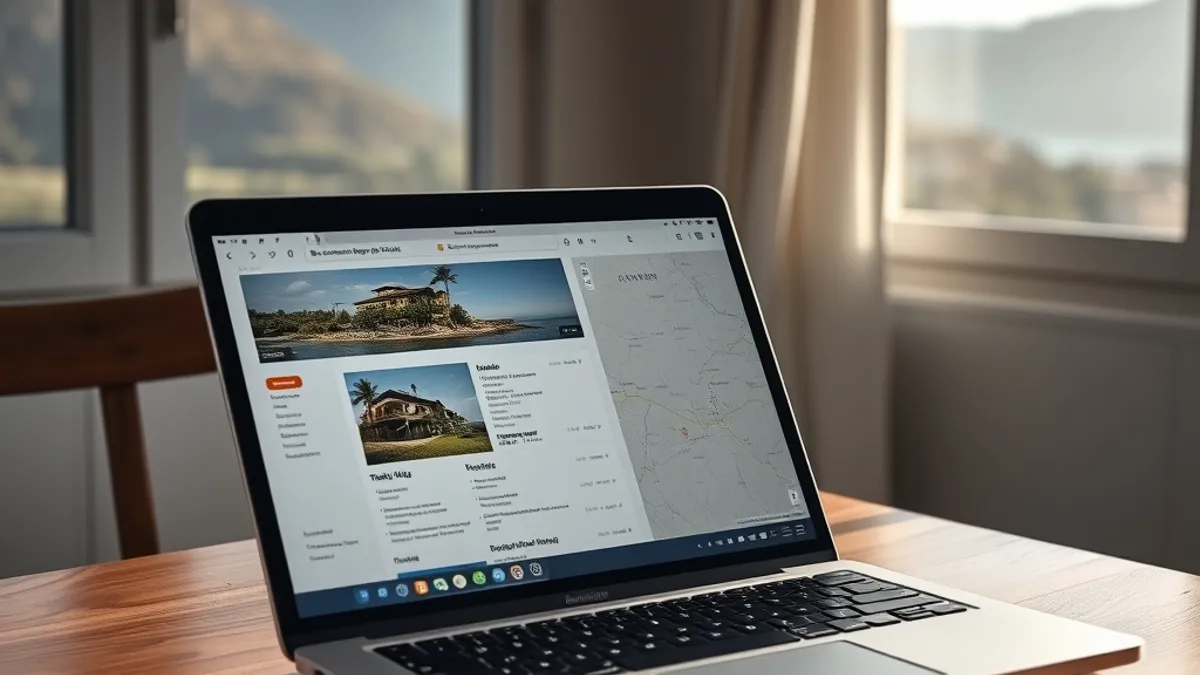
A villa’s location is the one thing no amount of interior styling can fix, and it’s also the thing listings describe most vaguely. “Close to the beach,” “peaceful setting,” and “minutes from town” are marketing phrases, not measurements. Satellite view turns those phrases into facts, and the whole check takes about ten minutes. Do it before you get emotionally attached to a listing, because it’s much easier to walk away from a villa you haven’t fallen for yet.
- Pin the exact coordinates. Ask the host for the precise location or drop a pin from the listing, then open satellite view rather than the standard map. Street maps hide a lot; satellite imagery shows you the rooftop of the building next door.
- Scan a 500-meter radius. Look for construction sites (bare earth, materials, cranes), main roads, and beach clubs or bars that could mean music until late. Note anything within earshot of the pool deck, and zoom in on neighboring plots to see whether they’re empty, built up, or mid-development.
- Measure real distances. Use the map’s measurement or directions tool to check actual walking or driving times to the beach, restaurants, and shops. Compare what you find against the listing’s claims, and remember that a “short stroll” on a hot afternoon feels very different from the same distance on a map.
- Read the terrain. Switch to terrain or elevation view. A hillside villa with those sweeping ocean views may mean a steep 10-15 minute climb back up with luggage and groceries.
Make this a habit rather than an occasional step. Satellite imagery is usually a few years old at best, so treat anything ambiguous as a question for the host: what’s being built on that empty lot, and is the road behind the villa paved? A host who answers quickly and specifically is a good sign; one who dodges is not.
Do this check before you fall in love with the photos, because the satellite view has a way of reframing everything. A stunning pool means little if a resort under construction sits just beyond the wall, or if the “beachfront” villa actually requires a scooter ride to reach the sand. Ten minutes with a map is the cheapest insurance you’ll ever buy on a booking.
How to Filter Reviews for Honest Signals
Reviews are where a villa’s marketing story meets reality, but only if you read them like an inspector rather than a hopeful traveler. Start with volume: listings with 20 or more guest reviews give a far more reliable picture than those with fewer than 5. A single glowing review could come from the owner’s cousin; two dozen reviews paint a pattern you can actually trust.
Once you’ve confirmed there’s enough history, go straight to the most recent 12 months. Villas change hands, management companies rotate, and a place that was immaculate three years ago can now have a lazy cleaning crew or a failing pool pump. Older reviews tell you about a different property in spirit, if not in name.
Don’t scroll passively, either. Use the search function on review platforms to hunt for specific keywords, because recurring complaints often hide in the middle of otherwise positive write-ups.
- ‘Noise’ — flags everything from all-night beach parties to a barking dog next door, which photos will never reveal.
- ‘Air conditioning’ — reveals whether units are in every bedroom or just the living room, and whether guests complained they were weak or noisy.
- ‘Construction’ — catches nearby building work that can turn a dream patio into a hammering zone for months.
- ‘Photos’ — surfaces guests who felt the listing images didn’t match reality, the single most useful keyword in villa hunting.
Here’s a counterintuitive rule: a detailed 3-star review is usually worth more than a vague 5-star one. When a guest explains that the water pressure faded to a trickle in the upstairs shower, or that the road to the villa turns to mud after rain, you’ve learned something actionable. Vague praise like “amazing place, will return!” tells you nothing you can verify.
Finally, test the host. Message past guests if the platform allows it, and ask the host direct questions — how often the pool is serviced, whether the wifi reaches the bedrooms. A host who replies quickly with concrete answers is a good sign; one who dodges or sends generic copy-paste responses is telling you what support will look like after you’ve paid.
Timing Your Booking and Confirming Before You Pay
Good villas in popular tropical destinations don’t sit on the shelf long. For the December to April high season, reserve 3-6 months ahead — the best two and three-bedroom places with private pools often fill first, and waiting usually means choosing from what’s left rather than what’s best. For shoulder months, booking 1-2 months out is typically enough, and you’ll often find more flexible hosts and softer rates.
Have a realistic budget in mind before you fall in love with a listing. Villa prices typically range from $150 per night for simple two-bedroom units to $1,000+ for premium oceanfront estates, depending on the region and season. If a villa that looks identical to its neighbors is listed far below the area norm, treat that as a red flag, not a stroke of luck. There’s usually a reason — a road issue, a construction site next door, or photos that are several years old.
Get the Essentials in Writing
Before you pay any deposit, ask the host to confirm three things in writing: pool maintenance, generator backup, and cleaning frequency. In tropical destinations, a pool that’s cleaned twice a week and one that’s cleaned “when someone gets around to it” are very different vacations. A generator matters more than most travelers realize — power cuts happen, and an hour without air conditioning in a humid climate is memorable for the wrong reasons.
Written confirmation also creates a record. If the pool is green on day three or nobody has cleaned since your arrival, you have something concrete to point to when requesting a fix or a partial refund. A friendly message summarizing what was agreed costs you two minutes and can save your whole trip.
Red Flags That Should Stop You from Booking
Most villa listings are honest, but the handful that aren’t tend to follow predictable patterns. Learn to spot them early, because a booking canceled months out is an inconvenience — a villa that looks nothing like its photos after you’ve landed is a ruined vacation. Scammers and sloppy hosts rely on travelers booking in a hurry, skimming the listing, and paying the deposit without asking a single follow-up question. The good news is that their tricks are rarely original: the same excuses, the same recycled images, and the same vague location answers show up again and again. Once you know what to look for, spotting them takes minutes, not hours. Here are the warning signs that should make you walk away, or at least dig much deeper before paying anything.
- Refuses a video call walkthrough — a legitimate host can usually walk you through the property live, opening doors and turning on taps; a refusal, or an excuse about “bad internet,” often means the photos don’t match the current state of the villa.
- Sends the same hero photos twice — when you ask for shots of the bedrooms or kitchen and receive the same poolside glamour image again, the host is avoiding the rooms that have problems.
- Location that shifts between messages — if the pin on the map moves between your first question and your third, or the host gets vague when you name a nearby landmark, the “beachfront” claim may not survive scrutiny.
- ‘Secluded’ with a resort 50 meters away — the satellite view is your truth serum here; if the listing promises privacy and the aerial image shows a neighboring resort’s sun loungers practically on the property line, trust the satellite.
- Reviews that suddenly stop about a year ago — a once-well-reviewed villa with no recent feedback may have changed management, fallen into disrepair, or quietly relisted under a new name after a run of bad stays.
- Brand-new listing, professionally staged, zero history — glossy magazine-style photos with no guest reviews and no owner track record means you’d be the test run; ask for a video tour and a reference before committing.
One red flag alone doesn’t always mean a scam — a genuinely new property has no history by definition. But two or three of these signals appearing together is a pattern, and patterns are what this whole inspection routine is designed to catch. A host who dodges a video call, recycles photos, and keeps the location vague is telling you something, even if every individual excuse sounds reasonable on its own. When in doubt, keep looking; there is always another villa, and the best ones rarely require you to take a leap of faith.
Your Pre-Booking Villa Checklist in Brief
A villa can look flawless online while the reality hides behind wide-angle lenses, vague map pins, and a handful of glowing reviews. That gap between the listing and the actual villa is exactly what a structured check is for. Photos, maps, and reviews each catch problems the others miss, so use all three together rather than trusting any one of them.
In practice, that means double-checking the pin on the map before you commit, reading the most recent year of reviews for recurring complaints, and getting key details like pool maintenance and cleaning frequency confirmed in writing before any deposit changes hands. Book well ahead for the high season months, and treat a suspiciously low price as a warning rather than a bargain. Do that, and most of the guesswork disappears before you pay. If this checklist saved you from a bad booking, or you have a story of your own, leave a comment or share this article with a fellow traveler.