A dream glamping trip can turn uncomfortable fast when wind, heat, or storms arrive, and most travelers never plan for weather until it is too late. A tent that felt magical on the booking page can rattle all night in a gale, bake in the afternoon sun, or soak through during a summer downpour. Unlike a hotel, there is rarely a lobby to complain to or a spare room to move into.
This guide walks through how weather really affects glamping trips, and what you can do about it. We start with why canvas behaves so differently from a hotel room, then look at wind and how to choose sheltered sites, heat and how to keep canvas cool, and storms with the booking policies that protect you. We finish with the best seasons for reliable weather, smart packing, and the questions to ask operators before you pay a deposit.
Why Weather Shapes Glamping Trips More Than Hotel Stays
Canvas, yurts, and domes respond directly to wind, heat, and humidity in ways that insulated hotel rooms never do. A hotel wall buffers you from the outside world; a tent wall is the outside world, just one layer thinner. You feel gusts as movement, afternoon sun as a slow build-up of heat, and damp air as condensation on the fabric above your bed. That sensitivity is part of the charm on a calm evening and part of the problem when conditions turn.
No backup room when the weather turns
Unlike hotels, glamping sites rarely have backup accommodation, so a storm can mean a cancelled night rather than a room swap. If the operator decides gusts make the tents unsafe, your options are usually a refund, a rescheduled date, or a night in the nearest town. This is why cancellation policies matter as much as photos of the view, and why it pays to confirm the terms before paying a deposit rather than after.
Weather shapes the itinerary itself
Weather also determines which activities are possible, from stargazing to coastal walks. Clear skies make an open stargazing deck the highlight of a trip, while heavy rain can turn a clifftop path into a slog. Instead of booking first and hoping, let the forecast shape the plan: pick dates and sites that suit the activities you actually want, and keep one flexible day for the weather to surprise you.
Wind: Choosing Sheltered Sites and Reading the Forecast
Wind is the condition most likely to ruin a glamping night, and coastal sites feel it first. Exposed coastal and clifftop locations often see average winds of 15-25 km/h, with gusts above 50 km/h during Atlantic storms. At those levels, canvas walls billow, guy lines hum, and light sleepers rarely sleep at all. The good news is that wind is also the most predictable weather problem, which means it is largely avoidable with a little research.
Start with site selection. Look for sites tucked into valleys, behind dunes, or among trees rather than exposed headlands. Natural shelter does more for your night’s sleep than any tent design. If you love dramatic Atlantic scenery, you can still have it: some operators build specifically for rough weather, and it is worth reading how one Irish retreat handles this in homes built for Atlantic weather and deep Irish quiet.
Timing matters too. Check wind forecasts 48-72 hours before arrival, when predictions are reliable enough to act on. Sustained winds above 40 km/h often prompt operators to close tents, so a late forecast check can save you a wasted drive.
- Ask how structures are engineered. Geodesic domes and hard-sided cabins handle gusts far better than classic bell tents, whose tall, round shape catches wind.
- Ask about guy lines and anchoring. Well-anchored tents use multiple tensioned guy points and heavy-duty stakes rather than light pegs, which matters on exposed ground.
- Ask what happens if tents close. Some operators offer alternative hard-sided units or rescheduling; knowing this before booking beats finding out at the gate.
Heat: Keeping Canvas Cool in Summer Glamping Trips
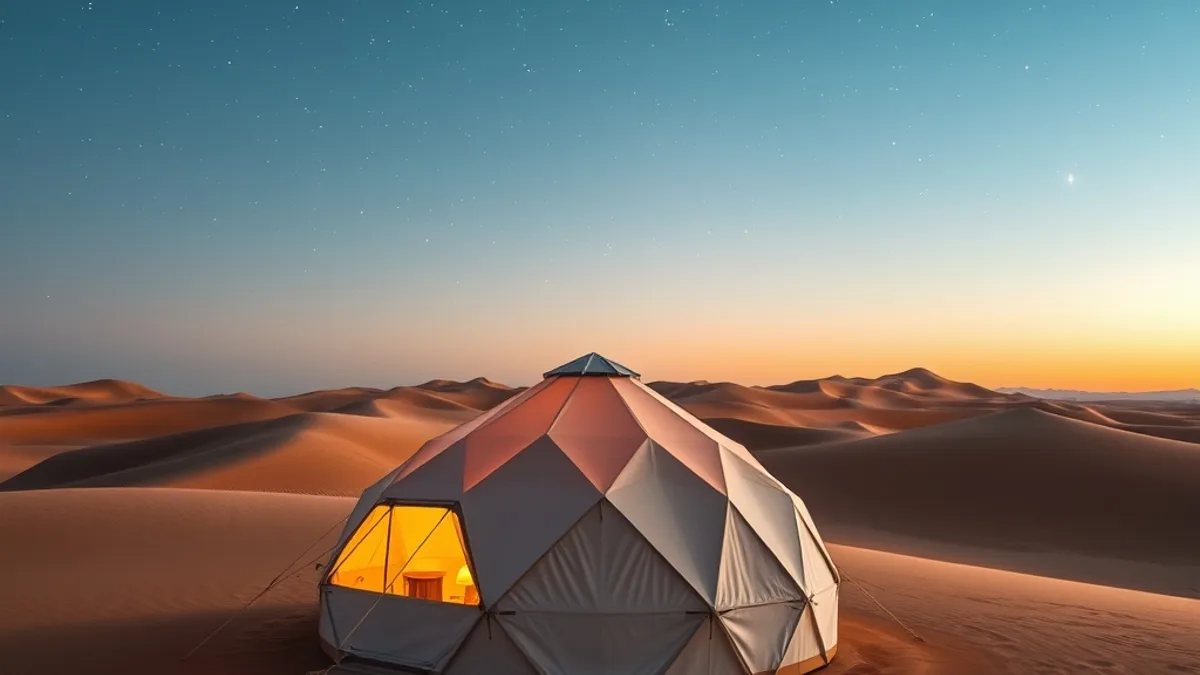
Heat is the sneaky one. While wind announces itself, summer heat builds quietly, and canvas tents can climb well above 30°C inside on sunny afternoons. Once the fabric heats up, it radiates warmth back into the tent long after sunset. The fix is not décor or fancy furnishings; shade position and ventilation matter more than anything else inside the tent.
Choosing a site that stays cool
Prioritize sites with shaded pitches, mesh windows, and cross-ventilation, or choose air-conditioned domes and cabins if your budget allows. A tent pitched under trees or on a north-facing slope can sit several degrees cooler than one in open sun, and mesh panels let breezes move through while keeping insects out. Cross-ventilation, where air enters one side and exits the other, is the single most effective passive cooling feature to look for in a listing.
Timing your day around the heat
Plan activities for early morning and evening, since midday heat peaks between roughly noon and 4 pm. Swim, hike, or explore before breakfast heat sets in, then use the hottest hours for a shaded hammock, a long lunch, or an air-conditioned café in the nearest town. This rhythm turns hot afternoons from an endurance test into part of the holiday.
Destination and season matter just as much. Mediterranean destinations suit heat-ready glamping best in May-June and September, when temperatures sit in the comfortable 20-28°C range. For a destination built around sunshine without the scorch, see these family homes designed for Mediterranean sun and easy living.
Storms and Rain: Timing, Cancellation Policies, and Backup Plans
Storms are the weather risk most likely to cost you an actual night of your trip. In northern Europe, storm season runs roughly from November to February, and many glamping sites either close entirely or cut capacity during those months. If you want a winter stay, confirm the site is actually operating before you get attached to a listing.
Continental summers bring a different pattern: thunderstorms tend to cluster in late afternoons, roughly between 2 and 6 pm. That gives you a predictable window to work around. Schedule driving days, ridge walks, and kayak trips for the morning, and keep the late afternoon for reading in the tent or a long lunch in a village.
Before paying any deposit, ask the operator exactly what happens if weather forces a closure. Some offer flexible rescheduling, others a weather guarantee, and some simply keep your money. Get the policy in writing, because a friendly email promise means little once a storm has actually arrived.
Packing matters more than most summer travelers expect. Even in warm months, bring waterproof layers and quick-dry clothing, since a soaked canvas interior dries slowly without strong airflow. A few smart questions and items can turn a stormy stretch from a disaster into a cozy, dramatic stay — destinations like wild Icelandic coastal lodges with dramatic views and warm interiors show how good a stormy night can feel when the site is built for it.
- Ask about drainage around the tent. Heavy rain pools quickly on flat ground, so a pitch on a slight slope or raised ground keeps both your feet and the tent floor drier.
- Check whether meals and activities continue in bad weather. Some operators swap outdoor dinners for covered communal spaces, while others simply cancel, which changes how a rainy day actually feels.
- Bring a spare dry bag for electronics and documents. Canvas can leak at seams during sustained downpours, so a sealed bag protects passports, phones, and cameras better than a zip pocket.
- Know your exit route. If a severe storm warning appears, ask the operator in advance how you would safely reach your car or a shuttle point, since tracks and footpaths can become impassable quickly.
Best Seasons and Booking Lead Times for Weather-Proof Glamping
If you want the best odds of good weather, aim for the shoulder seasons. May-June and September-October usually deliver mild, stable conditions with far fewer crowds than high summer. In most European glamping regions, these months sit comfortably in the mild range that canvas structures handle best, and you get the same tents, the same views, and quieter surroundings.
The savings are real too. Peak summer rates typically run 30-50% higher than shoulder-season prices for the very same accommodation. If your dates are flexible even by a week or two on either side of the school holidays, you can often halve the cost of a well-located dome or cabin.
How far ahead to book
Lead times depend heavily on the season. For summer dates, reserve 3-6 months ahead, because the best-located and best-engineered sites sell out first and you are left with the exposed pitches if you wait. For shoulder-season trips, 1-2 months’ notice is usually enough, though popular weekends can still fill early.
When to embrace the wild weather
Not every trip needs calm skies. If dramatic weather appeals to you, choose destinations known for moody skies, roaring seas, and genuinely cozy interiors — think storm-watching from a solid cabin with a wood stove rather than hoping a bell tent survives the front. The trick is picking a structure and a site designed for the conditions, then letting the forecast become part of the experience instead of a threat to it.
Packing and Site Questions for Unpredictable Glamping Weather
Glamping puts you closer to the weather than any hotel stay, so your packing list needs to work harder. Even in warm months, evenings can drop 10-15°C from the afternoon high, and canvas structures lose heat fast after sunset. Pack layers you can add and remove easily, plus a genuinely warm sleeping layer — a proper sleeping bag or a thick liner, not just the blanket provided.
Just as important are the questions you ask before booking. Heating, cooling, and power backup vary enormously between operators, and you want answers before you pay, not after you arrive to a cold tent with a dead power bank. A short email now saves a miserable night later.
Also confirm how the tent handles rain. Solid floors and raised wooden platforms keep interiors dry during heavy downpours, while tents pitched directly on grass can wick moisture upward and stay damp for days. Ask specifically, because photos rarely show the ground.
- Download offline weather forecasts before you travel. Remote glamping sites often have weak mobile coverage, and an app with cached forecasts lets you track approaching fronts even with no signal.
- Bring a small microfiber towel and spare base layers. These dry far faster than cotton, which matters when everything damp has to air out inside a tent overnight.
- Ask what the heating source actually is. A wood stove, electric heater, or hot-water bottles behave very differently, and if it is a wood stove, check whether firewood is included or sold on site.
- Find out how power works. Solar setups and generators can mean limited evening electricity, so you will know whether to bring a fully charged power bank for lights and devices.
- Check lighting inside the tent. Some structures have no fixed lighting, so a headlamp per person keeps evenings practical once the sun goes down.
Wrapping Up: Making Weather Work for Your Glamping Trip
Glamping keeps you right at the edge of the elements, and that closeness cuts both ways. Wind, heat, and storms each demand different site choices, seasons, and packing decisions, which is why the forecast deserves a place in your planning from the very first search. Most travelers only think about weather when it arrives, and by then the canvas walls are already rattling.
The good news is that most weather risk can be planned away. Shoulder-season dates and sheltered, well-engineered sites remove much of it, and flexible booking policies plus early forecasts turn unpredictable weather from a threat into part of the adventure. Check the outlook, ask the operator the right questions, and book the trip that fits the season. If you have a weather story from a glamping trip, share it in the comments below.