Tasmania has some of the wildest landscape in Australia, and many travelers want to experience it properly — sleeping surrounded by rainforest or alpine peaks — without giving up a real bed, a hot shower, or a wood heater on a cold night. That is exactly the gap glamping in Tasmania fills. Safari tents, geodesic domes, and off-grid cabins now sit inside and beside national parks, letting you wake up to wilderness without hauling your own gear.
The tricky part is knowing where to base yourself and which month actually suits the experience you want, because a coastal summer stay and a misty winter forest cabin are two very different trips. This guide covers the island’s best wilderness regions, the seasons and months to aim for, how to choose and book the right stay, what to pack, and how to pair your nights under canvas with Tasmania’s food and wildlife.
Why Glamping in Tasmania Works for Wilderness Lovers
Tasmania is small enough that one trip can cover an remarkable range of scenery. The island is roughly 300 km long, and within that distance you get alpine peaks, temperate rainforest, and white-sand beaches — often within a few hours’ drive of each other. Few destinations let you watch dawn mist over a mountain lake and end the day near a sheltered bay, but here it is a normal itinerary.
Sleep inside the parks, not beside them
The real appeal for wilderness lovers is location. Glamping puts you inside or right at the edge of national parks like Cradle Mountain and Freycinet, so the trailhead or the wildlife is minutes from your bed rather than an hour’s drive away. You get the early-morning and late-evening hours when wombats, wallabies, and other animals are most active — without ever carrying a tent, sleeping bag, or stove.
Comfort levels to suit every traveler
Stay types vary widely, which is part of the fun. You can book a safari tent with proper beds and a deck, sleep in a geodesic dome with panoramic views, or settle into an off-grid cabin with a wood heater and an outdoor bath under the trees. Some stays are deliberately simple and remote; others rival boutique hotels. Knowing which style suits you — and which season it suits — makes the difference between a good trip and a great one, and the sections below walk through both.
The Best Regions for Wilderness Stays
Tasmania’s wilderness stays cluster in a handful of regions, each with a distinct character. Choosing the right one matters more here than in most destinations, because the island’s landscapes differ sharply from north to south and coast to interior. A dome under alpine peaks and a cabin beside a rainforest river offer two very different kinds of trip, even though both count as glamping.
- Cradle Mountain-Lake St Clair: the classic alpine choice, with glacial peaks, button-grass plains, and boardwalks where wombats and wallabies graze at dawn. It sits about 2.5 hours from Launceston, making it an easy first stop if you fly in there. Stays here tend to emphasize mountain views and fireside evenings.
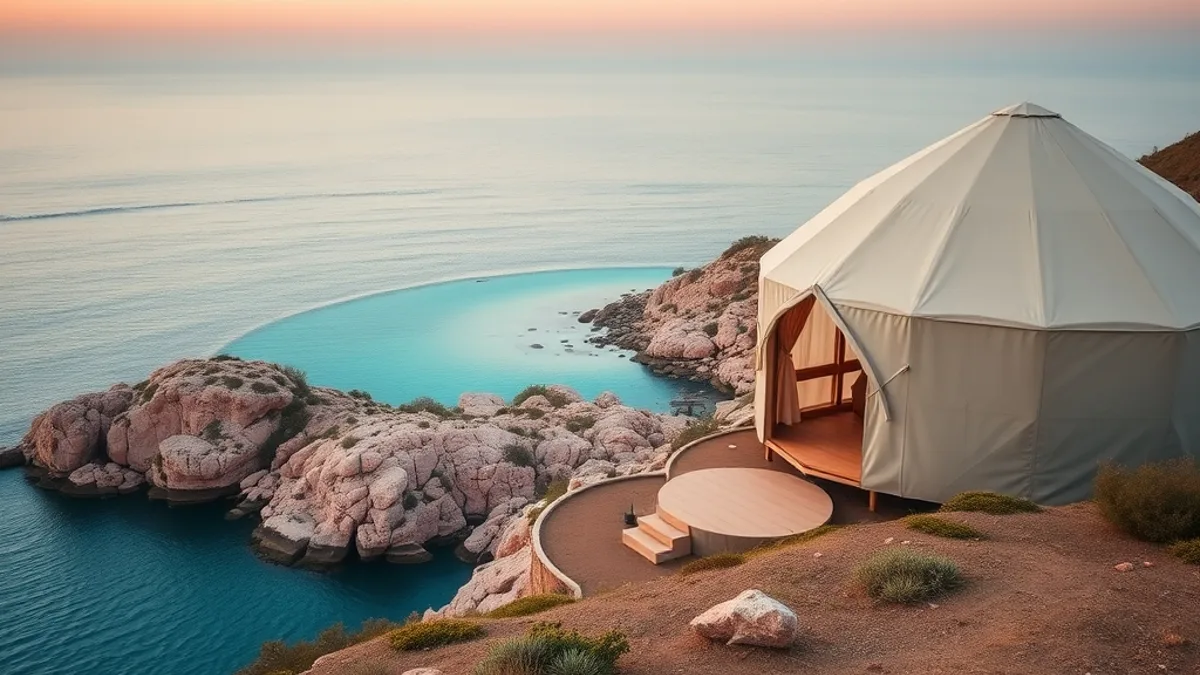
- Freycinet Peninsula: the coastal option, with stays near the famous Wineglass Bay lookout and pink-granite headlands. It is roughly 2.5 hours from Hobart, so it pairs naturally with an east coast food itinerary. Expect sea breezes, beach walks, and waking up close to the water.
- Tarkine and the northwest rainforest: the deepest off-grid option. Expect moss-covered myrtle trees, rivers, and very few neighbors — ideal if you want to switch off completely rather than day-trip between sights. Access can be slower, so plan realistic driving time.
- Bruny Island and the Huon Valley: the convenient south. Forest-and-water settings, ferry or short-drive access, and an easy loop from Hobart if you want wilderness without long transfers. It suits shorter stays and first-time visitors.
A practical approach is to pick two regions rather than trying to see everything. Most parks sit within a half-day drive of Hobart or Launceston, so a mountain-and-coast combination — say Cradle Mountain plus Freycinet — is very achievable in a single week without rushed driving. Two well-chosen bases give you variety while letting each stay settle in properly.
When to Go: Seasons and the Best Months
Tasmania’s seasons matter more than in mainland Australia, and the right month changes the whole character of a glamping trip. The good news is that every season has a genuine appeal — you just need to match it to the stay you have booked.
Summer: December to March
Summer brings the warmest and most reliable weather, with daytime highs of 18-23°C and long daylight hours that stretch well into the evening. This is the best window for coastal stays around Freycinet and Bruny Island, for swimming, and for making the most of long days on walking tracks. It is also the busiest period, so expect the highest rates and the tightest availability.
Shoulder seasons and winter
October-November and April are the sweet spot for many travelers. Days are mild at 12-18°C, crowds thin out noticeably, and rates drop from their summer peaks. You still get usable daylight for hiking, and the forests look fresh either in spring growth or autumn color.
Winter, from June to August, is a different kind of trip: expect 4-12°C days and frequent rain. It suits travelers who want wood heaters, misty forests, and cozy interiors rather than long hikes. A rainforest cabin with a fire, a book, and an outdoor bath is a genuinely appealing winter proposition — as long as you pack for wet conditions and build flexibility into your plans.
How to Choose and Book the Right Stay
Tasmanian glamping is popular, and the best wilderness stays are small, so the good spots go fast. If you want dates between December and January, book 6-12 months ahead — safari tents and domes near Cradle Mountain and Freycinet often sell out their peak season well in advance. Shoulder-season dates in October-November and April are easier to secure, typically 2-3 months out, and you may find lower rates for the same tents. Midweek stays are another easy way to widen your options, since weekend nights fill first at the smaller properties.
Budget expectations are fairly consistent across the island. Tents and domes generally run AUD 250-600 per night, while luxury wilderness lodges start around AUD 600 and climb past 1,500 for the most remote and pampered options. Prices shift with season and demand, and minimum-stay rules are common over peak periods, so check current rates and conditions before committing.
The word “off-grid” gets used loosely in listings, so read the details carefully. Ask the host directly if anything is unclear before you pay a deposit — a quick message now saves a disappointing arrival later.
- Power source: solar setups with limited capacity usually mean no hair dryers or multiple device charging — some hosts provide shared charging points in a main lodge instead.
- Bathrooms: composting toilets and outdoor showers are common in remote stays; if that’s not your style, filter for properties advertising en suite bathrooms.
- Access: some sites require a walk-in of a few hundred meters or a 4WD track, so confirm how you’ll get luggage to your tent, especially in rain.
- Weather protection: prioritize wood heaters, covered decks, and solid flooring — Tasmanian conditions shift fast, and a canvas tent in a cold snap feels very different from a dome with insulation.
- Self-catering vs. meals: check whether there’s a full kitchen, a campfire cooking setup, or on-site dining only, since the nearest supermarket can be an hour away.
What to Pack and How to Plan Each Day
Pack layers and a waterproof shell no matter the season. Even in the height of Tasmanian summer, evenings can drop below 10°C, and a warm sunny afternoon can turn to wind and drizzle within the hour. A merino base layer, a fleece, and quick-drying pants will earn their place in your bag on every trip.
Footwear matters more than most glampers expect. Even if you’re sleeping in a furnished tent, the tracks around your stay are often gravel or mud, so bring sturdy walking shoes or light hiking boots, plus something warm and dry for evenings by the fire.
Keep the drives short
Tasmania’s compact size is one of its biggest advantages — most parks sit within a half-day drive of Hobart or Launceston, so you rarely need to spend more than a few hours on the road between stays. Plan a relaxed morning, a lunch stop in a small town, and an afternoon arrival with time to settle in before dark. Short hops also leave room for spontaneous stops at lookouts, roadside stalls, and short walks you hadn’t planned on.
Build in buffer days
Tasmania’s weather can close walking tracks, and low cloud sometimes hides the very views you came for. Keep a flexible itinerary with at least one buffer day per region so you can shift a hike, a wildlife outing, or a drive to the next clear morning. Flexible travelers consistently get more out of the island than those with a rigid schedule — and a spare day spent by the fire in a cozy cabin is rarely a hardship.
Pairing Glamping with Tasmania’s Food and Wildlife
Glamping in Tasmania pairs naturally with the island’s food scene, and the east coast is the best example. Base yourself near Freycinet Peninsula and you can spend the morning walking toward Wineglass Bay, then the afternoon shucking fresh oysters, picking berries at roadside farms, and tasting your way through local vineyards — all within easy reach of your tent or dome.
Many east coast stays lean into this. Hosts often stock fridges with regional cheese and wine, or point you toward the closest farm gate before you arrive. Ask when booking; the smaller operators are usually the ones with the best local connections.
Dawn wildlife at Cradle Mountain
Cradle Mountain stays reward early risers. Wildlife spotting is best at dawn, when wombats graze in open clearings and echidnas snuffle along track edges. Tasmanian devils are mostly nocturnal, but some lodges and hosts run guided night sessions or maintain viewing areas where your chances improve considerably. Ask your host what’s been seen recently — activity changes week to week.
Host-prepared meals and hampers
One of the pleasures of wilderness stays is eating well without cooking logistics. Many hosts offer local produce hampers delivered to your tent, or fire-cooked dinners as part of the stay — think slow-cooked lamb, fresh bread, and Tasmanian wine enjoyed under the stars. It’s worth requesting these in advance, as hosts typically need notice to source and prepare everything.
Planning Your Tasmanian Glamping Trip
Glamping in Tasmania works best when you match the region to the season. Summer, from December to March, is the time for coastal stays around Freycinet, while winter suits cozy forest cabins with wood heaters in the island’s mistier corners. If you want mild days and fewer people, the shoulder months of October-November and April are a smart middle ground.
Book early for peak months, especially December-January, and budget AUD 250-1,500+ per night depending on your comfort level. Pack for changeable weather, since even summer evenings can turn cool. With the right stay, the island’s wilderness becomes a comfortable, unforgettable base rather than a compromise. If this guide helped you plan your trip, leave a comment or share it with a fellow traveler.