Here’s a scenario that catches travelers off guard: you book a remote lodge after browsing photos of a sleek gym and a serene spa, then arrive to find a single treadmill under a canvas roof and a massage table in a tent. It’s not false advertising exactly, but lodge fitness and spa facilities vary enormously depending on what tier of camp you’re booking, and the marketing images rarely make that clear.
This guide walks you through what remote camps actually include, from basic gym decks at simple safari camps to full bush spas at flagship lodges. We’ll break down gym setups by camp tier, explain what treatment menus and pricing typically look like, and show you how to verify facilities before you commit. You’ll also find advice on timing your stay around wellness, plus the destinations where combining game drives with massage decks and dawn workouts works best. By the end, you’ll know exactly which questions to ask before booking.
What Lodge Fitness and Spa Facilities Really Look Like
The first thing to understand is scale. Remote lodge gyms are usually small, typically 10 to 25 square meters, with somewhere between 3 and 8 pieces of equipment. That often means a treadmill, a set of dumbbells, and sometimes a rowing machine. If you’re picturing the fitness center at a city hotel, reset your expectations: most bush gyms are compact spaces designed for a quick stretch and cardio session between activities, not full training sessions.
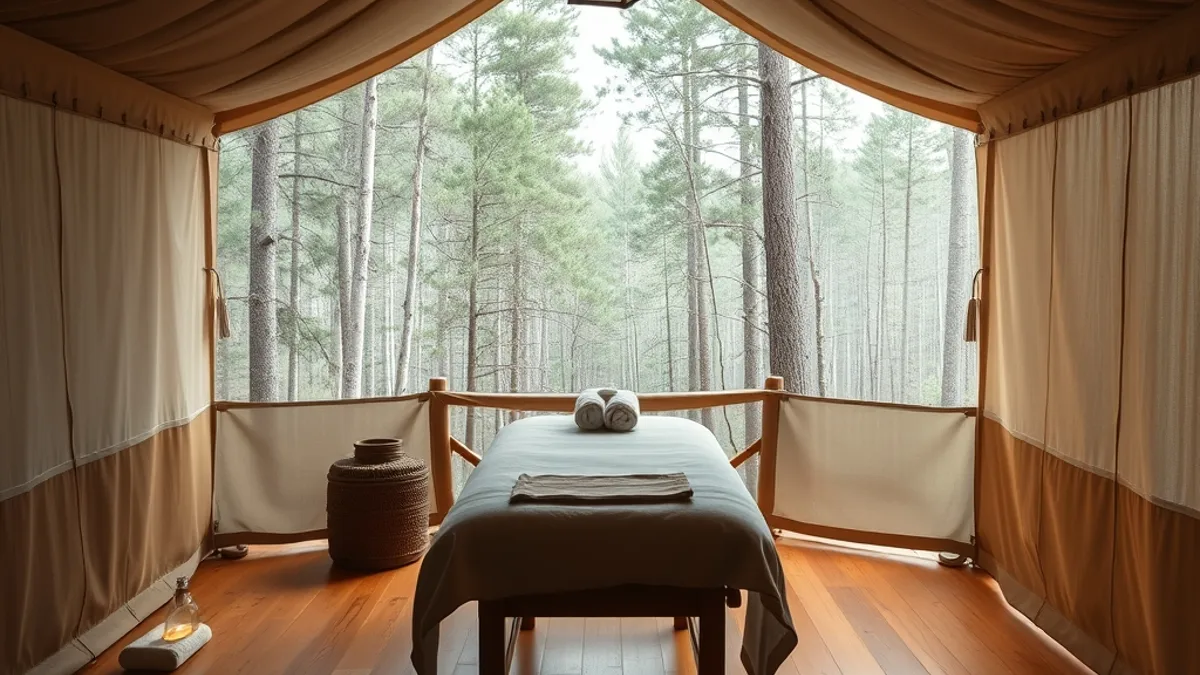
Spas follow the same logic. Instead of built wellness centers, most camps use tented or open-air treatment rooms, which is part of the charm but also means facilities are simpler than the word “spa” might suggest. Think a canvas structure with a massage table, screens for privacy, and the sounds of the bush as your soundtrack.
How your nightly rate shapes what you get
Ultra-luxury camps, typically priced from $600 to $1,500+ per person per night all-inclusive, are the ones most likely to add extras like plunge pools, saunas, and dedicated resident therapists. At this level, wellness is often a genuine selling point rather than an afterthought.
Mid-range camps, usually running $250 to $600 per person per night, often offer massage on request rather than a permanent spa. That can mean a therapist who visits on certain days or an arrangement where treatments need advance notice. It works fine if you know about it in advance; it’s disappointing if you assumed a full spa was included.
Gym Setups by Camp Tier
Gym setups at remote camps fall into fairly predictable tiers, and knowing where your camp sits helps you plan your training routine realistically. At the basic end, expect a rack of free weights and a stationary bike set under a thatched deck. It’s functional, open to the breeze, and perfectly adequate for maintaining fitness on a short stay.
Mid-tier camps step things up with a treadmill and yoga mats, and many follow a monthly equipment check to keep everything safe and usable. Flagship lodges go further still, offering full gym tents and guided sunrise workouts, typically running between 6:00 and 7:30 am so guests finish before the morning game drive departs.
- Basic camps: the open-air deck setup means you’ll be exercising in view of the surroundings, so pack modest workout clothing if that matters to you.
- Mid-tier camps: the treadmill is usually the only powered cardio option, so bring your own resistance bands if you want a broader workout.
- Flagship lodges: guided sunrise sessions are often group affairs led by camp staff or a trainer, so ask whether they suit your fitness level or run daily at all.
One practical note: equipment at remote camps leads a hard life, with dust, humidity, and constant use. Whatever tier you book, don’t assume every machine works on any given day, and treat the gym as a bonus rather than the centerpiece of your stay.
Spa and Treatment Menus at Remote Camps
Treatment menus at remote camps are shorter than city spa menus, but what they offer tends to be well chosen. The staples are deep-tissue massage, aromatherapy, and foot treatments, which makes sense after long days in a vehicle bouncing over rough tracks. Expect to pay roughly $60 to $150 per hour, depending on the camp’s tier and the therapist’s experience.
Here’s the detail that surprises many guests: at most properties, treatments are billed separately from all-inclusive rates. Even if your stay covers meals, drinks, and game drives, the massage goes on a separate tab, so budget for it when planning your trip.
The outdoor setting is the real luxury
What bush spas lack in infrastructure, they make up for in setting. Treatments happen on riverbank decks where you might hear hippos below, or in star-lit massage tents after dark. Lakeside properties often build rituals around sauna and cold-plunge sequences, taking advantage of the water at their doorstep. If that appeals to you beyond the safari context, the same philosophy shows up at lakeside cabin retreats built around sauna nights and still water, where the landscape does most of the therapeutic work.
The practical takeaway is that the setting, not the treatment list, is what you’re paying for at a bush spa. A good deep-tissue massage with elephants in the distance beats a ten-treatment menu in a windowless room every time, but only if you go in knowing what’s actually on offer.
How to Verify Facilities Before You Book
Remote camps vary more than their websites suggest, and a glossy gallery page does not always reflect what is actually on the ground. Properties in the same region can differ widely in what they offer, even when their marketing looks nearly identical. A few direct questions before you pay a deposit will save you from arriving with expectations built on borrowed images.
- Request a photo of the gym taken recently. Ask the camp directly for a current picture of the fitness area, not a brochure image. Websites often show sister-property images, so the treadmill in the photo may belong to a lodge hundreds of kilometers away.
- Ask for the current spa menu. Menus change with staffing and season. A written menu emailed by the reservations team tells you which treatments are actually offered right now, along with rough pricing so you can budget before you travel.
- Confirm whether therapists are resident. Some camps keep a therapist on site year-round; others fly one in on scheduled days or share one between neighboring properties. If massages matter to your stay, ask directly and plan your dates around the answer.
- Check booking and billing procedures. Find out whether treatments must be pre-booked and how they appear on your bill. At most properties, spa services come as an extra charge on top of your stay, so also confirm which payment methods are accepted in camp, since card facilities in remote areas can be unreliable.
Camp managers answer these questions daily, and a property that responds slowly or vaguely before booking will rarely improve once you have paid. Good communication at the planning stage is one of the most reliable signals of how well your stay will be handled overall. It also gives you a written record of what was promised, which is helpful if anything differs when you arrive.
Timing Your Stay Around Wellness
Wellness at a remote camp depends heavily on when you travel. Staffing, weather and demand all shift through the year, and the same massage deck can feel like a sanctuary in one month and a rain-soaked disappointment in another.
Travel in the dry season for comfort and full staffing
In East Africa, the strongest stretch for game viewing and lodge operations runs June to October. Southern Africa peaks May to October. These dry months bring comfortable open-air treatments, reliable game drives and, just as importantly, full staffing, including resident therapists and fitness instructors. High season also brings crowds, which is why spa slots should be reserved 2 to 4 weeks ahead. On-site availability tends to fill within 48 hours of arrival, so waiting until you land is a gamble.
What the shoulder months trade you
November and the March to April window see fewer guests, which means easier treatment availability and more spontaneous bookings. The trade-off is rain, and open-air sessions in tented or riverside settings can be disrupted. If you travel in these months, ask whether there is an indoor fallback for treatments. For travelers combining bush and coast, a stay at bluewater resorts in South Africa for safari elegance and coastal release shows how the wellness rhythm changes once water replaces wilderness.
Whatever month you choose, plan treatments around your game-drive schedule rather than hoping for free time to appear.
Destinations Where Bush Wellness Shines
Bush wellness works best where the setting does half the work. Some regions simply lend themselves to massage decks, dawn workouts and slow mornings, and knowing which type of destination suits you helps you pick the right camp.
Safari regions: drives and deep tissue
Classic safari country pairs early game drives with afternoon recovery. You are up before sunrise, bumping through grasslands for hours, then back in camp by late morning with stiff shoulders and time to spare. That rhythm makes deep-tissue massage and open-air treatment tents feel earned rather than indulgent. Many safari camps also run guided fitness sessions in the 6:00 to 7:30 am window, so you can stretch or train before heading out with your guide.
Lake and coastal retreats: slower rituals
Water-based settings shift the pace. Lakeside and coastal properties add sauna rituals, cold-plunge routines and water-based recovery such as swimming or paddling, and mornings tend to stretch longer because there is no game drive pulling you out of bed. If that spacious, unhurried style appeals, the Nanyuki homesteads near safari country with spacious calm show how a quieter base near safari country can deliver wellness without the packed daily schedule.
Both styles work. The choice comes down to whether you want your recovery earned on a game drive or delivered beside still water.
The Bottom Line on Remote Camp Wellness
The photos that sold you on a camp may belong to a flagship lodge, while your tent comes with a massage deck and little else. That mismatch is the most common surprise travelers report, and it is easy to avoid. The simplest rule: fitness and spa facilities scale directly with nightly rate, from basic gym decks to full bush spas.
Before you book, verify equipment and therapist availability with the camp itself, reserve treatments 2 to 4 weeks ahead in peak season, and plan your massage around game-drive schedules rather than hoping a slot appears. Do that, and a remote stay delivers both the wildlife and the recovery. If this helped you plan, leave a comment or share the article with a fellow traveler.