You’ve found a lodge you love, opened the rates page, and hit a wall of labels: luxury tent, deluxe tent, honeymoon suite, family unit. The photos all look gorgeous, the descriptions all promise privacy and views, and none of them explain what actually changes between a $400 tent and an $800 suite on the same property. That confusion is exactly what understanding lodge room categories solves.
This guide breaks the three main categories down into what you can realistically expect: safari tents with canvas walls and real en-suite comfort, lodge suites with plunge pools and separate lounges, and family units built for groups of four to six. We’ll cover why category labels matter more than view or location, how to match a category to your party size and season, and the booking timing and rate traps that catch travelers out. By the end, you’ll know which category fits your trip before you compare a single price.
Why Lodge Room Categories Matter When You Book
On most safari properties, the category label drives the price far more than the view or the position on the map. A tent, a suite and a family unit on the same lodge can differ by $200-500 per person per night, even when guests eat at the same table, game-drive in the same vehicle and watch the same waterhole. Paying for a category you don’t need is the most common way travelers overspend on a lodge stay.
Brochures blur the lines on purpose. “Luxury tent” can mean anything from a spacious canvas suite on a fixed deck to something closer to upscale camping, and “family unit” might be a genuine three-bedroom cottage or two rooms joined by a corridor. Knowing the standard features of each category — real floor sizes, bathroom setups, bedroom counts — means you can read between the marketing and stop paying for space you won’t use.
Start with your party size
Your travel party is the first filter, before budget or season. Couples fit comfortably into both tents and suites, and the choice comes down to atmosphere versus space. Groups of four or more need family units or interconnecting rooms, which changes both the price structure and how far ahead you need to book. Fix that variable first, and the rest of the comparison becomes much simpler.
Safari Tents: Canvas Walls, Real Comfort
The classic safari tent has come a long way from camping gear. A typical tent spans 40-80 sqm, fixed on a raised wooden deck, with proper walls of canvas, real beds and furniture, and an en-suite bathroom with flush toilets and hot showers. Many also add verandas, outdoor bathtubs or lounge areas, so you get the sounds and smells of the bush without giving up plumbing.
Season matters more in a tent than in any other category. Dry-season travel — June to October in East Africa — is when canvas stays dry, nights are cool and comfortable, and the whole experience works best. If you’re weighing tents against more solid options, it helps to see how fixed, spacious accommodation can work close to the parks; the homesteads near Nanyuki offer a calm, roomy alternative just outside safari country and sit somewhere between canvas and full lodge construction.
The trade-offs to accept
Canvas insulates against sound poorly. You’ll hear hippos, hyenas and your neighbors more clearly than you would behind brick walls — part of the charm for many guests, less so for light sleepers. Pack earplugs and you’ll be fine. Also check the calendar before you commit: many tented camps close or scale back operations during the heavy rains of March to May in East Africa, when canvas floors get wet and some tracks become impassable.
On price, tents are usually the accessible entry point. Entry-level tented rates often start around $350 per person per night, typically well below the lodge’s top suites, while still including the same game drives and meals. For atmosphere per dollar, a well-run tent is hard to beat — just book early if you want peak-season dates, since the best-positioned tents go first.
Lodge Suites: Space, Privacy and Plunge Pools
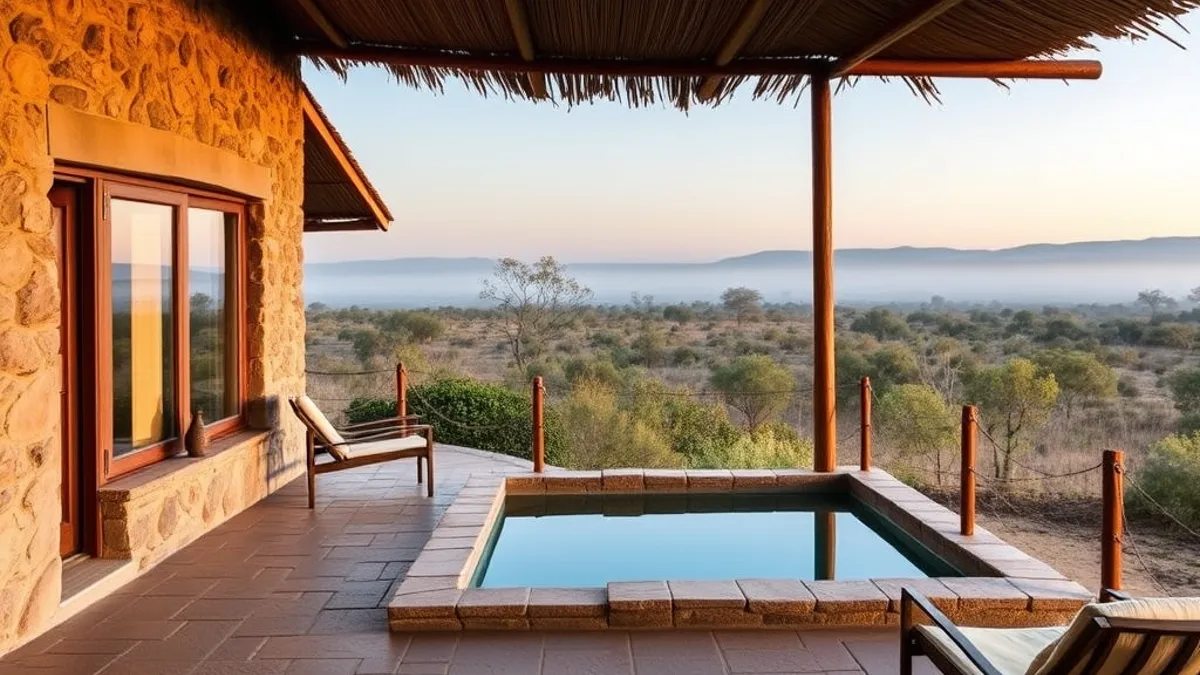
If tents trade on atmosphere, suites trade on space. A standard lodge suite usually ranges from 60-120 sqm, with a separate lounge area, an outdoor shower, and often a private plunge pool on the deck. You get solid walls, proper sound insulation and the same bush setting — the indoor-outdoor living of a tent with none of the canvas.
Position matters more within this category than travelers expect. Corner suites and end-of-row suites typically get the widest views and the most privacy, while mid-row units may look onto their neighbors. Request your preferred placement at the time of booking, not at check-in — front desks at remote lodges have limited room to reshuffle guests once the camp is full.
Who suites suit best
Suites are the sweet spot for honeymooners and couples who want privacy and a bit of indulgence without paying for bedrooms they don’t need. If a plunge pool and a private deck for two top your list, it’s worth reading how dedicated honeymoon properties design around that, such as these Le Morne nests built for honeymoon calm and polished tropical living.
The trade-off is price. Suites sit at the top end of the typical lodge rate range, and top suites in peak season command the highest rates of any category on all-inclusive terms. If that stretches the budget, a mid-category suite in green season often delivers most of the same experience for considerably less — remember that peak dry season rates run roughly 30-60% above green season, so timing matters as much as category.
Family Units: Two or Three Bedrooms Under One Roof
If you are traveling as a group of four or more, the family unit is usually the category that makes a safari lodge trip work. These units typically sleep 4-6 guests across two or three bedrooms, with a shared lounge in between. That shared space matters more than it sounds: after a long game drive, kids can spread out with snacks and coloring books while adults unwind without whispering in the dark.
Price is the other reason to look here. Many lodges waive the single supplement for children under 12 in family units, which is a meaningful saving when you are paying per person. In a standard tent or suite, that supplement often applies to every traveler, so the family unit can quietly become the best-value category on the property.
There is one catch: family units are usually the scarcest category per lodge, often just one or two per property. For June-October travel, book 9-12 months ahead or you will be piecing together separate rooms instead.
- Count the bathrooms before you commit. Two-bedroom units sometimes have only one shared bathroom, which gets tight with teenagers; three-bedroom units usually include two.
- Ask about bed configurations. Some units offer a double plus two singles, others add sofa beds or foldouts, and that difference decides whether six people fit comfortably or four do.
- Confirm the age policy. A few lodges restrict family units to guests with children, so a group of adults may be redirected to other categories.
- Check whether meals are served in-unit. Some family units come with a small kitchenette or private dining option, which helps with picky eaters and early dinner times.
How to Match a Lodge Room Category to Your Trip
The right room category depends less on budget than on who is traveling and how. A couple on a first safari usually gets the most out of a tent: you hear hippos at night, you feel the breeze through the canvas, and you pay the lower end of the price range for an experience that photographs like a brochure.
Honeymooners should think differently. The atmosphere is lovely, but privacy and space are what you will remember, so prioritize a suite with a plunge pool. One practical tip: request the specific suite placement at booking, not at check-in. Corner and end-of-row suites tend to have the best views, and front desk staff cannot conjure an empty one on arrival day.
Families with young children should skip adjoining tents entirely. A family unit keeps everyone under one roof, with a shared lounge and doors you can actually hear through, which matters for safety and for those early wake-up calls before game drives.
For long stays of five nights or more, mixing categories works beautifully: one tent night for the canvas experience, then suite nights for comfort. This spreads the budget without sacrificing the atmosphere. If you want to see how this plays out in practice, this guide to safari serenity and beautifully paced comfort in Botswana shows a property where the categories sit side by side.
- Photographers: ask for a suite positioned toward the waterhole or river, since animals often move at dawn and dusk when you are in camp.
- Light sleepers: tents carry more sound from neighboring canvas and from wildlife, so a solid-walled suite at the end of a row is the quieter bet.
- Multigenerational groups: check whether the lodge offers interconnecting rooms as an alternative if the family unit is already taken.
Booking Timing and Rate Traps by Category
Timing is where most safari bookings are won or lost, and the rules differ by category. Tents and suites follow a fairly predictable rhythm: 3-6 months ahead is usually enough in shoulder season, while June-October travel calls for 6-9 months of lead time. Family units break the pattern entirely. They are the scarcest category on most properties and they sell out first, so treat them as your very first booking decision rather than an afterthought once flights are sorted.
The per person sharing trap
Most lodge rates are quoted “per person sharing,” which assumes two travelers splitting a room. Travel solo in a suite and you can face a single supplement of 30-50% on top of the listed rate. Always ask the lodge or operator what the solo rate is before comparing properties, because the cheapest brochure price may not apply to you at all. One useful exception: some lodges drop the supplement for children under 12 sharing a family unit, so families should ask about that too.
Green season arithmetic
The flip side is the green season discount. In November and January-March, rates across all categories typically drop 30-60% below peak-season prices, and since June-October rates run roughly 30-60% higher than green season, the swing is dramatic. The trade-off is rain: expect afternoon showers, greener and denser vegetation that makes wildlife harder to spot, and in East Africa the possibility that some tented camps shut down entirely during the wettest March-May weeks. If your dates are flexible and your priority is value over guaranteed wildlife density, the green season is where the same suite suddenly fits the budget.
One last habit worth building: when you request a quote, ask the operator to state the category, the season and the basis (per person sharing or solo) in writing. Comparing a tent quote against a suite quote is the fastest way to book the wrong trip.
Choosing Your Lodge Room with Confidence
Those vague labels on lodge websites now have a clear meaning behind them. A “luxury tent” means canvas walls, a real bed and an en-suite bathroom on a fixed deck, not camping gear. A suite means 60-120 sqm of space, often with a plunge pool, and a family unit means two or three bedrooms sleeping 4-6 guests under one roof.
The practical takeaway is simple: match the category to your season, your party size and your booking lead time before you compare prices. Tents suit atmosphere-seekers, suites suit couples wanting space, and family units suit groups of 4-6. Once the category is fixed, you compare lodges on the same terms, and the price differences finally make sense. If this helped you decode the labels, leave a comment or share the article with someone planning a safari.