Many travelers book a safari lodge without realizing that meals there are fixed-time and often shared, then arrive unsure what dinner actually looks like. Will you sit with strangers? Can you eat at 21:00 if you want? Lodge food and communal dining follow their own rhythm, and it helps to understand it before you pack your bags.
This guide explains how meal times are structured around game drives, why shared tables exist and when you can expect one, and what the food actually looks like from breakfast to a boma dinner. We also cover how to handle dietary requirements, the etiquette of dining with fellow guests, and how to choose a lodge that matches the way you want to eat. By the end, you will know exactly what to expect from your first early-morning coffee to the last plate of the evening.
How Lodge Meal Times Are Structured Around Game Drives
At a safari lodge, the day’s schedule is built around wildlife, not around the kitchen. Animals are most active at first light, so breakfast is served early, typically between 05:30 and 07:00, so guests can head out on the morning game drive as the sun comes up. Expect a wake-up knock or call at your door shortly before, with coffee and tea available in the lounge or on your terrace.
Afternoon tea instead of lunch
On many safari schedules, a formal lunch is skipped altogether. Instead, high tea or afternoon tea is served around 15:30 to 16:30, just before the afternoon game drive departs. It bridges the long gap between breakfast and dinner without making anyone too full for a bumpy ride.
Dinner after the evening drive
Dinner follows the evening drive, with a single seating usually between 19:00 and 20:30. Because there is one kitchen serving everyone, the whole lodge tends to eat at roughly the same time. When lunch is offered, typically around 12:30 to 13:30, it is usually a lighter buffet or plated service rather than a heavy meal. Exact times vary by lodge and season, so check your pre-arrival information.
Why Communal Dining Exists and When You Can Expect a Shared Table
Shared tables are standard at lodges of roughly 10 to 24 rooms, where a single kitchen serves all guests at once. With one seating and one dining area, seating everyone together around long tables is simply the most practical arrangement. It also turns dinner into a social event rather than a quiet, separate affair.
The tradition grew out of safari culture. Days on game drives produce stories worth swapping: the leopard someone spotted on yesterday’s route, the elephant herd that blocked the road, the lion call heard from camp at night. Sharing those sightings over a single long table became part of the experience, and many lodges keep the custom because guests genuinely enjoy it.
Smaller lodges work differently
Properties with fewer than 10 rooms more often offer private or in-room dining on request, since the kitchen is serving far fewer guests. If you prefer eating just with your travel companions, a smaller lodge or a homestead-style stay such as those described in spacious, calm homesteads near safari country may suit you better than a bigger camp.
Seating is also more flexible than you might expect. Some lodges deliberately seat solo travelers together so nobody eats alone, while couples can usually ask for a separate table if they would rather keep dinner private. It never hurts to mention your preference when booking or at check-in.
What Lodge Food Actually Looks Like Across a Day
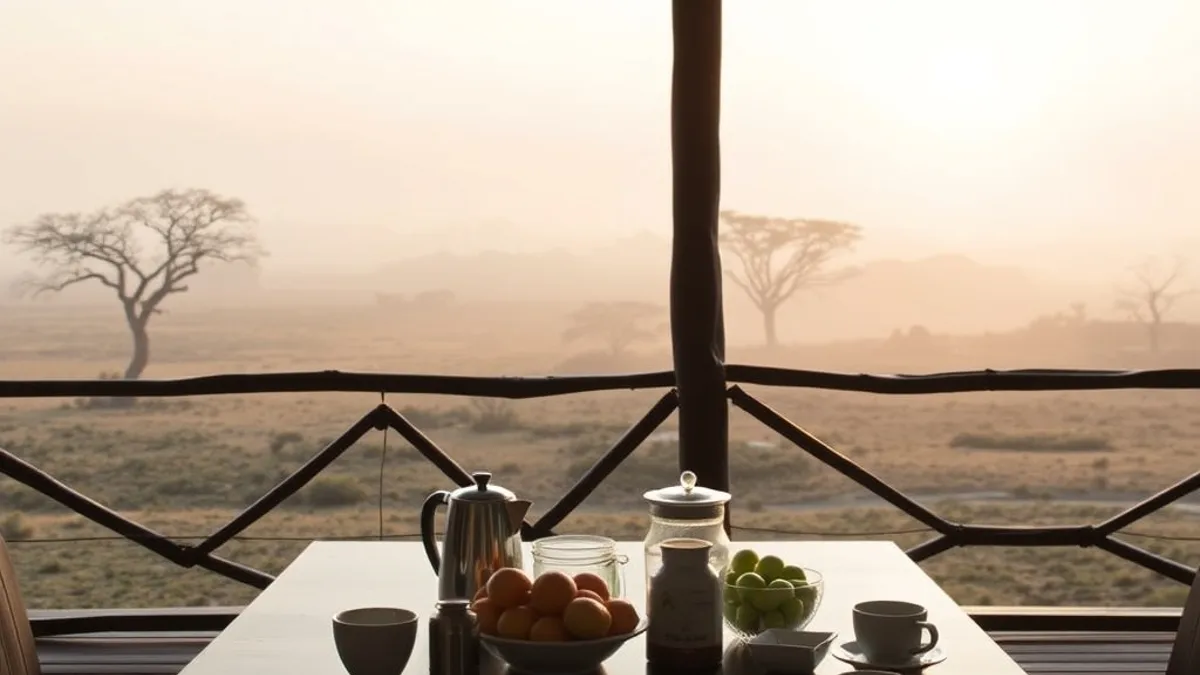
Lodge food is generally hearty, well-prepared home-style cooking rather than fine dining, though some upscale camps do serve restaurant-quality plates that would not look out of place in a city restaurant. Breakfast is usually a buffet of fruit, breads, yoghurt and cereals, plus a cooked-to-order option such as eggs made the way you like them, bacon or a regional specialty. Lunch, when served, tends to be light rather than heavy: think salads, cold meats, soups or a simple pasta dish. Chefs know a big midday plate will sit uncomfortably on an afternoon drive in the heat, so lighter fare is deliberate.
High tea is not a full meal, despite the name. Expect cakes, scones, savoury snacks and coffee or tea, enough to tide you over between lunch and dinner. Dinner is commonly a three-course set menu or a plated choice of two mains, sometimes served as a braai or boma grill night around the fire, with meat straight off the coals and side dishes passed around the table.
- Bush breakfasts take the morning meal out into the reserve, often set up under a tree with a chef cooking eggs on-site, and are typically offered 2-3 times per week, weather permitting.
- Boma dinners under the stars move the evening meal to an outdoor fire-lit enclosure, sometimes with local dishes and singing from the staff, usually a couple of times a week.
- Set menus rotate across your stay, so you rarely see the same dinner twice in a row, though choices can be narrower than at a city restaurant.
- Drinks policies vary between lodges, with some including house drinks in the rate and others charging separately, so ask before you order. If drinks are excluded, budget accordingly, as a multi-night stay adds up quickly.
Handling Dietary Requirements and Special Requests
Food is one of the real highlights of any lodge stay, but a remote kitchen cannot improvise the way a city restaurant can. There is no corner supermarket to pop into when a guest arrives with an unexpected allergy. If you have dietary requirements, the single most useful thing you can do is tell the lodge well before you arrive rather than mentioning it at check-in. A request made in advance gets planned into the menu; a request made on arrival gets patched together from whatever is on hand.
- Submit your needs 2-4 weeks before arrival. Most lodges ask for vegetarian, vegan, gluten-free, allergy and religious dietary requirements to be submitted 2-4 weeks ahead. This gives the kitchen time to plan menus that include you at every meal rather than as an afterthought.
- Understand how remote supply works. Many lodges place one large supply order for the coming weeks, sometimes flying or trucking groceries in from a distant town. A request made on arrival may be limited to whatever happens to be in stock that week, which is rarely enough to build several full meals around.
- Confirm twice before you travel. Repeat your requirements when you receive your booking confirmation, then again in the pre-arrival email most lodges send 1-2 weeks out. This double-check catches anything lost between the booking agent and the kitchen, which happens more often than you would think.
- Flag children’s needs in advance too. Simpler children’s meals and earlier sittings can usually be arranged, but only if the lodge knows before you arrive. Add this to the same message as your other requests so nothing gets missed.
Put a reminder in your calendar for the moment you book, so the dietary email goes out the same day. Include specifics rather than general terms: name the allergy, mention severity, and note whether cross-contamination is a concern. A little lead time is the difference between a kitchen that plans confidently for you and one that has to apologize at dinner.
Dining Etiquette and Practical Tips for Shared Tables
Shared tables work well when everyone follows a few unwritten rules. The rhythm of a safari lodge depends on one kitchen serving all guests at once, so small courtesies go a long way toward keeping mealtimes relaxed for the whole room. Think of it less like restaurant dining and more like being hosted in someone’s home, where your behavior affects everyone else’s evening.
- Arrive on time. Service is a coordinated effort, and late guests push every course back for the entire table. If a drive runs long, a quick word to staff helps them manage the timing.
- Share the storytelling. Everyone at the table had a drive that day, so keep your leopard sighting to a few minutes at first. Others will want to describe what they saw too, and a good conversation lets each sighting get its moment.
- Ask before photographing the table. Plated dishes and candlelit settings are tempting subjects, but other guests may be mid-bite or simply prefer not to appear in the background of your shot.
- Handle tipping through the communal box. Most lodges run a shared tip box at departure that is divided among all staff, including the kitchen team behind your meals. Per-meal cash is rarely expected and can create awkwardness at the table.
- Be considerate about phones and noise. Keep calls away from the table and let the conversation flow naturally. A table of eight strangers can become a group of friends by the second night if everyone makes a small effort.
None of this is complicated, and most guests settle into the rhythm within a day or two. Treat the table as you would a dinner party with new friends and you will fit right in.
Choosing a Lodge Based on How You Want to Eat
Dining style matters more than many travelers expect when choosing a lodge. Some people love the energy of a long shared table and the chance to compare animal sightings with strangers; others would rather eat quietly with their own party. Knowing which type you are will save you from booking the wrong property.
Private vs. shared dining
Shared tables are the norm at lodges with roughly 10-24 rooms, where one kitchen serves everyone in a single seating. If you dislike that setup, filter your search for lodges under 10 rooms or look for properties that advertise private dining and in-room meals. Smaller camps are generally far more flexible about where and with whom you eat.
Menus, budgets and timing
Full-board rates at mid-range African lodges commonly run USD 250-600 per person per night, and drinks are sometimes billed separately, so ask what the rate includes before you book. If you are a picky eater, ask directly whether dinner is a fixed set menu or offers a choice of mains; a set menu is part of the charm for some guests and a problem for others. Families with young children should also ask whether the lodge can accommodate an earlier or later seating, since the standard dinner schedule does not always suit little ones. A short email before booking will answer all three questions and help you choose a lodge that matches how you actually want to eat.
Wrapping Up Lodge Food and Communal Dining
So the mystery of lodge dinner is solved: meals run on the rhythm of the game drives, not on restaurant hours. Expect an early breakfast before the morning drive, high tea in the late afternoon, and a single dinner seating between 19:00 and 20:30 once everyone is back from the bush. At lodges with 10-24 rooms, that dinner usually happens around one big shared table, while smaller properties under 10 rooms tend to serve you separately or in your room if you ask.
The single most useful thing you can do is send any dietary requirements 2-4 weeks before arrival, since remote kitchens order supplies well in advance. Beyond that, knowing whether you prefer communal dining or a quiet table for two before you book will help you choose a lodge that matches how you actually want to eat. If you have stayed at a lodge with a memorable boma dinner or a shared table story, leave a comment or share this article.