Many travelers book river and lake lodges expecting to walk out the door, grab a rod and be casting within minutes. Then reality hits: the motorboat needs two weeks of notice, the guide is fully booked for your dates, and the fly gear on the rack carries a daily rental fee. The water is right there, but getting onto it suddenly takes planning you never budgeted for.
This guide breaks down what fishing and boating add-ons actually include, how the season shapes your options, and how to choose between river and lake lodges. You will also find practical advice on booking guides, boats and gear, the questions worth asking before you pay a deposit, and ways to make boating part of the whole stay. By the end, you will know exactly what to confirm before you book, so the fishing fits your trip instead of the other way around.
What Fishing and Boating Add-Ons Actually Include
Most waterside lodges treat fishing and boating as optional extras layered on top of the room rate, and the menu varies more than travelers expect. The core offerings usually fall into four categories: guided fishing sessions with a local expert, boat rentals ranging from rowboats to motorboats, free-use kayaks and canoes, and a tackle loan service that may also include help arranging your fishing license. Some lodges bundle several of these into a package; others price each one separately, so it pays to read the fine print before you arrive.
The split between free and paid is fairly predictable once you know the pattern. Paddles, life jackets and basic tackle are often included with your stay, while motorboats and guided sessions nearly always cost extra. Before you commit to a guide, ask one specific question: does the quoted price cover two anglers in the boat, or is it charged per person? The difference can change your budget significantly if you are traveling as a pair or a group.
- Guided sessions: a local guide typically provides rods, flies or lures, and local knowledge of where fish are holding, often covering a half day on the water.
- Boat rentals: rowboats, pontoon boats and motorboats usually rent by the hour or half day, with fuel sometimes billed separately on motorboats.
- Kayak and canoe use: many lodges keep a small fleet on the shore for guests, often free of charge, with paddles and life jackets included.
- Tackle loan and licenses: lodges commonly lend basic rods and tackle, and guides can usually arrange the fishing license you need for the local water.
Matching the Season to the Water
Timing shapes everything about a lodge fishing trip. At most freshwater lodges, the prime fishing season runs May to October, and early summer is generally the best stretch for rivers, when insect hatches are active and fish feed aggressively near the surface. Book inside that window and you give yourself the widest choice of guides, boats and water.
Rivers versus lakes across the season
Lakes are the more forgiving option: they fish well at dawn and dusk throughout the season, so an early start or an evening session rarely goes to waste. Rivers are less predictable, because water levels after the spring thaw can leave them high, cold and murky for weeks. If a river trip is your priority, ask the lodge how the water has been running and whether conditions typically settle by the time you plan to visit.
Why shoulder months can work in your favor
The edges of the season are quietly the smartest time to book. Shoulder months like May and late September often mean lower guide prices, easier boat availability and far less crowding on popular stretches of water. The trade-off is cooler mornings and slightly shorter days, but for many anglers that is a fair exchange. If you are flexible on dates, it is also worth looking at destinations where the season runs long, such as the lake country around Queenstown, where calm lakes and mountain scenery stretch the boating season.
Choosing Between River and Lake Lodges
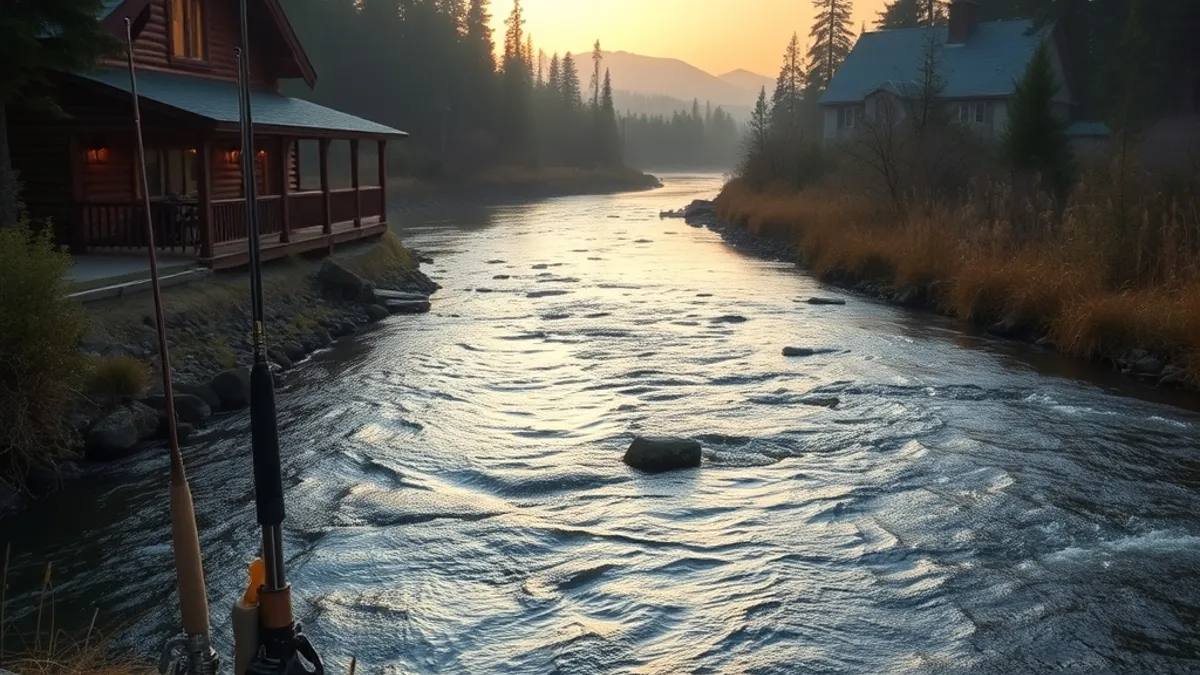
The water itself should drive your lodge choice, not just the room photos. River lodges are built around moving water: they suit fly fishing, wading and drifting downstream with a guide, and the constant current often produces the most exciting fishing. The trade-off is that flows can limit boating, especially early in the season when snowmelt keeps rivers high and fast, and some lodges suspend canoe use entirely until levels drop.
Lake lodges work differently. Calm water makes boating simpler and safer, family paddling becomes genuinely easy, and dawn sessions are far more reliable because you are not waiting for a river to settle. If your group includes children or mixed abilities, a lake lodge usually delivers more time actually on the water and less time managing conditions.
Whichever you choose, distance matters more than most travelers realize. Aim for lodges within 10-15 minutes of the water, because that is what makes a pre-breakfast fishing session realistic. If the launch is a 40-minute drive away, those golden early hours quietly disappear.
- Wading access: river lodges with walk-in access to riffles and pools let you fish short sessions without launching a boat at all.
- Drift options: on rivers, ask whether the lodge offers guided drift-boat or raft trips, which cover far more water than wading from one spot.
- Family paddling: lake lodges with a free kayak and canoe fleet make it easy to take kids out for an hour without booking anything.
- Shoreline fishing: on lakes, check whether the lodge’s own shoreline or jetty fishes well, since that gives you a no-boat option at dawn and dusk.
Booking Guides, Boats and Gear
Guides and boats are the two things that sell out first at popular waterside lodges, especially on summer weekends when everyone seems to have the same idea. A little advance planning gets you better time slots, clearer pricing and gear that actually matches the fish you want to chase. It also saves you from arriving at a beautiful stretch of water with nothing to float on it. Here is how to lock everything in without overpaying or losing your first-choice mornings on the water.
- Reserve your boat early. In high season, book boat rentals 2-4 weeks ahead of your stay. Guides fill up faster still, so contact the lodge as soon as your dates are set if you want a weekend slot.
- Get the guide price in full. Guided sessions typically run $150-400 per half day per boat, but what that covers varies widely between lodges. Ask whether rods, flies, waders and licenses are included or billed separately, so there are no surprises on the final bill.
- Sort the license through the guide. Most lodge guides arrange fishing licenses within 24-48 hours of confirming a trip, which saves you the paperwork. Just confirm it is happening rather than assuming.
- Decide what gear to rent versus borrow. Basic tackle loan is often free at the lodge, while premium fly gear rents for around $30-60 per day. Bring your own boots and rain jacket either way, since lodge sizes and stock can be limited.
Once these four steps are handled, the rest of your stay can stay loose. You will know what you are paying, what you are getting and when you need to be at the water, which is exactly the headspace a fishing trip should have. The only thing left to decide is whether that first cast happens at dawn or after breakfast.
Questions to Ask Before You Book
Lodge websites tend to show the prettiest stretch of water and leave the fine print for later. A few direct questions before you pay a deposit will surface the details that actually shape your days on the water. Ask them in writing, ideally by email, so you have answers you can compare side by side between lodges rather than relying on memory or a friendly phone call.
Start with the water itself, then work outward to logistics and weather policies. The answers often reveal how experienced the operation is: good lodges reply quickly and specifically, often within a day, while vague or slow responses are worth noting in themselves. If a lodge cannot tell you whether its water is shared or who else holds rights to it, that uncertainty will follow you once you arrive.
- Water access and rules: Ask whether the water is private or shared, and whether catch limits, size rules or fly-only stretches apply to your session. Private water often means fewer crowds but stricter handling rules.
- Launch and mooring: Find out how far the nearest boat launch is from your room, and whether mooring at the lodge jetty is included with your rental. A long drive to a public ramp can eat an hour from every outing.
- Weather policy: Clarify what happens if wind or storms cancel a guided session. Some lodges reschedule within your stay, some refund, and some do neither, so get the answer before you commit.
Lodges that answer all three clearly are usually the ones that run smooth operations on the water too. Treat hesitant or evasive replies as a signal to keep looking, because the way a lodge handles pre-booking questions usually mirrors how it handles problems once you are a guest.
Beyond Fishing: Making Boating Part of the Stay
Filling a lodge stay with fishing alone is a common mistake, especially for mixed groups where not everyone wants a rod in hand at dawn. The smarter plan uses the water two ways: once with a guide, once on your own terms. That way you get expert technique on one outing and the quiet, self-paced version on the other.
Split your water time
Book one guided fishing morning to learn the water, the hatches and the local techniques. Then plan one self-paddled evening, taking a canoe or kayak out on your own schedule. The contrast is the point: a guided session teaches you, while a solo paddle lets the day slow all the way down. Guests who do both usually come home with a fuller picture of the place than those who fished flat out for three days.
Cruises and lodge evenings
Sunset canoe or boat cruises often cost less than fishing charters and need shorter notice, which makes them an easy add for a free evening. They also suit non-anglers in your group who still want time on the water. Pair your outings with lodge extras like sauna evenings or firepit dinners, and the water becomes part of a whole rhythm rather than a single activity. That combination, more than any trophy catch, is what makes guests rebook the same lodge the following season.
Wrapping Up Your Waterside Lodge Choice
The frustration most travelers run into is booking a waterside lodge expecting easy fishing and boating, then discovering that access, gear and guides all cost extra or need weeks of notice. The best river and lake lodges avoid that surprise entirely: guide rates are known upfront, tackle loan is simple, and the staff give honest advice about the season rather than overselling it.
The takeaway is straightforward. Book boats early, confirm exactly what is included before you pay, and match the season to the water you want to fish. Get those three things right, and a lodge close to the water turns a fishing trip into a whole slower rhythm of stay. If you have a favorite waterside lodge or a tip of your own, share it in the comments below.