Most of us have done it: bought a souvenir at a lodge gift shop on the last day of a trip, only to find the same carving at a village market for a fraction of the price, or worse, discovered at the airport that the item cannot legally leave the country. Lodge gift shops are convenient, and the markups typically run 30-100% above local market prices, so a little planning goes a long way.
This guide walks you through what lodges usually stock and what you can expect to pay, when it makes sense to buy at the lodge versus waiting for a local market, and how to shop ethically by avoiding items like ivory, certain skins, shells and plant materials that many countries restrict. We also cover the customs and export rules to check before you buy, practical tips for packing fragile pieces, how shopping differs by region, and simple strategies for getting the best value without the regret.
What Lodge Gift Shops Typically Stock and Charge
Walk into almost any safari lodge gift shop and you’ll find a predictable mix of items. Beadwork in the form of bracelets, necklaces and keyrings sits alongside carved wooden animals, from small elephants that fit in a pocket to larger statement pieces. Textiles such as throws, table runners and sarongs are common, as are bags of locally grown coffee. Many lodges also stock natural cosmetics, including soaps, body butters and oils made from regional ingredients, plus branded merchandise like caps, T-shirts and water bottles bearing the lodge’s own logo.
What you can expect to pay
Small impulse souvenirs are the easiest way to test the waters. Magnets, postcards and similar trinkets usually cost between $2 and $10, which is close enough to what you’d pay elsewhere that you won’t feel overcharged. Hand-carved wooden pieces and beadwork sit in a different bracket entirely, commonly ranging from $20 to $150 depending on size and the amount of detail involved. A finely carved giraffe or an intricate beaded collar can sit at the top of that range, while simpler items land closer to the bottom.
The main thing to understand before you buy is the markup. Lodge shops typically charge 30-100% more than local markets for comparable items, essentially a convenience fee for shopping without leaving your accommodation. That isn’t necessarily a rip-off; it reflects the cost of stocking a remote shop and, at some lodges, a share going back to artisan programs. But knowing the premium helps you decide which purchases justify the convenience and which ones you might rather buy in town or at a village market, where similar crafts often sell for significantly less.
When to Buy at the Lodge and When to Wait for Local Markets
Timing matters almost as much as price when you’re deciding where to spend your souvenir budget. A carved giraffe or a beaded bracelet looks identical in a lodge shop and a village market, but the experience of buying it, and the price you pay, can be very different. Knowing when each option makes sense saves money and, just as often, gets your money to the right hands.
When the lodge shop is the right call
Buy at the lodge when authenticity and peace of mind top your list. Lodge shops usually sell at fixed prices, so there’s no negotiation, and the markup is effectively the cost of convenience. Many safari lodges also run or support artisan programs, sourcing beadwork and carvings directly from named cooperatives or community groups. If provenance matters to you, the shop manager can usually tell you exactly who made a piece and where the proceeds go, something a roadside stall rarely can.
The lodge shop is also the practical choice on your last day. If you’re flying out that morning or your itinerary leaves no time for a market visit, paying a premium on-site beats going home empty-handed.
When to wait for the local market
If your schedule allows a trip to a village or roadside craft market, waiting usually pays off. Similar items at these markets often cost 40-60% less than the same pieces in the lodge shop, and you get to meet the makers face to face. Ask your lodge staff which nearby markets are reputable and how to get there safely; many lodges will arrange a visit or point you toward sellers they know.
Bargaining is expected at markets and part of the experience, but keep it good-natured. A fair approach is to counter at roughly half the asking price and settle somewhere in between. In lodge shops, by contrast, prices are typically fixed, so haggling there usually earns you nothing but awkwardness.
Whichever venue you choose, bring cash in small denominations. Card facilities are often limited or unavailable, and sellers frequently can’t break large notes. Small bills make change easy and bargaining smoother, especially at village markets where the day’s first sale often sets the tone.
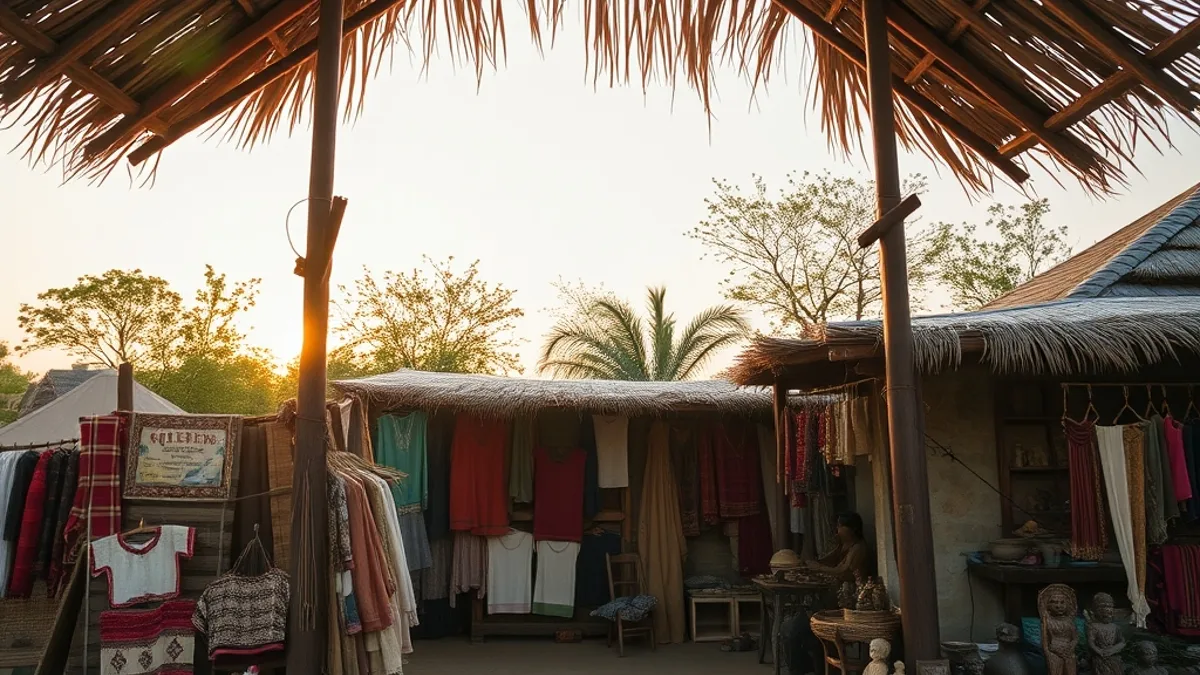
Ethical Curio Shopping: What to Avoid and Why
The most beautiful curio on a shelf can be the worst purchase you make. Some of the classic safari souvenirs—carved ivory trinkets, polished coral, uncarved hardwood bowls, animal skins and certain shells—are restricted or banned by many countries, both at export and at import. Buying one can mean confiscation at the airport, a fine, or worse, and it also fuels demand for products that often come from poached or unsustainably harvested material.
The safest habit is to ask questions before you pay. Ask the seller where the item was made, who made it, and from what material. Genuine community crafts—woven baskets from a named cooperative, beadwork stitched by a local women’s group, textiles from a documented weaving workshop—keep money in the region and give you a story to tell at home. Vague answers like “it’s local” without any detail are a signal to walk away.
Watch out for the antique trick, too. Sellers sometimes describe ivory or bone pieces as old heirlooms to get around export rules, but much of it is newly carved, and age does not make it legal. If you cannot get documentation, treat it as something you leave behind.
- Ivory in any form: Even small pendants, chess pieces or “pre-ban” carvings are restricted by many countries, and customs officers rarely accept a seller’s word that an item is old.
- Coral and certain shells: Coral is often harvested in ways that damage reefs, and some shell species are protected; polished coral jewelry and dried specimens are best avoided entirely.
- Uncarved hardwood and raw plant material: Logs, rough timber and untreated plant products can carry pests and are commonly restricted, so favor finished, documented crafts instead.
- Animal skins and teeth: Skins, claws and teeth may require permits that can take weeks to arrange, and some species are banned outright—buy only with paperwork in hand.
- Named artisan groups: Cooperatives that identify their weavers or beadworkers by name are the strongest sign your money reaches the actual makers rather than a middleman.
Customs and Export Rules to Check Before You Buy
Before you hand over cash for that striking carving or beaded piece, take a moment to think about what happens at the airport. Materials like ivory, certain animal skins and some shells are listed under CITES, the international convention that governs trade in wildlife products. Items made from these materials need export permits, and those permits can take weeks to arrange. A shop that offers one on the spot is not offering you paperwork.
Food souvenirs deserve the same caution. Coffee, honey and biltong are popular purchases, but your home country may limit what you can bring back, and agricultural items are often inspected closely. Check your customs authority’s rules before you buy, not when you land.
Keep every receipt
Receipts do more than help you budget. If a customs officer asks about a wooden figure or a textile in your bag, a printed record of where and what you bought speeds up the conversation considerably. Ask the lodge shop for a proper receipt rather than a handwritten note, and keep all of them together in your travel documents.
The simplest rule covers most situations: if a seller cannot document where an animal or plant product came from, treat it as a souvenir you leave behind. No carving is worth a fine or confiscation at the border.
Packing and Transporting Fragile Souvenirs Home
Getting a fragile souvenir home in one piece starts with how you pack it, not how carefully the airline handles your bag. Carvings and ceramics survive best when they are wrapped in soft clothing and placed in the center of your checked luggage, where layers of fabric absorb shocks from every side. Hard-sided suitcases add another layer of protection if you have one.
Choice matters as much as technique. Textiles and woven baskets pack flat and weigh little, which makes them ideal travelers. If you have fallen for a heavier piece, ask yourself whether it will survive the journey and whether your luggage allowance can absorb it.
Practical packing tips
- Ask the lodge shop for bubble wrap or a small box before you leave; many safari lodges keep packing materials on hand precisely because guests buy fragile pieces.
- Slip a copy of your receipt inside the wrapping so that if customs opens the bag, the paperwork travels with the item.
- Weigh your suitcase at the lodge before departure day, since dense stone or hardwood carvings can quietly push you over your airline’s weight limit.
- Carry your most delicate piece in hand luggage if it is small enough, where you control the handling from start to finish.
If your trip includes time at quieter properties away from the main safari circuit, such as the spacious homesteads near Nanyuki’s safari country, ask ahead whether the shop can help with packing materials. A little planning at purchase time saves a lot of disappointment at the luggage carousel.
How Gift Shop Choices Differ by Region
One of the pleasures of visiting lodge gift shops is seeing how sharply the stock reflects the landscape outside the door. In East Africa, lodges lean heavily on Maasai beadwork, with its bold color patterns and detailed collars, alongside carved hardwood figures that vary from small animals to substantial statement pieces.
Head south and the shelves change character. Southern African shops often feature handwoven baskets in striking geometric designs, printed and woven textiles, and products made from marula, including oils, creams and liqueurs. These make practical gifts because they are light, sturdy and easy to pack.
Drier climates, different crafts
Desert and mountain lodges stock goods suited to cooler nights and rugged terrain: wool textiles, ceramics and spice blends sourced from the surrounding region. A woolen throw or a set of local spices often captures a place better than a generic figurine, and both travel well.
Tropical island and coastal lodges take a different approach again. Because shells and coral raise both legal and environmental concerns, these shops favor shell-free crafts, wood carvings and locally made soaps. Wherever you are, the regional focus is usually a good sign that the shop sources from nearby artisans rather than importing generic stock, which tends to mean better quality and money that stays in the local community.
Shopping Smart at Lodge Gift Shops
Lodge gift shops solve one problem and create another. You get guaranteed authenticity, fixed prices and a purchase you can make in minutes between game drives, but that convenience typically costs 30-100% more than the same item at a local craft market. If you value your time or you are leaving the next morning, that premium can be worth paying. If you have an afternoon to visit a village market, you will often pay 40-60% less for comparable beadwork or carvings.
The bigger risk is not overpaying, though. It is buying something you cannot legally bring home. Skip restricted animal and plant products like ivory, certain skins and shells, favor crafts with documented artisan origins, and check customs and CITES rules before you spend serious money. Keep receipts for every purchase, since they make customs checks far smoother. If this guide helped you shop smarter, share it with a fellow traveler or leave a comment below.