You’ve booked the safari lodge of your dreams, and then a quiet worry creeps in: what are you actually allowed to photograph? Can you raise your camera during dinner, snap a portrait of your guide, or shoot at the waterhole after dark? One wrong move can disturb wildlife, break camp rules, or make staff feel uncomfortable, and nobody wants that on a trip they’ve saved for.
That’s exactly why lodge photography etiquette matters. In this guide, we’ll walk through the wildlife rules every safari photographer should know, from quiet-voice zones near sightings to why flash is off-limits on night drives and at most waterhole hides. We’ll cover photographing around camp, including common areas, rooms and meals, and how to handle the consent conversation with staff and guides. You’ll also find practical advice on gear and timing, how game drive schedules shape your shooting windows, and how to share your lodge photos afterward the right way. A short summary at the end pulls it all together.
Why Lodge Photography Etiquette Matters More Than You Think
Good photography behavior at a safari lodge is about far more than politeness. When you follow your guide’s instructions, you protect the animals’ natural behavior — a relaxed leopard keeps hunting, resting and moving normally, which is exactly what makes the next sighting good too. When guests push boundaries, guides can and do end sightings early. Losing your shot stings; losing the whole drive’s sighting because of one careless photographer stings far more.
It also helps to remember that a game drive is a shared experience. A single guest standing up during a predator sighting, blocking another vehicle’s line of sight, or waving a long lens across a neighbor’s frame affects everyone on that drive. Vehicles often gather at the same sighting, and guides coordinate positions with each other. One guest who ignores the system can cost several vehicles their angle — and guides talk to each other about it.
Guides remember who follows instructions
Here’s the part most photographers miss: etiquette pays you back. Guides track for hours to find animals, and they decide where vehicles settle and how long a sighting lasts. If you listen quietly, stay put when asked and let the guide work, you’ll often find yourself invited back to better positions or given a few extra minutes when a sighting is quiet. Word travels fast in a camp of a dozen guests.
Careless behavior works the same way in reverse. A photographer who pressures a guide for a closer angle rarely gets a second chance at a special sighting. On a typical drive of 2.5 to 4 hours, that trust is the difference between a decent portfolio and an empty memory card — and between being welcomed back on your next stay or quietly deprioritized at the morning briefing.
Wildlife Rules Every Safari Photographer Should Know
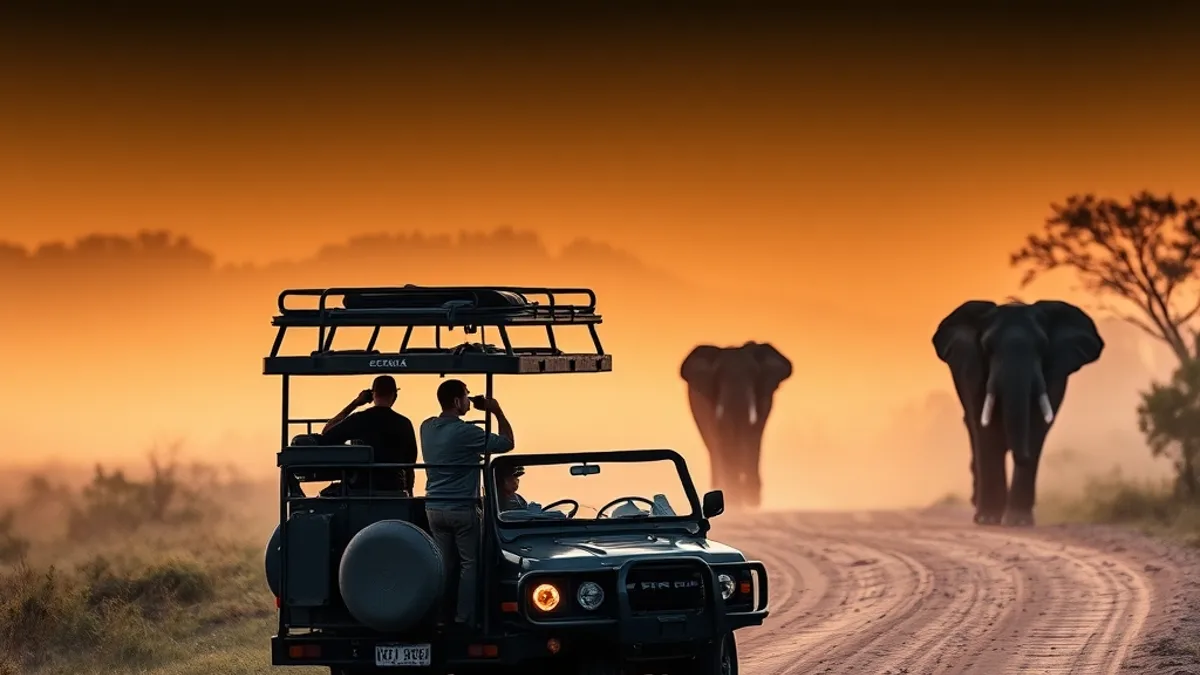
The best safari photographs come from restraint, not aggression. Most lodges enforce a quiet-voice rule within roughly 30 meters of any sighting, and that rule exists for good reason: a raised voice, a sudden stand or a swinging camera bag can flush animals off a kill or draw a predator’s attention straight toward your vehicle. Stay seated, keep your elbows inside the vehicle, and let the animal forget you are there.
It also matters what you ask of your guide. Never request that they off-road, chase or box in an animal so you can get a tighter angle. A professional will refuse, and a good sighting can end on the spot if a driver feels pressured to bend the rules. The guides who produce the best positions over a whole stay are the ones who trust their guests not to push.
Before your next trip, it helps to read up on the landscapes you will be shooting — this piece on Nanyuki homesteads near safari country with spacious calm gives a feel for the kind of low-density settings where patient photography works best.
A few specific rules deserve their own list:
- Kill flash completely on night drives and in waterhole hides. Flash photography is prohibited at night drives and most waterhole hides across southern and East African lodges, because a burst of light can startle nocturnal species such as leopards and bushbabies mid-hunt. Set your camera to silent shooting and raise ISO instead.
- Bring enough reach that the vehicle never needs to move closer. A lens in the 200-400mm range lets you fill the frame from a legal distance; anything under 100mm relies on luck and tempts you to ask for the very maneuvers that end sightings.
- Pre-set your camera before you reach the animal. Dial in exposure and focus settings while still in open ground, so you are not fumbling with dials and clicking through test frames at the critical moment.
- If a sighting is crowded, wait your turn rather than repositioning. Vehicles typically take turns at the front, and quietly rotating through gives everyone a clean angle without a single guest dominating the animal.
Photographing Around Camp: Common Areas, Rooms and Meals
Photographing a safari camp itself can be as rewarding as any game drive: the lantern-lit dining tent, the fire pit at sundown, the quirky details of your own room. But a lodge is also someone’s workplace and, for the duration of your stay, a shared home. A few simple habits keep your camera welcome everywhere.
The first rule applies to any shared space. Common areas like dining rooms, lounges and pools feel public, but they are not — other guests paid for the same privacy you did. A quick word with the manager before setting up a tripod in the dining area takes seconds and sets the right tone, especially when other guests appear in your frame.
Privacy around people is taken seriously at most properties. Never photograph another guest’s face, their children or their room without asking first, even if they are just background in a wide shot. Many lodges treat this as a serious breach, not a small faux pas.
Beyond people, some zones are simply off limits. Security arrangements, staff quarters, kitchens and other back-of-house areas are restricted at nearly every property, and photographing them can raise real concerns. If you are unsure whether an area is guest space or staff space, ask before you raise the camera.
Practical habits matter too:
- Keep your camera bag off dining tables and out of walkways during meals — camps are informal, but bags on the floor or a spare chair beat bags next to the soup.
- Charge batteries and swap cards in your room, not at the shared dinner table where lenses and cables sprawl into shared space.
- If you want a shot of the dining setup or lounge décor before guests arrive, ask the manager when the room is empty; most are happy to give you ten quiet minutes.
Staff, Guides and the Consent Conversation
The people who make a safari camp run are not part of the scenery. Guides, trackers, housekeepers, chefs and waiters are colleagues doing a job, and the same courtesy you would expect in your own workplace applies here. The rule is simple: always ask before you raise your camera. Some staff members are genuinely proud of their work and happy to pose; others decline for personal, cultural or religious reasons, and that answer is final. A polite no is not an invitation to negotiate.
One of the most appreciated things you can do is offer to send the photos afterward. A portrait of a waiter in the dining tent or a shot of your tracker scanning the horizon means far more when it actually arrives, and it builds goodwill in a way that an extra tip in the moment often does not. Ask your guide or the camp manager how to share images — many camps have an email address or a manager who forwards files to staff.
There are also moments that are simply off limits. Never photograph staff performing personal or routine tasks such as laundry, housekeeping or maintenance without an explicit yes. Someone folding linens or repairing a fence has not agreed to be content.
- Ask through the right channel: if you want a photo of someone you have barely interacted with, go through the camp manager rather than waving your camera across the room — it removes any pressure to say yes to a guest.
- Watch body language, not just words: a hesitant pause or an awkward smile often means no even when someone agrees out of politeness toward a paying guest.
- Let the guide drive the sighting: during game drives, don’t shout instructions or demand position changes mid-tracking; guides read wind, animal behaviour and other vehicles, and second-guessing them mid-approach can end the sighting for everyone.
- Keep requests for the right moments: if you want your guide to reposition the vehicle for light or angle, raise it calmly during a lull, not while a predator is being tracked.
Gear, Timing and Practical Photo Logistics at Camp
Good safari photography is mostly logistics, and it starts the moment you check in. Book your game drives at reception and confirm the seat rotation policy at the same time. In most camps the front row seats rotate between drives so every guest gets clean, unobstructed angles at some point — knowing the schedule helps you plan which lens to carry and where to sit with your gear.
Timing matters more than equipment. The best light windows are the first and last 90 minutes of each drive, which match the standard departures around 5:30-6:00 am and 3:30-4:30 pm. That soft, low-angle light is when the classic warm safari images happen, so have your camera out of the bag and settings ready before the vehicle rolls. A typical drive runs 2.5 to 4 hours, which gives you plenty of shooting time if you are organized.
Dust is the quiet enemy of camera gear. Dry-season tracks, especially between June and October, are notoriously dusty, and fine red powder finds its way into every crevice of an unprotected body and lens.
- Pack a scarf or buff: a simple cotton scarf wrapped around your camera and lens between sightings costs nothing and keeps dust out of the zoom mechanism.
- Use a bag liner or dry bag: a padded liner inside a soft duffel protects gear on bumpy transfers between the airstrip and camp, where hard cases are impractical.
- Confirm the drone policy in writing before you travel: drones are banned at the vast majority of private lodges without written management permission, and arriving with one in your carry-on without clearance can cause problems at the gate.
- Charge batteries before each drive: many tents run on limited solar power or generators, so charging opportunities can be restricted to specific hours at camp.
Sharing Your Lodge Photos the Right Way
What you do with your photos after the trip matters as much as how you took them. The biggest issue is location data. Geo-tagging sightings of rhino, cheetah or any den site is discouraged by most lodges because poachers actively monitor location data on social platforms. An innocent post can, in theory, tell someone exactly where a vulnerable animal was seen and when. Turn off location tagging for safari images or strip the metadata before posting.
Tagging the lodge itself also needs a little thought. If your post shows staff faces or reveals the camp layout — tent positions, fences, security details — ask the lodge before tagging its name. Many properties prefer that back-of-house details and identifiable staff portraits stay off public feeds, and a quick message to your contact at camp resolves it easily.
Finally, give credit where the real work happened. That leopard in the tree or the wild dog pack on the move did not find you by luck — your guide and tracker did the tracking, read the signs and positioned the vehicle.
- Name your guide and tracker in the caption: a credit line costs you nothing and can genuinely help their professional reputation with future guests who book based on reviews and posts.
- Consider withholding exact sighting details publicly: describing a sighting as “a rhino in the park” rather than naming the specific waterhole or track keeps sensitive animals safer.
- Check lodge social media policies at checkout: some camps have simple written guidelines on what they ask guests not to post, and it takes one question to find out.
- Send the staff portraits you promised: following through on sharing images with the people you photographed closes the loop respectfully and keeps the door open for your return.
The Short Version
So what’s the short answer to “what can I photograph at a safari lodge?” Respect wildlife distance, keep flash off at night drives and waterhole hides, and never pressure your guide for a better angle — guides can end a sighting over it. Stay seated, keep your voice low near animals, and let your 200-400mm lens do the work instead of the vehicle.
With people, it’s just as simple: get consent before photographing staff or fellow guests, and skip back-of-house areas entirely. Plan your gear and drive times around the golden hours at the start and end of each drive, and think carefully before geo-tagging sensitive sightings like rhino or den sites. If you’ve got a lodge photography story or a question we didn’t cover, leave a comment or share this article with your travel crew.