Booking your first safari lodge stay often comes with a wave of small questions, and one of the biggest is what kind of safari lodge vehicles you’ll actually be riding in. Will it be a fully open 4×4 with nothing between you and the bush, or a closed vehicle with sliding windows and a pop-up roof? And once you’re on board, how does the seating work when six to ten guests share the same vehicle for days on end?
This guide walks through both vehicle types and where each is standard, from private game reserves to national parks. We’ll cover seat rotation and etiquette on game drives, how to choose between open and closed vehicles based on season and travel party, what private vehicles cost, and what a typical drive day looks like from the early morning coffee to the afternoon departure. By the end, you’ll know exactly what to confirm with your lodge before you pack.
Open Safari Lodge Vehicles: What They Are and Where You’ll Find Them
Open safari vehicles are exactly what the name suggests: 4x4s with no doors and no windows, usually shaded by a canvas canopy roof and fitted with rows of raised, individual seats. That design gives every passenger a clear 360-degree view over the vehicle’s sides, which is why photographers and wildlife lovers tend to favor them. You hear the bush, too — birdsong, distant lions, the crunch of elephants moving through brush — with nothing filtering the sound.
You’ll find open vehicles as the standard setup in private concessions and private game reserves, where lodges hold the rights to drive off-road. That matters more than it might sound: following a leopard off the track, or positioning the vehicle with the sun behind you, is often what separates a good sighting from a great one.
The trade-offs of going open
The same openness that makes these vehicles brilliant for photography also exposes you to everything the environment throws at you. Dust kicked up on rough tracks, wind, strong midday sun and cold morning air all reach you directly. Early drives can start below 10°C, especially in dry season, before warming quickly by mid-morning — so pack layers you can peel off as the day heats up. A light windproof jacket, a buff for dust and sunscreen are the essentials most first-timers underpack.
Closed 4x4s and Pop-Up Roofs: When Lodges Use Them
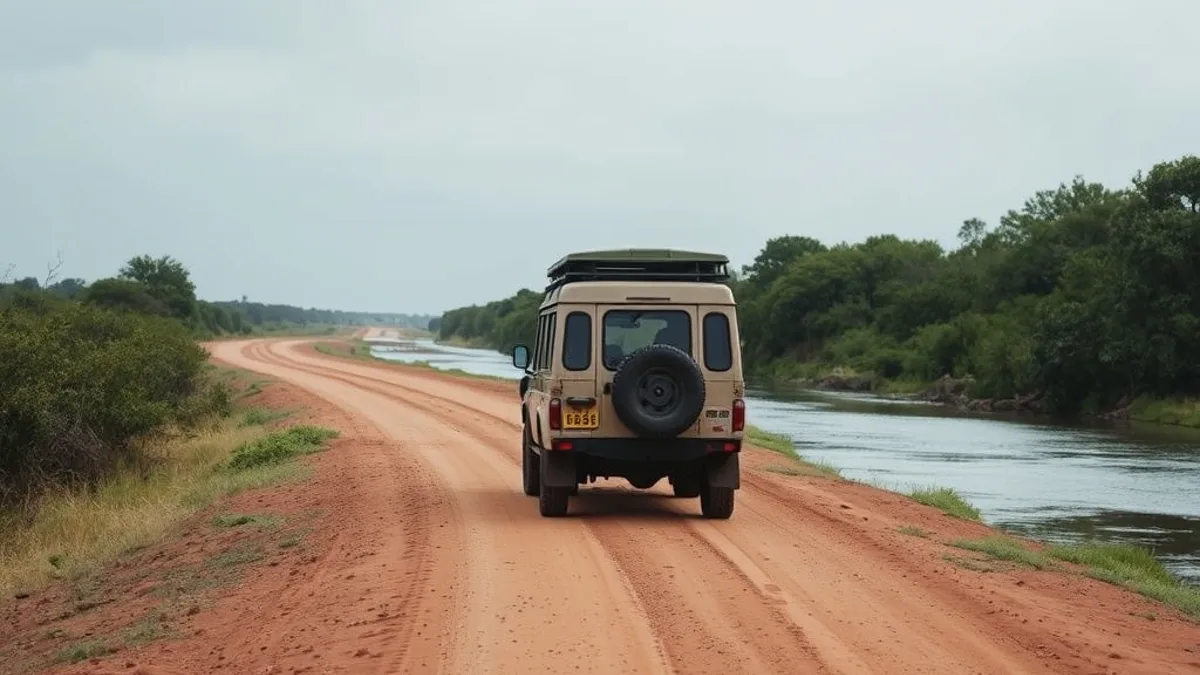
Inside national parks, the rules change. Vehicles must stay on designated roads, which is why closed 4x4s with sliding windows and pop-up or hatch roofs are the norm there. The raised roof still lets you stand and scan the surroundings, while the body of the vehicle keeps you enclosed at window level.
That enclosure is a genuine advantage in the wrong weather. Closed vehicles shield you from rain, dust and wind, which makes them common during the green season — roughly November to March across much of Southern Africa — when afternoon storms and muddy tracks are part of the experience. If your trip falls in those months, it’s worth asking your lodge directly what vehicle they run.
Photography from a closed vehicle
The main compromise is photography. With no open sides, you shoot through open windows or from the raised roof, which means your window seat matters far more than it does in an open vehicle. If you’re serious about images, request a window row when you book or ask the guide about seat arrangements on day one.
It’s also worth knowing that some lodges mix both: closed vehicles for airport transfers and open ones for game drives within their own concession. If you’re pairing a bush stay with a coastal escape — say, a few nights at one of the bluewater resorts in South Africa for safari elegance and coastal release — confirm the vehicle type for each leg so you know what to pack.
Seat Rules on Game Drives: Rotation, Weight and Etiquette
Seating on a shared game drive is one of those details nobody explains until you’re already on board. The good news: most lodges rotate seat positions between drives, so no guest spends the whole trip stuck in the back. Rotation typically happens after every drive or every day, and a good guide will announce it before you climb in. The front row beside the driver — or the tracker seat on vehicles that have one — offers the clearest views and the least dust, so ask about the rotation policy on day one rather than quietly hoping for the best. If you’re traveling with a photographer in the group, mention it at check-in; many camps will try to balance the schedule so keen shooters get their fair share of prime seats.
Back rows aren’t automatically worse, though. On some vehicles, the bucket seats in the rear rows sit higher than the front seats, giving you a good view over everyone’s heads. On others, you’re looking past shoulders and camera lenses, which is exactly why rotation exists. Remember, too, that guides radio each other about fresh sightings, so even a back-row seat can deliver a front-row experience when your vehicle arrives first at a kill or a leopard in a tree. And since a typical drive carries only 6-10 guests in three or four rows, nobody is ever far from the action.
- Stay seated at all times. Standing up or shifting seats mid-drive can block another guest’s view and, near big game, draws a guide’s instant correction.
- Keep elbows and camera gear inside the vehicle. Long lenses swinging over the edge are a hazard on narrow tracks and can startle animals that come close to the sides.
- Speak quietly near predators. Loud conversation at a lion or leopard sighting changes the animals’ behavior and can end the sighting early for every vehicle queued behind yours.
- Follow the guide’s movement instructions without argument. If your guide asks you to slide left or duck down, it’s usually so the whole vehicle gets a clear line of sight — not just the front row.
Choosing Between Open and Closed Vehicles for Your Trip
The simplest rule of thumb: match the vehicle to the season and the park rules. If you are traveling in the dry season, when grass is short and animals gather at water sources, an open 4×4 is hard to beat. In East Africa that typically means June through October, and in Southern Africa roughly May through September. Dust is manageable and visibility across the bush is at its best, so the open sides pay off every single drive.
Families need to think differently. Many lodges set a minimum age for open-vehicle drives, often somewhere between 6 and 12 years, because little ones must sit still and stay quiet for three to four hours. If your children are younger, ask about closed vehicles, covered rows, or family-only drives before you book rather than at the gate.
Green-season travelers face the opposite question. Rains can turn tracks muddy and sightings sparse, and some lodges quietly switch to closed 4x4s or add canvas panels when the weather turns. Confirm the vehicle type in writing when you reserve, not after you arrive. Photographers have one more box to tick: ask the lodge to guarantee a window or front-row seat, since a great vehicle with a bad seat still means shooting through other guests’ hats.
- Dry-season bonus: Short grass and thin foliage mean animals are visible from farther away, so even back-row seats get decent sightings in open vehicles.
- Child-age workarounds: Some camps offer a closed “family vehicle” with a private guide, letting you bring younger children without breaking the lodge’s open-drive age rule.
- Green-season trade-off: Rainy months bring fewer vehicles at sightings and lush scenery, so a closed vehicle’s roof hatch can still deliver good photography with far less mud.
- Photographer’s checklist: Ask about lens room (will a beanbag fit?), whether the vehicle has a camera rest, and how many photographers share each row.
Private Vehicles, Group Sizes and Extra Costs
Most shared safari vehicles carry 6-10 guests across three or four rows, and who you share with shapes the whole experience. Smaller camps with 6-8 rooms tend to keep drives intimate, often filling a single vehicle with guests from the same lodge. Larger properties may combine bookings, so you could share a row with strangers for the length of your stay.
What a private vehicle actually buys you
Hiring a private vehicle and guide typically costs USD 250-450 per day on top of your room rate. That sounds steep until you weigh what you get: guaranteed seats in the best rows, a guide who tunes each drive to your interests, and the freedom to linger at a leopard sighting without six other guests sighing behind you. It also unlocks flexible departure times, since standard drives leave camp around 05:30-06:30 with the whole vehicle, not on your personal schedule.
Private vehicles suit three groups in particular: families who want to set their own pace, keen photographers who need to control angle and timing, and anyone who simply dislikes sharing. If you fall into one of these camps, the daily cost often feels like cheap insurance for the trip you actually imagined.
When and how to book
Availability is the catch. Private vehicles are limited at most lodges, so request one at the same time as your room. For peak-season dates, ideally book 6-12 months ahead; waiting until check-in usually means hearing that the vehicle is already taken. Confirm the daily rate, whether it includes the same guide throughout, and whether children are welcome on board.
What a Typical Game Drive Day Looks Like
A lodge day revolves around two drives, and both start earlier than you expect. Morning drives typically depart between 05:30 and 06:30, but the ritual begins before that with coffee and rusks around the fire while the sky lightens. You will be back in camp by roughly 09:30-10:00, in time for a full brunch that most guests treat as lunch and breakfast combined.
The rhythm of a single drive
Each drive lasts about 3-4 hours and covers roughly 20-40 km, though the distance depends entirely on what you find. Twenty kilometers spent following a wild dog pack feels very different from forty kilometers of quiet tracks. Guides adjust constantly, and no two drives follow the same route.
Afternoon drives depart around 15:30-16:30, timed to catch animals stirring as the heat breaks. In private reserves where night drives are allowed, the outing often continues after sunset with a spotlight, giving you a chance at leopards, hyenas and smaller nocturnal creatures that hide during the day.
Why radio chatter changes the seat math
Guides radio each other about good sightings, which is why a fresh finding feels chaotic in the best way: several vehicles converge, and everyone queues for a turn at the front. In those moments your seat position matters far less, because vehicles take turns moving up. The reverse is also true: a quiet, exclusive sighting you discover yourselves rewards whoever sits on the correct side. So treat seat rotation as your long-game strategy and let the radio do the rest. Bring a light jacket for the morning fire and a camera ready from the moment wheels roll, since the best sightings often happen within the first kilometer of camp.
Wrapping Up Your Lodge Vehicle Choice
So, open or closed? If you are staying in a private reserve during the dry season, an open 4×4 with no doors or windows is what you will most likely ride in, and it is hard to beat for photography and sound. Inside national parks, or during green-season rains, expect a closed vehicle with a pop-up roof instead. Matching the vehicle type to your season and travel party makes every game drive noticeably more comfortable.
On seating, rotation between drives is standard at most lodges, so confirm the policy on arrival rather than stressing about your first-row assignment. If you want certainty, a private vehicle at USD 250-450 per day removes seating worries entirely, especially for families and photographers. Once you know what vehicle your lodge uses and how seats rotate, the only thing left to do is enjoy the drive. If this helped you plan your first safari, leave a comment or share the article with a fellow traveler.