You’ve booked a lodge that promises elephants at the waterhole from your veranda, but once you arrive, questions creep in. What exactly is a viewing hide, and how close will it put you to the animals? When should you sit there, and will your neighbors’ chatter scare everything away? Many travelers arrive with high expectations and no practical idea of how these setups actually work.
This guide walks you through lodge viewing hides and waterholes from the ground up: what the structures look like, the times of day wildlife is most active, why the dry season concentrates the action, and the etiquette that keeps animals coming back. We’ll also cover how to choose a lodge with the best waterhole setup, how far ahead to book a waterhole-facing room, and how to plan your stay so the hide becomes a highlight rather than an afterthought. By the end, you’ll know exactly what to expect on site.
What Lodge Viewing Hides Actually Look Like
The first thing to know is that a viewing hide is designed to make you invisible. Most are sunken into the ground or screened with thatch, wood or canvas, and they sit roughly 20-100 meters from the water’s edge. That distance is deliberate: close enough for strong binocular and camera views, far enough that animals don’t sense human presence. Many hides have one-way viewing slots you look through, while others feature a wide open front, often with a low wall that conceals your silhouette against the sky.
Most lodges operate a communal hide that seats 6-12 guests on simple benches. Expect the basics to be thoughtfully provided: cushioned seating, reference field guides for identifying what you’re watching, and at some properties a coffee station so you can settle in for a long morning session. The atmosphere is usually hushed and unhurried, closer to a bird blind than a lounge.
Private options at higher-end lodges
If you’d rather not share, some upscale lodges take the concept further. A few offer dedicated private hide suites you can book for a solo or couple’s session, while others attach ground-level blinds directly to individual rooms, letting you slide from bed to viewing position without crossing open ground. Ask about these options when comparing lodges, because they can transform a waterhole stay.
When Wildlife Visits the Waterhole
Waterholes run on a rhythm, and knowing it saves you hours of empty bench time. The busiest windows are early morning from 6:00 to 9:00 and late afternoon from roughly 15:30 to 18:30, when antelope, zebra, giraffe and predators come down to drink before the heat or after it fades. Arrive a little before the window opens and you’ll catch the first arrivals rather than startling them with a late entrance.
What the floodlights reveal
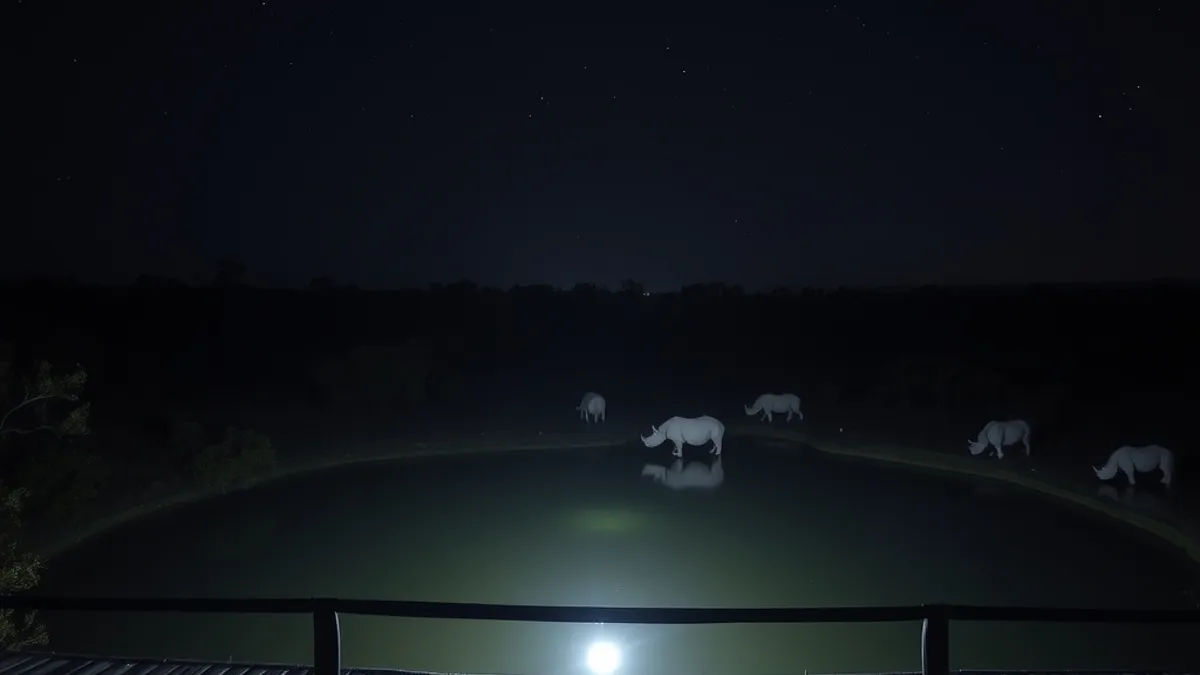
If your lodge has a floodlit waterhole, don’t skip the evening shift. Between 19:00 and 22:00, the lights typically draw nocturnal species that stay out of sight during the day: rhino, leopard and hyena are the headliners guests hope for. The viewing works differently at night, since you watch from darkness into light, so keep light discipline and let your eyes adjust.
Midday is usually the quiet stretch. The waterhole may hold nothing more than elephant herds, which drink whenever they please, plus a steady parade of birds around the edges. That’s your cue to structure the day around the peaks: plan game drives for the mid-morning and midday hours, then return to the hide when the waterhole traffic picks up again in the late afternoon. A short chat with your guide the night before helps you time both.
Seasons: Why the Dry Months Fill the Waterhole
Timing your trip matters as much as timing your day. Wildlife gathers at water based on rainfall, and the pattern in southern Africa is reliable: from June through October, seasonal puddles and streams dry up, pushing game toward permanent water sources. A lodge waterhole becomes one of the few reliable drinks on the landscape, which is exactly why sightings multiply during these months.
East Africa’s version of the same effect
East Africa follows a similar rhythm on a slightly shifted calendar. The dry season from June to September concentrates animals around remaining water, and a well-placed lodge waterhole can deliver comparable density to its southern African counterparts. If your safari dates fall in this window, the hide becomes a serious complement to game drives rather than a backup activity.
The green season, roughly November to March, tells a different story. Rain falls across the landscape, animals disperse to fresh grazing and temporary water, and the waterhole sees thinner action. The trade-offs aren’t all bad: you’ll share the lodge with fewer guests, rates typically drop, and the scenery turns lush and photogenic. Birding often improves too. Just go in knowing that a waterhole-focused itinerary rewards the dry months, and treat green-season hide time as a pleasant bonus rather than the main event.
Hide Etiquette Every Guest Should Follow
A viewing hide only works if the animals forget you are there. Even with a comfortable buffer between the structure and the water, sound and movement carry easily across open ground. A scraped chair, a whispered conversation or a sudden stand-up gesture can send a herd of kudu or a shy bushbuck bolting before you ever raise your camera.
The good news is that hide etiquette is simple. Think of it as being a guest in the animals’ living room rather than the other way around. Guides will usually brief you before a session, but a few rules apply at virtually every lodge, whether you are in a communal hide or a private blind attached to your room.
- Never feed anything. Tossing food toward the water changes animal behavior, draws species that would not normally visit, and can create dangerous associations with humans.
- Keep hands and gear inside the structure. Dangling arms over a sunken hide’s edge can look like a predator’s movement to animals below, and it puts your fingers closer to curious baboons or hyenas than you want them.
- Skip the flash after dark. At floodlit waterholes, flash photography startles nocturnal animals and ruins your neighbors’ night vision. Use a camera that handles low light well instead.
- Respect session times. Guided hide sessions run on a schedule so that one group’s late arrival does not spoil the quiet for everyone already seated.
- Silence your phone completely. Even a vibrating phone against a wooden bench is audible at close range, and a glowing screen can be visible from the water at night.
Follow these basics and you will quickly notice the difference. Animals linger longer, birds return to the edge, and the hide becomes the calm, almost invisible vantage point it was designed to be.
Choosing a Lodge with the Best Waterhole Setup
Not all waterhole setups are equal, and the difference between a great setup and a mediocre one often comes down to a few details you can check before booking. Start by asking what happens after dark. A floodlit waterhole is one of the most memorable experiences a lodge can offer, because nocturnal species such as rhino, leopard and hyena typically visit between 19:00 and 22:00, hours when you would otherwise be sitting in the bar. If night viewing matters to you, make floodlighting a non-negotiable in your search.
Next, look closely at the room categories. “Waterhole view” can mean anything from a front-row seat over the pan to a sliver of water visible between two trees, so ask specifically whether your room category faces the water directly. Be prepared for the price difference: waterhole-view rooms typically cost 20-40% more than standard rooms at the same lodge. Many travelers find the premium worthwhile for a three-night stay, but it depends on how much time you plan to spend in your room versus the communal hide.
- Ask about distance and screening. A hide that is set back from the water and screened or sunken for concealment will get you far closer to shy species than an open deck.
- Check the lighting type. Red or low-intensity floodlights disturb nocturnal animals less than bright white lights, so it is fair to ask what kind of lighting the lodge uses.
- Look for both communal and private options. Lodges with a shared hide plus private viewing decks let you rotate: join the social buzz of the communal hide one session, then enjoy the quiet of your own deck the next.
- Confirm seating and comfort. Most hides seat 6-12 guests, so if you are traveling in a group, ask whether you can book a session where your party fills a meaningful share of the space.
- Consider private plunge-pool decks. At some lodges, a plunge pool on your deck doubles as a viewing spot, letting you watch the waterhole while cooling off between game drives.
A quick email exchange with the lodge reservations team will answer most of these questions. The lodges with genuinely good setups tend to describe their hides, lighting and room orientations in detail without hesitation.
Booking and Planning Around the Hide Experience
A waterhole stay rewards a little planning. Because the best sightings cluster around predictable hours and seasons, how you book matters almost as much as where you book. The good news is that the preparation is simple: a handful of decisions made before you pay any deposit will shape every session you spend at the water’s edge. Work through the steps below in order, and you will arrive with the right room, the right length of stay and a realistic idea of what each day can deliver.
- Choose your dates around the dry season. Dry months concentrate game at permanent water, which is exactly what you want from a waterhole-focused trip. If your dates are flexible, let the season lead the decision rather than the other way around.
- Book waterhole-facing suites well in advance. For peak dry season dates, reserve these rooms 6-12 months ahead. They are the first category to sell out, and the premium over standard rooms only buys you the view if the room is actually available.
- Plan a minimum 3-night stay. Wildlife is never guaranteed, and a single evening can be quiet. Three nights gives you multiple morning and evening sessions, plus at least one or two floodlit nights, so sightings get a fair chance.
- Balance hide time with game drives. Treat the hide as one part of your day, not the whole itinerary. Drives cover ground and find animals away from water, while hide sessions catch the traffic that comes to drink.
- Confirm the details before arrival. Ask the lodge about guided hide session times, whether the floodlights run nightly, and any etiquette briefings, so you can plan each day around the waterhole peaks.
Once the booking is locked in, the hardest part is done. All that remains is to pack a camera that handles low light, bring patience in generous supply, and let the waterhole set the rhythm of your days.
Wrapping Up Your Waterhole Stay
A viewing hide is simply a quiet, screened seat a short distance from the water, and that is exactly its charm. Wildlife tends to show up in predictable windows: early morning, late afternoon and, at floodlit waterholes, after dark. Visit during the dry season, when animals gather at permanent water, and your odds improve even more.
The rest comes down to you. Stay at least three nights so you get several sessions, book a room that faces the water if you can, and follow basic etiquette: low voices, slow movements and no flash. Do that, and the hide becomes the calmest, most memorable seat in the lodge. Have you had a standout waterhole moment? Share it in the comments or pass this article along to a fellow traveler.