Many travelers book remote lodges hoping for unforgettable night skies but arrive without the gear, timing or local guidance to make the most of them. They pick a full-moon week, pack a phone flashlight that ruins their night vision, and never learn which constellations hang over their deck. The result is a faint smattering of stars instead of the Milky Way experience they imagined.
Stargazing at remote lodges rewards a little planning, and this article walks you through everything that matters. We explain why lodges far from towns offer dramatically darker skies than cities, how to time your stay around the moon and the seasons, and what equipment is genuinely worth packing. You will also learn how to book a lodge with real stargazing credentials, what to expect from guided astronomy sessions, how to stay comfortable and courteous after dark, and how to wrap up a trip that delivers clear, memorable skies night after night.
Why Remote Lodges Offer the Best Dark Skies
Lodges far from towns sit in areas with little light pollution, and the difference is striking. A genuinely dark site often reveals 2,000-3,000 stars to the naked eye, while a city sky shows only a few hundred. On a moonless night at a remote lodge, the Milky Way is not a faint smudge but a glowing band you can read a star chart by.
Why altitude and landscape matter
Darkness is only half the equation. High-altitude lodges sit above much of the atmosphere’s haze, and desert or savanna locations typically have dry, stable air that keeps stars sharp rather than shimmering. Together, darkness and clarity can make even familiar constellations look dramatically brighter than at home.
Many lodges also work actively to protect their skies. Outdoor lighting is kept low and shielded, directing light down onto paths rather than up into the sky. Some properties switch off deck lights after dinner entirely. That deliberate design means the darkness you travel for is preserved right outside your room, not erased by a floodlit parking lot.
Timing Your Stay Around the Moon and Seasons
The single biggest factor you control is the moon. Plan your stay within 3-4 days of the new moon for the darkest skies, when faint stars, the Milky Way and dim deep-sky objects are at their best. A full moon washes out all but the brightest stars, so even a superb dark-sky location will underwhelm under a bright lunar glow.
Choosing the right season
Season matters too, especially in the southern hemisphere. In lodge regions such as southern Africa, the dry May-September season typically brings clear nights with less cloud and haze. If your trip combines safari and coast, you can pair a dry-season bush stay with a beach break at bluewater resorts in South Africa for safari elegance and coastal release, keeping the whole itinerary in the clearest months.
Finally, build in a buffer. Cloud cover can erase a single planned viewing night, so allow at least two nights at one lodge. Two or three nights means one cloudy evening does not sink the whole plan, and it gives you time for your eyes and expectations to adjust properly.
Equipment Worth Packing for Stargazing at Remote Lodges
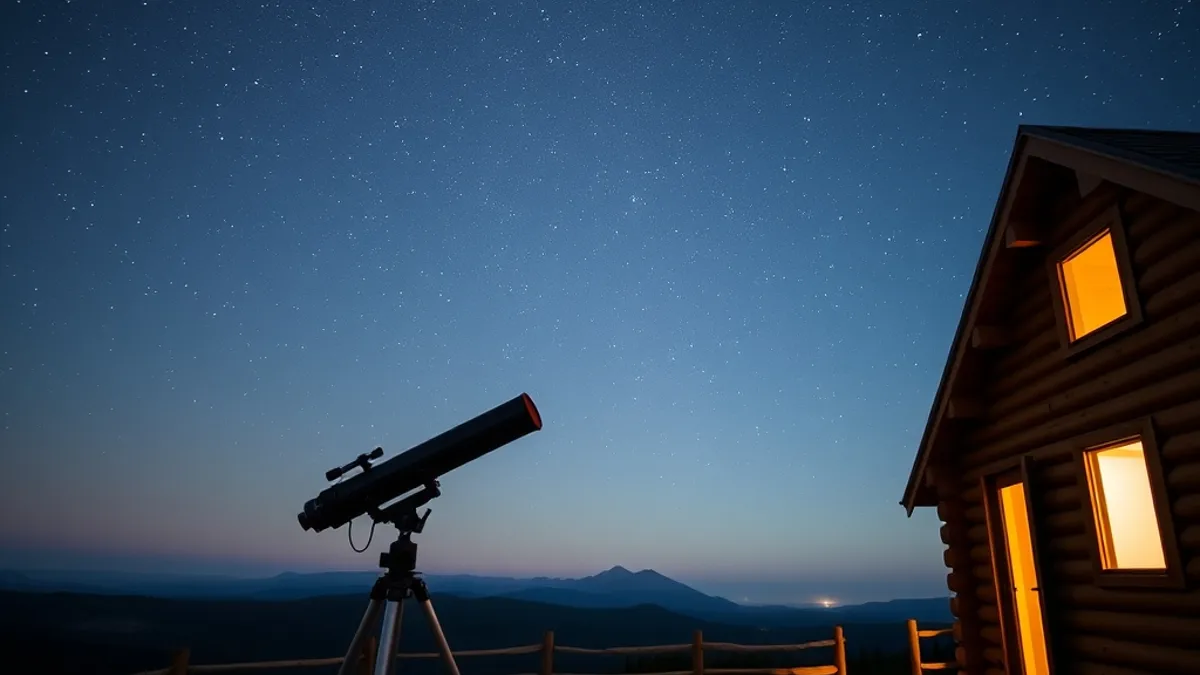
You do not need expensive gear to enjoy dark skies. For most travelers, a pair of 10×50 binoculars costing roughly $50-200 is the best value: they are light, easy to hold, mountable on a standard tripod, and ideal for sweeping the Milky Way and picking out star clusters. Binoculars also forgive shaky hands and require no setup time, which makes them far more practical on a lodge deck after dinner. A telescope shows more detail, but entry-level models run $200-500 and only suit dedicated astronomy trips where you are willing to carry and assemble equipment. Many lodges provide their own telescopes and guides, so ask before buying anything larger than binoculars — you may find the lodge gear covers everything you wanted to see.
Alongside optics, a few small items make a big difference to comfort and enjoyment:
- A red-light headlamp preserves your night vision; white light resets your eyes’ dark adaptation and takes many minutes to recover, so a headlamp with a true red mode is essential rather than optional.
- A star chart or a stargazing app used in night mode helps you identify constellations; keep the screen brightness at its lowest and hold it close so the glow does not wash out the sky around you.
- Warm layers, including a beanie and a windproof jacket, matter even in warm climates, since desert and savanna nights turn cold quickly once the sun drops and you are standing still for an hour or more.
It also pays to test your gear at home before your trip. Practice mounting your binoculars, finding objects with your chart and switching your headlamp to red mode in the dark, so you spend your lodge nights looking up instead of fumbling with straps and settings.
Booking a Lodge with Real Stargazing Credentials
Not every lodge that mentions “stargazing” in its brochure actually delivers a serious night-sky experience. The ones that do usually advertise it openly: dedicated star decks built away from guest rooms, on-site observatories, resident telescopes, and outdoor lighting that is low, warm and shielded so it points down at paths rather than up at the sky. If a lodge’s website shows photos of its telescope or its star deck, that is a good sign. If astronomy only appears as a passing mention, treat it as a bonus rather than a reason to book.
Timing matters as much as location. The most sought-after dark-sky lodges sit in regions with short dry seasons, so demand concentrates into a few months. For peak-season dates, reserve 3-6 months ahead, and book earlier if you want a specific room type. Rooms with private sky-facing decks or beds positioned under a window with a clear horizon view sell first, often to returning guests who know exactly what they are paying for.
Ask about the astronomy program before you pay
One detail catches many travelers by surprise: astronomy sessions are not always included in the room rate. Some lodges run them as complimentary nightly activities, while others charge per person or require a minimum number of guests. Before booking, confirm whether guided sessions are included, whether the telescope is available for independent use, and whether sessions run nightly or only on certain nights. A quick email to the lodge saves an awkward conversation at check-in and helps you compare true costs between properties.
Making the Most of Guided Astronomy Sessions
A guided astronomy session is one of the best-value extras a remote lodge can offer. These sessions typically cost $50-150 per person and pair a decent telescope with a guide who actually knows the sky above that specific patch of the planet. In southern-hemisphere lodge regions, that often means constellations most Northern Hemisphere travelers have never seen properly: the Southern Cross, the Magellanic Clouds, and seasonal objects that simply are not visible from home. A good guide turns a fuzzy patch of light into a story.
Arrive early to the session, even if it feels awkward to stand around in the dark. Human eyes need 20-30 minutes to fully adapt to darkness, and that adaptation resets every time you look at a bright phone screen. Leave your phone in your room or pocket, use the lodge’s red-light torches if you need to walk over, and resist the urge to check messages. Guests who scroll on their phones ten minutes before the session spend the first half hour seeing far less than everyone else.
Questions worth asking your guide
Guides are usually happy to tailor a session if you tell them your dates and interests. Ask whether the core of the Milky Way is well placed during your stay, since its position shifts through the year and can be the difference between a good sky and a spectacular one. Ask which planets are visible and when, because a bright planet through a telescope is often the highlight for first-time viewers. And ask what the guide considers the single best object in the sky that week — local knowledge beats any star chart.
Night-Sky Etiquette and Comfort at the Lodge
Good stargazing etiquette at a lodge mostly comes down to one thing: protecting everyone’s night vision, including your own. A single white flashlight beam can undo the long dark-adaptation process for a whole star deck, so once the sun goes down, red-light torches only. If you have not packed one, ask at reception; many lodges keep a few on hand for guests. The same rule applies on night drives, where guides use filtered spotlights to find animals. Never shine a light at other guests, at wildlife, or across the bush — it spoils the viewing for everyone and can startle or disturb animals.
Cold is the other thing travelers consistently underestimate. Desert and savanna temperatures drop sharply after sunset, and the difference between the daytime forecast and midnight can be dramatic. Dress warmer than the day suggests: more layers than you think you need, plus a hat and something warm on your hands, because you will be standing still for long stretches rather than moving around.
- Stay within the areas your guide designates for night viewing, typically the lodge perimeter or the star deck, and ask where it is safe to walk after dark rather than assuming.
- Keep your voice low near viewing areas and on night drives, since loud conversation carries far in quiet bush settings and can mask animal sounds your guide is listening for.
- Bring a sealed snack or hot drink in a thermos if the lodge allows it, so you can stay out longer without trekking back to the main area and putting your eyes through the full adaptation process again.
- Close your tent or room curtains before dinner if you step out with a light, so your own doorway does not glow and spill light toward the star deck later.
Wrapping Up Your Dark-Sky Lodge Trip
Unforgettable night skies rarely happen by accident. The travelers who come home raving about the Milky Way usually planned it that way: timing their dates around the darkest lunar phase, aiming for the dry May-September season in southern-hemisphere lodge regions, and choosing a lodge with genuine dark-sky facilities like shielded lighting and a proper star deck. Get those three pieces lined up and the sky does the rest.
You also do not need to spend heavily to see it well. A pair of 10×50 binoculars or a single booked guided session covers most travelers’ needs, and two or more nights at one lodge gives you the best odds of at least one clear, unforgettable sky. If this helped you plan your own dark-sky trip, leave a comment or share the article with a fellow traveler.