Every safari lodge brochure shows the same dreamy scene: a deck, a golden horizon, and an elephant strolling past. What the photos rarely explain is how much the view from your room changes what you actually see, how much noise you hear at night, and what you pay. Lodge views fall into three broad categories — waterhole, river, and savanna — and the difference between them can be bigger than the difference between two entirely separate lodges.
This guide breaks down what each view type really delivers, from dawn elephant visits at the waterhole to hippo grunts along a river bend, plus the trade-offs nobody mentions until check-in. We’ll also cover how to match your view to the season, how far in advance to book, and what each category typically costs. By the end, you’ll know which room to ask for before you hand over your deposit.
Why Lodge Views Matter More Than You Think
Most travelers plan their safari around game drives and treat the room as a place to sleep. That’s a mistake, because your room’s view determines how much wildlife you see during the hours you’re actually at the lodge — especially the long midday stretch between the morning and afternoon drives, when animals still move and you’re stuck on your deck with a coffee anyway.
View category is also usually the single biggest price differentiator within one lodge. It often matters more than room size, decor, or even a private plunge pool. Two rooms with identical floor plans can sit at very different price points purely because one faces a waterhole and the other faces a service road.
One lodge, three experiences
The same property can feel like three different safaris depending on your room’s orientation. A waterhole-facing room gives you a steady stream of animal traffic. A river-facing room trades big herds for hippos, birdsong, and moving water. A savanna-facing room gives you distance, sky, and silence. Before you book, find out exactly which way your room faces — and what sits between your deck and the view.
Waterhole Rooms: Front-Row Seats to the Watering Ritual
Waterhole rooms overlook a man-made or natural pan that animals visit with remarkable predictability. Because water is a fixed destination, you don’t need luck — you need patience. Elephants, impala, kudu, warthogs, and predators all follow the same routine, and from your deck you watch it repeat day after day without a guide or a vehicle.
This view type is at its best during the dry season from June through October, when natural water sources shrink and animals queue at whatever remains. A waterhole that sees modest traffic in the wet months can become a busy crossroads in September. Expect the first wave of activity early: dawn visits typically run from around 5:30 to 7:00 am, with a second rush at dusk. Some lodges also flood their waterholes with lights at night, so you can watch nocturnal visitors from bed.
The trade-offs are real, though. Waterhole rooms usually carry the highest rates at a lodge, and the animals don’t respect your sleep schedule. Here’s what to weigh:
- Animal noise before dawn: elephants and hippos can be loud at close range, and waterhole rooms may experience commotion well before your wake-up call. Lodges commonly provide earplugs for exactly this reason — pack them anyway.
- Lit waterholes change animal behavior: floodlighting attracts game at night but can make sightings feel staged compared to a dark, natural pan. Ask whether the waterhole is lit if that matters to your style of safari.
- Less scenic depth: a waterhole is a compact stage. You get close, reliable action, but you lose the sweeping horizons and layered landscapes that open plains provide.
River Rooms: Moving Water, Moving Wildlife
River-view rooms sit above or beside bends in a river, exactly where hippos, crocodiles, and birds concentrate year-round. Water flows here even in the green season from November through March, when rain fills the channels and scatters animals across the bush — which is precisely why river rooms stay rewarding when waterhole views go quiet.
Rivers also pull predators to their banks. Prey animals must come down to drink, so leopards use the thick riverine vegetation as cover and lions patrol the flats nearby. Many river rooms quietly double as sunrise vantage points: wake early, and you may watch a leopard in the trees before your first game drive even starts.
Before booking, check the actual distance from your deck to the water. River-view rooms often sit 50-200 meters from the riverbank — beyond walking distance of hippos and crocodiles, which is good for safety but means the animals appear small. Thick vegetation can also screen part of the view, so ask the lodge to describe the sightline honestly. If you love the idea of living beside moving water, our piece on riverfront homes between limestone cliffs and slow water explores that appeal in a very different landscape.
River rooms suit travelers who value soundscapes and birdlife over constant big-game drama. The all-day hippo grunting, kingfishers diving at dawn, and the constant murmur of moving water are the real luxury here.
- Kingfishers, bee-eaters, and herons: riverbanks are among the best birding habitats on any reserve, and you can log dozens of species from your deck without binoculars leaving their case.
- Cooler microclimate: rooms near water tend to sit a few degrees cooler than rooms on open plains, a small but welcome comfort during hot midday hours.
- Green-season reliability: when rain disperses herds and some pans dry out or flood inconsistently, a river keeps delivering wildlife and scenery when other view types go quiet.
Savanna Rooms: Big Skies and Open Horizons
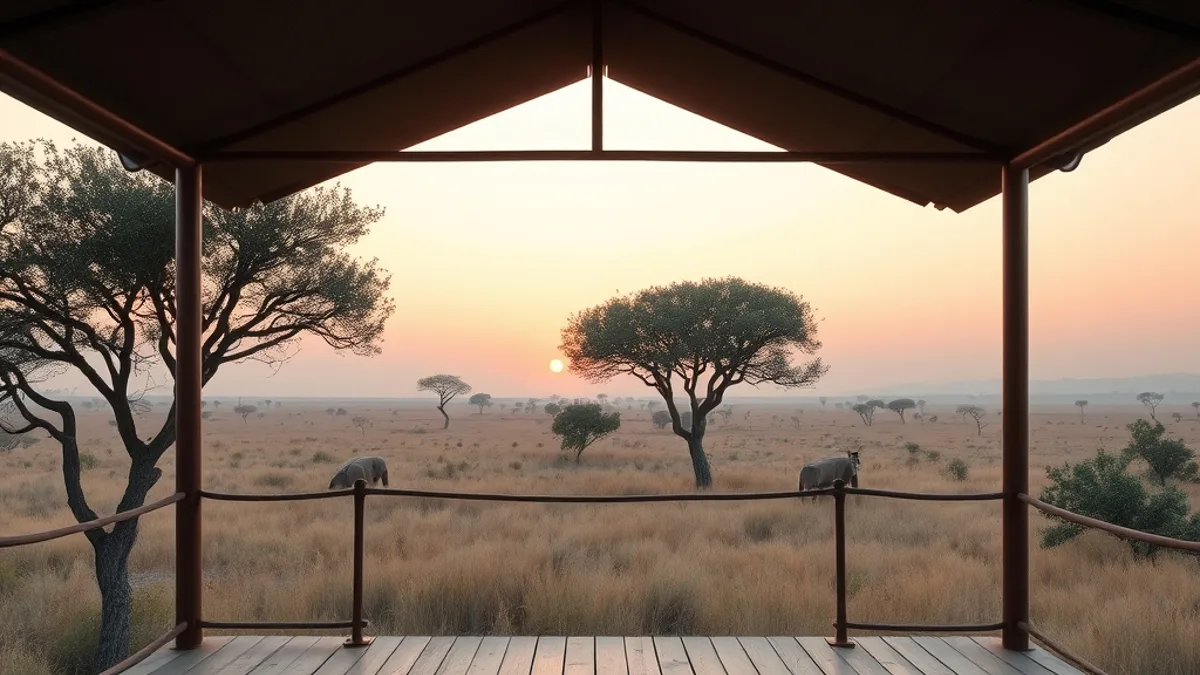
Savanna rooms are the value play at most lodges. Because they sit furthest from the water features that concentrate game, they usually carry the lowest rates, yet they often come with the most dramatic scenery: open plains rolling to the horizon, big skies, and sunsets that color the whole landscape rather than a single treeline.
The trade-off is proximity. You will rarely have an elephant walk past your deck here. What you get instead is distance, and distance has its own rewards. With open sightlines, a pair of binoculars turns your bed or deck into a spotting station. Distant herds of buffalo, a line of giraffe against the sky, or even a predator moving through the grass hundreds of meters away all become visible in a way they simply are not from a room screened by trees.
These rooms suit a particular kind of traveler: someone who spends full days out on game drives and treats the room as a place to spread out, rest, and enjoy quiet at night. If you are gone from dawn to dusk anyway, paying a premium for a waterhole you will only see at lunchtime may not make sense.
One caution before you book. Ask the lodge directly whether the view is truly open or partially screened by trees, because “savanna-facing” can mean very different things at the same property.
- Orientation matters: a savanna room facing west delivers sunset views from your deck, while an east-facing one gives you sunrise light over the plains instead.
- Binoculars are essential gear: pack your own or borrow the lodge’s, since most sightings from these rooms happen at a distance where the naked eye struggles.
- Star quality: open plains away from water features and dense vegetation often mean darker skies, making savanna rooms the best choice for stargazing from your deck.
- Wind exposure: rooms on open plains can catch more wind and dust than sheltered river or waterhole rooms, worth knowing if you spend long hours outside.
How to Choose the Right View for Your Trip
Choosing a view category is less about finding the “best” one and more about matching the room to your season, your budget, and how you actually spend a safari day. A waterhole room that delights a photographer in September may feel like an unnecessary expense for a traveler who is out driving from dawn to dusk. It also works in reverse: a guest who loves lingering on the deck with coffee may get more joy from a waterhole view than from any extra game drive. Before you book, be honest about your travel style, your priorities, and how many hours you realistically plan to spend in your room each day. Then work through the decision in order.
- Start with your travel dates. If you are traveling in the June-October dry season, waterhole rooms are at their most rewarding because wildlife concentrates at shrinking water sources. In the November-March green season, animals disperse and rivers fill, so river or savanna rooms give you better scenery and often better value.
- Think about how you use your room. Photographers should prioritize waterhole or river rooms, since predictable subjects at first and last light are exactly what those views provide. First-timers on full-day game drives can comfortably save money with a savanna room, because they will experience most of their wildlife from a vehicle anyway.
- Compare the premium honestly. If a waterhole room costs 20-40% more than a savanna room at the same lodge, decide what that money buys you: sightings from your deck, or the same amount spent on extra drives, private vehicles, or a longer stay.
- Get the view category in writing. Many lodges have only a handful of rooms per view type, and “waterhole-facing” can quietly become “partially overlooking the pan” if the reservation is vague. Confirm the exact category on your booking confirmation, and ask about the direction your deck faces at sunrise and sunset.
Whichever category you land on, the goal is the same: a room that adds to your safari rather than one you resent paying for. Run through this checklist before you pay a deposit, and confirm everything directly with the lodge or your safari operator in writing. Categories and even room numbers can shift between the time you book and the time you arrive, especially when lodges renovate or reclassify rooms. A few minutes of matching view to season and travel style prevents both overspending and disappointment, and it means you can settle onto your deck on day one knowing you chose exactly the right window onto the bush.
Booking Timing and Rates for View Categories
View categories are usually the scarcest inventory at a lodge, and that shapes how far ahead you should book. At many properties, only a handful of rooms face the waterhole or the river bend, so the best views often sell out long before standard rooms do. If a specific view is central to your safari plans, treat it like a flight upgrade: secure it early rather than hoping for availability later.
How far ahead to book
For July-September stays, reserve waterhole-view rooms 9-12 months ahead. This is peak dry season, when wildlife viewing is at its best and demand for the most reliable room-based sightings is highest. Green season travel is far more forgiving: 3-6 months of lead time is typically enough, and river and savanna categories often remain available closer to your dates.
What view categories cost
As a rough benchmark, mid-range lodges typically price savanna-view rooms from around $250-400 per person per night, with waterhole categories carrying a noticeable premium at the same property. Use that figure as a planning guide rather than a quote; rates vary widely by country, lodge level, and what is included, so always check current prices with the lodge or your operator before committing.
Shoulder months are where savvy travelers find bargains. May and November sometimes bring soft occupancy, and lodges occasionally upgrade guests to better view categories at lower rates simply to fill the prime rooms. If your dates are flexible and a view upgrade matters to you, ask directly about shoulder-season availability before locking in a peak-season booking. A polite email a few weeks before arrival can also pay off; front desks sometimes move guests into empty premium rooms when they can.
The View That Fits Your Safari
That dreamy lodge photo in the brochure tells you far less than the view category does. Waterhole rooms deliver the most room-based wildlife, especially in the dry season when animals queue at the water. River rooms bring soundscapes, hippos, and green-season reliability, while savanna rooms offer space, big skies, and the lowest rates at most lodges.
Which view is worth its premium comes down to three things: the season you travel, your budget, and how much time you actually spend in your room. Match those to the strengths of each category and the choice makes itself. If this helped you plan your safari, leave a comment or share the article with a fellow traveler.