You’ve finally found it: a safari lodge with your name on it, whether that’s a tented camp overlooking a river crossing or a family suite in a private reserve. Then a practical question stops you mid-dream: does this lodge sit in one of Africa’s malaria zones, and what does that mean for your health planning?
This guide walks through the answers step by step. We start by mapping malaria zones across Africa’s safari countries, then look at malaria-free lodge alternatives if prophylaxis isn’t an option for you. From there, we cover how to time your stay with the risk calendar, which lodge features genuinely reduce mosquito exposure, and the medical steps to take before departure. We also explain which symptoms to watch for during your trip and in the weeks after you return, then wrap everything into a simple health plan. By the end, you’ll know exactly what to ask your doctor, your travel agent and the lodge itself.
Mapping malaria zones across Africa’s safari countries
The simplest rule for understanding malaria zones in Africa is this: altitude and water decide the risk. The mosquitoes that transmit malaria, mainly the Anopheles species, thrive at low altitudes where standing water collects. That’s why the northern reaches of Kruger National Park, Botswana’s Okavango Delta and the Caprivi Strip in Namibia, and most lowland parks in Tanzania and Kenya carry high-risk labels on travel-health maps.
Altitude changes everything. Areas above roughly 1,800 meters, including much of South Africa’s highveld and the reserves situated there, carry little to no transmission risk. The cooler temperatures simply don’t suit the mosquito’s life cycle, so you can game view comfortably without reaching for antimalarials.
Risk shifts with the seasons
Malaria zones are not fixed in intensity throughout the year. The wet months from November to April raise transmission risk because mosquitoes breed in the pools and puddles left behind by rain. The dry months from May to October lower it considerably, as breeding sites shrink and mosquito numbers fall.
So when a lodge brochure says a park is “in a malaria area,” ask the follow-up questions: at what altitude, and in which season? A reserve that demands caution in February may need only basic precautions in August. Check the current risk profile for your specific dates with a travel-medicine professional, since conditions can shift from year to year.
Choosing a malaria-free safari lodge alternative
If prophylaxis doesn’t suit you, you don’t have to give up the safari dream. Several South African reserves offer genuine Big Five game viewing in areas where malaria transmission doesn’t occur, so no antimalarial medication is needed at all.
Where to look
Three regions stand out. The Eastern Cape reserves are famous for their combination of Big Five game and coastal proximity, and if you want to extend the trip toward the shore, a look at bluewater resorts in South Africa shows how safari elegance pairs with coastal release. The Waterberg, a plateau region in Limpopo, offers rolling bushveld with rhino, leopard and rich birdlife. Madikwe, near the Botswana border, is one of the country’s larger reserves and home to the full Big Five, plus wild dogs.
Who these reserves suit best
Malaria-free parks are a natural fit for families traveling with young children, since some antimalarials aren’t recommended for small kids. They also suit travelers whose existing medication rules out antimalarials due to interactions, and anyone who simply prefers to skip a daily or weekly drug course.
There are trade-offs to weigh honestly. These reserves can cost more per night, often in the range of $300-800, reflecting their private-reserve model. And they lack some of the Okavango’s signature water-based activities, such as mokoro trips through the channels. If those experiences matter to you, weigh them against the convenience of skipping prophylaxis entirely.
Timing your stay with the risk calendar
When you travel matters almost as much as where. Malaria risk in safari country rises and falls with the seasons, so aligning your dates with the risk calendar can dramatically reduce your precautions without sacrificing the experience.
The dry-season sweet spot
Botswana’s dry season, running from May to October, is the classic example of good timing. Vegetation thins, animals gather at permanent water, and game viewing hits its peak, all while mosquito activity sits at its lowest point of the year. If you’re considering a lodge in the Okavango or along the Caprivi, this window pairs the best wildlife conditions with the least mosquito pressure. Resorts built around this rhythm, like the rainshore resorts in Botswana, are designed for beautifully paced comfort in exactly this season.
What wet-season travel involves
Traveling between November and April has real appeal: greener landscapes, newborn animals, dramatic skies and noticeably lower lodge rates. The trade-off is higher malaria risk, which calls for more precautions. You’ll want stricter repellent discipline, longer coverage in the evenings and a firm conversation with your travel-medicine doctor about the right prophylaxis for those months.
Whichever season you choose, remember one constant: Anopheles mosquitoes feed mainly between dusk and dawn. Plan evening game drives to end before nightfall where possible, or make sure you’re covered with repellent and long clothing for the return to camp after dark.
Lodge features that reduce exposure
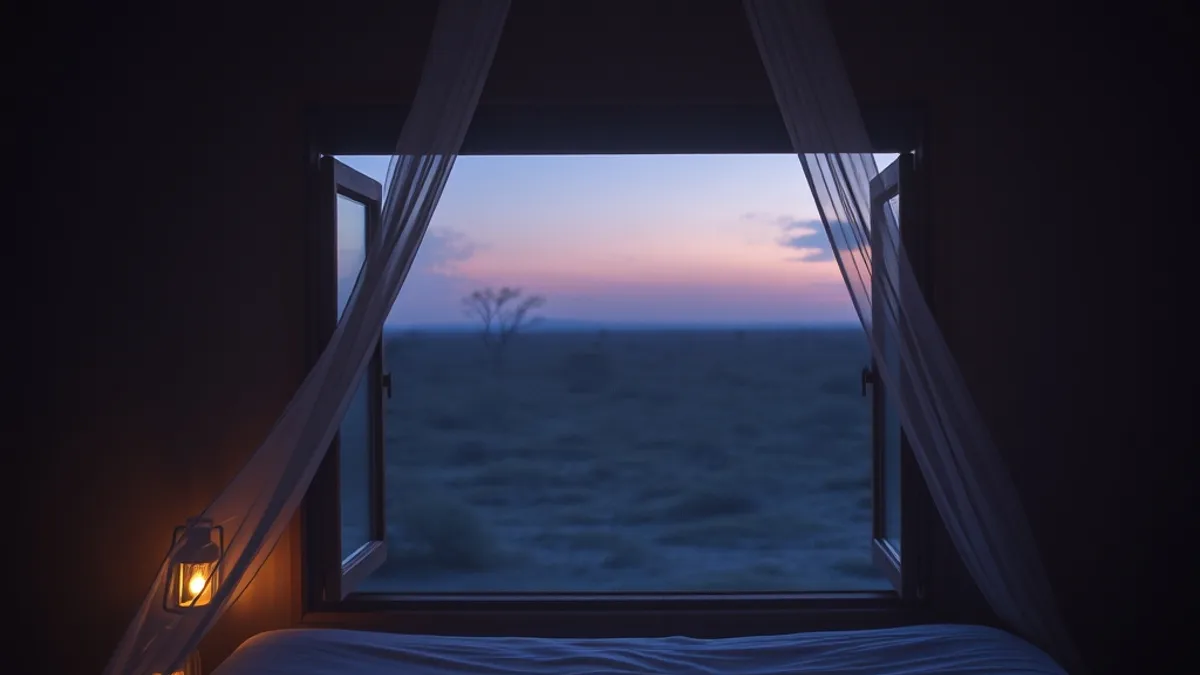
Your choice of room matters as much as your choice of repellent. At safari lodges, the best protection comes from the building itself: windows with fine mesh screens, air conditioning or a working ceiling fan, and a four-poster bed hung with a mosquito net that has no tears or gaps. Check the net carefully on arrival, especially at the hem where it tucks under the mattress.
Before you book, ask the lodge or camp two direct questions. First, do they treat rooms and tents with residual insecticide sprays, which knock down mosquitoes that slip inside? Second, do they supply repellent in each suite, or should you carry your own? Well-run camps answer both without hesitation. Lodges such as the homesteads near Nanyuki, described in a guide to spacious calm near safari country, show how thoughtful design keeps insects at a distance without closing you off from the bush.
Location within the camp counts too. Open-air dining decks are a highlight of any safari, but they often sit near water sources where mosquitoes breed. Once the sun goes down, the mosquitoes that carry malaria become active, so favor elevated walkways and lit paths in the evening and head indoors shortly after dinner.
- Screens and seals: Run a hand along window mesh and door frames; even a small gap at a sliding-door track lets mosquitoes in overnight.
- Fan direction: A ceiling fan set at medium or high speed makes it harder for mosquitoes to land, so keep it running while you sleep rather than switching it off when the room cools.
- Net condition: Ask housekeeping to replace a net with holes the same day; most camps keep spares and treat the request as routine.
- After-dark lighting: Stick to lit paths and ask staff to walk you back after dinner, since many camps offer an escort as standard practice.
Prophylaxis and pre-trip medical steps
Antimalarial medication is not one-size-fits-all. The right course depends on your destination’s risk level, your medical history, and the drugs the local mosquito population resists. Planning ahead gives your body time to adjust and your doctor time to prescribe correctly, which is why the steps below work as a sequence rather than a checklist you can tackle the night before your flight.
- Book a travel-medicine consultation 4-6 weeks before departure. This window lets the clinician match antimalarials to your zone and health profile, spot interactions with medications you already take, and fit in any vaccines that need a series of doses rather than a single shot.
- Start your course on schedule. Common antimalarials begin 1-2 days before you enter a malaria zone, though exact timing depends on the drug prescribed. Setting phone reminders helps you avoid missed doses once safari days get busy and early morning game drives start blurring together.
- Continue after you leave. Courses typically run 1-4 weeks after departure, depending on the medication. Finishing the full course matters, since the drug works against parasites at different stages of their life cycle. Many travelers stop once they are home and feeling fine, which is exactly when the protection still counts.
- Pack your protection kit. Bring repellent containing 30-50% DEET, long-sleeved shirts and trousers for evenings, and enough medication in its original packaging to last the whole trip plus a buffer. Original packaging also helps if a border or pharmacy official wants to verify what you are carrying.
- Confirm your routine vaccinations are current. Travel clinics also check boosters you may have let lapse, so one appointment covers several bases.
Cost and side effects vary by drug, so raise both at your consultation. Some antimalarials need taking with food, others cause sensitivity to sun, and a few are unsuitable if you are pregnant or have certain pre-existing conditions. Ask what to do if you vomit a dose or miss one entirely, because the answer differs by medication. Knowing the specifics before you fly makes the routine far easier to keep in camp, where schedules revolve around drives and meals rather than pill timers.
Recognising symptoms during and after your trip
Malaria does not always announce itself dramatically. The early symptoms look a lot like ordinary travel fatigue: fever, chills, headaches, and body aches. What makes it dangerous is timing. Symptoms can appear while you are still on safari or surface weeks after you fly home, long after you have packed the trip out of your mind.
If symptoms start during your trip
Tell your guide or lodge manager straight away. Most camps in malaria zones keep protocols for suspected cases and can arrange testing or transport to a clinic faster than you could on your own. Immediate testing matters because early treatment is far more effective, so do not wait to see whether a fever settles overnight.
If symptoms appear after you get home
See a doctor and say one thing clearly: you have recently been in a malaria zone. This single sentence changes everything. Doctors in non-endemic countries rarely consider malaria first and may assume flu, which delays treatment. Mentioning your travels prompts the right blood test from the start.
Speed things up further by carrying a note with your antimalarial’s name and dosage. Emergency rooms abroad will ask, and having it written down saves time when it counts. Keep the information on your phone as well as on paper, in case your luggage and devices travel separately. A safari rarely leads to malaria, but knowing the warning signs turns a rare problem into a manageable one.
Wrapping up your safari health plan
That dream lodge you bookmarked no longer feels like a question mark. You now know how to place it on the malaria map: lowland parks below roughly 1,800 m carry more risk, while areas like the Eastern Cape, Waterberg and Madikwe let you skip prophylaxis entirely. You also know that timing matters, with the wet months of November to April raising risk and the dry months of May to October lowering it.
The rest comes down to four practical pillars: choosing lodge features that keep mosquitoes away, starting your antimalarial course on schedule, and recognizing symptoms during and after your trip so you can get tested quickly. With zones, seasons and medical prep aligned, your safari can be both thrilling and low-risk. If this helped you plan, leave a comment or share the article with a fellow traveler.