Many couples book a lodge for their honeymoon only to find thin walls, shared decks and a season that works against them. The photos looked secluded, but in reality the suite sits twenty steps from the dining terrace and the neighboring deck hears every conversation. A honeymoon at a lodge can be genuinely private and unforgettable, but only if you choose the room, the season and the booking window with care.
This guide walks through why lodges suit newlyweds in the first place, how to pick a suite that actually delivers seclusion, and which months give you the best mix of weather, wildlife and price. We also cover how far ahead to book, what a realistic budget looks like, how to shape a relaxed itinerary, and how to pull all three decisions together into one smooth trip.
Why a Lodge Suits a Honeymoon
The appeal of a lodge starts with simple numbers. Where a large resort might hold hundreds of units, a typical lodge has somewhere in the range of 8 to 20 rooms or suites. That difference shapes everything about the atmosphere: the pool stays calm, the lounge never feels crowded, and dinner service moves at a pace that suits a couple lingering over dessert. You are not competing with a wedding party of forty for the best table or the hammock with the view.
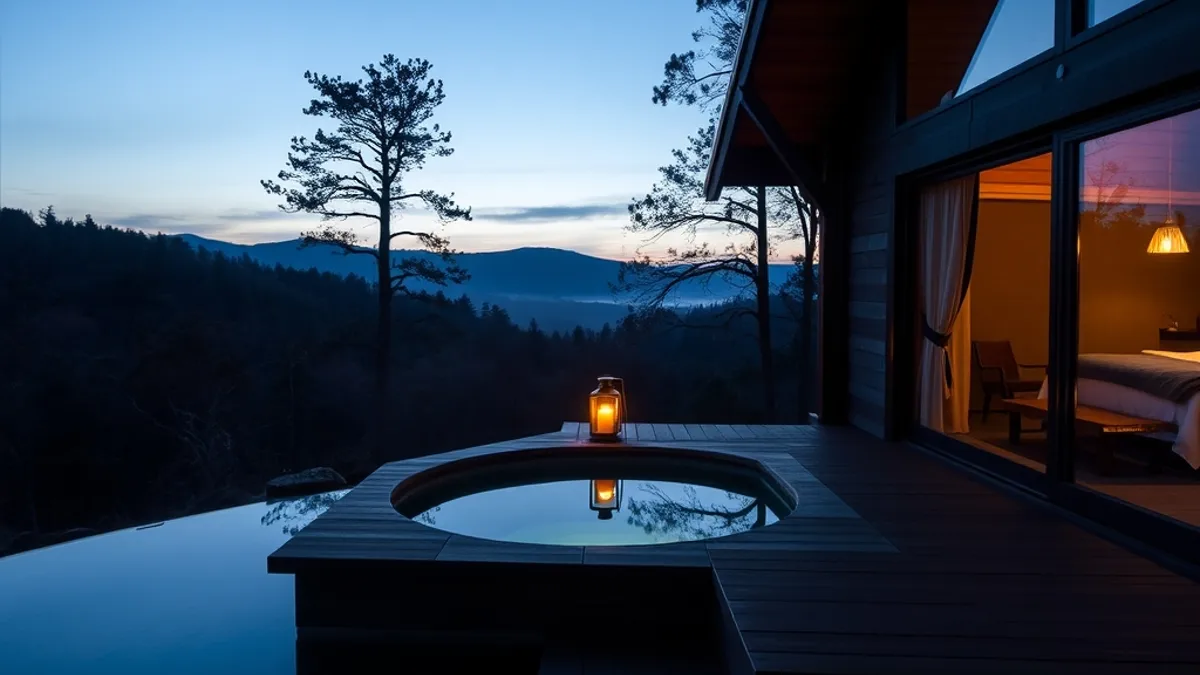
Privacy goes a step further in the layout. Many lodges build their best rooms as stand-alone suites scattered across the property, which means no shared corridors, no adjoining walls and no elevators full of other guests. Your nearest neighbor might be a hundred meters of garden path away, and the sounds around your deck are birds and wind rather than door slams.
Why all-inclusive rates make sense for a first trip together
Most safari and remote lodges price their stays as all-inclusive packages that bundle meals, guided activities and airport or airstrip transfers into one rate. For a honeymoon, this removes a surprising amount of decision-making. You never argue about where to eat, how to book a game drive or who arranges the pickup. Everything is planned before you arrive, which leaves the two of you free to simply settle in and enjoy each other’s company from the first afternoon.
Choosing the Right Room for Privacy
If privacy is the whole point of your honeymoon at a lodge, the room category matters more than any other choice. Lodge-wing rooms, however handsome, usually share a wall or a common deck with the next unit. Stand-alone suites and villas sit in their own footprint, often screened by trees or natural vegetation, and that physical separation is what makes mornings on the deck feel like yours alone. Ask the lodge directly which categories are detached and which are not, because marketing photos rarely make the difference obvious.
Sightlines deserve equal attention. A suite can be physically separate and still look straight onto the main lodge, the pool or the dining area, which means other guests are looking at you every time you step outside. Ask for a floor plan or a description of what each suite faces before you commit.
- Decks angled away from the main lodge and dining area feel dramatically more private, especially at lodges where suites radiate out from a central hub.
- Private plunge pools and outdoor showers add real romance, but they typically push the nightly rate up by 15-30% over a standard suite at the same property.
- Ask exactly how far the honeymoon suite sits from the dining hall: a two-minute stroll suits most evenings, while a long walk changes how you plan dinner, drinks and early game drives.
- Some lodges position their top suites closest to shared facilities for views rather than seclusion, so confirm orientation and distance together rather than assuming the priciest room is the quietest.
None of these questions are awkward to ask. Lodge reservations teams answer them daily, and a couple that asks about sightlines and walking distances usually ends up in a better-suited room for it.
When to Go: Trip Timing and Seasons
Timing shapes a lodge honeymoon more than almost any other decision, because the same property can feel like two different places across the year. For safari lodges, the dry season from June through October delivers the classic experience: animals gather at water sources, vegetation thins out and game viewing is at its best. The trade-off is that this window also brings the highest rates and the lowest availability, so the suites you want may be gone long before you start looking.
The green season, running November through March, tells a different story. Prices can come in 30-40% lower, the landscape turns lush and photogenic, and many lodges still run full programs. The catch is the rain itself, which tends to arrive as afternoon showers rather than all-day washouts, leaving mornings and early evenings largely usable.
The shoulder-month sweet spot
Shoulder months such as late May or early November often balance price and weather better than either peak or green season. You catch the edge of good game viewing or the start of the rains, with more suites open and rates that sit between the two extremes. If your dates are flexible by even a week or two, ask the lodge which weeks they consider the transition and aim for those.
One final note: match the season to the region, not to a generic calendar. Tropical lodge destinations, highland lodges and desert properties all follow different weather patterns, so a June-to-October rule that works for safari country says nothing about a beach-forest lodge or a mountain retreat. Check the specific region’s seasons before locking dates, and if Botswana is on your shortlist, this guide to rainshore resorts in Botswana for safari serenity and beautifully paced comfort shows how the seasons play out in practice.
How Far Ahead to Book
Lodge honeymoons sell out from the top down, and the suites everyone wants are the ones with the best views and the most privacy. If your trip falls in the peak dry-season window at a safari destination, aim to book 9-12 months ahead. That lead time matters most if you want a stand-alone suite with a private pool, since lodges often have only a handful of those units and returning guests and honeymooners claim them early.
Shoulder-season trips are far more forgiving. Booking 3-6 months out usually still leaves you a solid choice of rooms, and you may even find lodges willing to negotiate on longer stays. The trade-off is weather risk, so read up on what the shoulder months actually look like in your chosen region before committing.
Honeymoon perks add a wrinkle most couples miss. Many lodges offer upgrades, spa credits or private dinners, but they typically require booking directly with the lodge or its reservations team, and they ask for proof that you married within the last 6-12 months. Keep a copy of your marriage certificate handy when you enquire.
- Book the suite category, not just the lodge. Ask specifically whether your chosen unit is available for your dates, since two rooms at the same lodge on the same night can feel like completely different stays.
- Ask about minimum-night stays. Some lodges require two or three nights minimum in high season, which shapes how many lodges you can realistically combine.
- Confirm perk conditions in writing. Get the upgrade or credit confirmed by email before you pay your deposit, so there is no debate at check-in.
- Watch for charter flight schedules. Airstrip transfers and light-aircraft seats fill on their own timelines, so lock those in at the same time as your rooms.
Budgeting Your Lodge Honeymoon
Lodge pricing looks intimidating at first glance, but it becomes manageable once you break it into room rate, inclusions and transfers. A private stand-alone suite at a mid-range lodge usually starts around $400-600 per night, while luxury lodges commonly begin at $1,000 or more per night. Rates at the top end often include meals, game activities and drinks, which changes the real comparison considerably.
Resist the urge to spread your budget across four or five short stops. Five to seven nights at one or two lodges gives you time to settle in, use the suite you paid for, and build a rhythm with your guide. Fewer bases also mean fewer transfer costs and less packing.
Transfers are the line item couples forget. Many lodges sit 30-90 minutes from the nearest airstrip, and private road transfers are often priced separately from the room rate. Ask whether your quote includes them, or whether you will pay per vehicle on arrival. If you want a gentler, beach-side version of the lodge honeymoon style, it is worth reading about honeymoon lodges with a polished tropical feel to see how the same budgeting logic applies.
- Compare rates on an all-inclusive basis. A $600 nightly rate with all meals and activities can beat a $450 rate that charges separately for dining and drives.
- Ask what drinks are included. Some lodges include house drinks and laundry, others bill everything to your room, and that gap adds up over a week.
- Price the private vehicle option. Sharing a game-drive vehicle with other guests keeps costs down; a private vehicle and guide usually costs extra and is worth it for a honeymoon.
- Leave a buffer for tips and spa treatments. Gratuities for guides and staff, plus any spa time, are almost never in the base rate.
- Check single-currency totals. Ask the lodge or operator for one all-in total in your home currency so you are not tracking multiple payments in different currencies.
Building the Itinerary Around the Lodge
A lodge honeymoon succeeds or fails on the shape of each day, not just the destination. Game drives run early, transfers eat whole mornings if you let them, and jet lag is real after a long-haul flight. The good news is that pacing a lodge stay is simple once you accept one idea: you cannot do everything, so you should not try. Most couples who come back disappointed tried to pack a full safari schedule into a trip that was supposed to be a honeymoon. The steps below keep the trip relaxed without wasting the nights you paid for.
- Split 5-7 nights across two lodges. Choose one lodge known for game viewing and a second known for pure downtime, so the trip has both excitement and recovery built in. Two lodges is the sweet spot; three or more turns the honeymoon into a logistics exercise.
- Keep the first two days activity-light. After long-haul flights, plan nothing more demanding than a late breakfast, a swim and a short afternoon drive. Book your most expensive, most anticipated activity for day three or later, when you are actually rested enough to enjoy it.
- Put shared activities in the morning. Game drives and guided walks run best at dawn anyway, when animals are most active. That naturally frees the afternoon for the plunge pool, the outdoor shower and a nap, which is exactly what you booked a stand-alone suite for.
- Confirm transfer times before you lock the itinerary. Ask how long the road or air transfer between your two lodges takes, and whether it fits in a morning. A transfer that runs into the evening costs you a game drive and your first dinner at the new lodge.
- Leave one unplanned day at the end. A day with no booked activity gives you room to repeat a favorite drive, linger over lunch, or simply use the suite one last time before departure.
Follow that order and the trip takes care of itself: rest first, wildlife in the mornings, afternoons to yourselves, and transfers that never steal a full day. The lodge does the heavy lifting on food, activities and setting, so your only real job is pacing the week well. If a drive runs long or a rainstorm cancels a walk, let it go rather than rearranging everything. Honeymoons reward flexibility far more than they reward efficiency, and the couples who enjoy their stay most are usually the ones who treated the schedule as a suggestion rather than a contract.
Putting It All Together
Most honeymoon disappointments at lodges come down to three things: thin walls, a shared deck overlooking the dining area, or a season that brings rain instead of game. All three are avoidable if you treat privacy, room type and season as one decision rather than three. A stand-alone suite in the wrong month can feel like money wasted, and a great season in a lodge-wing room defeats the point of going.
So anchor your plan on three pillars: book a stand-alone suite, give yourself 9-12 months of lead time for peak season, and pick the season window that matches the region. Then keep the trip itself simple — a 5-7 night stay split across one or two lodges, with sensible transfers that don’t eat whole days. Do that, and the trip stays relaxed from the moment you land until you fly home. If you’ve done a lodge honeymoon, share what worked in the comments below.