Anyone who has priced out a glamping trip knows the frustration: the same safari tent can show two wildly different rates depending on which nights you tap into the calendar. That leaves a lot of travelers asking the same question. Does the midweek vs weekend glamping debate actually come down to real savings and empty fire pits, or is the weekend premium simply the price of a livelier atmosphere?
The honest answer is that both can be true, and which one wins depends on your trip style. In this guide, we break down how glamping sites price individual nights, where the biggest price gaps appear, and how crowd levels shift between a Tuesday and a Saturday. We also look at how far ahead you need to book each type of stay, which nights suit couples, groups, and remote workers, and a few destination types where midweek trips shine. By the end, you should know exactly which nights to pick for your next night under canvas.
Why Midweek vs Weekend Glamping Changes Everything
The first thing to understand about glamping pricing is that sites rarely sell a flat weekly rate. Instead, each night is priced on its own, which means the identical bell tent can carry one rate on a quiet Tuesday and a noticeably higher one on a Saturday. Friday and Saturday nights are the two most expensive and fastest-selling nights of the week at most sites, and everything around them gets priced accordingly.
It is not just money that shifts between weekdays and weekends. Crowd levels change too, and that affects everything you actually came for. Hot tubs, fire pits, shared kitchens, and shower blocks all feel different depending on how many neighbors are sharing them. A fire pit that needs no booking on a Wednesday can require a slot reservation when the site fills up on a Saturday evening.
Availability windows are the real divider
The sharpest difference shows up in how far ahead you need to plan. Weekend dates in peak season often sell out months in advance, especially for the most photogenic units on a site. Midweek dates, by contrast, tend to stay open much longer, which makes them the natural choice for spontaneous trips. This single fact shapes most booking decisions, so it is worth looking at each side of the trade-off in detail, starting with what midweek stays actually save you.
Price Gaps: What Midweek Stays Actually Save
The headline saving is straightforward: midweek rates at the same site typically run roughly 20-40% below Friday and Saturday pricing for the exact same unit. We are not talking about a smaller tent or a worse pitch here. You book the same safari lodge, the same geodesic dome, or the same lakeside cabin, and simply pay less because you chose a Tuesday instead of a Saturday.
Minimum-stay rules quietly widen that gap. Many sites enforce two-night minimums on weekends, so a single weekend night is often not even an option. If you want one night under canvas, midweek is usually the only realistic window, and that flexibility alone can shrink a trip’s total bill before you have even compared base rates.
The biggest savings appear when you combine the right nights with the right season. Shoulder-season midweek trips can cost 30-50% less than a peak-season weekend for the identical unit. A few factors that shape the final bill:
- Base rate differences per night: the 20-40% midweek discount applies to the nightly rate, so on a multi-night stay the savings compound with every weeknight you include.
- Minimum-stay rules: a two-night weekend minimum can force you to pay for a night you did not plan to stay, while midweek bookings often allow single nights.
- Season stacking: pairing midweek dates with shoulder-season months stacks two discounts on the same unit, which is where the 30-50% gap against peak weekends comes from.
- Add-on demand: extras like fire-pit wood bundles or hot tub slots are often easier to reserve midweek simply because fewer guests are competing for them.
Always check the calendar for your specific dates, since each site sets its own rates and rules. But as a rule of thumb, the more weeknights you can string together, the more the savings stack up.
Crowds and Atmosphere on Weekdays vs Weekends
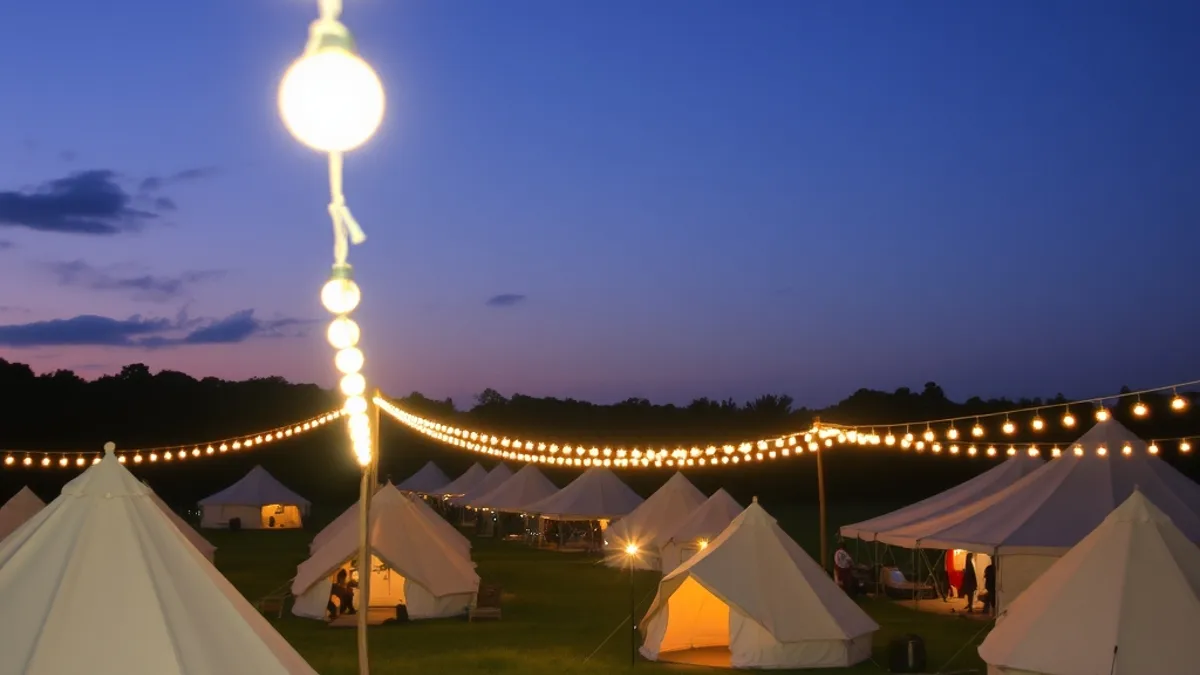
Money is only half the story. The atmosphere at a glamping site on a Tuesday bears little resemblance to the same site on a Saturday, and the difference comes down to who is staying and how many of them there are. Sunday-to-Thursday stays are the quietest window at most glamping sites, and that quiet shows up in practical ways.
On a weekday, hot tubs are more likely to be free when you want them, fire pits need no reservation or early-morning queue, and the gap between tents genuinely feels like a gap. You can hear birdsong instead of a neighboring speaker. Shared kitchens and shower blocks, which can turn into morning bottlenecks when a site is full, are often empty enough that you have them to yourself.
What weekends bring instead
Weekends trade that calm for energy. Group bookings for birthdays and reunions cluster on Friday and Saturday nights, and with them come music, late conversations around the fire, and busier shared facilities. For some travelers that buzz is the whole point; for others it is exactly what they paid to escape.
So who should pick which? Midweek stays suit couples who want stillness and remote workers who can set up a laptop on a deck with a view and no background noise. Weekends suit social trips where the crowd is part of the fun, and families with school-age kids who simply cannot travel outside Saturday-to-Sunday windows. Match the nights to your trip style and the same site can deliver two completely different holidays.
Availability and How Far Ahead to Book
Glamping availability follows a simple pattern: the most desirable nights disappear first, and everything else lingers on the calendar. Peak-season weekends in June, July and August typically need 3-6 months of lead time, especially at popular sites with a small number of units. If you have your heart set on a safari tent or treehouse for a Saturday in August, booking around New Year is not excessive. Small sites with only a handful of tents feel the squeeze most, because one family reunion can wipe out an entire month of weekends in a single booking.
Midweek dates behave completely differently. Slots in May or September are often still available 2-4 weeks out, and even shoulder-season Tuesdays and Wednesdays can open up on short notice. That flexibility is a genuine advantage if your schedule changes, a project deadline shifts, or you simply decide to escape at the last minute. Instead of planning a summer trip around a site’s calendar, you can let the weather forecast and your workload decide.
It also pays to think about how minimum-stay rules shape your options. Midweek bookings often allow single nights, which makes overnight stopovers on a longer road trip easy to arrange, while weekends usually expect you to stay longer. A few practical habits help:
- Single-night midweek bookings are widely accepted, which makes overnight stopovers on a longer road trip easy to arrange.
- Weekends usually enforce two-night minimums, so a Saturday night often means committing to Friday too, even if you only need one.
- Because fewer people compete for midweek dates, you can sometimes negotiate extras like a later checkout or a specific unit, especially close to the arrival date.
- Set a reminder to recheck cancellations: a peak-season Friday spot occasionally frees up a week or two before arrival, and sites often release held bookings a few days ahead.
Choosing the Right Nights for Your Trip Style
The right nights depend less on the calendar and more on what you want from the trip. A quiet, romantic escape and a lively group celebration are two very different bookings, and they rarely land on the same dates. Matching your travel style to the day of the week matters more than most first-time glampers expect.
Couples seeking stillness
If your priority is calm, book midweek dates in the shoulder season. You get the best combination of value and privacy: lower rates, empty hot tubs and neighbors you may never see. A Tuesday arrival in May or September often feels like having the whole site to yourself, which is exactly the point of a glamping getaway for two. Bring a headlamp for late-evening walks, since many rural sites have minimal lighting between tents.
Celebrations, groups and remote workers
For birthdays, hen parties or family reunions, the weekend premium is usually money well spent. Everyone can actually attend, the site has atmosphere, and shared spaces like fire pits and kitchens become social hubs rather than obstacles. If you go this route, reserve well ahead for summer weekends and expect minimum-stay rules, which sites typically enforce on Friday and Saturday nights.
Flexible remote workers have the best deal of all. Arrive on Sunday and leave on Thursday: you capture low midweek rates, work from the deck while the site is empty, and enjoy the quietest window of the week. Check the site’s Wi-Fi or mobile signal before committing, as connectivity varies widely between rural locations. A split stay like this often costs less than a single weekend night would for a group, and you still get two proper evenings around the fire.
Where Midweek Glamping Shines: Destination Examples
Midweek stays reward certain landscapes more than others. Where seclusion is the whole appeal, arriving when the crowds are absent changes the experience entirely.
Forests and lakesides
Forest and lakeside sites feel most secluded on quiet weekday mornings, when mist sits on the water and the only sound is birdsong. Forest cabins in Latvia are a good example: midweek, you can sit outside with coffee and hear nothing but the trees. If that appeals, this look at forest houses hidden in the Latvian green stillness of Gauja shows what a weekday stay can feel like.
Coasts and mountains
Coastal glamping near warm seas is far easier to book midweek outside the July-August crush. You still get the beach days and long evenings, but without fighting for space on the sand or a spot at the shared shower block. Shoulder-season weekdays also tend to bring milder, more comfortable temperatures for sleeping in a tent.
Mountain and hillside sites reward weekday stays with clearer trails and emptier viewpoints. Popular summit paths that queue on Saturdays are often nearly silent on a Wednesday, and parking at trailheads is simpler. Photographers should note that golden hour at a weekday viewpoint, with nobody else in frame, is one of the quiet luxuries midweek glamping delivers.
The Midweek-Weekend Trade-off in Brief
So, does glamping midweek really pay off? In most cases, yes. Midweek rates typically run 20-40% below Friday and Saturday pricing, and you get the quietest, most private experience at the same time. Sunday-to-Thursday stays mean emptier hot tubs, easier fire-pit access and real breathing room between tents. If your dates are flexible, midweek is almost always the smarter spend.
The weekend premium isn’t wasted money, though. It buys atmosphere, group energy and shared time, which matters for celebrations and social trips. Just remember that peak-season weekends often need booking 3-6 months ahead, and two-night minimums are common. For the best of both worlds, shoulder-season midweek dates can land 30-50% below peak weekend prices. Have you tried a midweek glamping trip yet? Share your experience in the comments or pass this article along to a friend.