The idea of glamping sounds perfect until one question pops into your head: what about the bathroom? Many travelers love the thought of waking up in a safari tent or a dome under the stars, but hesitate to book because they cannot picture the glamping bathroom. Will it be a cold hose in the woods? A long midnight walk to a toilet block? A shower that never quite gets hot?
The good news is that glamping bathrooms come in far more varieties than most people realize, and many are genuinely comfortable. In this guide, we break down the four main types you will encounter, from full ensuites built into the tent to composting toilets and shared washroom blocks. We also explain how outdoor showers and wood-fired hot water actually work in practice, and give you a simple way to match the right setup to your trip, your season and your budget.
What a Glamping Bathroom Actually Includes
The first thing to understand is that “glamping bathroom” is not one single thing. The term covers everything from a hotel-grade ensuite built into the tent itself to a clean shared block a short stroll away. What you get depends heavily on the price tier of the site, so it pays to know the typical setups before you book.
The typical ensuite setup
At the top end, the bathroom sits inside the tent or is attached directly to it. You get a flush toilet, a hot shower, a vanity with a mirror and fresh towels, all within a few steps of your bed. In many safari tents and luxury domes, this setup feels almost identical to a boutique hotel room, just with canvas walls and better views.
Mid-range and budget setups
Mid-range sites often place a private washroom hut a few steps from the tent, connected by a deck path. You still get your own facilities, so you never queue or share, but you may step outside to reach them. Budget setups use shared washroom blocks that typically serve 4-8 units, which works fine for many travelers but changes the experience noticeably.
The finishing touches are what signal true glamping, whatever the tier: heated floors on cold mornings, a rainfall shower head instead of a basic nozzle, and eco toiletries in refillable dispensers. When a listing mentions these details, it usually tells you the operator cares about the whole experience, not just the bed.
Ensuite Bathrooms: The Full Hotel Experience Under Canvas
If your idea of camping ends the moment you picture a communal toilet block, an ensuite glamping bathroom is the answer. This is the setup for travelers who want zero compromise on comfort: a proper flush toilet, a hot shower and a vanity, all yours alone. It is the most common configuration in safari tents and luxury domes, where the bathroom is designed to feel like part of the accommodation rather than an add-on.
What you pay for the privilege
Comfort like this comes at a price. Expect ensuite units to carry roughly 20-40% higher nightly rates than comparable units with shared facilities at the same site. That premium buys convenience, privacy and the ability to shuffle from bed to shower without putting on shoes, which matters more on a rainy night than you might think. For honeymoons, special occasions or anyone with mobility concerns, most guests find the upgrade justified.
One detail to check before booking
Not all ensuites are built the same way, and one difference matters more than any other: is the bathroom fully inside the structure, or is it a separate pod attached to it? A fully internal bathroom means you never leave the canvas, whatever the weather. A separate pod can still be private and comfortable, but reaching it means crossing a deck or covered walkway. In heavy rain or with small children in tow, that short trip feels very different. Good listings state this clearly; if they do not, ask before you book.
Composting and Off-Grid Toilets: How They Really Work
Composting toilets have a reputation problem, and it is mostly undeserved. A properly managed composting toilet is odour-free, because the system separates liquid from solid waste and ventilates the unit continuously. At established glamping sites, staff handle the maintenance, which typically involves only around 15-30 minutes of simple awareness from the operator’s side per unit. As a guest, your job is usually nothing more than using the toilet as intended.
Waterless systems like these are the natural choice for remote sites without mains plumbing. If a site sits far from the nearest sewer connection, installing flush toilets and the infrastructure behind them can be impractical or environmentally disruptive. Composting and other off-grid toilets let operators open beautiful, isolated locations without digging up the landscape, which is often exactly why those locations are worth visiting in the first place.
Questions to ask before you book
The phrase “composting toilet” in a listing can describe several quite different arrangements, so it is worth asking a couple of pointed questions before committing. The answers shape your daily routine more than you might expect:
- Attached or a short walk away? A private unit attached to the tent is a completely different experience from one at the end of a path, especially at night or in the rain. Ask exactly where the toilet sits relative to your bed.
- Private or shared? Some sites give each unit its own waterless toilet, while others place a couple of units together. Confirm yours is for your party alone if privacy matters to you.
- Is there a hand-washing station? Waterless toilets need a proper hand-washing option nearby, whether that is a plumbed sink, a foot-pumped basin or a sanitizer station. If the listing does not mention one, ask.
With those three answers in hand, you will know exactly what you are signing up for, and for many remote and eco-focused stays, a well-run composting setup is genuinely no hardship at all.
Outdoor Showers and Wood-Fired Hot Water
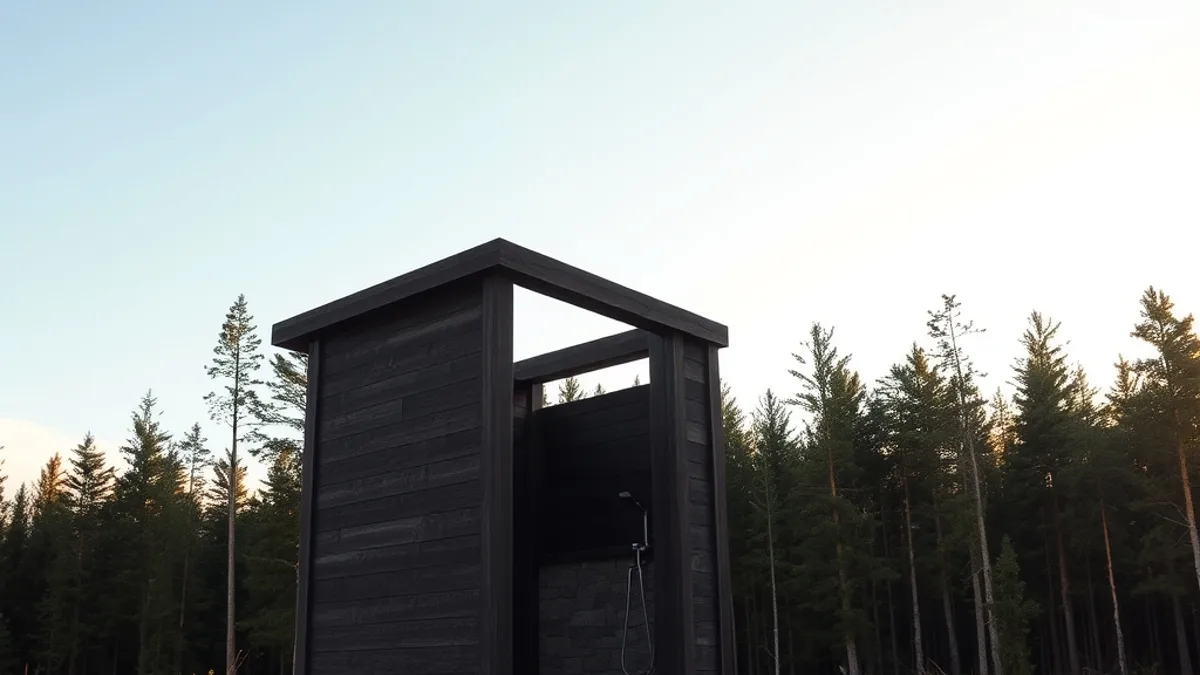
There is something genuinely memorable about showering under the open sky with trees or stars above you. But an outdoor shower is only as pleasant as the weather allows. As a rule of thumb, these setups feel best when overnight temperatures stay above roughly 10°C. Below that, the novelty wears off fast, especially when you have to walk back to your tent with wet hair.
Hot water is the other half of the equation. Many glamping sites with outdoor showers use wood-fired systems, where a staff member lights a boiler in the evening or morning. The water can take 10-20 minutes to reach temperature, so ask at reception when the fire is lit and plan your shower around it. Arriving ten minutes early is better than standing under a lukewarm stream.
Solar hot water and shoulder-season stays
Solar systems are quieter and more eco-friendly, but they depend on sunshine. They perform best at sites that get 5+ hours of daily sun, which is usually easy in midsummer and much harder in spring or autumn. If you are booking a shoulder-season stay, ask the host how the hot water is backed up when clouds roll in. A good site will have a gas or electric booster; a vague answer is a sign to pack warmer expectations.
One practical tip: shower early in the evening rather than last thing at night. Water heated during the day is at its warmest then, and you will not be queuing in the dark.
Shared Washroom Blocks: When They Are Good Enough
Shared washroom blocks have a bad reputation they rarely deserve. At established glamping resorts, the blocks are usually within 30-80 meters of the tents, so you are never trekking across a field with your towel. Many newer blocks even have underfloor heating, which makes a pre-breakfast shower surprisingly pleasant even on a cool morning.
When sharing works fine
If you are staying one or two nights in warm months, a shared block is often perfectly adequate. You spend most of your time outdoors anyway, the walk takes a minute or two, and the savings on the nightly rate can be significant. Many travelers find they barely notice the difference over a weekend.
The problems start when a block is undersized for the number of units it serves, or when cleaning is infrequent. Before booking, check the guest-to-facility ratio and ask about the cleaning schedule. A block cleaned twice daily serving four or five tents is a very different experience from one cleaned once a day serving a dozen. Reputable hosts will answer this question directly.
Also look at the photos closely. A tiled block with a proper shower, mirror and drying area is a world away from a basic portacabin. If the listing does not show the washrooms, that silence tells you something too.
How to Choose the Right Bathroom Setup for Your Trip
Once you know the four main bathroom types, choosing between them comes down to three things: the season you travel, how long you stay, and who is traveling with you. A setup that feels charming on a warm two-night trip can feel limiting on a rainy week at the edge of the season. The good news is that you do not need insider knowledge to get this right. Work through the steps below before you book, and you will know exactly what you are paying for.
- Match the setup to the season. Off-grid glamping sites in Europe and North America mostly operate May to October. If you are traveling in the shoulder months at the edges of that window, prioritize sites with a reliable hot water system rather than one that depends purely on sun or a wood fire.
- Count your nights. For stays of 3+ nights, the daily walk to a shared block starts to feel like a chore. Families with small children face the same issue at any length, since someone always needs the bathroom at the most awkward moment. In those cases, the price gap for a private bathroom is usually money well spent.
- Read the listing like a contract. Look for specific keywords such as ‘private washroom’, ‘composting toilet’ or ‘hot shower’. Vague phrases like “facilities available” can mean almost anything, so message the host and ask exactly what is inside the unit and what is a walk away.
- Think about the walk at night. Whatever the distance, ask what the path between your tent and the facilities is actually like: is it lit, decked or gravel, and is any of it covered? A quick dash in daylight is a very different experience from the same walk at midnight in the rain with a flashlight.
Ten minutes of checking before you book saves you from the most common glamping disappointment: arriving with hotel expectations at a site that runs on solar panels and a wood boiler. Remember that hosts answer these questions every day, and the good ones reply quickly and in detail. A vague or evasive answer tells you something too, and it is far cheaper to learn that before your card is charged than after. If a site cannot describe its hot water setup in a straight sentence, treat that as a red flag rather than a mystery to solve on arrival. Match the bathroom to your trip, not the other way around, and the whole stay works better.
The Bottom Line on Glamping Bathrooms
So, what does a glamping bathroom actually look like? It ranges from a hotel-grade ensuite with a rainfall shower inside your tent to a simple composting toilet a short stroll away, and each option comes with a clear trade-off between price and comfort. The ensuite route typically adds 20-40% to the nightly rate, while shared and off-grid setups keep costs down at the cost of a few steps in a robe.
Three factors decide whether you will love your stay: the season you travel in, the length of your trip, and the distance from your bed to the nearest facilities. Get those matched to the right bathroom type and the fear of cold showers or midnight walks to a toilet block disappears. Knowing these four main types before you book removes the biggest uncertainty about luxury camping. Have you stayed somewhere with a bathroom worth writing home about? Share your experience in the comments or pass this article along to a fellow traveler.