Booking one villa for grandparents, parents and kids sounds like the perfect family trip until everyone arrives and discovers the layout works against them. Some multigenerational villas cram three generations around a single open-plan great room with nowhere to retreat, while others scatter bedrooms so far apart that toddlers miss bedtime and grandparents feel isolated. The right design does neither.
This guide walks through the layouts and rooms that actually make shared villas comfortable: sleeping wings and bedroom setups, kitchens and dining spaces, pool and garden features for mixed ages, plus the practical details families often forget to check. We will also cover where and when to book, and how to choose a layout that fits your group before you pay the deposit.
Why Multigenerational Villas Need a Different Layout
Traveling with three generations means managing two opposite needs at once. The group wants to gather for long dinners and pool afternoons, but each person also needs a quiet place to escape when the noise, heat or a fussy toddler becomes too much. A villa where everything funnels through one shared living space fails this test, because everyone shares one sightline and one soundscape. There is no corner for a grandparent to read and no separate space for teens to hang out without disturbing naptime.
The layout that works inverts this thinking. Look for a footprint where the sleeping areas sit in separate zones, while the kitchen, dining space and pool form one shared core at the center of the property. This arrangement gives the group a natural gathering point without forcing bedrooms to double as living rooms.
How big should the villa be?
Size matters as much as arrangement. Villas with 4-6 bedrooms that sleep 8-12 guests hit the sweet spot for most extended families. That range lets each family unit claim its own bedroom or small cluster of rooms, so parents get privacy and kids get bunkmates, while the whole group still fits around one table. Smaller properties force sharing that breeds friction; sprawling estates with a dozen bedrooms can make the group feel like strangers in the same building. The 8-12 guest range keeps everyone close enough to connect and far enough apart to rest.
When you compare listings, count the usable spaces rather than just the bedrooms. A villa with a genuine lounge separate from the dining area, plus a garden pavilion or upstairs sitting room, gives the group flexibility that raw square footage alone cannot. Ask the villa manager how previous large families used the space, and which rooms they found themselves gravitating toward on rainy afternoons. The answers tell you more than any floor plan.
Bedroom Configurations That Work for Every Age
Bedrooms decide whether a multigenerational trip feels relaxed or exhausting. The most important check happens before you even look at photos: confirm that at least 2 bedrooms sit on the ground floor, each with its own en-suite bathroom. This keeps grandparents off the stairs entirely, which matters for anyone with limited mobility or a fear of falling on unfamiliar steps at night.
Bed flexibility is the second thing to verify. Parents traveling with babies or toddlers often want to share a room with young children, so look for king beds that convert into twins or rooms spacious enough to add a crib or rollaway. Ask the villa manager directly rather than trusting listing photos, which rarely show the full sleeping setup.
Bathrooms deserve their own math. For groups of 8 or more, aim for a minimum of 3 bathrooms, or mornings turn into a queue with everyone competing for the shower before breakfast.
Details worth adding to your checklist
- Sleeping wing separation: check that bedrooms sit in separate wings or on different floors, so a toddler’s nap and an early bedtime are not interrupted by conversation drifting from the room next door.
- Blackout curtains or shutters: these let young children sleep past sunrise and help jet-lagged grandparents nap during the day, a detail listings often omit.
- Bedroom air conditioning: confirm each bedroom is cooled individually, since a warm room at night is the fastest route to cranky guests of every age.
Shared Spaces: Kitchens, Dining and Living Areas
Ask anyone who has taken a multigenerational villa trip what they used most, and the answer is rarely the pool. It is the dining table. A table that seats 10-12 is the single most used feature on these trips, hosting breakfast, card games, laptop sessions and long dinners. Villas that split dining across a small inside table plus a separate outdoor set force the group to divide, which defeats the purpose of traveling together. Measure the table in the listing photos and ask how many chairs are actually provided.
Kitchens that can handle a crowd
If your group plans to cook, the kitchen needs to work at scale. A standard residential oven that fits two trays will frustrate anyone preparing dinner for a dozen people, so ask about oven size and how many burners the stove has. Many villa destinations offer a chef service, either full-time or by arrangement, and this can transform the trip for grandparents who would rather not spend their vacation cooking. Ask what the service covers and how far in advance it must be booked.
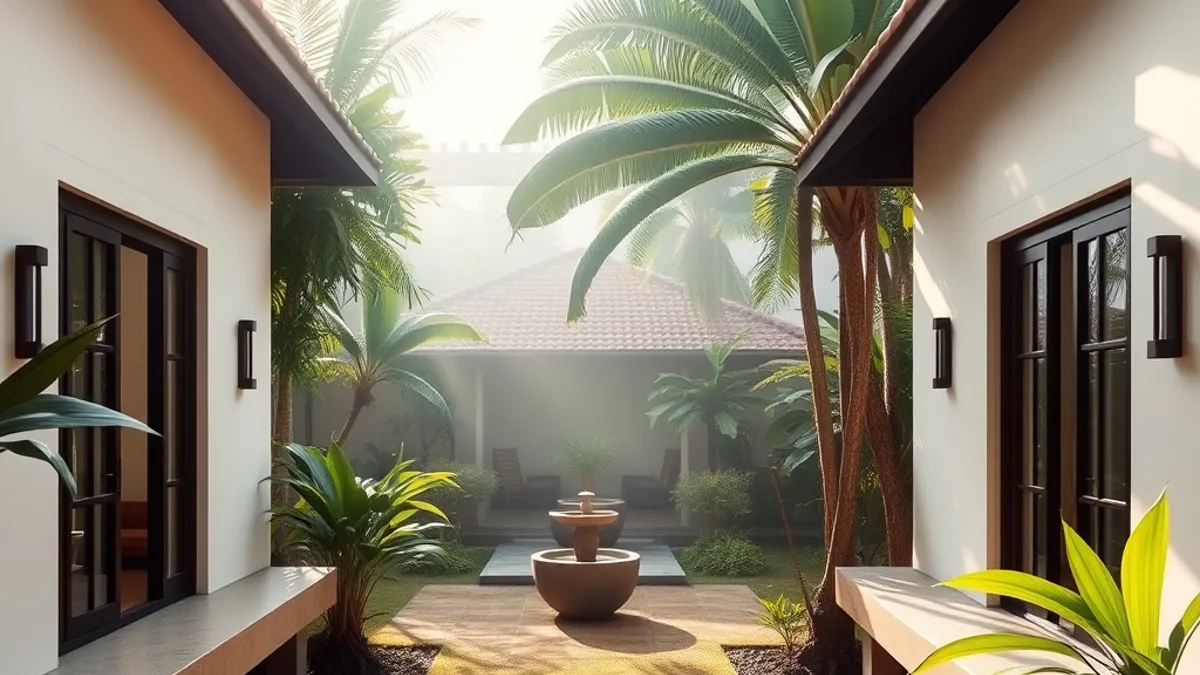
Living space matters just as much. Indoor-outdoor living rooms with wide sliding walls let the group spread across zones while still feeling connected, so teens can drift to one end and adults can talk without anyone being shut away. For older guests, a covered terrace or shaded lounge is the quiet hero of the layout: a comfortable, breezy spot to sit outside and watch the garden without sitting in the midday sun, which can be punishing in tropical destinations.
Pool, Garden and Play Spaces for Mixed Ages
The pool is usually the heart of a multigenerational villa holiday, so it pays to look closely at its design. A depth of 1.0-1.2 m suits mixed-age swimmers well: children can stand comfortably, and grandparents or cautious adults can wade in without feeling out of their depth. Ask the owner or manager whether the pool has a shallow entry shelf or a separate kids’ pool, because a single deep basin forces young children to cling to the edge all day.
If your group includes toddlers, fenced or gated pool access is the one feature you should verify before booking, not after arrival. Ask for photos of the barrier and confirm it closes securely. A beautiful pool without safe access turns every adult into a full-time lifeguard.
Look beyond the pool too. Flat, shaded gardens with open lawn give kids space for games while grandparents watch comfortably from a lounge chair, which works far better than steep terraced grounds where a single misstep means a tumble. In tropical destinations, midday heat between 11 am and 3 pm can push everyone indoors, so shade structures and non-slip decking make a real difference to how much of the day you actually enjoy outside. Some settings take this outdoor comfort even further, as you can see in this piece on overwater villas where privacy meets the horizon.
- Ask whether pool towels and floats are provided, so you are not packing bulky gear for eight or more people.
- Check if the pool is heated or naturally warm; in cooler highland areas, an unheated pool may go unused by older guests.
- Look for a shallow sun shelf with loungers in the water, which lets non-swimmers join the fun without getting in over their head.
- Confirm whether the garden has a covered play or shade pavilion, giving toddlers a cool retreat without trekking back inside.
Practical Features Families Forget to Check
The features that make or break a long family stay are rarely the ones featured in the photo gallery. Laundry facilities top the list: with children in the group, a stay of a week or longer generates a steady stream of swimsuits, sandy clothes and spilled meals, and a washing machine on-site saves everyone from overpacking. Ask whether laundry is self-service or handled by the villa staff, and whether it is included or charged per load.
Medical access is the second thing families forget to confirm. Before booking, ask how far the villa is from the nearest clinic; villas within 15-30 minutes of medical care are the safest choice, especially when grandparents or small children are traveling. In remote destinations, that question matters more than an extra bedroom ever will.
Finally, never assume baby and safety equipment comes standard. Stair gates, cribs and high chairs vary widely between properties, and renting them locally on arrival day is a headache you can avoid with one email before booking. The same goes for comfort basics: reliable Wi-Fi and air conditioning should reach every bedroom, not just the living areas, or someone in the family will sleep badly every night.
- Ask whether the villa offers a safe or lockable drawer for storing medications that need to stay cool and out of children’s reach.
- Check if the kitchen includes a kettle, microwave and basic kids’ dishware for late-night bottle and snack runs.
- Confirm who staffs the villa and whether someone is reachable overnight in case of an emergency or a power cut.
- Ask about backup power or a generator, since air conditioning that dies during a tropical storm affects the whole group at once.
Where and When to Book Multigenerational Villas
Timing Your Booking Right
Large villas that sleep 8-12 guests are the first to disappear from any booking calendar, so peak-season family trips need planning. Book 6-9 months ahead for travel in June-August and December, when the best multigenerational layouts sell out first and late bookers are left choosing between awkward configurations or multiple smaller properties.
If your dates are flexible, shoulder months reward you twice. May and October often price 20-30% below peak while still delivering good weather in most villa destinations, which means the same budget can stretch to a bigger garden, an extra en-suite bedroom or a chef service that would be out of reach in high season.
Picking the Right Setting
Layout matters as much as timing, and the surrounding terrain shapes the layout. Flat-access destinations such as rice-field valleys and calm lagoon coasts suit mixed-age groups far better than cliffside or hillside estates, where stairs and steep paths become a daily obstacle for grandparents and toddlers alike. The gentle, walkable landscape around Ubud’s quiet rice-field enclaves is a good example of how a flat setting keeps everyone mobile and independent.
One more filter to apply: airport transfer time. Destinations with transfers under an hour reduce arrival-day stress enormously, especially for older travelers who have just taken a long flight. A villa that looks perfect on paper loses its charm if the final stretch is a winding three-hour drive.
Choosing a Layout That Fits Your Family
Booking one villa for three generations often fails for a simple reason: the layout forces everyone to share too little space or sleep too far apart. When the whole group crowds into one living area and the bedrooms sit awkwardly split, the trip can feel more exhausting than a hotel stay. The fix is to treat layout as your first filter, not an afterthought.
Hold firm on the non-negotiables: ground-floor bedrooms for older guests, a minimum of three bathrooms, and a dining table that seats the whole group. Match the villa’s setting to your family’s mobility, whether that means a flat garden estate or a gentle beachside compound. And plan ahead — book early for peak season, or use shoulder months to get more space for the same budget. If this helped you plan your next family trip, leave a comment or share the article.