Standing at the booking page, cursor hovering over two room categories, most travelers ask the same question: is the extra money for a resort room upgrade actually going to change my holiday, or will I just pay more for a slightly bigger bed? Resort room upgrades can range from a modest step up to a completely different experience, and the honest answer is that some are worth every dollar while others barely register once you arrive.
This guide gives you a clear way to judge. We will look at which upgrades deliver the biggest daily payoff, which room categories justify the extra cost, and when timing your booking can save you money. We will also cover how to compare upgrade prices against the base room, the situations where upgrades are usually not worth it, and how your destination changes the whole equation, so you can decide with confidence instead of guessing.
When Resort Room Upgrades Are Worth the Money
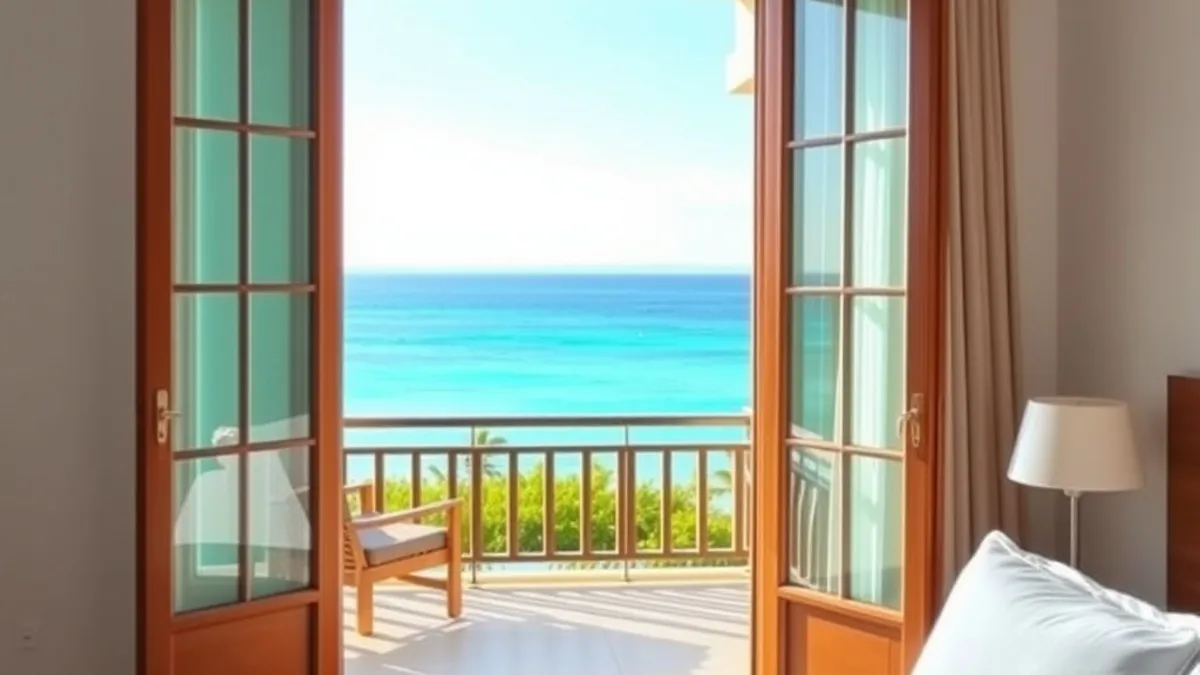
The simplest test for any upgrade is this: does it change something you will use every single day of your stay? View upgrades pass that test better than almost anything else. Moving from a garden room to an ocean-front category means you wake up to the water, watch the sunset from your balcony, and feel the difference every morning and evening. That daily payoff is exactly what you are paying for, and it is why view upgrades are usually the first ones worth considering.
Space and private facilities
Upgrades that mainly add square footage follow a different rule. Extra space matters most on stays of 5+ nights, or on trips where you genuinely spend time in the room, such as a slow holiday with lazy afternoons on the terrace. On a short trip where the room is just a base camp, that extra square meterage is easy to forget.
Private facilities work on a seasonal logic. A plunge pool or direct beach access justifies itself in hot months, when you will swim daily and actually use the feature. In cooler weather, the same upgrade can sit unused. Finally, be honest about the small stuff: a slightly better bathtub or a fancier coffee machine rarely changes the character of a holiday. These are the upgrades most often skippable, no matter how tempting they look in the room description.
Room Categories That Justify the Extra Cost
Not all room categories are created equal when it comes to value. Some upgrades buy you a genuinely one-of-a-kind setting, while others add a modest improvement at a modest price. Knowing which tier you are looking at helps you decide whether the premium is justified or inflated.
At the top of the range, overwater villas and beachfront pool villas often run 50-100%+ above entry-level rooms. That sounds steep, but these categories are the clearest case of paying for a setting you simply cannot get any other way. If the whole point of your trip is that villa experience, the base room will leave you feeling like you missed the destination itself.
For most travelers, the sweet spot sits lower down: ocean-view and sea-facing categories, typically 20-40% more than a garden room. You get the daily view payoff without the top-tier price. Here are other categories that can justify their cost in the right circumstances:
- Family suites and two-room categories: these pay off when they replace the need for booking a second room, which can make the effective per-person cost surprisingly reasonable, and they give parents a separate sleeping area from the kids.
- Adult-only wings: usually priced 10-20% above comparable base categories, they suit couples who value quiet over square footage, with calmer pools and less foot traffic.
- Higher floors: often a similar 10-20% premium, they typically bring better views and less noise from ground-level walkways and pool areas.
When to Book an Upgrade: Timing and Lead Time
Timing can matter as much as the upgrade itself. The same category can cost noticeably more or less depending on when you lock it in, and there are two distinct strategies: book early for peak season, or gamble politely at check-in during quieter months. Neither is better in every situation; the right one depends on how essential the upgrade is to your stay and how flexible you are willing to be.
- Book early for peak-season stays. If you are traveling in the December to March high season, secure the upgrade 3-6 months ahead. This locks the price before demand pushes it up, and it guarantees you the category you actually want when the resort is full. Waiting until arrival in peak season rarely works, because the best categories sell out first and last-minute offers are scarce.
- Ask at check-in during shoulder months. In quieter windows like May-June and October-November, resorts often have unsold higher categories sitting empty. This is when complimentary upgrades are most likely, so a polite request at the front desk can pay off. You have nothing to lose by asking, and the worst outcome is simply staying in the room you already booked.
- Book the base category and monitor prices if the upgrade is not essential. Once you are booked, keep an eye on the resort’s own upgrade offers, which often drop 15-30% in shoulder season. If a deal appears by email or on your booking page, you can add the upgrade later at a better rate than you would have paid originally.
The right approach depends on how much the upgrade means to you. If the ocean view is the reason you chose the resort, book it early and skip the uncertainty, especially for a special occasion where disappointment would sting. If it is a nice-to-have, patience and a well-timed question can get you the same room for less. Just remember that a guaranteed category booked in advance removes all risk, while hoping for a free upgrade always leaves some room for chance.
How to Compare Upgrade Prices Against the Base Room
The simplest way to judge an upgrade is to break it down into a per-night difference, then divide that by the number of days you will actually enjoy the benefit. A view you see every morning and a private pool you dip into every evening earn their keep daily; a bigger bathtub you use once does not.
Here is how the math works in practice. On a 7-night stay, a $40-per-night upgrade costs $280 in total. That figure is far easier to judge than a lump-sum price flashed at checkout, because you can weigh it against your daily routine: is the ocean-front balcony worth roughly $40 to you each morning of the trip?
Check what the base room already includes
Before paying a premium, read the base category description carefully. If the entry-level room already comes with a balcony, a decent view angle and a comfortable outdoor space, the higher category may add surprisingly little to your actual experience. Many resorts sell “upgrades” that differ mainly in floor level or a slightly wider angle on the same sea.
Finally, compare the upgrade cost against an extra experience rather than against nothing at all. For $280 you might instead book a spa day or a couple of treatments — for ideas, see this guide to resorts in Thailand for spa rituals and beach-soft mornings. Ask yourself which you would remember more a year from now: the same bed with a better window, or a massage you still talk about. Often the experience wins; sometimes, on a long stay where you use the view daily, the upgrade wins. Make the comparison explicitly and you will rarely regret the choice.
Situations Where Upgrades Are Usually Not Worth It
Most upgrade advice focuses on when to say yes, but knowing when to say no saves just as much money. The pattern behind every case below is the same: the premium category costs more, yet something about the trip stops you from using what you paid for. Run your itinerary against this list before you commit.
- Short stays of 1-2 nights: you barely settle in before checkout, so a view or villa premium buys very little actual enjoyment — you may sleep through most of it.
- Excursion-heavy trips: if your days are built around diving, boat trips or day tours, the room is only for sleeping, and a standard bed in a standard room sleeps just as well.
- Crowded peak-season bookings: when the upgrade price climbs sharply for the December to March rush, you pay a much higher rate while sharing the same pools, beach and restaurants with maximum crowds anyway.
- Resort-facility travelers: if you plan to spend your days at the spa, the pools and the restaurants rather than in the room, an expensive room sits empty from breakfast to bedtime.
A useful test is to picture your typical day hour by hour. If the upgraded features appear in that picture — the morning coffee on the sea-view terrace, the afternoon swim in your own plunge pool — the money is doing real work. If the day happens entirely outside the room, keep the base category and spend the difference on experiences you will actually use.
None of this means upgrades are bad value in general; it means their value depends entirely on how you travel. The same ocean-front villa that justifies itself on a quiet week-long honeymoon is poor value on a two-night stopover packed with activities. Match the spending to the schedule, not to the brochure photos.
Destination Choices That Change the Upgrade Equation
Where you travel changes the upgrade math as much as how long you stay. A category that feels essential at one destination can be an expensive afterthought at another, so it pays to think about the setting before you click “upgrade”.
Overwater destinations: the room is the experience
In the Maldives and similar overwater-style destinations, the premium category is not an add-on — it is the whole point of the trip. Stepping off your deck into the lagoon, watching fish from your glass floor panel: these are the memories, not extras. Yes, overwater and villa-style categories command the steepest premiums of any resort upgrade, often doubling the price of a base room. That makes the decision significant, but here the upgrade carries more weight than almost anywhere else. If the budget genuinely cannot stretch, a beachfront room still delivers a wonderful trip; just know what you are trading away.
Coastal and mountain resorts: different logic applies
At Mediterranean and coastal resorts, a sea-view upgrade matters most in summer months, when terraces and balconies are in daily use for breakfast, reading and evening drinks. Ocean-view categories typically cost 20-40% more than garden rooms, and in warm weather you will feel that difference every single day. Visit the same resort in cooler months, and the same premium buys far less usable enjoyment.
Mountain and wellness resorts flip the equation again. Weather varies, clouds roll in, and a panoramic view can be hidden for a day or two at a time. There, upgrades toward spa-access or wellness-wing rooms often beat view upgrades, because heated pools, saunas and treatment access deliver value regardless of the sky. For a closer look at that style of trip, see this guide to Swiss mountain wellness resorts and fresh-air restoration. The principle is simple: pay for whatever you will use daily at that destination, not for the category name.
Deciding With Confidence
The simplest test is this: a worthwhile upgrade changes something you use every day. An ocean view you wake up to, a private pool you swim in each afternoon, extra space for the family or direct beach access all earn their keep. A slightly better bathtub or a coffee machine rarely does, so skip those and keep the money for something you will actually remember.
Timing matters just as much as the category. Book early for peak-season stays to lock the price before demand rises, and ask politely at check-in during shoulder months when free or discounted upgrades are more likely. Then judge the per-night difference against how many days you will genuinely enjoy the benefit. Run that quick math before you pack, and the right choice will usually be obvious by the time you reach the front desk. If this helped you weigh your next upgrade, leave a comment or share the article with a fellow traveler.