Resort water slides and splash parks are often the highlight of a family holiday. Kids race up the stairs for another turn while parents watch from a lounger, half relaxed and half wondering what actually happens behind the scenes to keep all that splashing safe. It is a fair question, and the answer is more structured than most guests realize.
This article walks through the systems that make resort water slides work safely, from how slides and run-outs are designed in the first place to the lifeguard rotations, water quality testing and daily inspections that happen every operating day. We also cover the ride rules resorts enforce at the top of the tower, what parents can check before joining a queue, and the key takeaways to keep in mind. By the end, you will know exactly what to look for the next time your kids beg for one more ride.
How Resort Water Slides Are Designed With Safety in Mind
Good slide safety starts long before the first rider climbs the tower. Designers work backward from how a guest moves through the ride, and that shapes everything from the height requirements to the shape of the splash-down area. Body slides typically require a minimum rider height of around 1.0 to 1.2 meters, and that number is not arbitrary. It reflects the body length needed to hold the correct riding posture, with heels back, arms crossed and the torso positioned so the slide’s curves carry the rider the way engineers intended. A smaller child simply cannot maintain that position, which is why the height rule is a design feature rather than a formality.
Slowing down without a hard stop
The end of a slide gets just as much engineering attention as the start. Run-out lanes and splash-down pools are sized to slow riders gradually rather than stopping them abruptly. On a body slide, a long, gently rising run-out lets water resistance and friction bleed off speed over several meters. On rides that end in a pool, the splash-down area is deep enough and long enough to absorb momentum across a glide, not in one jarring moment. This is why you should never stand up or stop paddling in a splash-down lane; the geometry expects you to keep moving until you reach the exit point.
The tower itself
Slide towers are treated as part of the ride, not just a way up. Non-slip stair treads reduce slips even when feet are wet, and handrails run along both sides of the stairs so riders always have something to grip. At the top, queue platforms are gated, which keeps waiting riders separated from the slide entrance and gives attendants a controlled point to manage dispatch. When you walk up a well-maintained tower, all three elements should be obvious: grippy steps, rails on both sides and a gate at the platform.
Lifeguard Coverage and Daily Rotations
Slide design sets the stage, but people keep it safe hour by hour. Certified lifeguards are stationed at the key points of every water attraction during opening hours: at the top of slide towers, at the splash-down pools below and around the edges of splash parks. Because a slide incident and a splash park incident look completely different, each post has its own sightlines and responsibilities, and coverage is planned so no zone goes unwatched while a ride is running.
Rotations and signals
Vigilance fades with time, so guards usually rotate posts every 20-30 minutes with a short scan break in between. The rotation keeps eyes fresh, and it also means every guard knows every zone on the deck. Communication follows a standard code: whistle signals are the default way to flag a rescue, clear a zone or get another guard’s attention, so responses do not depend on anyone shouting instructions across a noisy pool. Many resorts with large aquatic zones, such as the pool complexes you find at city-edge resorts in Singapore with composed poolside settings, run this rotation system across multiple attractions at once.
Controlled dispatch
The most overlooked safety job happens at the top of the tower. Ride dispatch is controlled, meaning staff do not simply wave riders up to the entrance. The attendant at the launch point signals the next rider only once the splash-down area below is confirmed clear. That single check prevents the most common slide hazard: a rider landing on top of someone who has not yet cleared the run-out. If you watch a busy slide for a few minutes, you will notice the rhythm, a pause between riders while the bottom is checked, then the signal, then the ride. That pause is deliberate, and it is one of the clearest signs a slide is being run properly.
Water Quality Testing in Pools and Splash Parks
Clean water is the part of slide and splash park safety guests notice least when it works and immediately when it does not. Resort pools and splash zones operate on strict chemical targets: free chlorine is typically held between 1.0 and 3.0 ppm, which is strong enough to neutralize bacteria and organic matter from dozens of swimmers while still comfortable for skin and eyes. pH is kept near 7.2-7.8, close to the pH of human tears, because when pH drifts too high, chlorine loses much of its disinfecting power even if the reading looks fine.
On busy resort pools, staff test the water 2-4 times per day and log the results. The log matters: it creates a record that shows whether readings have been drifting, and it tells maintenance teams when to adjust dosing before a problem becomes visible. Automated dosing systems handle much of the fine-tuning, but manual tests remain the standard check because test strips and photometers catch what sensors can miss.
How splash park water stays clean
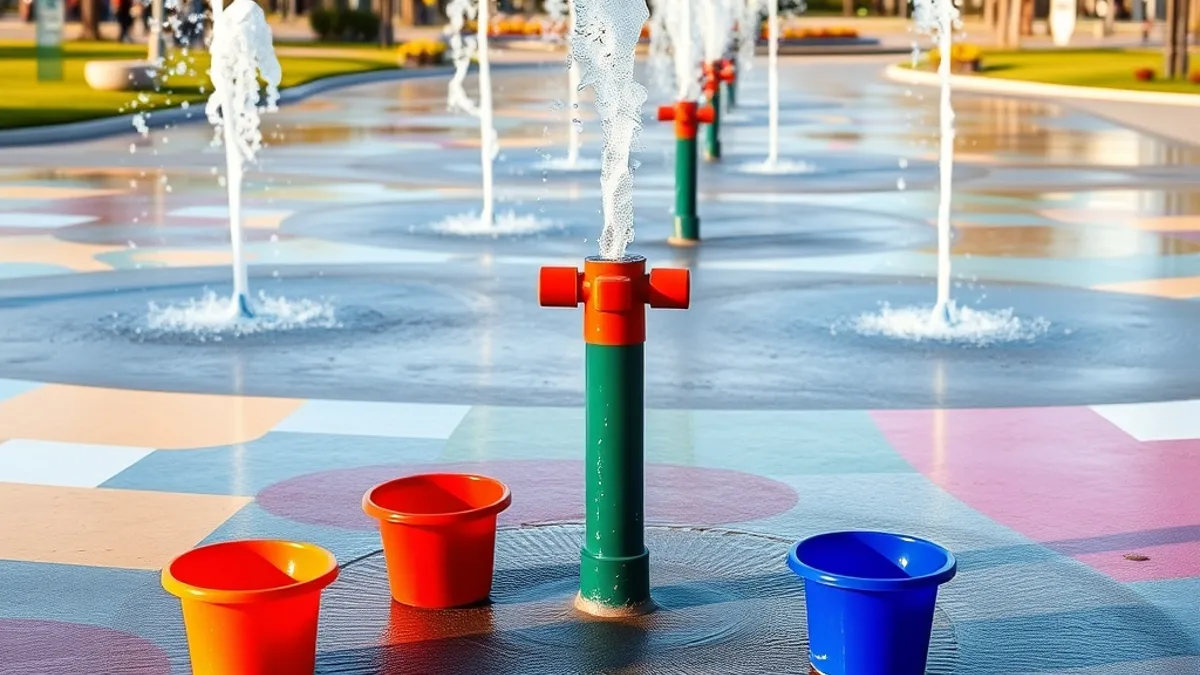
Splash parks are their own system. Because young children play directly in the spray features, the water is treated especially carefully. Most splash parks commonly use recirculated, filtered water refreshed on a daily cycle rather than drawing fresh water continuously. In practice that means:
- Filtration passes the entire volume repeatedly through sand or cartridge filters, which capture hair, sunscreen residue and the small particles that cloud water and shelter bacteria.
- Daily refresh cycles replace a share of the water volume each day, so contaminants that survive filtration are steadily diluted rather than accumulating over a season.
- Play features and nozzles are part of the water system itself, so the same treated, filtered water feeds the fountains and sprays children run through.
- UV or secondary disinfection is often added alongside chlorine at larger splash parks, providing a second barrier against chlorine-resistant organisms.
If you want a quick visual check as a parent, clear water with visible drain covers and no strong chemical odor is a good sign. Cloudy water or a sharp smell usually means the balance is off, and it is worth mentioning to staff before letting kids play.
Ride Rules: Height, Age and Supervision Checks
Height limits at resort water slides are treated as firm rules, not friendly suggestions. Most slides have a measuring board or a physical gauge at the entrance, and many resorts set up a dedicated measuring station before you even join the queue. If a child is under the line, staff will turn them away at the platform, so it saves tears (and wasted queue time) to check before lining up.
Age and supervision rules matter just as much as height. At most resorts, children below a certain age cannot be in a splash park enclosure without an adult present, and that adult is expected to stay inside the fenced area, not watch from a lounge chair on the far side of the pool deck.
The final checkpoint comes from the slide attendants themselves, who give each rider a quick once-over just before sending them down. Here is what they are typically looking for:
- Single riders only — tandem riding changes a rider’s speed and posture, so most body slides send one person down at a time, even for small children who meet the height minimum.
- No loose items — sunglasses, water shoes, hats and phone cases are asked to be removed because they can fly off mid-slide and injure riders below or clog the splash-down pool drain covers.
- Feet-first position — riders must launch lying or sitting feet-first; head-first sliding is the fastest route to facial and spinal injuries and attendants will correct posture before giving the go signal.
It is also worth listening to the pre-ride briefing attendants give at the platform. They will usually remind riders to keep arms and legs inside the slide channel and to stay in the riding position until they reach the run-out. If an attendant asks a rider to remove an item or adjust their posture, it is not fussiness — loose objects and poor form are among the most common causes of minor injuries on body slides. Teaching kids these habits before your trip makes the whole process faster and calmer for everyone waiting in line.
Daily Inspections, Maintenance and Closing Procedures
Before the first guest climbs the tower, someone from the aquatics team has usually already climbed it themselves. Slides are walked and inspected every morning before opening, with staff checking seams and joints for wear, confirming that joints are flush and smooth, and running water to verify that flow rates look normal along the whole length of the channel.
Splash parks get similar attention on a schedule. Nozzles, spray cannons and dump buckets are flushed and cleaned on planned maintenance days, which keeps spray features hygienic and prevents clogged heads from producing weak or unpredictable jets that children might lean into.
Weather and Incident Closures
Water slides shut down quickly when conditions turn. Lightning in the area, heavy rain that reduces visibility, or a rescue in the splash-down pool will all close a ride temporarily. Riders already in the queue are usually asked to clear the tower while staff secure the area.
The key thing to know as a guest is that reopening is not automatic. A ride stays closed until a staff member has checked the slide and signed off that it is safe to run again. If you see an attraction sitting idle on a blue-sky afternoon, that pause is usually a sign the system is working as intended rather than a problem.
What Parents Should Check Before Using Resort Water Slides
Timing makes a bigger difference at resort water slides than most families expect. Peak slide queues are shortest before 10:00 and after 16:00, when many guests are still at breakfast or heading to dinner. Those windows also tend to be the moments when lifeguards are least stretched by crowds, which means sharper attention on every dispatch and a faster response if anything goes wrong.
Before committing to a long line, measure your child. Standard height minimums for body slides run about 1.0-1.2 meters, and enforcement at the platform is strict. A quick check at your room — or at the measuring station by the queue — avoids the disappointment of being turned away after thirty minutes of waiting.
Finally, take two minutes to orient yourself when you arrive. A well-run slide area shows its safety setup openly, and the details are easy to spot if you know what to look for:
- Depth markers — posted water depths at the splash-down pool tell you whether a non-swimmer who passes the height check will still be out of their depth at the bottom.
- Lifeguard positions — count the guard stands covering the slide tower, splash-down pool and any connecting pool so you know exactly where help is stationed before your child rides.
- A visible first-aid point — there should be a clearly signed first-aid station or posted emergency procedure near the slide exit; if you cannot find one, that is a reasonable reason to be cautious about the operation overall.
The Takeaway on Resort Water Slide Safety
The short answer is that no single measure carries the load. Safe resort water slides rely on layered systems: design, lifeguards, water testing and daily inspections all working together. If one layer slips, the others catch it, which is why a quiet morning walk-through by maintenance staff matters just as much as the guard scanning the splash-down pool.
For families, understanding those layers changes how you use a water park. You start noticing the details: the posted rules, the guard rotations, the way staff manage the queue at the top of the tower. That awareness makes it easier to relax, because you can see the safety routines happening in real time rather than hoping they exist.
If this guide answered your questions, leave a comment or share it with another planning family.