You’ve booked a villa advertised as fully air-conditioned, arrived after a long flight, and then discovered the truth: the cool air stops at the bedroom door. The lounge is stifling, the dining table sits in a sauna, and the ceiling fan overhead just pushes warm air around. This gap between what listings promise and what villa air conditioning actually covers is one of the most common surprises in tropical villa rentals.
The reality is that “air-conditioned” can mean anything from one split unit in one bedroom to cooling in every room of the house. This guide walks you through why layouts differ between rooms, what bedroom cooling typically includes, and how living spaces are usually handled. We’ll also cover when full cooling really matters based on season and climate, the hidden electricity costs some hosts pass on, and the exact questions to ask before you book so your next villa matches your expectations.
Why Villa Air Conditioning Layouts Differ Between Rooms
If you’ve ever wondered why the living room in your villa rental felt like an afterthought, the answer usually comes down to money and design philosophy. Cooling a bedroom all night is the single biggest comfort priority for most guests, so owners almost always install units there first. Air conditioning is expensive to buy and run, and a unit that hums through eight hours of sleep delivers far more perceived value than one cooling an empty lounge at midday. That’s why budget and mid-range villas, especially those under $150 per night, most commonly offer bedroom-only cooling.
Tropical villa design often works with this choice rather than against it. Many properties are built around open sliding walls, high ceilings and covered verandas that let natural cross-ventilation do the work in shared spaces. In a well-designed villa with a good breeze, a ceiling fan in the lounge can be genuinely pleasant during the day, and owners know it. The architecture itself becomes part of the cooling strategy, with rooms positioned to catch prevailing winds and openings placed on opposite walls to pull air through.
Why the listing label can mislead you
The problem starts with the phrase “air-conditioned villa” itself. In some listings, it means every room has a unit. In others, it means exactly one split air conditioner in one bedroom, with the rest of the villa relying on fans and open walls. Both can honestly carry the same label, which is why the layout matters far more than the wording. Before you book, treat the label as a starting point for questions, not as an answer, and find out specifically which rooms are cooled and how the rest of the villa handles the heat.
What Bedroom Cooling Typically Includes
Bedroom cooling is the part of a villa that hosts get right most often, because it’s where guests notice temperature differences the most. The standard setup in most villa rentals is a split-unit air conditioner: a quiet indoor unit mounted high on the wall, connected to a compressor outside. These units are sized for a single room of roughly 15 to 25 square meters, which covers most villa bedrooms comfortably. You’ll usually control it with a handheld remote, though some villas use a wall-mounted thermostat instead.
How bedrooms are actually used
Nighttime is when bedroom units earn their keep. The typical pattern is simple: the air conditioner runs from bedtime until morning, keeping the room at a sleeping temperature, while daytime cooling stays off entirely. Guests are out at the beach or the pool during the day anyway, and many hosts even ask that units be switched off when you leave the room. This nighttime-focused use is built into how owners size and install the equipment, so don’t expect a bedroom unit to cool the room instantly if you switch it on at midday after it’s been off for hours.
One detail that catches travelers off guard is the spaces attached to the bedroom. En-suite bathrooms, walk-in dressing areas and private corridors that connect to the sleeping room are sometimes covered by the same unit’s airflow and sometimes not. It varies enormously between properties, and a bathroom without airflow in a humid climate can stay damp and uncomfortable no matter how cold the bedroom gets. Ask the host specifically whether the en-suite and dressing area are included in the cooling, rather than assuming the whole suite benefits from the single unit on the wall.
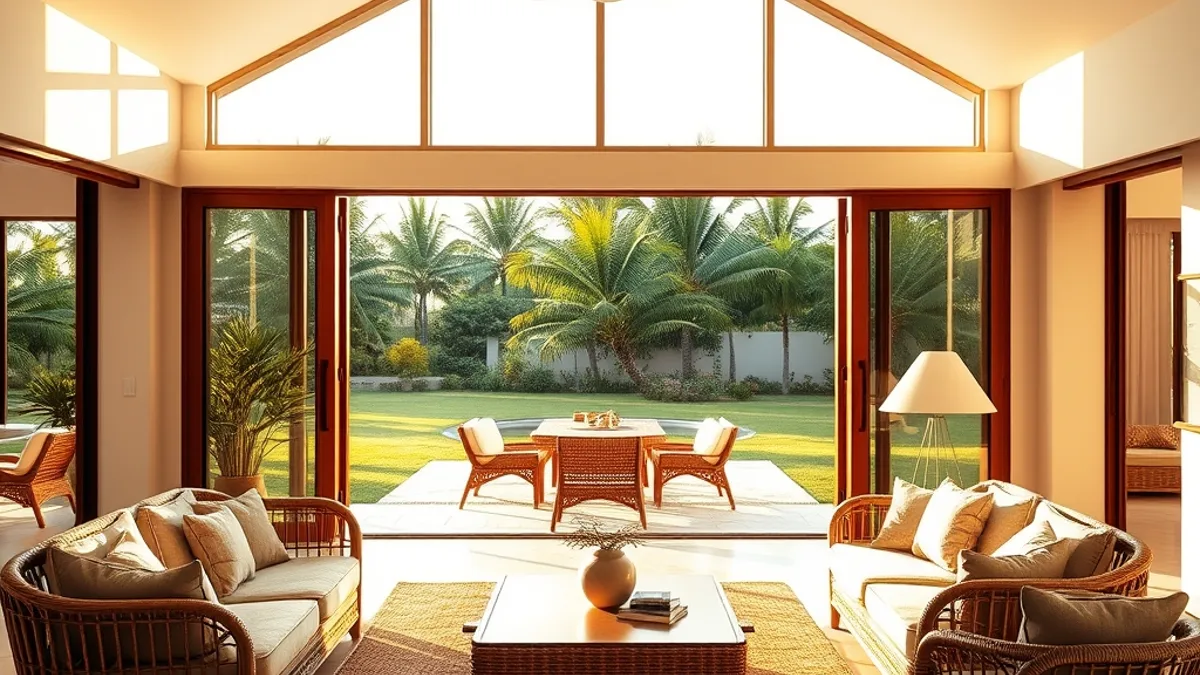
How Living Spaces Are Cooled or Left Open
Living spaces are where villa cooling gets complicated, and the reason is mostly about size and cost. A typical open-plan lounge and dining area runs 40 square meters or more, often flowing into the kitchen with high ceilings above. A single split unit designed for a 15 to 25 square meter bedroom simply can’t handle a volume like that, so cooling an open living space evenly usually takes two or more units. Doubling the equipment and the running costs is exactly why many owners skip air conditioning in these areas altogether.
The fan compromise
The most common middle ground, especially in mid-range villas, is a well-placed ceiling fan. A moving stream of air speeds up evaporation from your skin, which can make a room feel around 3 to 4 degrees Celsius cooler than it actually is. It doesn’t lower the temperature, but it transforms how a warm lounge feels, particularly when combined with open sliding walls and a decent cross-breeze. For daytime lounging, reading or an evening drink, many guests find this perfectly comfortable once they adjust to the climate.
When living spaces do get full cooling
Budget matters here as much as design. Villas priced from $250 per night upward are far more likely to extend full air conditioning into the lounge, dining area and sometimes even the kitchen, because the nightly rate supports the extra units and the electricity bill that comes with them. If enclosed, cooled shared space is important to you, whether for napping children, remote work or simply escaping the midday heat, the price band of the villa is one of the clearest signals of what to expect. Still, treat it as a likelihood rather than a guarantee, and confirm the specific layout with the host before booking.
When Full Cooling Matters Most: Season and Climate
Season changes everything when it comes to villa cooling. During the peak tropical months from December to March and June to August, midday heat can turn an open living space into the least comfortable spot on the property. If your villa only cools the bedrooms, you may find yourself retreating indoors by early afternoon and skipping the lounge entirely, which defeats the purpose of renting a whole villa rather than a hotel room.
Shoulder seasons tell a different story. In many Indian Ocean destinations, April and May bring steady breezes that make fan-cooled lounges far more tolerable. A ceiling fan that felt inadequate in January can feel refreshing in late spring, especially in a well-designed villa with high ceilings and wide openings on more than one side.
When airflow does the work
Some destinations simply lean on natural ventilation more than others. Maldives overwater villas and stays along the Zanzibar coast, such as the properties described in this guide to quiet Zanzibar beach retreats, often rely on sea breezes and open sliding walls in shared spaces rather than mechanical cooling. Bedrooms still get air conditioning for sleeping hours, but the lounge stays open by design.
Before booking, match the villa’s cooling layout to your travel dates. Full-villa cooling matters most in the hottest months, while a fan-cooled lounge can be a pleasant, budget-friendly choice in breezier seasons.
Hidden Costs: Electricity Charges and Usage Rules
Electricity is where villa pricing can quietly change. Some hosts bill power separately, and heavy air conditioning use can add $10-30 per day to your stay. On a week-long trip, that is a meaningful amount that rarely shows up in the headline nightly rate, and it can turn a budget-friendly booking into a much pricier one by checkout time.
The usual trigger is simple: units left running with doors or windows open. An air conditioner fighting an open sliding wall in a tropical climate burns through power fast, and hosts who pay the utility bill themselves often write usage rules precisely for this reason. Ask about meter policies before arrival, not after you see the charges.
The most reliable protection is a written answer. A verbal “yes, air conditioning is included” can mean unlimited use or a modest daily allowance, so get the details in the booking thread where you can refer back to them later if a dispute arises.
- Ask whether the villa has a separate electricity meter for your unit, and whether you can see the reading at check-in and check-out to verify any final charge.
- Find out if there is a daily kilowatt-hour cap, and what rate applies if you go over it, since per-unit rates for guests are often higher than standard residential tariffs.
- Check whether fans and lights count toward the same allowance as the air conditioners, because a family using fans all evening can consume more than expected.
- Request the house rules on leaving units running while you are out, since some hosts do spot checks and apply flat fees for doors found open.
How to Verify the Cooling Setup Before You Book
Listing labels rarely tell the full story, so the burden falls on you to ask the right questions before paying a deposit. A short, specific message saves more trouble than any amount of photo-scrolling, and hosts who answer clearly are usually the ones who run well-organized villas. Think of this step as your last line of defense against booking a villa that only cools a single bedroom while the space you actually live in during the day stays hot and stuffy.
- Message the host with a precise question: which rooms have air conditioning units, how many units there are in total, and whether the living spaces are included. Vague answers like “yes, the villa has AC” deserve a follow-up, because one bedroom unit technically makes that answer true. Ask them to name each cooled room individually so nothing gets lost in translation.
- Ask for recent photos of the living area showing wall units or ceiling fans. Listing galleries often showcase bedrooms only, so a lounge can look spacious and inviting without revealing whether it has any cooling at all. A quick photo request takes the host two minutes and tells you far more than the written description.
- Match the answer to your travel dates. If you are staying during the hottest months, prioritize full-villa cooling over a fan-cooled lounge, and be willing to pay a higher nightly rate for it. Families with young children or older relatives often find this upgrade worth every bit of the price difference.
- While you have the host’s attention, confirm the electricity terms at the same time, since cooling layout and usage rules often go hand in hand. Getting both answers in one message keeps the whole conversation in a single thread you can refer back to later.
Ten minutes of messaging turns an unclear listing into a predictable booking. Hosts who respond with room-by-room detail and photos are giving you exactly the information that a generic “air-conditioned villa” label leaves out, and their willingness to answer is a useful signal in itself. If a host dodges these simple questions or replies with vague reassurances, treat that as a warning sign and keep looking.
Choosing the Right Cooling Setup for Your Stay
That gap between the listing and reality is easy to close once you know what to look for. “Air-conditioned” can mean one split unit in one bedroom, so the layout matters more than the label. Bedroom-only cooling suits short stays and cooler seasons, while full cooling suits families and peak-month trips. If you are paying villa prices from $250 per night upward, full-villa cooling is far more likely, but it is still worth confirming rather than assuming.
Remember that living-space comfort depends on fans, airflow and villa design as much as on the number of units, so a fan-cooled lounge in a breezy spot can feel perfectly pleasant. Check the layout, your travel dates and the electricity terms upfront, and an unclear listing becomes a predictable booking. If this helped you sort out your next villa stay, leave a comment or share the article with a fellow traveler.