Booking a lodge with a kitchen should mean freedom: cook when you want, eat what you like, and skip restaurant queues after a long day of hiking. The problem is that “kitchen” covers a huge range. Some self-catering lodges hand you a fully equipped space with an oven, dishwasher and enough plates for the whole family. Others offer little more than a microwave, a two-ring hob and two forks, which is a nasty surprise if you have packed a week’s worth of meal plans and a cooler full of food.
This guide walks through what you can realistically expect, section by section. We cover the standard appliance set, the cookware and utensils typically provided, the pantry and cleaning supplies that count as starter stock, and how linen and towels fit into the rate. We also look at grocery planning for lodges far from a supermarket, how to verify the kitchen setup before you book, and what actually deserves space in your suitcase.
What Self-Catering Lodges Include in the Kitchen
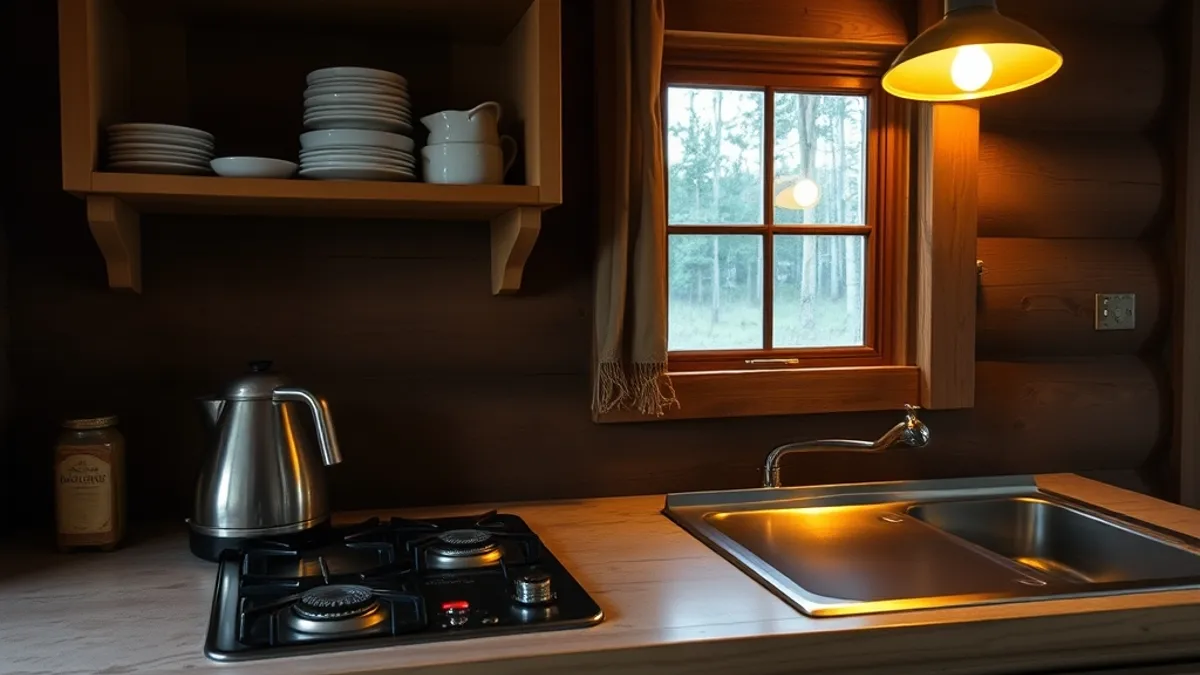
Most self-catering lodges follow a predictable pattern when it comes to appliances, and knowing that pattern makes it much easier to spot a listing that falls short. The standard set includes a fridge or fridge-freezer, a stovetop or hob, and either a full oven or a microwave — sometimes both. You can also count on the two small appliances that matter most to British and European travelers: a kettle and a toaster. With those five basics in place, you can boil water, make toast, cook a simple dinner and keep milk and butter cold without any real problem.
What moves a kitchen from basic to comfortable
Step up to mid-range and upscale lodges and the appliance list usually grows. A dishwasher is the most common addition, and it changes the feel of a holiday more than you might expect — no one wants to spend their evening scrubbing pans while the others relax by the fire. A coffee machine is another frequent upgrade, replacing the jar of instant coffee with something closer to what you drink at home. Some properties also add a blender for smoothies and soups, or a washing machine, which is especially welcome on longer stays or trips with young children.
Budget units are where expectations need to shrink. A cheaper lodge may offer only a two-ring hob and a microwave, with no oven at all. That rules out roasts, baked dishes and anything that needs sustained heat, so your meal planning has to adapt. Before booking, check the appliance list on the listing page or ask the host directly. Five minutes of questions about the oven, the fridge size and whether a dishwasher exists will save you from a week of microwave dinners you never planned to eat.
Cookware, Crockery and Utensils You Can Expect
Cookware in a self-catering lodge is almost always sized to the property’s maximum occupancy, not to your actual group. If the lodge sleeps eight, expect roughly 4-8 place settings of pots, pans, plates and cutlery. For a couple renting a two-person lodge, that is usually plenty. For a larger group that cooks proper meals every night, the provided kit can feel thin — two frying pans and a single large pot get a workout when you are feeding six people twice a day.
The everyday tools are generally covered. You will normally find a chopping board, a colander for draining pasta, a corkscrew, and a handful of basic serving dishes. Knives are the weak point: most lodges supply one or two, and they are often dull from years of guest use. Specialist tools rarely make an appearance at all, so if your cooking depends on them, plan to bring your own.
- Bakeware: baking trays, cake tins and muffin pans are almost never provided, so bring a small tray if you plan to roast vegetables or cook anything in the oven.
- A sharp chef’s knife: packing one wrapped in a towel in your checked luggage transforms meal prep, since lodge knives frequently struggle to cut a tomato cleanly.
- Large serving platters and bowls: group meals need somewhere to land, and most lodges stock only individual plates plus one or two small dishes.
- A good non-stick frying pan: lodge pans are often scratched and worn; if you cook eggs or fish regularly, your own pan is a worthwhile few inches of suitcase space.
If you cook seriously, treat these gaps as a checklist. A quick message to the host confirming what is on hand, combined with a couple of items in your car or suitcase, closes most of them without much effort.
Pantry Basics, Consumables and Cleaning Supplies
Nearly every self-catering lodge leaves a small starter pantry for arriving guests, and it is genuinely useful on that first evening when the nearest shop is closing. The typical spread covers salt, pepper, cooking oil, tea bags and instant coffee — and that is usually the full list. Some hosts add sugar and a few sachets of things like sauce or seasoning, but you should not rely on it. Treat the pantry as a bridge to your first grocery run, not as a supply for the week.
The cleaning kit and how long it lasts
Cleaning supplies follow the same starter-stock logic. Expect dish soap, a sponge, tea towels and bin bags as standard. In lodges with a dishwasher and washing machine, you will usually find dishwasher tablets and laundry detergent too, but only in quantities for roughly the first 2-3 days. After that, replacements come out of your own shopping. The same applies to everything else: toilet paper, hand soap and tissues are provided, but only in the amount the host left at turnover.
The practical takeaway is simple. When you write your grocery list before the trip, add the consumables you would normally overlook at home — extra toilet paper, more dishwasher tablets, a spare sponge, and a bottle of cooking oil if you use a specific kind. These are cheap items, but discovering you have run out of toilet paper an hour from the nearest shop is a poor way to spend a holiday evening. A two-minute check of the starter stock when you arrive tells you exactly what needs to go on the next shopping list.
Bed Linen, Towels and What Counts as Included
One of the nicest surprises for first-time lodge renters is that bed linen and bath towels come as standard in nearly all self-catering lodge rates. You arrive to made-up beds and fresh towels, so there is no need to stuff sleeping bags or spare duvets into your car. This alone can save a serious amount of trunk space, especially if you are traveling with children and their bedding. On longer stays, linen is typically changed weekly rather than after every few nights, so pack accordingly if you prefer fresher sheets more often.
That said, not every textile is covered by the base rate. Several items sit in a gray zone where some lodges include them and others charge extra or skip them entirely, so it pays to ask before you pack. A quick message to the host takes two minutes and can save you an awkward arrival-day discovery.
- Beach and pool towels: If the lodge has a hot tub, pool or lake access, these are frequently not included, and bath towels are often expected to stay indoors. Quick-dry travel towels are a cheap backup.
- Extra blankets: Beds usually come with a duvet and one set per person, so cold sleepers may want to confirm spare blankets exist or pack a warm layer for chilly nights.
- Cot linen: If you request a travel cot for a baby, the cot itself may be provided but the sheet and blanket often are not, so bring your own fitted sheet and a familiar blanket.
Mid-stay cleaning is another point to clarify. Unlike hotels, most lodges do not include a refresh during your visit; it is usually an optional extra paid separately, or you simply handle light cleaning yourself and leave the place tidy at checkout. If you would rather skip chores entirely, ask about a mid-stay clean when booking rather than assuming one is included.
Grocery Planning Around Remote Lodge Locations
Remote lodges offer wonderful peace and quiet, and that isolation has a practical side: shopping. Many lodges sit 20-60 minutes from a full supermarket, so the nearest decent-sized store may be a half-hour drive each way. Plan a 1-2 hour shopping stop on arrival day, either on the way to the lodge or as your first activity once you have the keys.
Village shops and petrol station stores can rescue you in a pinch, but they stock only essentials like milk, bread and pasta, and usually at noticeably higher prices. Treat them as backup, not as your main source of groceries for the week.
What to bring from home
Specialty items are the ones you will miss most in a rural shop. Pack good coffee, your favorite spices and cooking oils, and any wine or beer you care about, since small village shops rarely carry a serious selection. The same goes for specialty diets: gluten-free pasta, vegan cheese or specific snacks can be impossible to find locally.
If you arrive late or on a public holiday
Arriving after the supermarkets close, or on a public holiday when everything is shut, can leave you with an empty fridge on night one. Many lodges offer a pre-arrival grocery order or a welcome hamper for exactly this situation. Ask the host when you book, and check current details on what they can stock and how you pay for it.
How to Verify the Kitchen Setup Before You Book
Photos can flatter a kitchen, and listings rarely mention what is missing until you are standing in front of a cupboard with one dull knife and a single battered saucepan. A few targeted questions before you book will tell you whether the kitchen matches your cooking plans, or whether you should lower your menu expectations and plan for simpler meals. This matters most if you are staying somewhere remote, where replacing a missing item means a long drive to the nearest town. It also matters for longer stays, because small gaps in the kit become genuinely annoying by day three. The good news is that hosts are usually happy to answer these questions, and most can send you an inventory list within a day. Asking now costs you a few minutes; asking after you arrive costs you a ruined dinner and a grumpy evening.
- Request a full inventory list from the host. Most hosts can send a simple list of appliances, cookware and utensils. If they cannot, ask specifically about the oven type, fridge size and whether there is a knife block rather than a single knife drawer.
- Study the listing photos with a critical eye. Zoom in on the cooking area: is there a full-size oven or just a microwave, how big is the fridge door, and can you spot a chopping board or colander on the counters?
- Match place settings to your group size. Confirm the number of plates, cutlery sets and mugs actually fits your party, so you are not running the dishwasher after every single meal.
- Ask about the extras that matter to you. If you are traveling with a toddler or planning to grill, check whether a highchair, BBQ or any other add-on is available on site.
- Read recent reviews that mention cooking. Guests who cooked during their stay tend to flag gaps the listing omits, like a missing corkscrew, a tiny oven or no baking tray.
Ten minutes of this homework before you pay a deposit saves you from the most common kitchen disappointments, and it gives you a clear shopping list for anything you decide to bring yourself. Write down what the host confirms, because verbal promises can be forgotten by the time you check in. If a response is vague or evasive, treat that as a signal in itself and weigh it against other options. Finally, keep your questions polite and specific: hosts answer direct questions far more readily than open-ended ones, and you will get more useful answers about the things that actually matter to your stay.
Packing Smart for a Lodge Stay
So, will you find a full kitchen or just a microwave and two forks? In most cases, self-catering lodges cover the essentials well: a standard appliance set, cookware sized for 4-8 guests, starter pantry items like salt, oil, tea and instant coffee, plus bed linen and towels. That means your suitcase should be reserved for food and any specialty tools you genuinely can’t cook without.
Before you book, spend a few minutes checking the inventory list and recent guest reviews, and confirm anything missing with your host. Once you arrive, plan one main grocery run of 1-2 hours near the start of your stay, since many lodges are a fair drive from the nearest large store and small village shops rarely stock everything. Do that short pre-booking check and the kitchen surprises mostly disappear. If this guide helped you plan your trip, leave a comment or share it with a fellow traveler.