Most travelers book a private villa for one reason above all: privacy. Your own pool, your own gate, no lobby full of strangers. But privacy and security are not the same thing, and few guests know how to tell whether the villa they booked actually delivers both. That gap is where most problems happen.
This guide to villa security breaks the topic into the four things that matter: what a villa’s security layers actually cover, how gates and compound access work, what an in-room safe can and cannot protect, and how alarms, cameras and staff entry should be handled. You will also find practical questions to ask before booking, so you can judge a property’s security setup before you arrive rather than after.
What villa security actually covers
Security in a private villa works in layers, and each layer does a different job. The perimeter layer is physical: walls, fences and gates that control who can reach the property at all. The tech layer is electronic: perimeter alarms and CCTV that detect movement and record activity. The human layer is people: housekeepers, property managers and, in some compounds, security patrols. A villa can be strong in one layer and weak in another, which is why it helps to check each one separately.
The biggest difference from a hotel is that villas rarely have a front desk. If something goes wrong at midnight, there is no reception to walk into. Your response point is the property manager or the compound’s security team, and how quickly they react depends entirely on how that setup is organized. Knowing who to call, and confirming that number works, is part of your security planning.
What to expect at different price points
Budget affects the tech layer more than anything else. Villas above roughly $300 per night usually include perimeter alarms and CCTV as standard. Cheaper villas often rely on gates and staff alone, which can still be perfectly adequate, but it means the human and perimeter layers carry all the weight. If you book a budget villa, ask directly what happens when the gate is closed and no one is watching it.
Gates and compound access
In most resort areas, the standard setup is a gated compound with 24-hour security patrols, and that structure does most of the security work before anyone even reaches your door. A standalone villa on an open road is the exception, and it deserves a closer look: with no compound boundary, the villa’s own gate and staff become the only barrier between the road and your bedroom.
Access is usually managed through codes rather than keys. Guests typically receive 2 to 4 unique access codes per stay, and those codes are changed after checkout so previous guests cannot walk back in. That system works well, but only if you understand who holds which code and when it was last changed.
One question separates good setups from average ones: is the gate staffed or code-operated? A staffed gate adds a human check on every visitor and delivery, which stops most casual problems before they start. A code-operated gate is fine, but it means anyone with a valid code gets through unchallenged.
- Delivery check: at a staffed gate, food and package deliveries are logged and announced before they reach your villa, so you know a stranger is coming.
- Code sharing: if you ever suspect a code was shared with someone who should not have it, requesting a change costs nothing and takes under 10 minutes.
- Late arrivals: confirm in advance how a code-operated gate handles a taxi or rental car arriving after midnight, so you are not stuck outside.
In-room safes and valuables
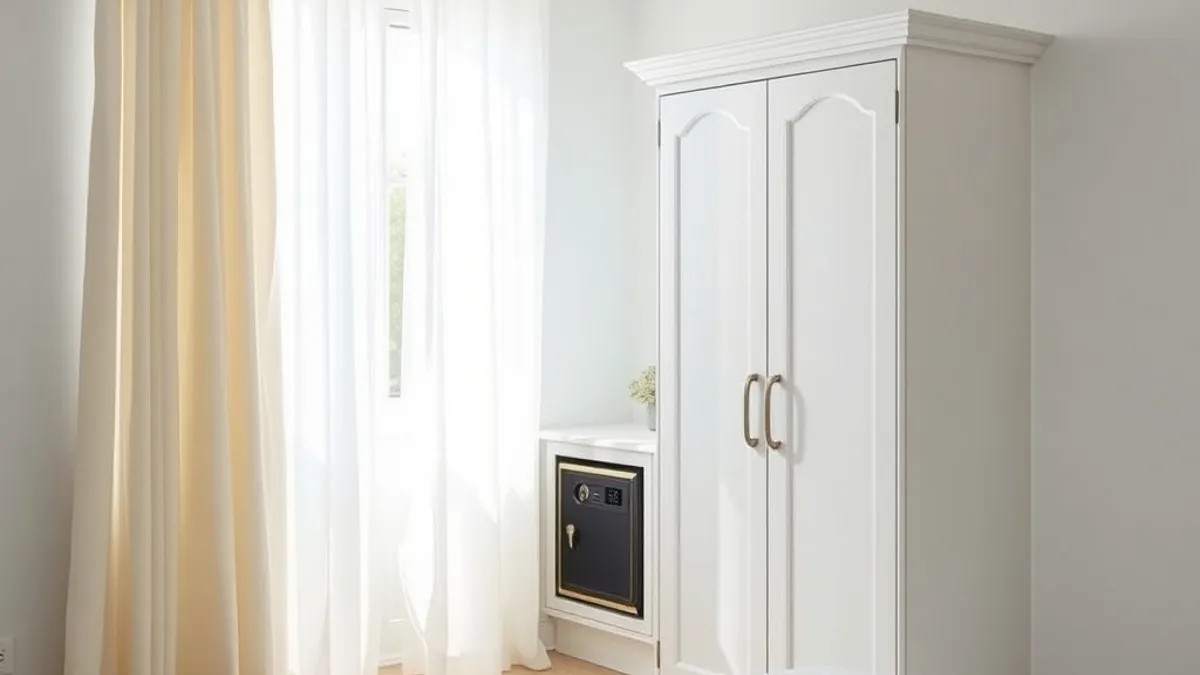
The in-room safe is the layer of villa security you interact with most, and it is also the one guests test least. Most in-room safes fit laptops up to 15-17 inches, which covers a standard laptop but not much more. If you travel with camera bodies, a tablet plus a laptop, or other bulky gear, confirm the safe’s interior size with the host before you book, not after you unpack.
Do the safe check in the first hour
Make the safe check part of your check-in routine, within the first hour of arrival. Set your own code, lock the safe, unlock it again, and confirm the door actually seals. A safe that accepts a code but has a weak latch is worse than no safe at all, because it creates false confidence. If anything feels loose, flimsy or unresponsive, report it to the property manager immediately so it can be fixed or replaced while you are still there.
What belongs inside
Passports, spare cards and backup devices belong in the safe, not in suitcases or drawers. A zipped bag under the bed is the first place anyone with a few minutes alone will look. If the villa has no in-room safe at all, ask the property manager about a locked office or main-house safe before you arrive, so you have a plan for your documents rather than an argument on day one.
Alarms, cameras and what they should and should not see
Perimeter alarms are the electronic layer of villa security, and they typically cover the points where someone could actually get in: gates, windows and doors. On better-equipped properties they come as standard alongside CCTV, but never assume that is true of the villa you are booking. Before your first night, ask the property manager two things: which zones arm automatically at night, and how you disarm them if you are arriving back late. Fumbling with an armed zone at midnight is no fun, and neither is triggering an alarm that wakes the whole compound.
CCTV has a clear line it should not cross. Cameras belong in shared and outdoor areas only: entrances, pools and driveways are all legitimate. A camera inside a living room or bedroom is a red flag, full stop. Even in well-managed properties, such as the gated enclaves you find around Ubud’s quiet rice field settings, it is on you to confirm the setup rather than assume it.
On arrival, walk the property and visually confirm where each camera sits, then ask the manager to explain every camera’s field of view. A professional manager will do this without hesitation. While you are at it, test the alarm response path so you know exactly what happens when a zone triggers.
- Ask who receives the alert: a patrol on the grounds, the property manager’s phone, or an off-site monitoring service each mean different response times, and you should know which applies before night one.
- Request the disarm code procedure in writing: some villas use a keypad code, others a fob or a phone app, and knowing which avoids a lockout at the gate.
- Check for a panic or hold-up button near the main bedroom or living area; not every villa has one, but if it does, you want to know where it is before you need it.
Staff access and privacy
Housekeeping and pool staff rarely wander in unannounced. In most villas, staff enter at set windows, commonly 9-11 am for housekeeping, and a good property manager will confirm this in writing at check-in. If the schedule is only mentioned verbally, ask for it again by message so you have a record you can plan around.
How entry should work
Good practice is simple: staff enter only when you are aware, or, in shared compounds, through a notice card system where a card outside the villa signals whether service is welcome that day. Just as important is how they get in. Ask whether staff use the same access codes as you or separate staff codes. Separate codes are the professional standard, because they let the manager control staff access independently and cancel it instantly if a team member changes, without touching your own codes.
Protecting your things during visits
Even in villas with long-tenured, trustworthy staff, the smart habit is the same: lock valuables away before any scheduled staff visit. Laptops, cameras, wallets and jewelry go in the safe, not on the desk or bedside table. And never leave the safe open overnight, even in a compound with patrols. An open safe in a locked villa is a small risk, but it is a risk you eliminate in ten seconds, and that habit also protects you from any ambiguity if something ever does go missing after a service visit.
Vetting security before you book
The time to evaluate villa security is before you pay the deposit, not after you collect the keys. That matters most in high season, when the best-secured compounds get booked first and the leftover inventory tends to be standalone homes with thinner setups. A little planning changes the conversation entirely, and none of it requires any expertise — just a handful of pointed questions asked at the right moment.
- Book 2-3 months ahead for high season. This gives you breathing room to ask security questions, not just availability questions. A host who has time to answer properly usually will, while a last-minute booking often gets you whichever villa is left, regardless of how well its security is described.
- Message the host three specific questions: what type of gate the property has, exactly where the cameras are located, and what size the in-room safe is. These are concrete questions with concrete answers, and vague or evasive responses are the clearest warning sign you will get. A confident host replies within a day; a hesitant one starts hedging.
- Read recent reviews with a filter. Search for words like “gate”, “safe” and “staff” rather than skimming for “amazing” and “beautiful”. Guests who mention a broken safe or a staff member entering unannounced will usually use those exact words, and those details matter far more than praise about the view or the pool.
- Weight managed compounds over standalone homes when the standalone option cannot clearly describe its security setup. A compound with patrols and a staffed or coded gate gives you a second layer of protection; a standalone home that cannot explain its own arrangement gives you nothing to fall back on if something goes wrong.
None of this takes more than an evening of messages and review-reading, ideally done while you still have several properties to choose from. What it buys you is the difference between hoping a villa is secure and knowing it is, and by the time you arrive with your luggage, the only thing left to check is that the safe works exactly as promised.
The takeaway
Most travelers book a villa for privacy, but privacy only feels safe when it comes with real security behind it. That security rests on three layers: gated access that controls who enters, working safes and alarms that protect what you leave inside, and disciplined staff entry windows that keep household visits predictable. When all three are in place, a villa can genuinely feel more secure than a hotel.
The checks that matter most happen early. Test the safe within the first hour of check-in, and ask three pointed security questions before booking: the gate type, the camera locations, and the safe size. A villa that can answer clearly about gates, cameras and staff codes is almost always one where you can relax. If this helped you judge your next villa rental, leave a comment or share this article with a fellow traveler.