Choosing between a villa and a farm stay trips up a lot of travelers, and for good reason: the two deliver completely different versions of a countryside holiday. In the villa vs farm stay question, one gives you private square meters, a pool and full control of your days, while the other trades that privacy for a working landscape, home-cooked meals and time with hosts who actually live on the land.
This guide compares the two across the things that really shape a trip: how much space you actually get, the setting outside your door, food and daily experience, costs and minimum stays, booking timing, and how to match each option to your travel style. By the end, you should know whether seclusion or immersion fits your next break.
Villa vs Farm Stay: How the Space Actually Compares
The most basic difference comes down to square meters. A typical villa offers somewhere between 100 and 400 sqm of private space, all reserved for your group: multiple bedrooms, a full kitchen, a living room, and usually a pool and terrace that no one else uses. A farm stay room, by contrast, averages 20 to 40 sqm — comfortable, but closer to a good hotel room than a house.
What you trade for shared grounds
What farm stays lack in private floor space they make up for in shared areas: lounges, gardens, terraces and grounds you can wander. You get more room to roam overall, just not exclusively. If you like reading in a common room or chatting with other guests over breakfast, that trade feels like a win.
Group composition matters a lot here. Couples get more intimacy in a villa, where every corner is theirs alone. Families and groups of four to eight also get better per-person value in a villa, since the cost splits across everyone. Solo travelers and couples who want company, though, often find farm stay common rooms and hosts far more social than a private villa ever will be.
Setting: Poolside Privacy versus Working Landscape
Villas are designed around one thing: privacy. Expect walled gardens, infinity pools positioned so neighbors can’t see you, and views chosen for seclusion rather than spectacle. Even villas near town tend to hide behind gates and hedges, so your pool afternoons stay entirely yours.
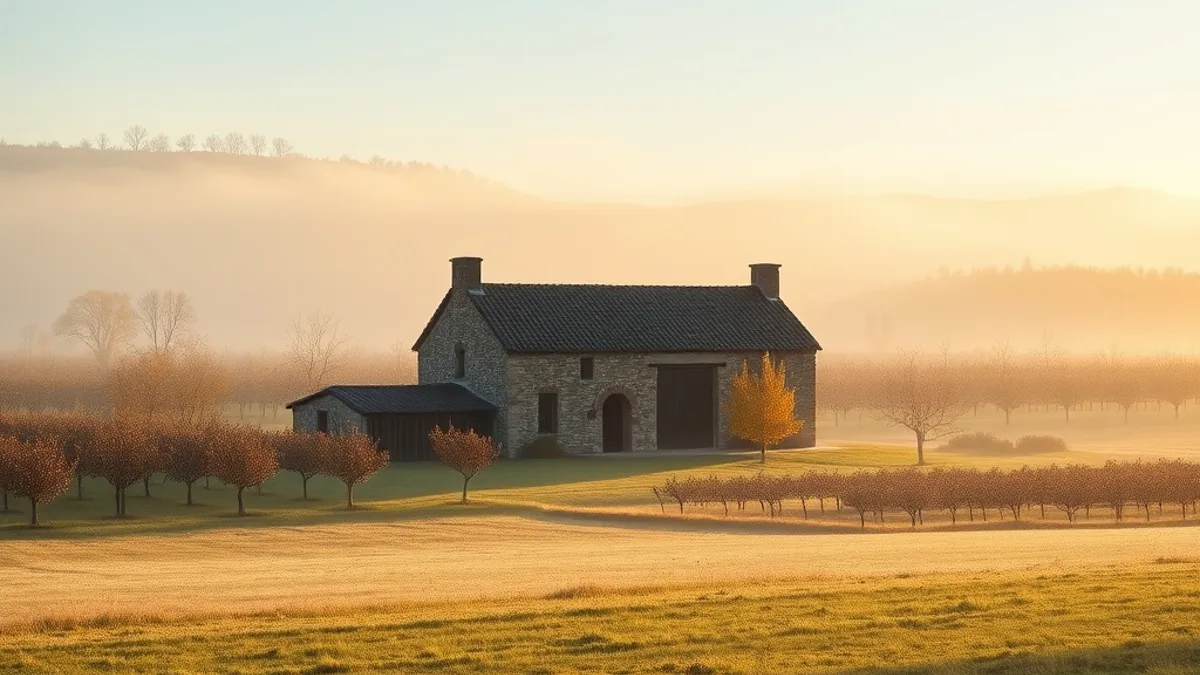
Farm stays flip that logic. Instead of a private bubble, you’re placed inside a working landscape — fields, orchards, vineyards and animals you can literally walk through. The setting isn’t staged for you; it exists because someone makes a living from it, and that’s exactly what gives it character.
How far from town are you really?
Villa settings vary widely, from town-edge properties where you can walk to dinner to fully remote retreats. Farm stays are more consistent: most sit 20 to 60 minutes from the nearest town by car, so plan on driving for restaurants and supplies. Some tropical versions, like the quiet enclaves surrounded by rice fields in Ubud, show how immersive a rural setting can get without feeling isolated.
So which wins? If untouched scenery and a daily rural rhythm are your priority, the farm setting takes it. If you want a private pool, sunset views and total control over your surroundings, the villa does.
Food and Daily Experience: Self-Catering versus Farm Table
Food is where the two stay types diverge most in daily experience. Farm stays usually include breakfast or half board in the rate, and that food often comes straight from the property: eggs from the henhouse, vegetables picked that morning, cheese from a neighbor. You sit down at a shared table, someone else did the cooking, and the menu reflects whatever is actually in season that week. For many travelers, this is the single biggest reason to pick a farm stay — meals become part of the experience rather than a chore to organize.
Villas are almost always self-catering. You shop, you cook, you clean up — or you outsource it. That freedom suits travelers who love browsing local markets and lingering over long, unhurried dinners at their own table with a glass of wine. But it’s real work if you weren’t planning on it, especially after a full day of sightseeing. Think honestly about how much you want to cook before committing.
Extras follow the same pattern. Farm stay activities like harvest participation and animal feeding are typically included in the rate, so the memorable moments cost nothing extra. Villa extras are all add-ons you arrange and pay for separately:
- Private chef: expect roughly $100-300 per day, depending on the menu and how many meals you want covered.
- Grocery pre-stocking: many villa managers will fill the kitchen before arrival, usually for the cost of the groceries plus a service fee.
- Housekeeping frequency: unlike a hotel or farm stay, cleaning visits are something you negotiate with the owner or agency when booking.
Costs and Minimum Stays Compared
Price gaps between these two stay types are wider than most travelers expect. A private villa typically runs roughly $150-800 per night depending on region and season, while a farm stay commonly lands at $80-250 per night for two people. That villa figure covers the whole property, though, so the math changes once you divide it among a group.
Minimum stays matter just as much as nightly rates. Farm stays usually require a 2-3 night minimum, which makes them easy to slot into a long weekend or a short detour between cities. Villas commonly ask for 5-7 nights in high season, and some owners enforce a Saturday-to-Saturday turnaround in summer. That longer commitment raises the total cost of the trip even when the nightly rate looks reasonable, and it locks you into one location for most of your vacation.
How the per-person math works out
For groups, the villa often wins on value. Split a mid-range villa among 6-8 guests and the per-person cost frequently undercuts what a single farm stay room would charge for a couple. A family of six paying $400 a night for a villa spends under $70 per person, while two farm stay rooms at the upper end of the farm rate range can cost noticeably more for less space.
Couples face the opposite equation. A farm stay room for two is usually cheaper than renting an entire villa, and the included breakfast stretches your food budget further. If you are traveling alone or as a pair for just a few nights, the farm stay almost always comes out ahead on pure cost.
When to Book and Which Season Fits Each Stay
Timing your booking depends heavily on which of the two you choose, because their calendars fill at very different speeds. Both stay types hit peak season in June-August across Europe, but the demand for a whole villa with a private pool behaves very differently from demand for a single farm room. Villas also come with longer lead times baked in, since owners expect bookings of 5-7 nights in high season and plan their summer calendars months ahead. Farm stays, with their shorter 2-3 night minimums, can turn over availability much faster. Here is how to plan each one.
- Book your villa 3-6 months ahead for high season dates. The best properties, especially those with private pools and strong views, get reserved early by returning guests. Waiting until spring for a July week usually means choosing from the leftovers, often at the top of the $150-800 nightly range rather than the bottom.
- Target the shoulder months for better villa rates. May, September and October bring lower prices and thinner crowds while the weather in most European regions stays pleasant for pool days and terrace dinners. Shorter minimum stays are also easier to arrange outside peak weeks.
- Plan farm stays 4-8 weeks out when possible. Outside harvest periods and school holidays, many farm stays have availability much closer to your travel dates, which suits spontaneous trips and short breaks that a villa’s minimum stay rules would rule out.
- Avoid booking a farm stay around harvest and holidays without extra lead time. These periods draw the most guests, so the usual short-lead flexibility disappears and rooms fill weeks in advance.
- Time a farm stay for spring or autumn. Mild weather and active outdoor work, from lambing and planting to harvest, define the experience in these seasons and make the daily rhythm worth the trip.
Whichever you choose, confirm cancellation terms before paying a deposit. Villa owners often ask for larger upfront payments because a single booking covers the whole property, while farm stays tend to have gentler deposit requirements. Check current conditions with your host or booking platform before committing.
How to Choose Between a Villa and a Farm Stay
The fastest way to decide is to ask what would ruin your trip. If a noisy neighbor or a shared breakfast table would bother you, book a villa. If three days alone by a pool would leave you restless, book a farm stay. Both deliver memorable weeks, but they solve different travel problems.
Group composition narrows the choice further. Groups of 4-8 people get the best value from villas, where the nightly rate splits across several bedrooms and everyone gets a kitchen and living room to share. Couples on short trips suit farm stays better, since a comfortable room, an included breakfast and a couple of days of rural rhythm is often exactly what a long weekend needs.
- Choose a villa if privacy drives your trip. You get your own pool, no fixed meal times, and the freedom to eat at midnight or swim at dawn without seeing another guest.
- Choose a farm stay if you want host interaction. Meals, tips on local trails, and the chance to join in daily work come built into the stay rather than arranged as extras.
- Match the stay to the region. Wine and olive regions favor farm stays, where the property itself produces what you came to taste. Coastal and mountain view spots favor villas, which are built to frame the scenery from a private terrace.
- Consider how much of the trip you want scheduled for you. A farm stay shapes your days around feeding times and meals, while a villa leaves the itinerary entirely in your hands.
When you are torn, let the destination decide. In an agricultural region, the farm stay is part of the attraction; on a coastline or a ridgeline with a view, the villa usually makes better use of the setting.
The Takeaway on Villa vs Farm Stay
So which one wins? If private space is the priority, the villa takes it: 100-400 sqm of rooms, kitchen and pool all to yourself, with costs that work out well for groups of 4-8. If you’d rather wake up inside a working landscape with breakfast included and hosts who actually talk to you, the farm stay delivers an experience a villa simply can’t replicate.
The practical details matter too. Farm stays usually ask for a 2-3 night minimum and can often be booked closer to your dates, while villas commonly want 5-7 nights in high season and months of lead time. In the end, it comes down to one question: do you want seclusion behind your own gate, or immersion in a place where work, food and scenery are all part of the stay? If this helped you decide, leave a comment or share the article.