Many travelers book villas with kitchens and then never really use them. They arrive tired, skip the shopping, and end up paying for every meal out — exactly what the kitchen was meant to help them avoid. The result is a holiday that costs far more than planned and a well-equipped kitchen that sits idle all week.
This guide fixes that before it happens. You’ll learn why a private kitchen changes the way you travel, how to sketch a simple meal plan before you fly, and how to shop at local markets and small grocers like someone who lives there. We’ll also cover stocking the kitchen on a budget, easy dinners built around local ingredients, and the food safety basics that matter in a villa. A little preparation turns that kitchen into the best room in the house.
Why Villas with Kitchens Change the Way You Travel
A private kitchen does something a hotel room never can: it turns a villa from a place to sleep into a place to live. You wake up when you want, make coffee in your pajamas, and eat breakfast without anyone rushing you out of a restaurant. Just as importantly, it cuts your food costs by roughly half compared with eating every meal out — money you can spend on experiences instead.
Who benefits most
Families with kids find in-villa cooking far easier than restaurant meals with tired children. Travelers staying a week or more get real value, since the savings compound with every dinner cooked at home. And anyone with dietary needs — allergies, intolerances, or simply a specific way of eating — gains control that restaurants rarely offer.
The kitchen also becomes part of the holiday’s rhythm rather than a chore. Slow breakfasts with local fruit, an unhurried lunch on the terrace, and a sunset dinner you cooked yourself often become the memories that outlast any restaurant. Once you experience that pace, it’s hard to go back to eating out three times a day.
Plan Your Meals Before You Fly
The biggest mistake villa travelers make is arriving with no plan at all. Without one, you end up wandering the shops hungry, buying too much of some things and nothing of others, and defaulting to expensive restaurant meals you never meant to book. A simple meal plan sketched before you fly takes twenty minutes and saves both money and stress all week. It also makes your first shop faster, because you arrive with a list instead of guessing what the kitchen needs. Here’s how to build one that actually survives contact with a real holiday.
- Sketch a 7-dinner plan. For a week-long stay, plan for 5-7 in-villa dinners and reserve 2-3 nights for local restaurants. Those nights out become treats rather than defaults, and you can book them for the areas worth exploring.
- Choose recipes with 5-8 ingredients that overlap. Grilled fish one night and fish tacos the next share the same fish, tortillas, and toppings. Every shared ingredient means less shopping, less waste, and faster cooking.
- Keep breakfasts and lunches formulaic. Eggs, fruit, bread, and salads repeated in small variations keep your shopping list predictable. You’ll buy the same core items every few days instead of improvising.
- Pack a small spice kit and pantry staples from home. Salt, pepper, a favorite spice blend, and a few basics in small containers spare you from buying full jars abroad that you’ll never finish before leaving.
Write the plan on your phone or a card and take it shopping with you. The goal isn’t a rigid schedule — it’s a framework that makes the first market visit quick and confident. Expect to adjust it once you’ve seen what the local shops actually stock, and treat any changes as part of the fun rather than a failure of planning.
Shop Like a Local: Markets and Small Shops
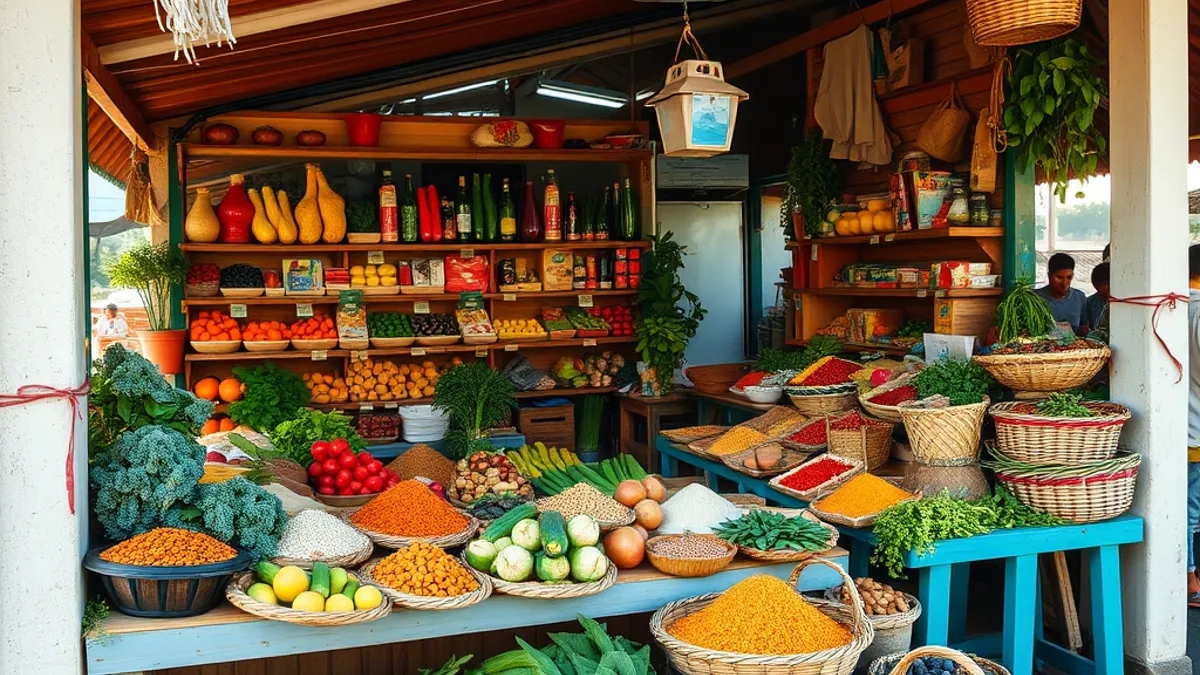
Your first market visit sets the tone for the whole trip, so make it day one. Local markets typically run from 6:00 to 11:00 am, and the best produce goes early — aim to arrive before 9:00 am. You’ll find the fullest stalls, the freshest fish, and vendors who still have time to chat and offer tastes.
Use your host’s local knowledge
Before you go anywhere, ask your villa host two questions: which day is the nearest market day, and where is the best small grocer within 5-10 km of the villa? Hosts know which vendors are good and when the market is worth the drive. Best market days are usually midweek, while weekends draw crowds and thinner selections — another reason to plan your big shop around local timing rather than your own.
Shop big, then top up
Do one large shop on arrival day for staples and anything that keeps well, then return for top-ups every 2-3 days. This rhythm keeps greens, fruit, and seafood at their best instead of wilting in the fridge by day four. Small, frequent shops also mean you walk the market several times a week, which is half the fun.
Above all, buy what is in season and abundant. It’s cheaper, it tastes better, and eating whatever the region grows right now is the fastest way to eat like a local — even if it means swapping your planned recipe for whatever looked irresistible that morning.
Stocking the Villa Kitchen on a Budget
A week of restaurant meals adds up fast. At $25-50 per person for a single dinner out, a family of four can spend more on one evening than on several days of home cooking. Set a grocery budget of roughly $30-60 per person per week and you cover breakfasts, lunches and most dinners for a fraction of that cost.
The trick is to buy versatile staples rather than a pile of one-recipe ingredients. Rice or pasta, eggs, olive oil, garlic, onions, seasonal vegetables and a local cheese can carry you through nearly every meal on your plan. In destinations like the rice-field enclaves around Ubud, the same basket of basics plus market produce covers everything from quick fried rice to slow vegetable dinners on the terrace.
Resort-area shops know travelers are in a hurry, and prices reflect it. Skip imported goods and familiar branded items, which often carry heavy markups, and buy drinks and snacks at a local minimart instead of the villa’s welcome stock or hotel-priced shops. A few staples worth prioritizing:
- Local cheese and cured meats — usually cheaper than imported versions and better matched to regional breads and wines you will want to try anyway.
- Whole fruits over packaged snacks — a bowl of market mangoes, bananas or citrus sits on the counter all week and handles breakfasts, desserts and poolside snacking.
- A liter of good olive oil — worth the upfront cost because it stretches across salads, marinades, eggs and every roasted dish on your plan.
- Dry goods in modest quantities — buy rice, pasta and beans in amounts you will actually finish, since villas rarely have surplus storage and you cannot take jars home.
Easy In-Villa Dinners That Use Local Ingredients
The best villa dinners start at the market, not in a recipe book. Pick one hero ingredient each day — a whole grilled fish, a tray of whatever vegetables look best, or the makings of a one-pot stew — and build the meal around it. This keeps shopping simple, cooking simple and the flavors unmistakably local.
Keep your recipes in the 30-45 minute range and designed for standard villa stovetops. Sheet-pan meals, stir-fries and pasta dishes all fit that window and rarely demand equipment you might not find in the kitchen. Save anything ambitious for a restaurant night, where a local chef does the work for you.
Let the terrace do the cooking
Some of the most memorable villa meals need almost no cooking at all. If your villa has an outdoor table or terrace, set it with market bread, local cheese, sliced fruit and something cold to drink, and you have a dinner worth remembering — no stove required. This is also the easiest way to use up odds and ends before a top-up shop.
Protect your holiday time by deciding in advance what you will and will not cook. Cook breakfast and 4-5 dinners in-villa, keep lunches strictly no-cook with bread, cheese and fruit, and reserve the remaining nights for local restaurants. You still enjoy the kitchen, but you never feel chained to it.
Food Safety and Kitchen Practicalities
Before you finalize your meal plan, take ten minutes on arrival to check the villa kitchen inventory. Look at knife quality, pan sizes and fridge space, then adjust your plan that first evening — if there is one small pan and a compact fridge, it is better to know before you have bought ingredients for a three-dish dinner.
Perishables need more care in a warm climate than you might be used to. Shop for seafood and dairy last on your route, get them into the fridge within 2 hours, and plan to cook seafood the same day or the next. Where tap water is not recommended, drink and cook with bottled or filtered water, and wash produce with it too — especially anything eaten raw. Finally, clean as you cook. Villa kitchens often lack dishwashers, and washing in small batches keeps evenings easy instead of ending them with a full sink.
- Check the freezer — if it works, freeze bread and any meat you will not cook within a day or two, and use ice packs for the trip back from the market.
- Confirm the fridge temperature — a fridge in a tropical villa works hard; if it feels warm inside on arrival, ask the host to service it before you load it with seafood.
- Keep raw and ready-to-eat foods apart — put raw fish or meat on the lowest shelf and store bread, cheese and fruit above it.
- Locate the basics early — find the cutting board, can opener, matches or lighter and dish soap on day one, so you are not hunting for them mid-recipe.
- Know your waste routine — ask the host about rubbish collection days, since food waste in a warm kitchen builds up quickly between pickups.
Making Villas with Kitchens Work for You
Most travelers book a villa with a kitchen, then arrive with no meal plan and no idea where to shop, so the kitchen sits unused and the food budget disappears into restaurants. The fix takes less than an hour of preparation. Sketch a simple dinner plan before you fly, do one big market shop on day one, and plan small top-up trips so everything stays fresh.
Money-wise, plan on spending about $30-60 weekly per person at the market, which leaves plenty of room in the budget for the restaurant nights that make a destination memorable. Shop early, eat seasonally and keep recipes simple — do that, and the kitchen becomes the most memorable room in the villa. If this helped you plan your next trip, leave a comment or share the article with a fellow traveler.