Booking a safari lodge should be the easy part, yet most travelers hit a wall of confusion the moment they try to work out what they have actually paid for. Is the lodge game drive included in the rate, or does it show up as an extra on the final bill? What time does the vehicle leave in the morning, and what happens if you miss it? These are the questions that trip people up most often, and the answers vary from lodge to lodge.
This guide walks through the essentials before you commit to a booking. We cover what a typical game drive involves, how morning and afternoon schedules work, what the vehicle and guide setup looks like, and how costs break down. You will also find practical advice on what to pack for an open vehicle and how to behave once you are on it, so you arrive prepared rather than surprised.
What a Lodge Game Drive Actually Includes
A lodge game drive is a guided outing in an open-sided 4×4, led by a qualified ranger, and it typically lasts between three and four hours. You sit in the vehicle while the ranger follows roads and tracks through the reserve, stopping whenever there is something worth watching: a leopard resting in a marula tree, a breeding herd of elephants, or fresh lion prints in the sand.
The ranger is far more than a driver. Throughout the drive, they explain animal behaviour, identify tracks and droppings, and describe the ecology around you, from how termites shape the soil to why certain trees are stripped bare. This commentary is built into the experience, not an optional extra you pay for at the end, and it is often what turns a good drive into a memorable one.
What the rate usually covers
At most all-inclusive lodges, the rate bundles two game drives per day along with meals, and sometimes guided walking safaris as well. That said, inclusions differ widely between properties, so it pays to read the rate details carefully before booking. Some lodges also add extras such as bush breakfasts or sundowner drinks on the drive itself, while others charge for these separately. Knowing exactly what your rate covers, and what it does not, is the single best way to avoid an awkward conversation at checkout.
Game Drive Times: Morning and Afternoon Schedules
Game drives follow the rhythm of the animals, not the comfort of the guests. Morning drives typically depart between 5:30 and 6:30 am, timed so that you are in the bush at first light. This is when predators are most active: lions finishing a night of hunting, leopards still patrolling, and hyenas making their final pass before settling down for the day. Expect a wake-up knock at your door well before departure, followed by coffee and rusks in the main lodge area. It feels brutal at first, but most travelers find that the cold, dark start becomes one of their favorite memories of the trip once the first sighting happens.
Afternoon drives usually leave between 3:30 and 4:30 pm. These outings have a different character. Animals stir as the heat of the day fades, and the drive typically includes a sundowner stop, a pause at a scenic spot for drinks and snacks as the sun drops. After dark, the vehicle returns with a spotlight, picking out nocturnal species such as bushbabies, genets and owls that you would never see in daylight. The light during these hours is also superb for photography, with warm, low-angle sun across the savanna.
- Seasonal shifts: Departure times move with the seasons rather than staying fixed year-round, so the schedule printed on your booking form may differ from the one you get on arrival.
- Winter adjustments: In winter, morning departures run later because sunrise is delayed, which means a slightly more civilized wake-up knock and an earlier breakfast beforehand.
- Confirm on arrival: Ask at check-in what time the next drive leaves and how the wake-up call works, since lodges handle this differently and times can change with weather.
Vehicles, Rangers and Trackers Explained
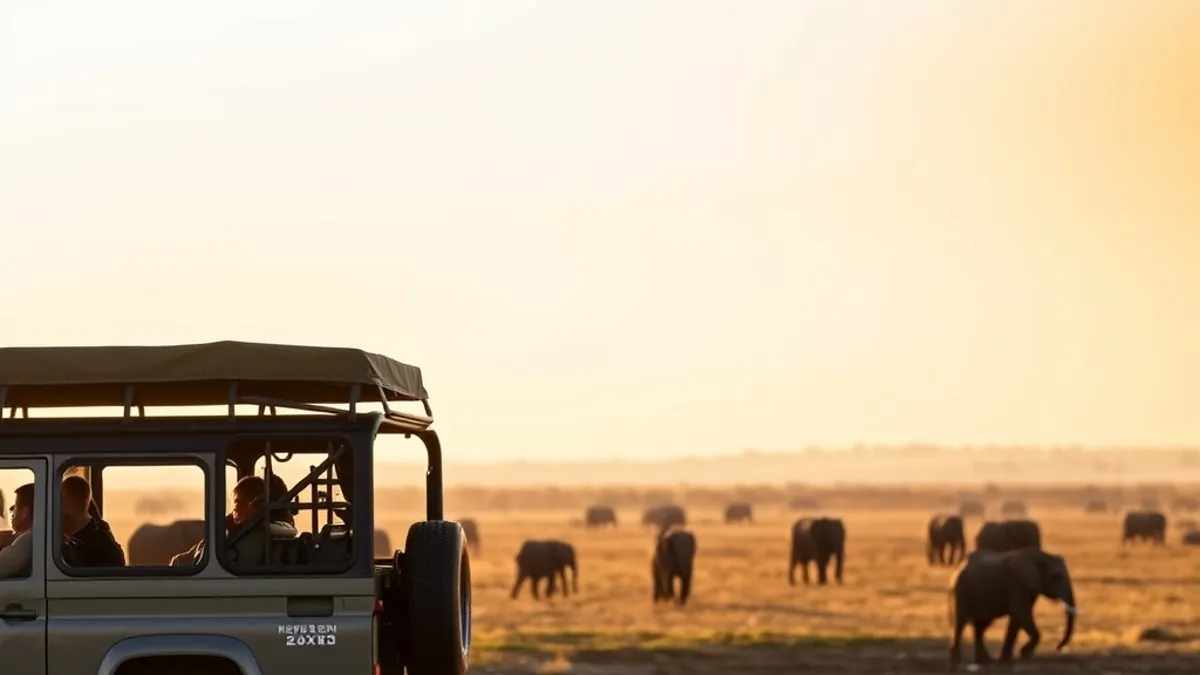
The standard safari vehicle is an open-sided 4×4 with tiered seating, usually arranged in three rows and seating 6 to 10 guests. The tiered design matters more than most people realize: because each row sits higher than the one in front, every guest gets an outward view over the roofline rather than staring at someone’s shoulders. There are no windows or doors, which means unobstructed photography and that unmistakable feeling of being right in the landscape.
The ranger and tracker team
On most drives you will actually have two guides, not one. The ranger drives and handles guest commentary, while a tracker sits on a front seat, often a specially mounted one ahead of the hood, reading spoor and radio signals. Trackers are skilled at interpreting the faintest signs: a scrape mark, a broken branch, a distant alarm call. Their ability to follow fresh tracks is often what locates a predator that would otherwise stay hidden.
When to book a private vehicle
Shared vehicles work well for most travelers, but photographers and families with young children often prefer a private vehicle, which can usually be booked on top of the rate for roughly $150 to $350 per day. A private vehicle lets you linger at a sighting as long as you like, follow your own interests, and avoid disturbing other guests, which makes it worth considering if a specific sighting or flexible timing matters to you. Check availability and current pricing with the lodge before you arrive, as private vehicles are limited in number.
What Game Drives Cost and When They Are Included
The way game drives are billed depends almost entirely on the type of lodge you book. At fully inclusive safari lodges, two daily drives are bundled into the room rate alongside meals, so you never hand over cash at the vehicle. That said, “fully inclusive” means different things at different properties, so confirm in writing before booking that drives, guiding and park access are all covered by your rate. Ask specifically what happens if you skip a drive or want an extra outing, since policies vary from lodge to lodge.
Budget lodges and self-catering camps work differently. There, drives are typically an add-on you pay for per outing, often somewhere in the range of $40-80 per person per drive, though the price varies with the operator, the reserve and the season. If you plan one drive a day for a week, these per-drive costs add up quickly, so factor them into your total budget rather than treating them as an afterthought. It also pays to ask whether the per-drive price covers the full 3 to 4 hour outing or a shorter version.
- Ask whether the quoted rate includes conservation or park fees, which are often billed separately and can be a noticeable extra per night.
- Some lodges charge per person per drive while others sell a shared vehicle for the whole stay, so compare both models if you are traveling as a couple or group.
- Private vehicle hire, popular with photographers, usually costs $150-350 per day on top of your rate rather than being priced per drive.
- Tips for rangers and trackers are almost never included in the quoted price, so carry small bills in the local currency or US dollars.
How to Prepare and What to Bring
Open vehicles and early departures make packing a real skill. On a winter morning in southern Africa, which runs from June to August, the first hour of a drive can feel close to freezing when you are moving at speed with the wind on your face. Dress in layers you can shed as the day warms: a base layer, a fleece and a windproof outer jacket is a reliable combination.
Binoculars are the single most useful item you can bring. Even when a leopard is spotted, it may sit thirty meters away in a tree, and sharing one pair across a full vehicle gets old fast. A camera with a dust bag or a simple scarf to cover it matters too, since fine dust on sandy tracks will find its way into every crevice of your gear.
When to go
The dry season, June to October across much of southern Africa, delivers the densest wildlife sightings. Vegetation thins out, water sources shrink and animals gather where drinking water remains, making them far easier to find. If your trip also includes coastal time, some travelers pair a safari with bluewater resorts in South Africa for safari elegance and coastal release, splitting a journey between bush and shoreline.
A few smaller items round out the kit. Bring sunscreen, sunglasses and a hat for the exposed middle of the day, plus a refillable water bottle. Neutral-colored clothing helps you blend in at sightings, and closed shoes protect your feet on dusty vehicle floors.
Etiquette and Safety on the Vehicle
A game drive feels like a safari tour, but it is also a shared wildlife encounter with real animals that behave unpredictably. The rules on board exist for good reason, and the ranger enforces them for everyone’s protection. The most important one: stay seated and keep your arms inside the vehicle at all times. Animals often approach far closer than guests expect, and an elephant or buffalo can close the distance to an open vehicle in seconds. Even predators that look sleepy from a distance can react fast if something moves above the canvas sides.
Etiquette matters just as much as safety. Sightings are shared spaces, and several vehicles may gather at the same lion kill or leopard sighting. Keeping your voice low and your movements slow lets everyone, including you, enjoy a longer and more natural encounter. Loud chatter can also change animal behavior, ending a sighting for every vehicle present. Patience pays off here: the quietest vehicle usually gets the best views, because animals that feel relaxed stay in the open longer rather than retreating into thick brush.
- Follow the ranger’s instructions immediately and without debate; the ranger is armed and specifically trained for wildlife situations, so their call is final.
- Never stand up or change seats while the vehicle is moving or during a sighting, since a sudden silhouette can startle animals.
- Avoid using flash photography at night drives, which disturbs nocturnal animals and blinds other guests.
- Keep phones on silent and never ask the ranger to get closer than the animal’s comfort allows; a good sighting is one where the animal stays relaxed.
- Save your questions for the drive itself; rangers love sharing animal behavior and ecology, and quiet moments between sightings are the perfect time to ask.
The Bottom Line
A lodge game drive is simply a 3 to 4 hour guided outing in an open-sided 4×4, usually offered twice a day and often already bundled into the room rate. Once you know that, the picture gets much clearer: ask whether drives are included, when they typically depart, and whether park or conservation fees are billed separately.
Getting those details straight before you book is what prevents surprise charges and missed sightings, and it helps you choose between a fully inclusive lodge and one that charges per drive. If this cleared things up for your own safari planning, leave a comment or share the article with a fellow traveler.