Every listing calls itself “luxury” these days, which makes choosing a glamping stay genuinely confusing. A yurt, a safari tent and a geodesic dome can all look dreamy in photos, yet they behave very differently once you factor in your destination, the season and how much comfort you actually expect after a long day outdoors. Pick the wrong structure and your romantic night under canvas turns into a sweaty or freezing ordeal.
This guide breaks the decision down step by step. We’ll introduce the three structures and their origins, compare how each handles weather and seasons, look at what’s really inside them (from wood stoves to ensuite bathrooms), and give you typical nightly price ranges so you can budget honestly. Then we’ll match each structure to the right setting, share booking tips including how far ahead to reserve for peak season, and finish with a simple way to pick your perfect night under canvas.
Meet the Three Structures: Yurt, Safari Tent and Dome
Before you can pick a favorite, it helps to understand what each structure actually is and where it came from. These three glamping staples look very different, and those differences are not just cosmetic. Each one solves a specific problem inherited from its origins, which is why they feel so distinct once you step inside.
The yurt: a circle built around a stove
A yurt is a circular dwelling made of felt stretched over a collapsible wooden lattice wall, set on a low platform. The roof slopes up to a central compression ring, and directly above it sits a crown opening that lets smoke escape and light pour in. In most glamping versions, the stovepipe runs right through that crown, so the whole room seems to orbit the warmth. The design comes from Central Asian nomadic tradition, where a home had to be warm, portable and quick to raise on open grassland.
The safari tent and the dome
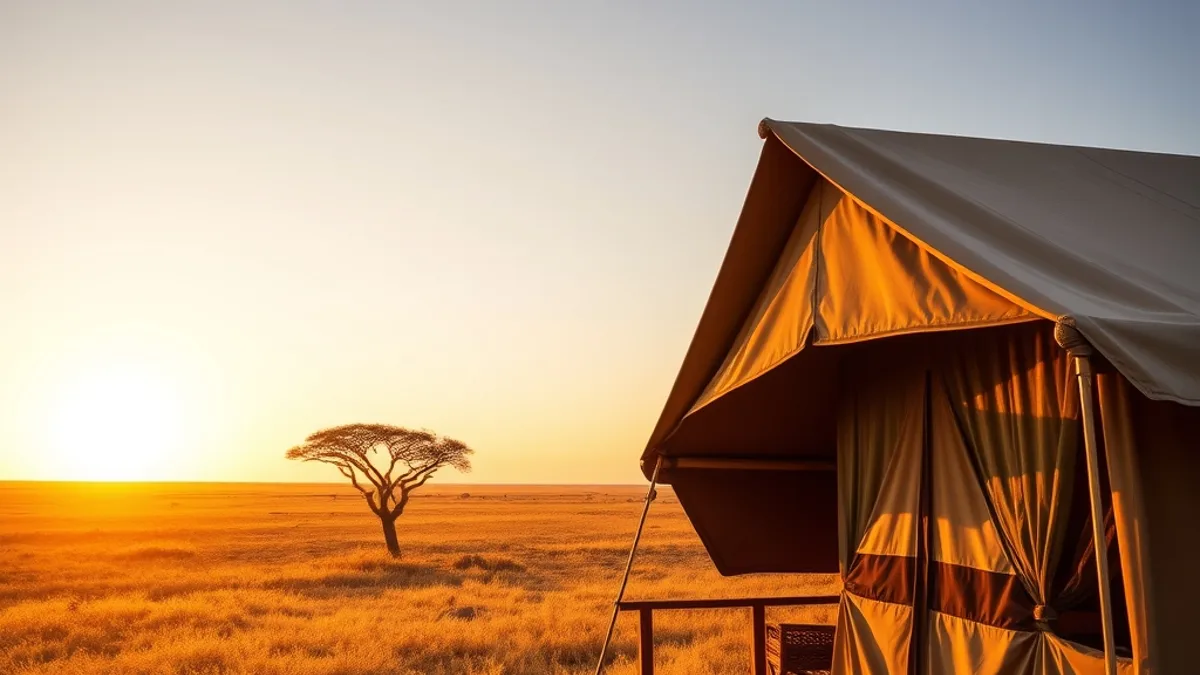
A safari tent is a large ridge-style canvas tent pitched on raised wooden decking. Most have a zipped front veranda that opens the living space to the deck, and inside you’ll typically find timber frame walls supporting the canvas, giving it a more solid, lodge-like feel. Its roots trace back to East African expeditions, where travelers needed shade, airflow and a touch of comfort in warm climates.
A dome is a hemispherical geodesic shell built from triangular panels, often with roughly half of them made of clear window material. It anchors to a round platform and relies on geometry rather than poles for strength. This is the newcomer of the three, a product of modern engineering rather than any nomadic or expedition tradition, and that shows in its emphasis on views and structural efficiency.
Knowing these origins makes choosing easier. The yurt evolved for cold grasslands, the safari tent for warm savanna air, and the dome for engineered strength in harsh places. Each shape carries its birthplace with it.
Weather and Seasons: Which Glamping Stay Handles What
Weather decides more about your glamping trip than any photo gallery does. These three structures handle temperature, wind and precipitation very differently, and picking the wrong one for the season can turn a dreamy night into a shivery one.
Yurts are the insulation champions. With a wood stove crackling, a lined yurt holds comfortable warmth down to around -20°C, which stretches the usable season from roughly October to April in cold regions. The round felt-and-lattice walls trap heat far better than any flat canvas panel.
Safari tents sit at the opposite end of the thermometer. They breathe beautifully in dry heat between 15-30°C, with the veranda and mesh panels keeping air moving. But canvas absorbs sun, so above 30°C the interior turns into an oven, and thin fabric can feel flimsy in strong wind. Treat them as a late-spring-to-early-autumn choice.
Domes are the all-weather workhorses. Their triangular panels shed snow instead of letting it pile up, and the interlocking geometry resists strong gusts. That is exactly why Iceland and Norway host them year-round.
A quick season-by-season cheat sheet:
- Deep winter (yurts and domes only): a yurt’s stove runs overnight, while a dome’s hard shell stands up to blizzards; canvas safari tents are rarely even pitched at northern sites in these months.
- Dark-season bonus: clear-panel domes double as aurora and stargazing rooms, letting you watch the northern lights from bed on long winter nights, something a canvas roof simply cannot offer.
- Shoulder months: safari tents cool quickly in the evenings outside peak summer, so pack warm layers even when the forecast looks mild.
- Hot spells: when daytime temps push past 30°C, a shaded safari tent deck is pleasant, but the tent interior itself lags badly behind the airflow of a dome’s vented panels.
The bottom line: choose a yurt for genuine winter warmth, a safari tent for warm dry months, and a dome when you want the season to be irrelevant.
Comfort and Amenities Inside Each Structure
Safari tents usually feel the most like a hotel room under canvas. The typical setup includes a king bed on a proper frame, an ensuite bathroom with a real shower and flush toilet, a small kitchenette, and loungers or a dining table out on the deck. You unpack once and live normally, which is why they suit travelers who want the outdoors without giving up any daily comforts.
Domes trade the square-cornered layout for the view. The bed usually sits as a statement piece under the arc of window panels, so you can lie back and watch the sky or the landscape. Expect electric or wood heating, blackout options worth asking about, and in mid-range units a compact wet room tucked behind a curved wall. Storage tends to be minimal, so pack soft bags rather than hard suitcases.
Yurts: stove-centered and communal
Yurts organize life around the wood stove and a circle of seating or floor cushions. The vibe is more cabin-lodge than hotel: you tend the fire, make tea on the stove top and gather around the warm center of the room. At simpler sites the bathroom sits in a separate block a short walk away, so check whether your unit is ensuite before booking if that matters to you.
Whichever structure you choose, look past the photos and ask what the walls are actually made of. Lined canvas, double glazing and a genuine heating source are what separate a four-season unit from a summer-only one, and they make a far bigger difference to your comfort than any styling detail.
What Each Glamping Stay Costs per Night
Glamping prices vary more by place than by structure, but there is a clear entry pattern. A basic yurt typically starts around $100-250 per night, domes run roughly $120-350, and safari tents sit at the top with $150-400. These are ballpark figures for mid-range sites in popular regions; check current rates with each operator before you plan a budget.
Safari tents cost more for a practical reason. A raised timber deck, real plumbing, wiring and a full set of furniture all add to build and maintenance costs, and that gets passed on to the nightly rate. A yurt on a simple platform with a stove and a shared bathroom block simply has less to pay for.
Before you fixate on structure type, look at where the site sits. Location premiums regularly outweigh the difference between structures, so a budget dome in a scenic spot can outprice a luxury tent in a plain one.
- View category: an ocean, lake or ridge-line frontage can double the rate of an otherwise identical unit set in an inland field a few kilometers away.
- Ensuite premium: units with a private bathroom and kitchenette usually price a tier above nearly identical models that rely on a shared washblock.
- Shoulder-season math: the same unit in May or late September often books 20-40% below peak rates, the cheapest way to try a pricier structure.
- Private buyouts: some sites let one group reserve the entire small camp, which costs more per night but can beat booking several separate units.
Matching the Structure to the Setting
Each of these structures evolved for a specific landscape, and it shows in where they perform best. Yurts belong on open steppe and lakeshore grassland. Their round shape sheds wind across flat horizons, and a central wood stove turns wide, cold country into cozy territory. Mongolian lake country is the classic example, where yurt camps sit on shorelines with nothing but water and sky around them.
If that sounds appealing, our guide to Khuvsgul remote hideaways shows what a lakeshore yurt stay looks like in practice. Safari tents, by contrast, belong in savanna and warm coastal bush. The shaded veranda and generous canvas airflow make days between 15-30°C feel effortless, which is exactly why East African expeditions built them this way.
Where domes earn their keep
Domes belong on volcanic rock, hillsides and northern latitudes. Anchoring into hard ground is straightforward, and the triangular panels shed snow and handle strong gusts, which is why Iceland and Norway run them year-round. On a dark winter night, a clear-panel dome also doubles as an aurora and stargazing room.
Follow the local specialists
The simplest rule: choose the structure a region is known for. Local operators there have already solved the drainage, wind and wildlife problems that come with that landscape, so you inherit years of trial and error without paying for it.
How to Book: Timing, Questions and Dealbreakers
Good glamping trips are usually won or lost at the booking stage, not on arrival. The photos on a listing page can hide a lot: a stove that burns out by midnight, a bathroom at the far end of a muddy path, or a tent pitched on a ridge with no windbreak. A few well-timed questions before you pay save you from a cold night or a bathroom hike in the rain.
- Time your booking around the peak. For June-September trips in popular regions, book 2-3 months ahead. Winter dome and yurt trips need similar lead time around holidays, when demand spikes even in cold destinations.
- Ask what heating runs overnight. A wood stove that dies at bedtime is very different from a thermostat that holds warmth until morning. This matters most in a yurt pitched for near -20°C conditions, where a middle-of-the-night refill is part of the deal unless there is backup heating.
- Confirm the bathroom situation. Ask directly whether the bathroom is ensuite or in a shared block nearby, because photos rarely make this clear. Mid-range and above safari tents and domes increasingly include ensuites, but simpler yurt sites often do not.
- Check insulation and canvas thickness. Lined canvas, double glazing and a genuine heating source separate a four-season unit from a summer-only one. Ask the operator directly rather than guessing from the photos.
- Screen for dealbreakers. Treat “no heating listed”, a shared bathroom at winter rates, or no wind protection on an exposed site as reasons to walk away and keep looking.
If your dates are flexible, aim for the shoulders of the season. Stays in May or late September often cost noticeably less than peak weeks while keeping most of the good weather window, and sites are quieter too. Ask the operator which weeks they consider shoulder season locally, since it varies by region.
Picking Your Perfect Night Under Canvas
So which one is yours? Yurts win on cold-season warmth, safari tents on hotel-style comfort in warm months, and domes on year-round weather resistance and views. Every listing calls itself luxury, but the shape of the structure tells you more than the photos do: each one evolved for a different landscape and season, and it performs best in the setting it was built for.
Price matters too, though less than location. Expect yurts at $100-250 per night, safari tents at $150-400 and domes at $120-350, with the view outside driving the cost more than the structure itself. Before you pay, match the structure to the landscape it evolved for, confirm the heating and bathroom details, and book 2-3 months before peak season. Then all that is left is to pick a night and enjoy it. If this helped you choose, share the article or leave a comment with your pick.