You’ve picked your dates, found a glamping site that looks amazing in the photos, and then hit the familiar dilemma: safari tents vs yurts. Both promise canvas walls and a night under the stars, but they deliver very different experiences in space, comfort and price. Book the wrong one and your family of four may be squeezed into a single round room, or you may pay for a private deck you barely use.
This guide compares the two styles side by side. We start with how safari tents and yurts actually differ in design, then look at floor space and layout, beds, bathrooms and heating, and what each option typically costs per night. From there, we cover the landscapes and seasons where each stay type shines, practical booking tips, and a clear bottom line to help you choose. By the end, you’ll know exactly which structure fits your trip, your group and your budget.
Safari Tents vs Yurts: How the Two Glamping Styles Differ
A safari tent is essentially a canvas house. It sits on a fixed wooden deck, keeps a rectangular shape, and is built out like a lodge room: solid frame walls, real windows, mesh screens, and often a covered veranda running along the front. You walk in through a door, not a flap, and the interior is usually divided into rooms rather than one open space.
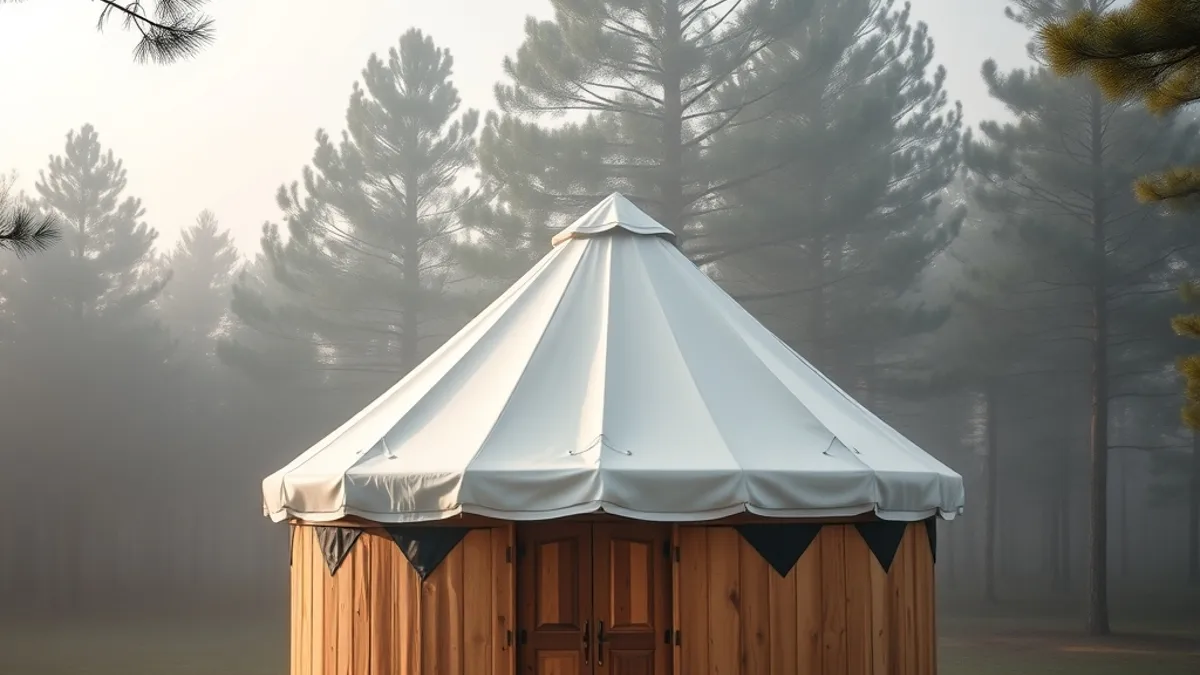
A yurt takes the opposite approach. It’s a circular tent structure inspired by the nomadic dwellings of Central Asia, with a lattice wall, a tensioned fabric cover and a central roof ring that lets light pour in from above. Inside, there are no internal walls: it’s one open room where the bed, seating and storage all share the same circle.
Why the shape changes the feel
That geometry shapes the whole experience. A safari tent behaves like an open-air suite, with airflow moving through the canvas and the deck acting as an extra outdoor room. A yurt feels like a snug single-room cabin: round, warm and contained, with the roof ring drawing your eyes up to the sky. Neither is better; they simply suit different moods, seasons and group sizes.
Space and Layout Compared
Space is where these two styles diverge most clearly, and it is often the deciding factor for families. Safari tents typically span 40–60 m², and larger layouts often split into two bedrooms plus a lounge and a covered deck. That means parents can close a door at night, kids get their own corner, and wet gear can stay outside on the veranda instead of dripping onto the floor. The layout feels closer to a small apartment than a tent, which is exactly why families with young children tend to settle in quickly.
Yurts typically span 20–35 m², and nearly all of it is one open-plan circular room. The bed, sofa and luggage all live together, so a family shares a single sleeping and living space. For two people that feels intimate and charming; for four it can feel crowded, especially on a rainy day when everyone stays indoors. There are no doors to close and little privacy, so think carefully about who is traveling with you before choosing this style.
- Bed configuration: two-bedroom safari tents often pair a king bed for adults with twin beds for children, while a yurt usually centers everything on one large bed with fold-outs or bunks squeezed around the edge.
- Luggage and storage: safari tents tend to have wardrobes, dressers and deck space for cases, whereas yurts offer limited storage, so packing light makes the stay far more comfortable.
- Indoor-outdoor flow: a safari tent’s covered deck effectively adds another living room in fine weather, while a yurt’s usable space stays fixed at its circular footprint year-round.
The practical takeaway is simple: choose a safari tent when privacy between adults and kids matters, and choose a yurt when you want a cozy two-person retreat. If you are unsure, ask the site for a floor plan before booking so you know exactly how the sleeping arrangements work.
Comfort: Beds, Bathrooms and Heating
Comfort is where the price gap between the two styles usually explains itself. Luxury safari tents almost always come with real beds on proper frames, quality linens and an en-suite bathroom with a flush toilet and hot shower. At the top end, you’ll find extras such as plunge pools, outdoor baths or freestanding tubs positioned for the view.
Yurts more often rely on shared washroom blocks a short walk from the tent, which is the single biggest comfort difference between the two styles. That said, premium yurts do add private bathrooms, so if a midnight walk across a gravel path doesn’t appeal, check the listing carefully before you book.
Staying warm or staying cool
Heating is the other dividing line. Yurts handle cold better: many sites in snowy regions operate November–March, using wood stoves and insulated covers to keep the round space warm even in frost. The compact, sealed shape holds heat far more effectively than open canvas.
Safari tents work the opposite way. Their open canvas construction creates constant airflow, which makes them ideal for warm nights through the April–October season in temperate climates, but less suited to frost. If your trip falls in the colder months, a yurt with a wood stove is typically the safer choice; in the heat of summer, the breezy deck of a safari tent wins.
What Each Option Costs Per Night
Glamping prices vary a lot by region and site, but the two structures follow a clear pattern. Safari tents sit at the top of the range: expect roughly $180–$400 per night in peak season. That premium reflects what you get inside — a large footprint, real bedrooms, and usually an en-suite bathroom with hot water on tap. You are paying for a lodge-style room with canvas walls, and the rate usually matches it.
Yurts are the friendlier entry point for a first glamping trip. Most go for roughly $90–$250 per night, which puts them closer to a mid-range hotel than a luxury lodge. If your trip is about the landscape rather than the room, that difference adds up fast over a week, and it makes yurts an easy way to test whether glamping suits you before spending more.
Timing matters as much as structure. Off-peak weeks and midweek nights are typically the cheapest options on any calendar, while weekends and holiday periods sit at the top of each range. Check the calendar before you commit, because shifting a trip by a few days can noticeably change the total.
- Group math favors yurts less than you think: a family needing two yurts to match one safari tent’s two bedrooms can end up paying the same or more, so price per stay, not per night, is the figure to compare.
- En-suite facilities drive the top of the safari tent range: tents with plunge pools, outdoor baths or private decks with loungers sit near the $400 mark, while simpler canvas rooms cluster at the lower end.
- Minimum-stay rules are common on weekends: many small sites ask for two or three nights over peak weekends, which quietly raises the total even when the nightly rate looks fair.
- Ask what’s included before comparing: some yurt rates cover bedding, firewood and a shared kitchen; others charge for linen or stove fuel, and those extras can erase the price gap with a safari tent.
Where Each Stay Type Shines
Safari tents belong in warm, open country. On savanna reserves, coastal meadows and sun-baked hillsides, the wide veranda becomes the real heart of the stay — breakfast at a deck table, an afternoon read under the canopy, sundowners with the whole horizon in view. Open canvas sides let the breeze move through, which is exactly what you want when nights stay mild. In temperate climates their season generally runs April–October, when the deck-and-breeze formula works at its best.
Yurts are built for the opposite conditions. Their round, low profile sheds wind, and the insulated cover and central roof ring hold warmth efficiently, which is why so many yurt sites operate through the snowy months of November–March. A forest clearing or a mountain plateau that would batter a tall canvas wall barely registers on a yurt’s curved frame. There’s something deeply restful about sitting by a wood stove while snow stacks up outside a round window.
Matching the structure to the landscape
The simplest rule: canvas for heat and views, yurt for wind, snow and stillness. A safari tent in a frost-prone valley will feel drafty and damp; a yurt on a hot, windless plain can turn stuffy by mid-morning. Pick the structure that suits the weather you’re actually booking into, not the one in the brochure photo.
If a cold-season yurt trip appeals, Mongolia’s lake country is hard to beat — places like Khuvsgul’s remote hideaways pair open-sky stillness with exactly the snug, weather-ready shelter yurts were designed for.
How to Book the Right Glamping Stay
Small glamping sites often have fewer than a dozen units, so popular dates disappear quickly. For summer weekends, book 3–6 months ahead; for holiday weeks, stretch that to 6–9 months. If you’re flexible, midweek dates in shoulder season are far easier to land and usually cheaper too.
The single biggest comfort difference between listings isn’t the view — it’s the bathroom. En-suite bathrooms are standard in luxury safari tents but rarer in yurts, where shared washroom blocks are common. A $120 yurt with a private bathroom can beat a pricier one that means a midnight walk across a wet field, so check the fine print before you pay.
Heating is the other question to settle early. A yurt listed for winter should clearly state a wood-stove or insulated setup; if the description is vague, email the site and ask directly. The same goes for season dates — confirm the site is actually open and fully serviced during your window, since some operations scale back facilities outside peak months.
- Read recent guest reviews for temperature honesty: owners describe heating optimistically; guests will tell you whether the stove actually kept the yurt warm at 2 a.m. in January.
- Ask about the exact unit, not just the site: many sites mix tent and yurt types, and the en-suite premium yurt in the photos may not be the base model you’re quoted.
- Check the cancellation terms twice: small sites often run stricter policies than hotels, and a 6–9-months-ahead holiday booking leaves plenty of time for plans to change.
- Confirm what’s supplied for cold stays: firewood, kindling and bedding vary by operator — some include a starter stack, others charge per bundle, which matters when temperatures drop overnight.
The Bottom Line for Your Glamping Trip
If you want space, privacy and a real bathroom steps from your bed, the safari tent is the stronger pick. With 40–60 m² of room, separate bedrooms and en-suite facilities as standard in luxury models, it feels closest to a lodge suite under canvas. The trade-off is price and season: peak rates of roughly $180–$400 a night, and a stay that works best in warm months.
Yurts flip that equation. They cost less, feel wonderfully snug, and handle cold-season trips well thanks to wood stoves and insulated covers. Couples on a budget will lean yurt, while families traveling in warm months will lean safari tent. Whichever you choose, booking early and checking the bathroom and heating details before you pay decides how good the stay actually feels. If this helped you decide, leave a comment or share the article.