You’ve seen the photos: a spacious canvas tent on a wooden deck, a proper bed inside, a forest stretching beyond the flap. It looks like the perfect way to enjoy nature without giving up comfort. But here’s the problem most travelers run into — it’s hard to know what actually happens behind the scenes. Does the camp really protect the landscape, or has someone simply stuck the word “eco” on the website?
This guide explains how eco glamping works in practice. We’ll cover what the term actually means, how low-impact site design keeps the ground intact, and how off-grid systems handle solar power, water and waste. You’ll also learn how to spot genuine sustainability from greenwashing, which landscapes suit sustainable tent camps, and when to book — including the May-September season, typical nightly rates and how far ahead summer weekends fill up. By the end, you’ll know exactly what questions to ask before you reserve a tent.
What Eco Glamping Actually Means
Eco glamping pairs hotel-style comfort with a tent structure that leaves the ground largely untouched. Inside the tent you’ll find a real bed, heating and either an en-suite or shared bathroom — the same essentials you’d expect from a small guesthouse. The difference is what sits underneath: instead of a concrete foundation, the tent rests on a raised deck or platform that can be lifted away without permanent damage to the soil.
That raised platform is the defining feature of a genuine sustainable tent camp. A traditional cabin requires excavation, drainage and a foundation that changes the land forever. A deck screwed into the ground does far less, and when a camp eventually closes or relocates, the site can largely recover.
Comfort stays in the picture
Going low-impact doesn’t mean roughing it. Quality bedding, wood stoves and hot showers are standard at well-run camps. The key detail is scale: systems are sized to the camp’s small capacity rather than to a full hotel’s demands, which is what makes the setup feasible without heavy infrastructure.
Watch the label
Here’s the honest caveat: the term is unregulated. “Eco” claims range from fully off-grid operations with solar power and composting toilets to ordinary campsites that simply add a green label to their marketing. That’s why it pays to look past the word and check what the camp actually does — a topic this guide covers in detail later.
Low-Impact Site Design: Platforms, Paths and Tent Materials
The foundation of low-impact design is simple: keep everything off the ground. Tents at sustainable camps sit on screw-piled or stilted timber decks that can be removed without scarring the land. Unlike permanent buildings, which require excavation and concrete that alters a site forever, these platforms leave the soil and root systems underneath essentially intact. When a deck is eventually dismantled, the ground beneath it can recover.
Paths matter as much as platforms
Foot traffic does as much damage as construction, which is why boardwalks connect the tents at well-designed camps. Guests walk along raised paths from the parking area to their tent, so they never trample undergrowth or compact the soil. Compacted earth drains poorly and takes years to regenerate, so a simple boardwalk protects far more ground than it covers.
Materials and camp size
Canvas and timber dominate construction at these camps. Many use breathable cotton canvas, which handles condensation better than plastic and ages well, along with locally sourced wood for the decks and frames. Plastic structures appear far less often, both for environmental reasons and because canvas simply suits a natural setting better.
Size is the final piece. Most sustainable camps cap capacity at around 5-15 tents, and that’s deliberate rather than accidental. A small camp keeps noise, light and foot traffic within what the site can absorb. Fifteen tents on a large clearing can coexist with the surrounding ecosystem; a hundred units on the same ground cannot, no matter how green the brochure sounds.
Off-Grid Systems: Solar Power, Water and Waste
Behind the canvas, sustainable tent camps run on a set of simple, proven systems. The goal is to provide real comfort — light, hot showers, heating — without hooking the camp into heavy infrastructure or running machinery all day.
Power and water
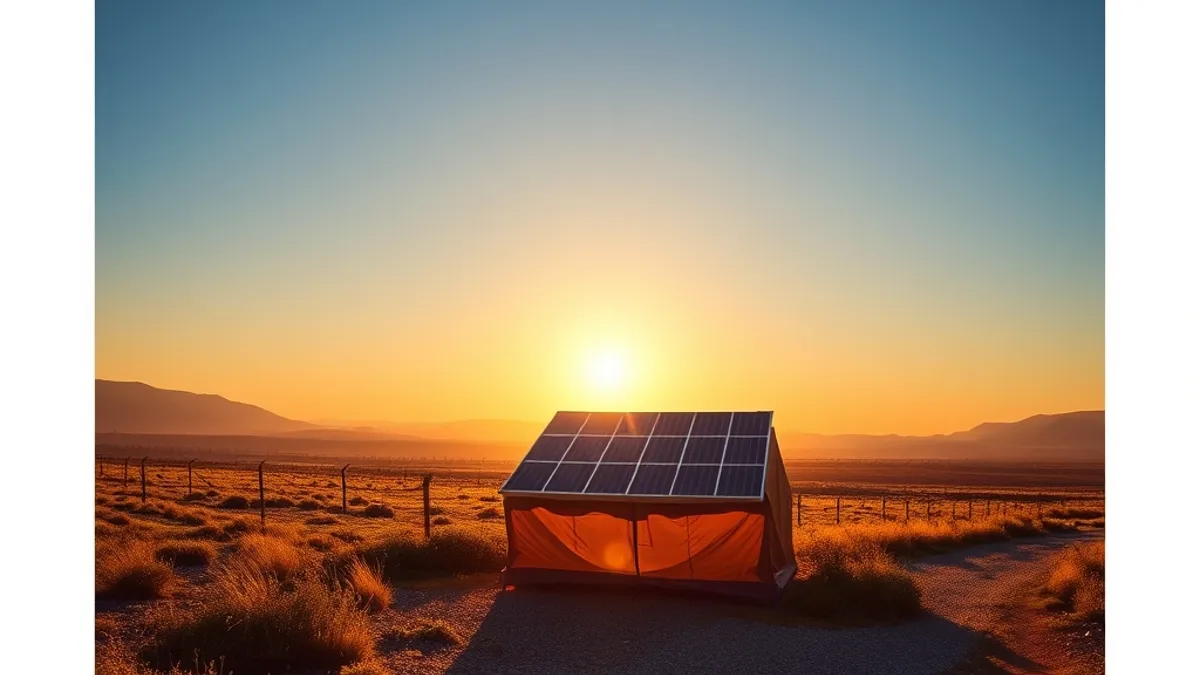
Electricity typically comes from rooftop solar panels paired with battery banks. These commonly cover lighting and device charging, along with small fans, which covers most of a tent’s modest electrical needs. Propane is reserved for hot water and cooking, since heating water with solar alone would require a much larger array.
Water often comes from a well or rainwater collection rather than a municipal connection. Low-flow showers keep consumption down, and greywater from sinks and showers is filtered through reed beds or soakaways instead of being discharged raw into the ground. It’s a low-tech solution that works well at small scale.
Waste and heat
Composting or dry toilets are common at these camps. They use little or no water, which matters enormously when every liter must be pumped or collected, and they turn waste into compost that is managed away from the guest area. Done properly, they’re clean, odor-free and far lighter on the site than flush systems.
Heating relies on wood stoves burning locally sourced or certified firewood. Compared with energy-hungry electric heating, a small stove warms a canvas tent quickly and fits the camp’s off-grid logic — the fuel is local, renewable and often sourced from the very forest surrounding the site.
How to Spot Genuine Eco Glamping from Greenwashing
The fastest way to separate a genuinely sustainable tent camp from a greenwashed one is to read the website closely. Real camps describe their systems in concrete terms: solar panels with battery storage for lighting and charging, propane for hot water, a well or rainwater supply, and a named method for treating wastewater and toilet waste. If a site repeats the word “eco-friendly” a dozen times without explaining a single system, treat that as marketing rather than substance.
Before you book, send the camp three direct questions. Where does the power come from? How is waste handled, from greywater to toilets? And does the camp employ local staff and source food and supplies nearby? Honest operators answer these quickly and in detail, because they are proud of their setup. Vague replies or silence tell you what you need to know.
Keep an eye out for these warning signs during your research and your stay:
- Diesel generators running all day, which usually means the camp skipped solar and battery design entirely
- Single-use plastics served at breakfast, a small detail that reveals how seriously the kitchen takes its environmental claims
- An “eco fee” added to your bill with no visible infrastructure to show for it, such as solar panels, composting toilets or reed-bed filtration on site
- Water-hungry features like long, power showers or flush toilets in a camp that claims to be off-grid
Third-party certifications such as Green Key or the EU Ecolabel add credibility, since they involve outside audits rather than self-declared claims. That said, many small, honest camps never bother with certification because of the cost and paperwork. Instead, they simply publish their systems openly on their websites, which is often the strongest signal of all. Specifics, not labels, are what you are looking for.
Landscapes That Suit Sustainable Tent Camps
The best sustainable tent camps start with the landscape, not the tent. A site only works if the ground can absorb seasonal use and recover quickly, so experienced operators choose terrain that tolerates a few hundred footsteps a day rather than fragile ground that collapses under them.
Forest clearings and coastal dunes
Forest clearings are a natural fit for canvas lodges. Tree cover buffers the wind, and shade keeps timber decks cool through summer afternoons, so tents stay comfortable without heavy air conditioning. Woodland camps in the Baltics and Central Europe have perfected this formula, often tucked into pine or birch stands where boardwalks thread between the trees. You can see how this plays out in practice in the Gauja forest houses hidden in Latvian green stillness, where canvas and timber structures sit lightly among the trees.
Coastal dunes and meadows suit bell tents and safari tents, but dune vegetation is notoriously fragile. Raised decks do the heavy lifting here, keeping guests and their luggage off the sand-binding plants that hold the dunes together. Meadows are more forgiving, though good camps still route foot traffic along defined paths rather than letting guests cut their own trails.
Mountains, steppe and the recovery principle
Mountain and steppe settings favor yurts and sturdy wall tents engineered for wind and wide temperature swings. These structures handle exposed ground that a lightweight bell tent never could, and their round or reinforced frames shed gusts that would flatten flat-sided canvas.
The common thread across all these landscapes is recovery speed. Grassland, dune grass and resilient woodland undergrowth bounce back after a season of use, while bog, alpine moss and soft forest floor do not. The best camps pick ground that tolerates people, then cap their size so the site never gets pushed past what it can absorb.
Seasons, Prices and Booking Windows
Timing shapes both your experience and your budget. In most of Europe and North America, the eco glamping season runs May through September, when nights are warm enough for canvas and camp infrastructure is fully operational. Camps at higher altitudes or northern latitudes often shorten that to June through August only, so check the exact dates for your destination before planning anything else.
Prices vary widely with comfort level. A basic bell tent with shared facilities typically costs around $150 per night, while a luxury safari tent with a private bathroom and wood stove runs $400 or more. The difference usually comes down to bedding quality, bathroom access and how remote the site feels, so decide which of those matters most before comparing rates.
Small camps present a specific booking challenge. With only 5 to 15 tents on site, there are very few units to go around, and summer weekends in popular regions sell out fast despite the limited inventory. Plan on booking 3 to 6 months ahead if you have your heart set on a July or August Saturday.
A few practical details worth knowing before you reserve:
- Shoulder months like May, June and September can cut rates by roughly 20-30% compared with peak summer weekends
- Booking a shoulder month also means milder temperatures for sleeping under canvas and a noticeably quieter site with fewer neighbors
- Midweek stays in high season are often easier to secure than weekends and can soften the price gap if you cannot travel in the off-peak months
- Check whether the camp operates a minimum-stay requirement on weekends, which some small sites use to manage their limited tent count
If your dates are flexible, aim for early June or September first. You get the full camp experience, lower rates and a calmer atmosphere, without gambling on the weather the way you might in late April or October.
Eco Glamping in a Nutshell
Eco glamping works because the comfort never comes at the landscape’s expense. Raised deck platforms and boardwalk paths keep soil and vegetation intact, camps stay small enough for the site to absorb them, and off-grid solar, water and waste systems run quietly in the background. You get the real bed, the wood stove and the hot shower, and the clearing looks much the same after you leave.
Telling a genuine camp from a greenwashed one comes down to specifics: named energy sources, clear waste treatment and local hiring are what separate the real operations from those leaning on the word “eco”. Timing matters just as much as picking the camp. The May-September season, nightly rates from about $150 to $400 or more, and 3-6 months of lead time for summer weekends all shape your booking. If this helped you plan a stay, leave a comment or share the article.