You love the idea of a rural escape in Portugal, but the Algarve in high season sounds like anything but an escape. The problem is that glamping in Portugal’s Alentejo remains a mystery to most travelers: what kind of accommodation will you actually find, which corners of the region work best, and is it genuinely comfortable or just camping with better views?
This guide answers those questions. It explains why the Alentejo feels so different from Portugal’s coast, then breaks down the best areas to base yourself, from Évora’s countryside to the shores of Alqueva Lake and the Atlantic coast. You’ll also find the accommodation types to expect, the best months to go, what a typical day looks like, and practical tips on driving, packing and booking. By the end, you’ll know exactly what to expect and how to plan a trip that suits you.
Why Glamping in Portugal’s Alentejo Feels Different
The first thing that strikes you about the Alentejo is the space. This is one of the most sparsely populated regions in Europe, a rolling patchwork of cork oak woodland, olive groves and wheat fields that stretches to the horizon without a single traffic light in sight. You can stand on a low hill and hear nothing but wind in the oaks and distant church bells. Few European regions offer this feeling of openness, and it’s exactly what glamping here is built around.
A sky you’ll actually notice
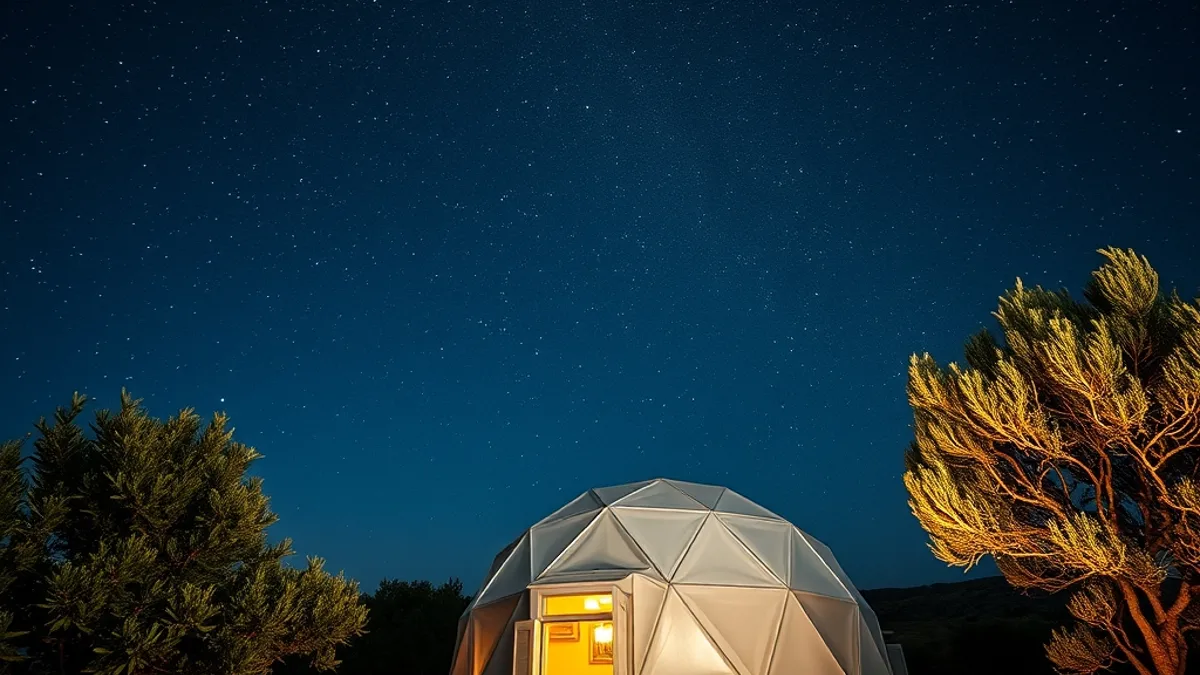
The Alentejo is one of Europe’s darkest-sky regions, and parts of it hold official dark-sky certification. That means stargazing isn’t an occasional bonus; it’s a nightly event. Step out onto your tent’s deck after dinner and the Milky Way is often clearly visible with the naked eye, no telescope required.
Slow rural luxury, not entertainment
Don’t expect nightlife, shows or a busy resort scene. The luxury here is quiet by design: farm-to-table dinners made from ingredients grown a few hundred meters away, afternoons at nearby wine estates, long meals and early nights. If your ideal evening is silence, a glass of local red and a sky full of stars, this is your region.
Where to Stay: The Best Areas for Glamping
Choosing your base is the most important decision for a glamping trip here, because the Alentejo is large and distances add up quickly. What looks like a short hop on the map can easily turn into an hour of driving on quiet country roads, so it pays to match your location to the kind of trip you want. The region offers three distinct settings: countryside near a historic city, lakeside wine country, and wild Atlantic coast. Each attracts a slightly different traveler, so think about what you want from your days as well as your nights before you book.
- Around Évora: ideal if you want to split your time between canvas and culture. You can spend mornings walking cork-oak trails from your tent and afternoons exploring Évora, a UNESCO World Heritage city roughly 90 minutes east of Lisbon by car, with its Roman temple and whitewashed lanes.
- Reguengos de Monsaraz and Alqueva Lake: the pick for water views and wine. Domes and tents here often sit within working wine estates, and the lake itself is one of Europe’s largest artificial lakes, perfect for kayaking and lakeside picnics.
- Zambujeira do Mar and the Costa Vicentina: for travelers who want the sound of waves with their morning coffee. If the wild Atlantic coast appeals but you’d like a comparison with more polished coastal stays, see our guide to Algarve havens for Atlantic light and effortless coastal luxury.
One practical note: coastal and interior sites typically sit 30-60 minutes from the nearest larger town, on quiet rural roads. That remoteness is part of the charm, but it shapes your whole trip. If you base yourself near Évora, you trade some seclusion for easy access to restaurants, museums and shops. Lakeside estates around Alqueva feel more isolated, which suits travelers happy to cook at their tent or plan excursions in advance. Coastal sites bring cooler sea breezes but often mean longer drives to wine country. Before booking, check the exact drive time to the places on your wishlist, not just to the nearest town, and be honest about how much driving you’re happy to do for dinners and day trips. A site that looks central on a map can still leave you with a long round trip every evening.
Types of Glamping Accommodation to Expect
Glamping in the Alentejo has matured well beyond a tent in a field. The common thread is comfort in a rural setting, but the setups vary more than most travelers expect, and knowing the differences helps you match accommodation to your travel style.
The most common option is the safari-style canvas tent, raised on a wooden platform and fitted with a proper en-suite bathroom, a real bed and usually a private deck facing the plains. Geodesic domes are the romantic choice: their panoramic windows frame the sky and the landscape, which makes them especially popular with stargazers and couples on a break. At the rustic end, converted farm stays and yurts trade polish for character, often sitting on working farms with shared pools and outdoor kitchens where you can cook your own dinner.
- Capacity: most units sleep two to four people, so check carefully if you’re traveling as a group of friends.
- Families: family-oriented units exist, but they’re fewer in number than couple-oriented ones, so book early if you need extra beds or space for children.
- Shared facilities: at farm stays and yurt sites, expect communal areas like pools and outdoor kitchens rather than private amenities, which suits social travelers.
Whatever type you choose, quality varies between operators, so read recent reviews and confirm exactly what’s included before booking, especially regarding bathrooms and cooking facilities.
When to Go and How to Book
The sweet spots for glamping in the Alentejo are April to June and September to October. During these months you can expect comfortable daytime temperatures of 20-28°C, and the landscape shifts from fresh green in spring to warm golden tones in early autumn. Evenings stay cool enough for a blanket on the deck, which is exactly what you want when the main event is the night sky.
July and August are a different story. Temperatures often exceed 35°C, and canvas tents and domes can heat up quickly under the midday sun. That said, summer has one clear advantage: many sites offer reduced rates. If you can handle the heat, look for shaded units with access to a pool, and plan your sightseeing for early morning and late afternoon.
Booking ahead matters more than you think
Quality glamping sites in the Alentejo tend to be small, often with only a handful of units. For spring and autumn weekends, reserve 2-3 months ahead or you may find your preferred dates gone. Midweek stays are easier to arrange and often quieter.
As for budget, expect to pay between €90 and €250 per night for two people, depending on the season and the type of setup. A simple yurt in low season sits at the lower end, while a panoramic dome on a wine estate in October will cost more. Always check what is included, as breakfast and activities vary from site to site.
What a Day Looks Like: Activities and Excursions
Days at an Alentejo glamping site follow a gentle rhythm that most travelers find is the whole point of coming. Mornings typically start with breakfast delivered to your deck or terrace, often featuring local bread, cheese and fruit from nearby farms. After that, the cork-oak trails that surround most sites are yours to explore on foot or by bike, with no need to drive anywhere.
If you want to venture further, Évora makes an easy day trip from most sites. The UNESCO World Heritage city is close enough for a half-day outing, and its Roman temple and whitewashed lanes pair well with an afternoon back at your tent. Wine lovers can head to the estates around Reguengos de Monsaraz for tastings instead. The pace here is unhurried, similar in spirit to the slow countryside mornings you find in Provence hideaways for lavender air and slow French countryside mornings, though the Alentejo has a character all its own.
Beyond the trails and towns, the region offers plenty of ways to fill an afternoon:
- Kayaking on Alqueva Lake, one of Europe’s largest artificial lakes, where calm water and quiet coves make paddling easy even for beginners
- Lakeside picnics, which many sites will pack for you if you ask the day before
- Wine tastings at small family estates, where the owner is often the one pouring and explaining the vintage
- Dark-sky stargazing after dinner, with some sites providing telescopes or guided sessions once night falls
Evenings are the highlight. On a clear night the Milky Way is visible without any equipment, and some hosts set up viewing areas away from artificial light. Bring a red-light torch if you have one, as it protects night vision better than a regular flashlight. Then head back to your deck, listen to the crickets, and let the quiet do its work.
Practical Tips Before You Go
A car is not optional in the Alentejo, it is essential. Glamping sites here are scattered across the countryside, often a fair drive from the nearest larger town along quiet rural roads where you may go twenty minutes without passing another vehicle. Rent a car at the airport or in Lisbon before heading out, and book it early for spring and autumn weekends when demand rises.
Packing deserves some thought too. Day-night temperature swings are big here, especially in spring and autumn, when a warm afternoon can drop to a chilly evening. Layers are your friend: a t-shirt for the day, a fleece and light jacket for dinner on the deck, and something warm for stargazing once the sun goes down.
Small villages in the region have limited dining options, and the best ones fill up quickly. A few extra preparations will make your trip smoother:
- Reserve restaurants and wine visits ahead of time, especially for weekend dinners, as a village may have only one or two places worth booking
- Carry cash for rural markets and small producers, since card payment is not universal at farm stalls and roadside stands
- Download offline maps before you leave larger towns, as mobile coverage can be patchy on remote country roads
- Ask your host about arrival times, since some small sites prefer check-in before dark so you can find your unit easily
With a little planning, the remoteness that defines the Alentejo becomes an advantage rather than a hassle. The quiet roads, the farm stands and the unhurried villages are exactly what you came for.
The Alentejo Glamping Experience in Short
Glamping in the Alentejo offers something the Algarve rarely can: wide-open cork-oak plains, genuine silence after dark and some of Europe’s darkest night skies, all wrapped in slow rural luxury. Instead of crowds and entertainment, you get farm-to-table meals, wine estates and a deck with nothing but horizon in front of you.
The best bases are around Évora, near Reguengos de Monsaraz and Alqueva Lake, or on the Costa Vicentina coast if you want Atlantic views. Expect safari tents, geodesic domes and rustic farm stays, mostly built for couples. Aim for April to June or September to October, when days sit comfortably between 20-28°C, and budget €90-250 per night for two. Because quality sites have only a handful of units, book 2-3 months ahead for spring and autumn weekends. If this sounds like your kind of escape, leave a comment or share the article with a fellow traveler.