You want the smell of spruce forest at dawn, a mountain view from your pillow, and a real bed at the end of the day. That’s exactly what glamping in the Canadian Rockies promises. The catch is knowing which season fits your budget, whether a heated dome can handle a January night, and how far in advance you actually need to book before the best sites disappear.
This guide walks you through all of it. We’ll explain why canvas domes with wood stoves make the Rockies viable year-round, break down the best seasons from summer peak to quiet shoulder months, and compare bases near Banff, Jasper, and Kananaskis. You’ll also learn which amenities matter most, when to reserve for July and August stays, what to pack for big temperature swings, and how to store food safely around wildlife. By the end, you’ll have a clear plan for a comfortable mountain escape, whatever your budget.
Why Glamping in the Canadian Rockies Works Year-Round
The old argument about mountain trips was simple: either you roughed it in a tent or you paid resort prices for a hotel room. Glamping in the Canadian Rockies breaks that trade-off. Canvas domes and safari tents now come with wood stoves or propane heating, real beds, and solid flooring, so a cold mountain night becomes part of the experience instead of something to endure.
That heating changes the calendar completely. Summer stays are easy to love, with long daylight hours that stretch hiking well into the evening. But winter is when heated glamping units really earn their keep: you fall asleep warm while snow stacks up on the peaks outside, and on clear nights you may even catch a display of the aurora from your deck.
Comfort without the resort price tag
Glamping also fills a practical gap. Backcountry camping demands gear, permits, and experience carrying everything on your back. Full-service mountain resorts offer comfort but often insulate you from the landscape. A glamping site sits between the two: you step out of a heated canvas dome straight onto forest ground, hear elk bugle at dusk, and still have a proper mattress waiting. For travelers who want immersion without sacrifice, that combination is hard to beat in any season.
Best Seasons for Glamping in the Canadian Rockies
Timing shapes almost everything about a Rockies glamping trip: what you’ll pay, what you’ll see, and how many neighbors share your view. Late June through early September is the peak window, when warm days keep every site open and demand pushes rates to their highest. May to mid-June works beautifully for patient travelers, with blooming valleys, cooler nights, and noticeably lighter crowds. Mid-September to early October is a favorite among photographers, as larch and aspen color set the slopes alight.
Winter, typically November to March, is a different animal entirely. Only heated domes stay open, days are short, and snow-based activities become the main draw. It’s also when rates drop and sites feel genuinely peaceful, provided you’re comfortable with cold mornings and limited daylight. Before you pick a window, consider these seasonal details:
- Peak summer (late June to early September): all trails, canoe rentals, and site facilities operate fully, so you can plan each day freely without checking what’s open.
- May to mid-June: valley wildflowers bloom in waves, and wildlife activity including elk and bear sightings peaks in late spring, making early drives especially rewarding.
- Mid-September to early October: the larch color typically peaks for only a week or two, so book these dates early and watch local reports for timing.
- November to March: snowshoeing, ice skating, and cross-country skiing near your site fill the short daylight hours, and long dark evenings favor stargazing from a heated dome.
Whichever window you choose, match it to your priorities. If hiking long trails and paddling matter most, summer delivers full access but also the biggest crowds and highest prices. If you’d rather save money and have space to yourself, the shoulder months offer real value with only modest trade-offs in weather. And if snow and quiet are the goal, a heated dome in winter is hard to beat.
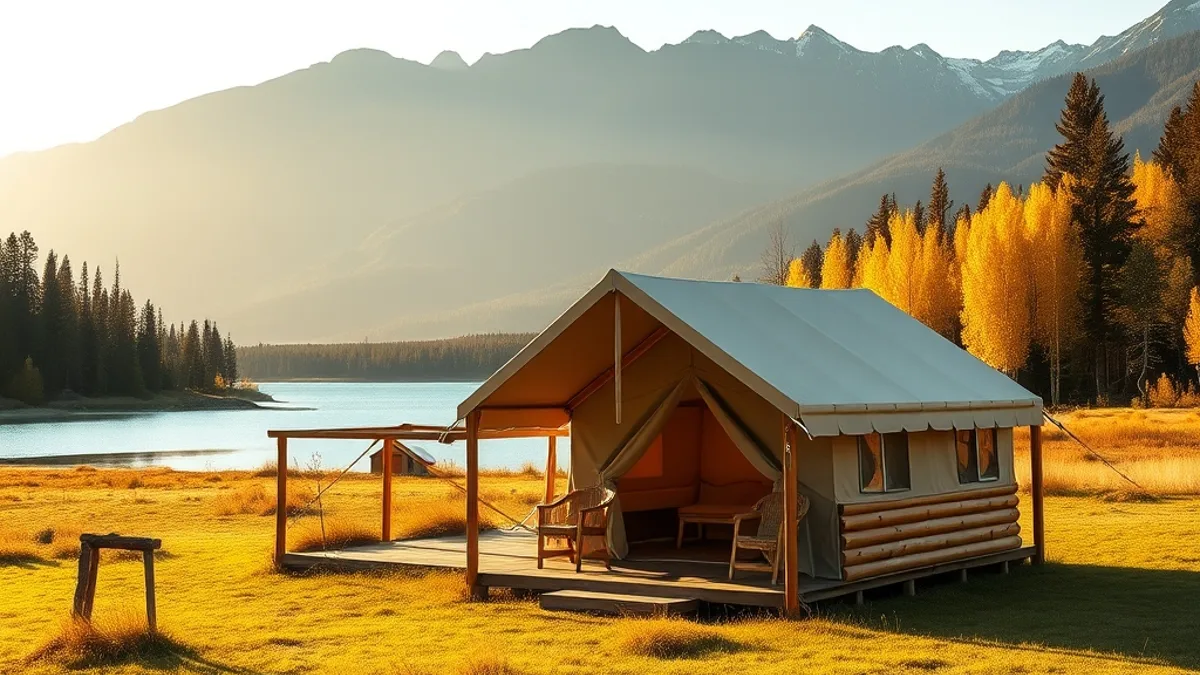
Where to Base Your Stay: Banff, Jasper, and the Kananaskis Corridor
Where you base your glamping stay shapes how much time you spend driving versus hiking. The Rockies are big, and the three main glamping zones each suit a different style of trip.
Banff and the Kananaskis Corridor
Banff-area sites sit about 1.5 hours from Calgary Airport, which makes them the easiest choice for a fly-in trip. You can land at midday, pick up a rental car, and be settled in your dome by evening. The big advantage is quick access to Lake Louise, one of the most photographed lakes in the country, plus the restaurants and amenities of Banff townsite when you want a night out.
Kananaskis, about 1 hour from Calgary, is the quieter alternative. The corridor offers strong hiking access right from your site, and you trade Banff’s buzz for more solitude. It works especially well for travelers who plan to spend their days on trails rather than sightseeing loops.
Jasper for remoteness and dark skies
Jasper sites lie roughly 3.5 to 4 hours from Edmonton, so they demand more travel commitment. The reward is a genuinely remote feel: Jasper is a designated dark-sky preserve, which makes it one of the best places in the Rockies to see stars and, with luck, the aurora from your canvas deck. Wildlife drives along the park roads are also a highlight here.
As a rule of thumb, choose Banff for convenience and icons, Kananaskis for quiet trail time, and Jasper if remoteness and night skies top your list.
What Stay Types and Amenities to Look For
The stay type you pick matters more in the Rockies than in most glamping destinations, because mountain weather can swing from sunny to snowy in a single day. Geodesic domes with wood stoves are the safest bet for winter and the shoulder months, since they hold heat well once the stove is going. Unheated safari tents and canvas cabins are a different story: they suit only summer, and even then you will want extra blankets for cold nights at altitude.
Comfort features are worth paying for here. Mountain weather is famously unreliable, so a covered deck means you can still enjoy your morning coffee during a rain shower, and a real bed on a proper frame keeps you off the cold ground. Before you book, confirm exactly which amenities are included, because remote sites often have no restaurant or store nearby, and the nearest grocery run can take an hour or more.
- En-suite or private bathrooms: Shared washroom blocks mean a walk in the dark and possibly a wildlife encounter, so a private bathroom is a genuine upgrade, not a luxury.
- Wood stove with supplied firewood: Some sites include firewood in the rate, while others charge per bundle, so ask before arrival if you are booking a cold-month stay.
- Meal plans or kitchen access: A few remote properties offer set dinners or breakfast baskets, which can save you from driving long distances for food.
- Canoe or kayak access: Sites on lakes sometimes include non-motorized boats, a free way to spend an afternoon without driving anywhere.
- Heating type: Propane heating tends to run consistently overnight, while a wood stove needs restocking, which matters if you wake up cold at 3 a.m.
Booking Windows and Budgeting for Peak Season
Glamping in the Canadian Rockies is a small market, and the most sought-after domes and tents are limited in number. For a July or August stay, reserve 6 to 9 months ahead. The top properties sell out by early spring, and waiting until summer usually means settling for leftover dates or a less desirable unit.
Budget accordingly: summer nightly rates commonly range from CAD 250 to 600 per night, depending on the site, the unit, and whether meals are included. If your dates are flexible, shoulder-season rates often drop 20 to 30 percent, and you get quieter trails as a bonus.
When shoulder-season stays open up
Shoulder and winter stays usually book well 2 to 3 months out, which gives you real flexibility on dates. You can watch the forecast, pick a stretch of good weather, and still find availability. Just remember that winter glamping is limited to heated domes, so confirm the heating setup before paying a deposit.
One practical tip: check the cancellation policy before booking far ahead. Properties in this region often have stricter terms for peak-season reservations, and travel insurance can be worth it if you are flying in from abroad and locking in dates months in advance.
Packing and Wildlife Awareness for Mountain Glamping
Even in summer, Rockies glamping means packing for two seasons in one day. Mountain weather shifts fast, and a morning that starts cold can turn warm by lunch, then rain by dinner. Layers are the answer: a moisture-wicking base, a fleece, and a waterproof shell you can add or shed without thinking. And do not assume a heated dome removes the need for warm sleepwear. Wood stoves burn down overnight, so insulated base layers, a beanie, and warm socks make the difference between a cozy night and a shivery one. A hot water bottle filled before bed helps too.
Wildlife awareness is part of the deal, not an optional extra. Bears and elk move through the valleys, especially in late spring and September, so treat every site as shared habitat. Store all food, toiletries, and scented items in the bear-proof lockers provided at your site, and never keep snacks, gum, or even sunscreen inside the tent itself. A scented item in your sleeping bag can attract a curious visitor at night. Ask your host about recent sightings when you check in, and keep a flashlight by the door for after-dark trips.
A few extras that seasoned glampers never skip:
- Headlamp or lantern with spare batteries: Many sites have no exterior lighting, and walking to a washroom in the dark without a headlamp is a bad idea in bear country.
- Offline maps downloaded in advance: Cell coverage at mountain glamping sites is often limited or nonexistent, so download your maps and any booking confirmations before you lose signal.
- Bear spray and knowledge of how to use it: Carry it on hikes near your site and keep it accessible, not buried in your pack.
- Cooler with a locking lid: If your site lacks a locker for every item, a hard-sided cooler stored in your vehicle is safer than soft food bags left out.
- Sturdy waterproof footwear: Trails around glamping sites stay muddy well into summer mornings, and dew-soaked canvas decks get slippery.
Wrapping Up Your Rockies Glamping Plan
So, which season fits your budget? If you want the full mountain experience with warm days and every site open, aim for late June to early September and remember those peak-season domes go for CAD 250 to 600 per night. Watching your wallet? The shoulder windows in May to mid-June and September deliver quieter valleys, cooler nights, and rates that often sit noticeably lower, with bookings needed just 2 to 3 months out.
The real key is planning ahead: reserving 6 to 9 months in advance secures the best peak-season domes, while choosing the right base, stay type, and packing list turns a canvas dome with a real bed and heating into a genuinely comfortable mountain escape. If this helped you plan your Rockies glamping trip, leave a comment or share the article with a fellow traveler.