One of the biggest worries first-time glampers share is simple: will I wake up with a spider on my pillow, or hear a raccoon rattling around my tent at midnight? Sleeping in a tent, yurt or cabin puts you closer to nature than a hotel ever would, and that closeness is exactly what makes people nervous about bugs and curious animals getting too comfortable.
The good news is that well-run glamping sites take this problem seriously, and most of the work happens before you ever arrive. In this article, we cover what good glamping sites do about insects, the wildlife protocols you should expect in bear country and on the coast, and the simple habits that keep critters out of your own unit. We also look at personal protection against bites and stings, how to choose sites with the fewest pest problems, the best seasonal timing to reduce encounters, and the key takeaways for a critter-free glamping trip.
What Good Glamping Sites Do About Insects
The difference between a comfortable glamping stay and a miserable one often comes down to screening. Look for fine mesh on every window, door and vent, not just the main openings. Quality tents use mesh with a weave of 1 mm or tighter, which blocks mosquitoes and the tiny midges that slip through standard window screen. If a listing photo shows gaping vents or open eaves with no covering, ask the operator about it directly before booking.
The floor matters just as much as the walls. Ants, spiders and beetles enter from below, so well-run sites raise their units on solid decking or sealed platforms rather than pitching canvas directly on the ground. A tent on a wooden deck with a sealed floor line is far harder for ground insects to breach than one staked onto soil.
Questions to ask before you book
During peak insect season, which in most temperate regions runs May through September, good operators actively manage the grounds around their units. Ask whether the site treats standing water and cuts back vegetation within 30 meters of guest accommodations. Standing water is where mosquitoes breed, so a site that drains or treats it is doing real work on your behalf.
Finally, inspect the small details of the unit itself, ideally on arrival before dark. Sealed zips, door sweeps along the bottom edge and covered eaves all signal a site that takes insect control seriously rather than relying on a single spray treatment each season.
Wildlife Protocols at Glamping Sites
Wildlife protocols vary by region, and a good operator tailors them to the animals actually living nearby. In North American bear country, bear-resistant food storage is standard, so expect a locker at each unit and clear rules against keeping food or scented items inside sleeping areas. These rules are not suggestions — sites enforce them because a single guest with a granola bar in a tent can train a bear to return.
What sites do about smaller animals
Where the main concern is deer, raccoons or foxes, fencing is rarely the answer. Sites in these areas typically use lockable storage boxes at each unit and motion-activated lights around walkways and kitchens. Raccoons in particular are persistent and clever, so secure storage matters far more than a decorative fence.
Coastal and island sites face a different cast: gulls and rodents. Here, expect lidded bins and sealed waste storage near kitchens and communal areas, because an open bin is an open invitation for gulls by day and rats by night.
One of the best signs of a well-run site is the check-in briefing. Good operators tell guests what to do during an animal encounter, which species they should report to staff, and where to store food. If nobody mentions wildlife at all, ask — the answer tells you a lot about how the site is managed.
How to Keep Critters Out of Your Own Unit
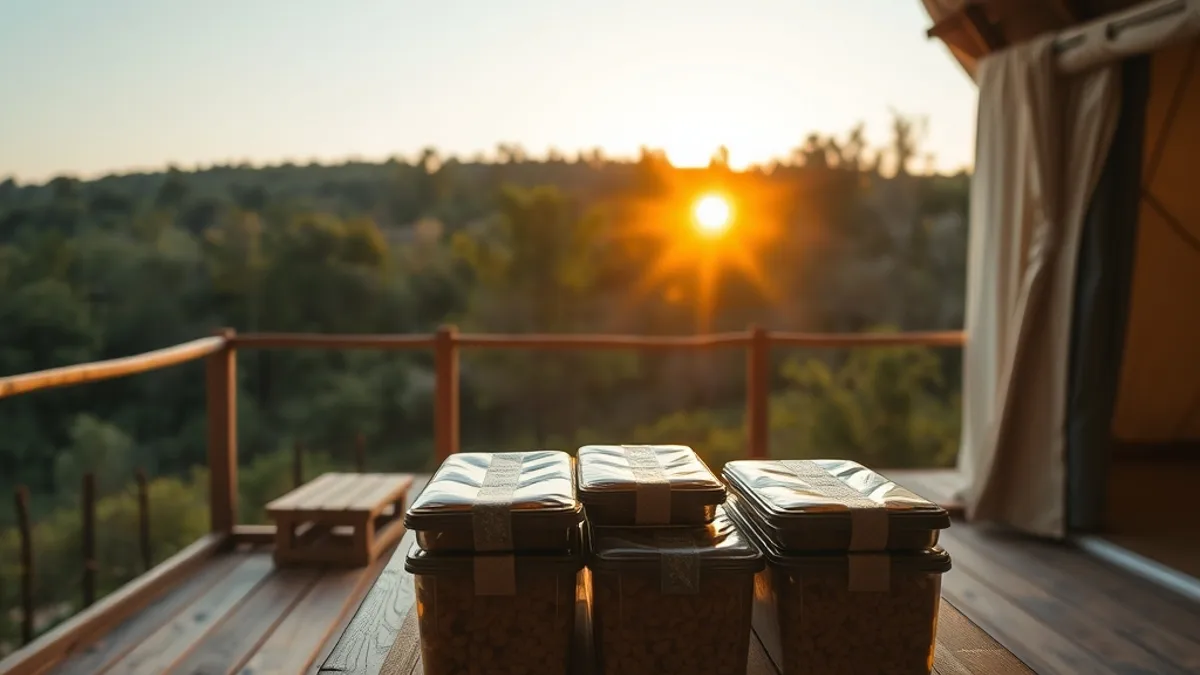
Even the best-run site needs your cooperation, because most critter problems start with guest habits rather than site failures. The single biggest rule is food storage: keep everything in sealed hard-sided containers, ideally stored in the unit’s provided locker rather than on shelves inside your sleeping area. Even one open snack bag left on a table can draw mice or raccoons overnight, and animals are creatures of habit — once they have been fed at a site, they tend to return and check again, which creates problems for the guests who come after you.
Your arrival routine matters too. Most sites recommend getting there before dark so you can inspect the unit in daylight. Walk the floor line and check for gaps where the walls meet the platform, test that every zip closes fully, and look over the mesh screens for tears. A small gap you spot in the afternoon takes two minutes to report and fix; the same gap discovered at midnight, with something buzzing around your head, is a different story entirely.
Quick habits that make the difference
- Eat away from where you sleep. Crumbs and food smells linger in bedding, so use the kitchen or outdoor table, and bin every wrapper immediately in the site’s sealed waste containers rather than an open trash can.
- Leave scented items outside the sleeping area. In wildlife-active regions, lotions, gum and even drinks can attract animals that associate any scent with food.
- Wipe down surfaces after cooking. A quick clean of the table and counter removes the residue that draws ants and mice long after you have finished eating.
- Zip up every time you enter or leave. A tent door left open for thirty seconds is enough for a mosquito to get in, and it is much harder to find at night.
None of these habits take more than a minute, and together they cover the gap that even excellent site management cannot close on its own. Make them automatic on day one and you will rarely think about critters again for the rest of your stay.
Personal Protection Against Bites and Stings
Biting insects are the most likely wildlife problem you will face on any glamping trip, so a little preparation goes a long way. The single most effective step is treating your clothing and gear with permethrin before you leave home. Spray or soak trousers, socks, shirts, and your tent’s exterior fabric according to the product instructions, then let everything dry fully. Once cured, the treatment typically keeps working through about 6 washes or 6 weeks of sun exposure, which comfortably covers a typical trip plus a few shorter ones.
For exposed skin, a repellent containing DEET or picaridin is your next line of defense. Apply it to ankles, wrists, and neck in particular, since mosquitoes hunt for those spots first. Timing matters as much as product choice: mosquito activity peaks at dawn and dusk, roughly one hour after sunrise and before sunset, so be extra diligent with repellent if you are sitting outside for breakfast or an evening drink.
Location and season shape the risk too. At wetland or forest sites, especially in June-August when midge and mosquito pressure is highest, a simple head net can turn a miserable evening into a pleasant one. It weighs almost nothing and fits over any hat.
- Do a full tick check after every hike, paying attention to the backs of knees, waistbands, and hairlines, and use a mirror or travel partner for your back and scalp.
- Shake out your shoes, boots, and sleeping bag each morning before use — spiders and centipedes often settle in warm, dark gear overnight.
- Carry travel-sized aftercare too: antihistamine tablets and a sting-relief pen handle the inevitable bites and the occasional bee or wasp sting far better than scratching.
A final note for countryside trips: insect pressure varies enormously by landscape and season. On a trip through lavender country, for example, breezy hillside evenings can be surprisingly calm while the river valley below hums — something you quickly learn reading guides like Provence hideaways for lavender air and slow French countryside mornings.
Choosing Glamping Sites With the Fewest Pest Problems
The easiest way to avoid pest problems is to pick a site that already manages them well, and reviews are your best tool. Search recent guest feedback specifically for words like “bugs,” “mosquitoes,” “mice,” or “raccoons.” Comments about comfort and views are helpful, but they will not tell you whether the owner reseals tent skirts each spring or leaves bins open by the kitchen.
Location and structure matter more than you might think
Geography does a lot of quiet work. Coastal and breezy sites generally have fewer mosquitoes than forest or lakeside locations in July-August, because steady wind makes it hard for mosquitoes to fly. A clifftop dome with a sea breeze can be nearly insect-free while a sheltered lakeside tent an hour inland is under constant pressure on the same dates.
Structure is the other big differentiator. Cabins, domes, and safari tents mounted on solid decks consistently outperform ground-level bell tents for pest control, since the raised floor cuts off entry routes for ants, slugs, and mice. A bell tent can still be excellent if it sits on a platform with sealed zips and fine mesh — but fabric touching bare ground is always a harder starting point.
Book early so you can compare
For summer dates, book 2-3 months ahead. That lead time lets you message two or three operators about their screening, food storage, and vegetation management, then choose the one with genuinely good answers. Late bookers usually have to settle for whatever is left, pest management or not. Expect typical rates of $120-$450 per night depending on the structure and region, and treat pest-control quality as part of what that price should buy.
Seasonal Timing to Reduce Insect and Wildlife Encounters
Timing your trip well can cut insect and wildlife encounters more than any product in your bag. In temperate regions, the peak insect season runs May through September, so traveling in late September or October lets you sidestep the worst of the mosquitoes and midges while still enjoying mild nights and warm daytime light. Many operators drop their prices slightly once the school holidays end, so the value improves along with the comfort.
Why shoulder season helps with wildlife too
Shoulder-season stays also mean less active wildlife near camps. In summer, natural food sources like berries, insects, and crops are abundant, so animals have less reason to investigate human food — yet in practice, busy sites and careless summer guests still attract raccoons and foxes. In the quieter weeks, there are fewer guests leaving scraps and less animal traffic around units overall.
Hot climates and a question worth asking
The logic flips in hot climates. Winter stays there cut mosquito pressure dramatically because cooler, drier air suppresses breeding, but rodent activity near food stores can actually increase as mice seek warmth and easy calories. If you travel to a warm destination in winter, be extra disciplined about sealed containers and lidded bins.
Finally, ask the operator directly which weeks they consider worst for bugs. Local staff know the micro-seasons that broad forecasts miss — the two weeks after the first spring rain, or the stretch when a nearby wetland drains and midges boom. A good operator will answer honestly, and the answer is often the single most useful piece of trip-planning information you will get.
The Key Takeaways for a Critter-Free Glamping Trip
Sleeping in a tent or cabin doesn’t have to mean sharing your bed with bugs or raccoons. Well-run glamping sites keep nature outside through fine mesh screening, sealed platforms under the units, proper food storage and clear guest briefings at check-in. The good operators make pest control part of the design, not an afterthought.
You handle the rest. Sealed food, fully closed zips, a DEET or picaridin repellent and permethrin-treated gear do most of the remaining work. Beyond that, choosing a breezy coastal site or a structure on a solid deck — and traveling outside the May-September insect peak — cuts your odds of an encounter even further. Do glamping trips still involve the occasional curious moth? Sure. But a sleepless night of bites or raided snacks is entirely avoidable with the right site and a few smart habits. If this guide helped you plan, leave a comment or share it with a fellow traveler.