Choosing between sleeping in a treehouse canopy or a canvas tent comes down to one question: which option actually delivers a better night’s sleep and easier daily living? Both promise a nature escape, but they feel very different once the sun goes down and the temperature drops.
This comparison of treehouse stays vs tent glamping breaks comfort into practical pieces: how well you sleep, how each structure handles heat and cold, what bathrooms and kitchens you can expect, how much privacy you get, and what it all costs. We’ll finish with a clear verdict on which option fits your trip, your group and your budget. By the end, you’ll know exactly which one to book.
What Comfort Really Means in Treehouse Stays vs Tent Glamping
Comfort in the outdoors isn’t one thing — it’s four things working together. When comparing treehouse stays vs tent glamping, judge each option on sleep quality, temperature control, bathroom access and noise insulation. A stay can excel in one pillar and quietly fail in another, so it pays to know what matters most to you before booking.
Treehouses start with a structural advantage: solid walls and solid floors. That construction cuts wind noise dramatically and blocks the ground chill that tent sleepers often notice creeping up through the floor at night. If you’ve ever woken at 3 a.m. in a tent because a gust rattled the canvas, you already understand the difference a rigid structure makes.
What tents give up for openness
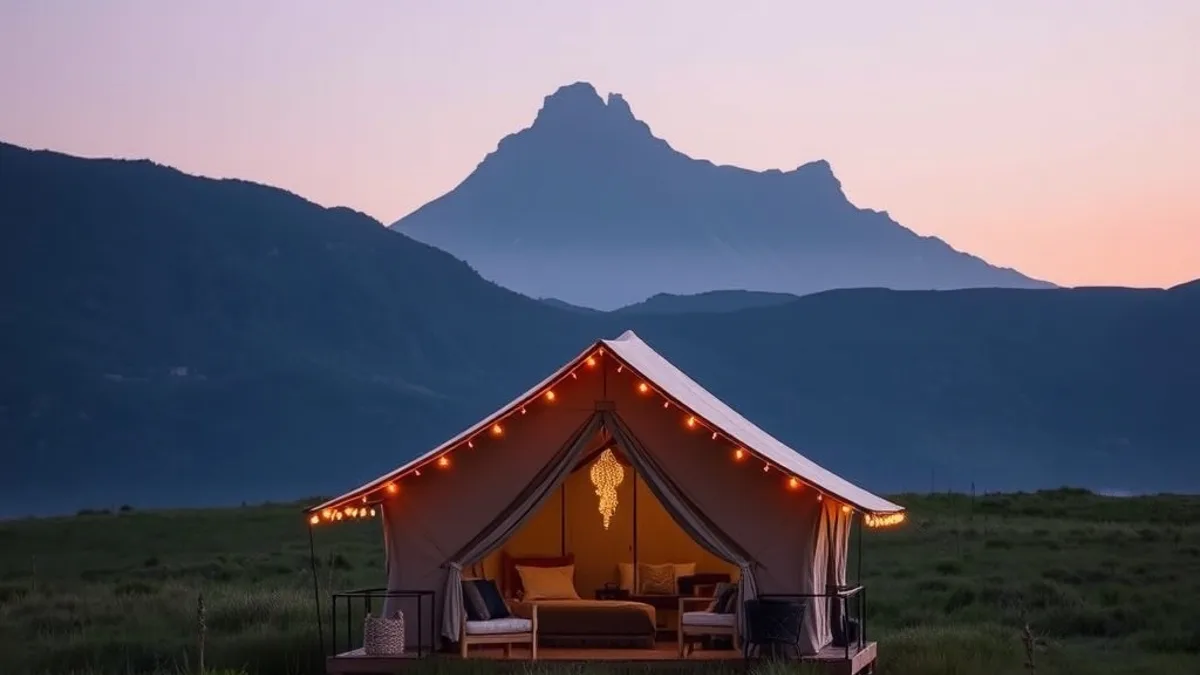
Tent glamping trades insulation for connection to nature. Mesh panels and canvas walls bring the outdoors closer — you can hear owls, rain and rustling leaves from your bed. That’s magical for some travelers and miserable for others, because the same thin walls let in temperature swings and carry sound from neighboring tents. Neither choice is objectively better; the right one depends on how enclosed you want your night to feel.
Sleep Quality and Temperature Control Compared
Temperature is where these two options diverge most sharply. Treehouses generally include real heating or air conditioning, which keeps the interior stable through the May–September glamping season and, just as importantly, through the colder shoulder months when canvas structures become a gamble. With a thermostat, your room at midnight feels the same as it did at check-in.
How tents manage the daily swing
Tent glamping relies on older tools: layered bedding, wood stoves or portable heaters. Canvas heats up fast in afternoon sun and cools down quickly after sunset, so the trick is dressing in layers and managing airflow. A wood stove can make a safari tent genuinely cozy, but it needs tending — expect to wake once or twice to feed the fire on colder nights.
Underfoot matters too. Elevated treehouse floors sit above ground damp, which means no musty chill rising through your bedding. Quality glamping tents fight the same problem with raised platforms or thick rugs that reduce cold transfer from the ground. If you’re a cold-sensitive sleeper, ask operators specifically what’s under the tent floor — it’s the detail that separates a good night from a shivering one.
Bathrooms, Kitchens and Daily Living Space
Bathroom access is often the deciding factor between these two styles. Many treehouses come with en-suite bathrooms and a small kitchenette built in, so everything you need sits behind a solid door. Expect roughly 15–40 m² of enclosed space — compact, but fully weatherproof and functional in any season. That means no midnight walks across a wet lawn, no shared stalls and no worrying about where you left your towel. For many travelers, especially those new to camping-style trips, this single convenience is what makes a treehouse feel like a real hotel stay rather than a compromise.
Tent glamping covers a much wider range, and that variety is both its strength and its trap. A basic bell tent may mean a walk to a shared bathhouse in the dark, while large safari tents of 25–60 m² can include private bathrooms and even full kitchens. Some properties sit a short stroll from a lodge with restaurant facilities, which changes the whole equation. The label “glamping” alone tells you little, so read the unit descriptions carefully and check the specifics of each unit before booking. Photos can be misleading — a tent pictured beside a sleek bathroom building may still be several minutes’ walk away.
- Ask about hot water timing. In properties with shared bathhouses, hot showers can depend on solar heating or boiler schedules — worth confirming if you like an early morning shower.
- Confirm the kitchen setup. Some safari tents include a two-burner stove and a small fridge, while others only provide a cooler and a fire pit, which changes how you plan meals.
- Check linen and towel service. Budget tent options sometimes expect you to bring sleeping bag liners or rent bedding on site, while treehouses almost always include hotel-style linens.
- Look at lighting and power. Solar-powered tents may limit evening electricity, while treehouse cabins typically offer standard outlets for charging devices.
One rule applies to both: check whether cooking is allowed inside. Canvas tents often restrict open flames to outdoor communal kitchens, both for safety and to keep wildlife away from sleeping areas. Treehouse operators frequently ban cooking entirely, usually to protect the wooden structure and deter pests. Neither rule is a dealbreaker, but it affects how you shop and pack. If breakfast on your own deck matters to you, filter listings for that feature specifically. Plan your meals around whatever the property allows, and ask questions before you arrive rather than after.
Privacy, Views and the Experience Difference
The biggest experience gap between treehouse stays and tent glamping comes down to where you wake up. A treehouse lifts you into the canopy, so your window frames branches, birds and shifting leaves rather than a row of neighboring canvas. That height also acts as natural screening: foliage and elevation keep you out of sightlines from other guests, which makes a morning coffee on the deck feel genuinely private.
Tent glamping works the other way. Units sit on open meadows, so you get wide horizons, big skies and some of the best stargazing you will find anywhere in accommodation. The trade-off is separation — with few walls or hedges between units, you may see neighboring tents from your deck, and they may see you. If you want that open-sky feeling without feeling exposed, look for sites that stagger tents or use tree lines and dunes as buffers; some remote hideaways do this exceptionally well, as described in this guide to remote lakeside stays built around open-sky stillness.
How noise behaves in each
Sound is where the difference becomes obvious after dark. In a tent field, conversation, zippers and footsteps carry across the meadow, and wind sets every canvas wall fluttering at once. Treehouse walls dampen both human noise and wind rustle, so evenings stay quieter and sleep is less dependent on considerate neighbors. If light sleep is a priority, ask operators how far apart units sit before you book.
Price, Booking Windows and Group Size
Price is the clearest dividing line between the two options. Treehouse stays typically run $180–$450 per night, reflecting the cost of building solid structures off the ground and plumbing in real bathrooms. Tent glamping ranges from $90–$250 per night, with basic bell tents at the low end and large safari tents with private bathrooms near the top. Even the priciest tent usually undercuts the cheapest treehouse, so budget travelers get more choice on the canvas side. That gap also means a couple used to splitting a tent rate may find a treehouse a genuine splurge, while groups paying per person often find the tent side easier on the wallet.
Booking windows differ just as much. Because treehouses exist in small numbers at most properties, summer weekends disappear early — reserve 2–4 months ahead if you have fixed dates. Popular tents turn over faster and usually need only 3–6 weeks’ notice, which makes tent glamping far more forgiving for spontaneous trips or last-minute long weekends. If your dates are flexible, watch for cancellations either way; popular properties do release units late, but you should not count on it in high summer.
- Couples pay a premium per person in treehouses: since most sleep 2–4 guests, two people often carry the full rate of a cabin built for more, pushing the per-person cost well above a tent for the same two travelers.
- Families stretch further in tents: large glamping tents sleep 2–6 guests, so a family of four or five can share one unit instead of booking two treehouse cabins.
- Shoulder-season dates soften both prices: outside peak summer weekends, operators are more open to shorter minimum stays and midweek deals, especially for tents booked on short notice.
- Ask what the rate includes: a higher treehouse price often bundles an en-suite bathroom and heating, while a cheaper tent rate may assume shared bathhouses — compare what you get, not just the nightly figure.
Which Option Fits Your Trip
The right choice depends less on the accommodation itself and more on who is traveling and when. If you shiver easily, a treehouse is the safer bet: solid walls, real flooring and heating keep the interior stable, so a cold snap or a rainy night does not turn into a bad sleep. The same logic applies to trips in the shoulder months, when canvas walls offer far less protection from wind and damp. And for romantic stays, an en-suite bathroom plus a private deck among the branches tends to beat walking to a shared bathhouse in a robe.
When tent glamping makes more sense
Tent glamping shines for budget trips, larger groups and fair-weather travel. In the peak season running roughly May–September, warm nights make canvas comfortable, and the lower nightly rate leaves more room in the budget for activities. Groups of four to six fit a single large tent, which keeps everyone together and splits the cost nicely.
Climate should drive the final call. Solid-walled treehouses handle wind, rain and shoulder-season chill far better than canvas, which heats fast by day and cools quickly after sunset. If your dates fall in reliably warm, dry weather, a tent gives you more openness for the money; if there is any chance of cold nights or storms, the treehouse pays for itself in sleep quality. Check typical conditions for your destination and month before you commit either way.
The Comfort Verdict at a Glance
So which one delivers the better night’s sleep and daily comfort? Treehouses take the crown on insulation, private bathrooms and privacy — solid walls, heating and an en-suite make a real difference when the wind picks up or the temperature drops. Tents fight back on price, flexible layouts and that open-air feeling you simply can’t get from a walled cabin.
Budget-wise, expect roughly $180–$450 per night for a treehouse versus $90–$250 for a tent, and remember treehouses need earlier booking — often 2–4 months ahead for summer weekends. Both options promise memorable nights in nature; the right pick comes down to your season, your group size and how much enclosure you want around you. If you’ve slept in either, share your experience in the comments or pass this article along to a friend planning a trip.