Glamping in Georgia’s barrier islands sounds like a dream: safari tents under live oaks, marsh-view cabins, beaches a short bike ride away. But then the questions pile up. Will the mosquitoes eat you alive in July? Is October too cool for the beach? Are winter rates actually a bargain, or do sites shut down? Each season changes the answer.
This guide breaks the year down for you. We’ll look at why these islands work for glamping in every month, then walk through spring and fall sweet spots, summer beach trade-offs, and winter’s quiet marshes. You’ll also find advice on storm season and booking lead times, how to pick the right island and stay type, and a final wrap-up to help you match the season to the trip you want. By the end, you’ll know exactly when to book and what to pack.
Why Glamping in Georgia’s Barrier Islands Works Year-Round
Georgia’s barrier islands—Jekyll, St. Simons, Sapelo and Tybee among them—have quietly become one of the South’s most interesting places to camp in comfort. Instead of conventional hotels, you’ll find tented camps tucked into the trees, safari tents on wooden platforms, and marsh-view cabins raised above the grass. It’s a different way to experience the coast: closer to the sounds of the marsh, the rustle of oaks and the calls of wading birds than any hotel hallway.
The landscape itself does a lot of the work. Live oak forests draped in Spanish moss shelter sites from coastal wind, salt marshes provide wide-open views and a constant parade of wildlife, and dune edges put you within earshot of the surf. That mix means glamping sites here have natural scenery and protection in every season, not just in postcard weather.
No month is off-limits
The islands sit in a subtropical climate zone, which means no month is truly off-limits for a coastal stay. Winters are cool rather than frozen, and even summer’s heat is softened by ocean breezes. The real question isn’t whether a site is open—it’s which comfort trade-offs you’re willing to make. Insects and humidity peak in the warm months, while winter brings chillier nights and shorter days. Once you understand what each season asks of you, choosing your dates becomes a matter of matching the islands to the trip you want, not fighting the calendar.
Spring and Fall: The Sweet Spot for Glamping in Georgia’s Barrier Islands
If you want the easiest possible introduction to glamping in Georgia’s barrier islands, aim for late April through May or late September through October. These windows combine mild temperatures in the 60s to 80s °F with noticeably lower humidity, and the biting insects that make summer nights miserable are far less active. You can sit outside your tent at sunset without dousing yourself in repellent, and morning coffee on the deck is a pleasure instead of a race against the bugs.
Shoulder-season value
Rates typically run $150–$350 per night in these shoulder seasons, well below what the same sites charge in summer. That gap can mean an extra night or two on the islands for the same budget, or simply a more comfortable margin for dinners and kayak rentals. Availability is also more forgiving, though the nicest marsh-view units still fill up on weekends.
These windows suit first-time glampers especially well. Days are warm enough for hiking the maritime forest trails, biking the islands’ flat paths, and paddling the marsh creeks at high tide—all without the peak heat that drains energy by midday. Evenings stay pleasant for campfires and stargazing, and the ocean, while not at its warmest, is still inviting for a swim on the milder days. If your priority is time outdoors rather than time in the water, spring and fall are hard to beat.
Summer: Beach Season and Its Trade-Offs
Summer is when the barrier islands feel most alive. From June through August, the ocean reaches its warmest, with water temperatures in the upper 70s to low 80s °F, and the beaches fill with families, umbrellas and sandcastle builders. If swimming and long beach days are the point of your trip, this is the season built for it. Warm evening water also makes sunset paddles and late-day swims easy, and long daylight hours mean you can fit a beach morning and a marsh outing into the same day.
The trade-offs are real, though. Summer carries the highest rates of the year, typically $250–$500 per night, and the most popular safari tents and cabins can be booked out months in advance. Plan to reserve summer stays 3–6 months ahead if you have specific dates or a specific site in mind. It’s also peak biting-insect season: mosquitoes and no-see-ums are at their worst, especially around dawn and dusk. Choosing a screened or sealed unit makes evenings far more comfortable, and packing repellent is non-negotiable. Crowds are part of the package too, so expect fuller bike paths, busier restaurants and less solitude on the sand than in quieter months.
What to know before you book a summer stay
- Time your outdoor hours. Plan marsh walks and bike rides for midday breezes rather than early morning or evening, when biting insects are most active near the water.
- Ask about airflow. Units with ceiling fans, screened porches or air conditioning make humid July and August nights dramatically more comfortable than open-air canvas.
- Check shade around your site. A tent under live oaks stays cooler than one on an open dune edge, which matters when afternoon temperatures climb.
- Build in flexibility. Summer overlaps with hurricane season, so review a site’s cancellation terms before committing to peak-season rates.
Winter: Quiet Marshes and the Lowest Prices
Winter is the season most glampers overlook, and that is exactly why it works. From December through February, rates drop to the year’s lowest levels, often $100–$200 per night, and the beaches on Jekyll, St. Simons and Tybee are near-empty. You can walk for an hour and pass more shorebirds than people. Parking is easy, bike paths stay quiet, and you will rarely wait for a table in town.
Days are cool rather than cold, typically in the 40s–60s °F range. That temperature band favors bonfires, birdwatching and long beach or marsh walks over swimming. The ocean is far too chilly for most travelers, but a fire pit, a thermos of coffee and a sunset over the salt marsh make up for it. Winter also brings migratory birds to the coastal refuges, so pack binoculars—this is one of the best birding windows of the year on the Georgia coast.
The key is choosing a unit built for the cold. Some tented sites scale back their operations or close entirely in winter, so confirm availability before you plan the trip around a specific property. Then ask the right questions about warmth and services.
- Heated safari tents: Some operators add electric or propane heaters, insulated canvas liners and warm bedding for the off-season—ask specifically about heating, not just “year-round availability.”
- Insulated cabins: Raised cabins with real walls, climate control and sealed windows hold heat overnight and keep out the damp coastal wind that canvas cannot.
- Fire pits and covered decks: In winter these become the main living space, so check whether your site includes a private fire ring or access to a shared communal fire area.
- Shorter operating hours: A few glamping properties reduce on-site staffing, housekeeping or food service in winter, which affects check-in logistics—verify what services run during your dates.
Storm Season and Booking Lead Times
Georgia’s coast sits squarely inside the Atlantic hurricane season, which runs June 1 through November 30. The highest risk falls between August and October, the same months that draw the biggest crowds and the highest rates. That overlap is what makes booking strategy matter so much here: the dates you most want are also the dates most likely to be disrupted. Before you put money down on any coastal stay, read the cancellation terms carefully—they matter more on this coast than almost anywhere else.
- Review cancellation terms before booking. Look for how far in advance you can cancel with a full or partial refund, and whether the operator offers a weather-related exception. Policies vary widely between properties, so do not assume a storm clause exists.
- Book peak-season stays as far ahead as the operator allows. June through August is peak season, and the best safari tents and marsh-view cabins fill early. Booking far ahead also gives you more time to adjust plans if a storm threatens your dates, rather than scrambling at the last minute.
- Reserve shoulder-season trips 4–8 weeks ahead. Late April–May and late September–October trips usually need only that much notice, which leaves you flexibility if the forecast changes.
- Prioritize flexible-date policies for late-summer trips. A single storm in September can reshape plans within days, so favor operators that allow date changes or credit toward a future stay rather than rigid, no-refund bookings.
- Sign up for operator alerts. Many glamping sites email guests about weather disruptions and rebooking options—opt in when you book so you hear about changes immediately, not at check-in.
The practical takeaway is simple: the further into hurricane season your trip falls, the more flexibility you should demand from your booking. A storm track can shift within a couple of days, and operators differ sharply in how they handle it—some offer full rebooking, some issue credits, and some hold firm on prepaid nights. Ask direct questions before you pay: what happens if the site closes, whether deposits roll over, and how quickly refunds are processed. Paying slightly more for a forgiving cancellation policy is often cheaper than losing an entire prepaid vacation to a storm track, especially on trips booked during the August–October risk window.
Choosing Your Island and Stay Type
Georgia’s barrier islands split cleanly into two personalities. Jekyll and Tybee suit travelers who want beaches plus restaurants, bike paths and plenty of activity within reach of their tent or cabin. Sapelo and Little St. Simons reward those seeking remoteness—fewer visitors, wilder shorelines and a stronger sense of escape, usually reached with a little more planning.
Stay type matters just as much as location. Safari tents and yurts shine in warm months when open canvas feels like a feature, not a compromise. Raised cabins with screens and climate control are the safer pick for summer insects or winter chills, since they seal out no-see-ums and hold heat when temperatures drop.
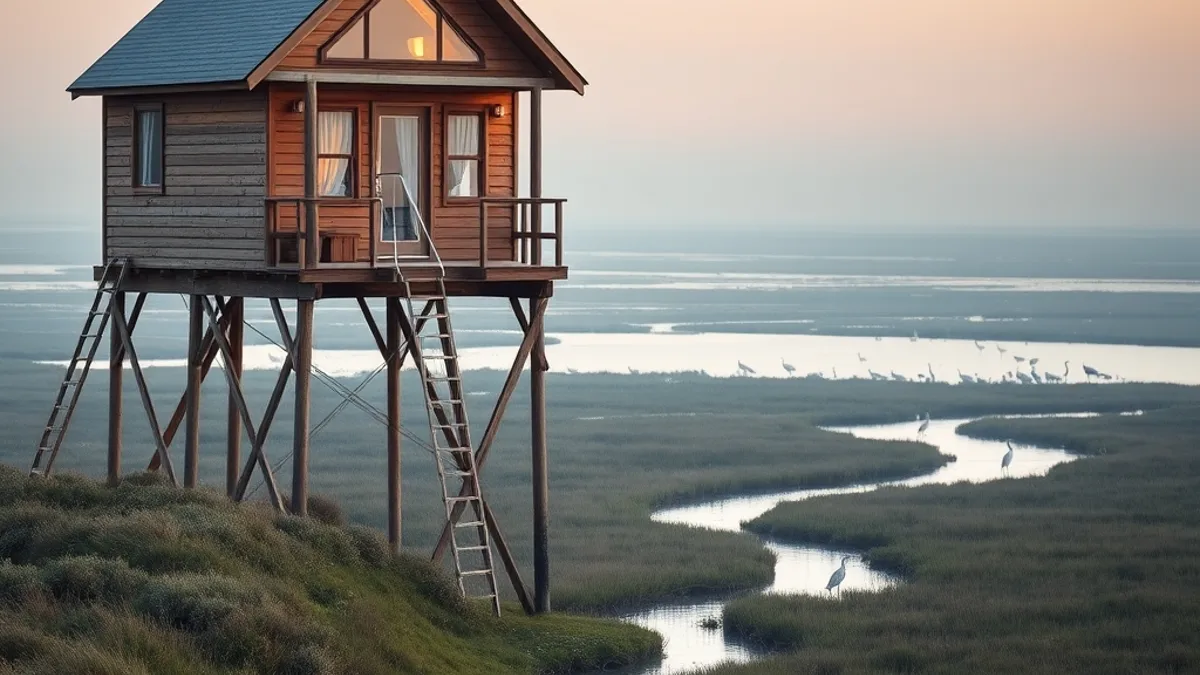
One more decision deserves attention before you book: site placement. Marsh-edge sites trade direct beach access for sunset views and fewer crowds, and many glampers find that trade worthwhile once they see the light over the grass at dusk. Decide which matters more to you before comparing prices.
- Bike-friendly layouts: Jekyll and Tybee both have established bike path networks, so a glamping site near a path can replace the need to drive between beach, meals and shops.
- Access logistics for remote islands: Sapelo requires ferry coordination and Little St. Simons is reached by private boat arrangement, so confirm transportation details and timing before committing to a stay.
- Screening and elevation: Raised, screened cabins keep marsh-edge mosquitoes and no-see-ums out at dawn and dusk, when insect activity peaks, and elevated construction also helps with coastal humidity and damp ground.
- Orientation of the site: West-facing marsh sites deliver the sunset views, while dune-edge sites put you closer to the sand—check maps or ask the operator which way your unit faces.
- On-site versus off-site dining: Remote islands may have limited or reservation-only dining, while Jekyll and Tybee let you walk or bike to restaurants, which changes how you plan evenings.
Putting the Seasons Together
If you’re still weighing your options, start with the shoulder-season windows highlighted above—they pair the coast’s most comfortable conditions with rates that leave room in the budget for extra nights or a second paddle trip. For many travelers, that combination of pleasant days, lighter crowds and reasonable prices makes the decision an easy one.
That said, the right answer depends on what you want from the trip. Swimmers should aim for the warm-water months despite the crowds, while travelers who prize solitude and campfire evenings will find winter hard to beat. Whichever direction you lean, match your unit to the season—a screened cabin for humid nights, a heated tent for chilly ones—and give yourself the right booking lead time. Planning a trip to Georgia’s barrier islands? Drop a question in the comments or pass this guide along to a travel companion.