Glamping in Iceland sounds like the perfect compromise — a warm bed under a glass roof, with volcanoes and waterfalls outside your door. But there’s a catch: what you actually see from that bed depends almost entirely on when you go. Come in June and you’ll get daylight that never quits, but zero chance of auroras. Book for February and the northern lights may dance overhead, if the clouds cooperate.
This guide walks you through the whole decision, season by season. We’ll compare midnight sun against aurora season, show you how to pick a site that’s actually winter-rated, and explain why booking four to six months ahead matters more here than almost anywhere else. You’ll also get practical tips on maximizing your northern lights nights, packing for Icelandic wind and cold, and planning a trip that matches your goal — whether that’s driving the highlands at 23:00 in full daylight or watching the sky glow green from a heated dome.
Why Glamping in Iceland Works in Every Season
Iceland’s weather is famously unforgiving — horizontal rain, gusts that rip car doors open, and winter nights that stretch for hours. Glamping exists precisely because of that gap between the climate and the landscape. Instead of choosing between a basic campsite and a conventional hotel, you get insulated domes, heated timber lodges and glass-roof cabins that keep you warm while putting you closer to the raw scenery than any lobby ever could.
The trade-off between seasons is the heart of the decision. Summer delivers the midnight sun, with daylight that lets you drive and explore at hours that would be unthinkable elsewhere — and the highland roads open up, unlocking the interior. Winter trades that light for the country’s biggest draw after the landscapes themselves: auroras overhead and ice caves you can walk into.
Where the sites actually are
Most glamping sites cluster near Reykjavik, along the Golden Circle and down the south coast. That geography works in your favor: you can land at Keflavik, pick up a rental car and reach your dome or lodge within a 1-2 hour drive. It also means you can base yourself at one site and make day trips to waterfalls, geysers and black-sand beaches without ever checking in somewhere new.
Choosing Your Season: Midnight Sun vs Northern Lights
The single biggest scheduling question for any Iceland trip is what you want to see from your window at night. The two headline attractions are mutually exclusive, and the calendar decides which one you get.
The midnight sun window
Midnight sun runs from about mid-May to late July, with near-continuous daylight, especially pronounced in the north. The upside is enormous flexibility: you can hike at 21:00, drive a scenic route at 23:00 and never worry about headlight-dark roads. The downside is absolute — with no real darkness, aurora hunting is simply off the table during these months.
Aurora season and the sweet spot
The northern lights season runs roughly September to mid-April, with peak visibility around the equinoxes, when solar activity tends to align with clear nights. That makes September and late April the smartest compromise months: you get genuine darkness for aurora chances, milder weather than deep winter, and noticeably fewer crowds than the summer high season. Roads are also generally easier to handle than in January or February.
If auroras are your priority, aim for those shoulder dates or the equinoxes. If road-trip freedom matters more, the midnight sun window is hard to beat. Just don’t book June expecting a green sky — the math doesn’t work.
How to Pick the Right Glamping Site
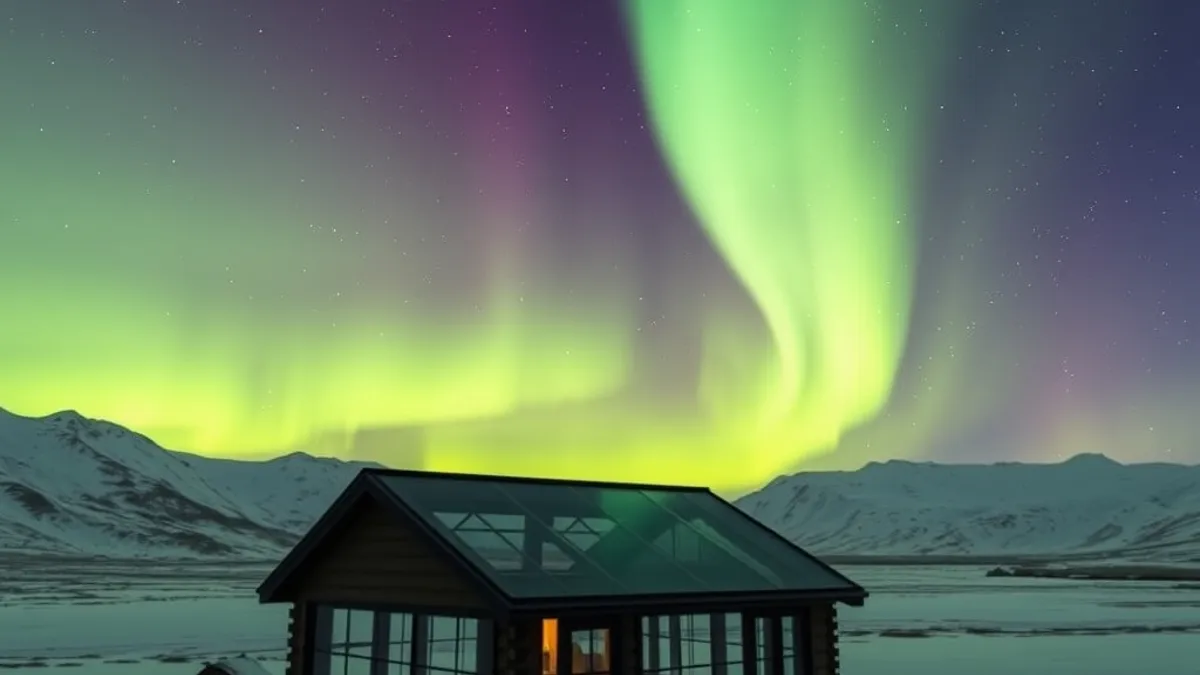
Not all glamping units are built for the same season, and this is where bookings go wrong. A transparent-roof dome is unbeatable for watching auroras from bed — you can lie warm under blankets and watch the sky without stepping outside. Timber lodges are the better pick for winter storms, when wind and snow make fabric walls a liability. Simple tents only make sense in summer, when the weather is milder and you’re out exploring most of the day anyway.
Before you book anything outside summer, ask one direct question: is the unit winter-rated? Most fabric tents close October to April, and a summer-only tent booked for a March aurora trip will leave you scrambling for a hotel. Hard-sided units are what operate through the cold months.
Location matters just as much. Look for sites with minimal light pollution, ideally outside Reykjavik’s glow along the south coast or the Golden Circle — city light washes out faint auroras entirely.
- Heating source: ask whether heat runs on electricity, gas or wood — a wood stove in a dome needs someone awake to keep it fed on a -10°C night.
- Bathroom setup: private en-suite bathrooms vs. shared facilities changes both comfort and price, especially when you’re walking outside at midnight in winter.
- Window orientation: for aurora units, check whether the transparent section faces north or simply upward — some domes have limited sky views from the bed.
- Accessibility: some sites sit down gravel tracks; confirm whether your rental car can reach them in the season you’re visiting.
On budget, expect nightly rates of about $150 to $400 per night depending on season, insulation level and whether bathrooms are private or shared. Winter aurora domes with glass roofs sit at the top of that range; summer tents at the bottom.
Booking Timing and Lead Times
Iceland’s most memorable glamping stays are small, and the good ones book out early. Timing your reservation matters almost as much as picking the right site, especially if you have your heart set on a transparent-roof dome or a specific stretch of the south coast.
Summer bookings: think four to six months out
Midnight-sun season is peak season for a reason. The weather is friendliest, the highland roads are typically open, and everyone from couples to families wants a piece of it. Reserve summer stays 4-6 months ahead, and move even faster if you’re targeting June and July weekends, when the best units often disappear first. If your dates are flexible, shifting to late May or late August can open up availability without giving up much daylight.
Aurora season: the early bird gets the dome
Winter-rated domes and lodges are limited inventory, and they typically sell out 3-4 months in advance for September and the equinox dates, when aurora activity tends to line up with clearer nights. Book as soon as your travel window is fixed, and consider a refundable rate if the forecast is still a gamble.
Whenever you go, favor midweek stays. They usually cost less than weekends, and spreading your booking across several nights gives you multiple chances at a clear sky — a far better strategy than betting everything on one Saturday.
Maximizing Your Northern Lights Nights
Seeing the northern lights is part luck, part preparation. You can’t control solar activity or cloud cover, but you can absolutely stack the odds in your favor with how you plan your nights. Auroras need three things to align: dark skies, clear weather and geomagnetic activity of Kp 2 or higher. You can’t manufacture any of those, but you can give yourself enough chances that at least one night cooperates. The travelers who see the lights are rarely the lucky ones — they’re usually the ones who stayed longer and checked the forecast more often. Treat it like a mini-campaign rather than a single evening, and follow this sequence.
- Commit to at least 3-4 nights in one area. Clouds are the biggest aurora killer in Iceland, and single-night travelers often leave empty-handed. A longer stay lets you ride out cloudy spells, and a stretch of several nights also spreads your chances across different levels of solar activity. If your budget allows, shifting dates into the midweek can help too.
- Check the forecast every afternoon. The Icelandic Met Office publishes both cloud cover and aurora activity forecasts that are updated regularly. Look at them before each evening, not just once on arrival, and build a simple routine: afternoon check, dinner plan, evening decision. Be ready to reposition if a nearby valley looks clearer, or simply rest if the sky is blanketed — forcing a night drive through thick cloud gains you nothing.
- Stay up for the peak window. The strongest displays tend to run roughly from 21:00 to 01:00, which means napping earlier or skipping the late dinner. Book a unit with a wake-up view of the sky or heated outdoor seating so you can wait comfortably instead of giving up at 22:00. Keep curtains open and lights off so your eyes stay dark-adapted.
One final habit: keep your gear and warm clothes laid out before you go to bed. Winter nights in Iceland can drop well below freezing, so layer up properly — insulated jacket, hat, gloves and warm boots — before you step outside. When the sky suddenly clears at midnight, you want to be standing in the open within two minutes, not fumbling for boots in the dark. Displays can build and fade within half an hour, so speed genuinely matters.
Packing and Practical Prep for Icelandic Conditions
Iceland doesn’t punish the unprepared dramatically in summer, but in the shoulder and winter months it absolutely can. The gap between a great glamping trip and a miserable one usually comes down to layers, wheels, and a shopping run. Summer days typically sit around 10-13°C (50-55°F), while winter nights often drop to -5 to -10°C — and wind makes both feel sharper than the thermometer suggests. Weather can shift from sunshine to sideways rain within an hour, so treat every forecast as a starting point rather than a promise.
Build your packing around a layering system: a moisture-wicking base, an insulating mid-layer such as fleece or wool, and a shell on top. Your shell should be both windproof and waterproof, because Icelandic weather rarely offers just one of those conditions. Add a warm hat and gloves even in summer — evenings outside a dome get chilly fast. For midnight-sun trips, pack a proper eye mask; daylight in June stretches late into the evening, and thin curtain fabric in a dome does little to block it. Sturdy, waterproof shoes matter too, since grass and gravel paths around units stay damp well past the summer months.
- Rent a 4×4 outside summer. F-roads and icy tracks either close or demand higher clearance, so a standard rental car can leave you stranded or force long detours. Check road conditions before setting out each day.
- Do a full grocery run before arrival. Many glamping locations sit 30+ minutes from the nearest shop, and some have no food service at all. Plan meals for your whole stay and bring more snacks and water than you think you need.
- Include hand warmers and a thermos. Waiting for auroras or enjoying the midnight sun is far more pleasant with hot drinks, and small heat packs make outdoor evenings last longer in the cold months.
- Pack swimwear year-round. Hot springs and geothermal pools are a natural complement to cold nights, and having a suit with you means you can stop whenever the opportunity appears.
Planning Your Iceland Glamping Trip
The answer to when Iceland’s glamping season delivers is simple: match your season to your goal. Midnight sun from mid-May to late July gives you road-trip freedom and long, flexible days, while September to mid-April is your window for auroras, with the equinoxes offering the best odds. If you want a bit of both, the shoulder months are a smart compromise.
Once you know your dates, book 3-6 months ahead depending on the season, and make sure your unit is winter-rated if you are traveling outside summer. Give yourself multiple nights to ride out cloudy spells, pack for wind and cold rather than mild weather, and position your base away from city light along the south coast or Golden Circle. Do that, and your glamping trip will deliver exactly what you came for. If this helped you plan your trip, leave a comment or share the article with a fellow traveler.