Sleeping in the treetops sounds like a dream: monkeys passing at eye level, mist drifting past your deck, birdsong as your alarm clock. But when travelers start researching canopy glamping in Costa Rica, the picture gets murky fast. Some listings are genuine treehouse suites suspended in the forest, while others are simply tents on a hillside deck with a good view. Prices vary widely, regions differ enormously, and it is hard to know what you are actually paying for.
This guide clears up the confusion. You will learn what canopy glamping really means and how it differs from a standard eco-lodge, which rainforest regions offer the best treetop stays, and when to book for the right balance of price and weather. We also walk through how to judge a property before you commit, what a typical day looks like up in the canopy, and what to pack for a stay where stairs, suspension bridges and afternoon showers are part of the deal.
What Canopy Glamping in Costa Rica Actually Means
Canopy glamping means sleeping at or above treetop level, usually in elevated tents, suspension platforms or treehouse suites built into the forest itself. Your room sits on stilts, platforms or among branches, not on the forest floor. In practice, that height changes everything about the experience, because the rainforest’s activity happens around you rather than below you.
Do not picture rough camping, either. These stays come with real beds, proper linens, private bathrooms and covered decks, and many add outdoor showers where you rinse off surrounded by leaves. Walls are often made of open mesh or fitted with large windows, so airflow moves through the space while the jungle sits directly in front of you.
How it differs from a standard eco-lodge
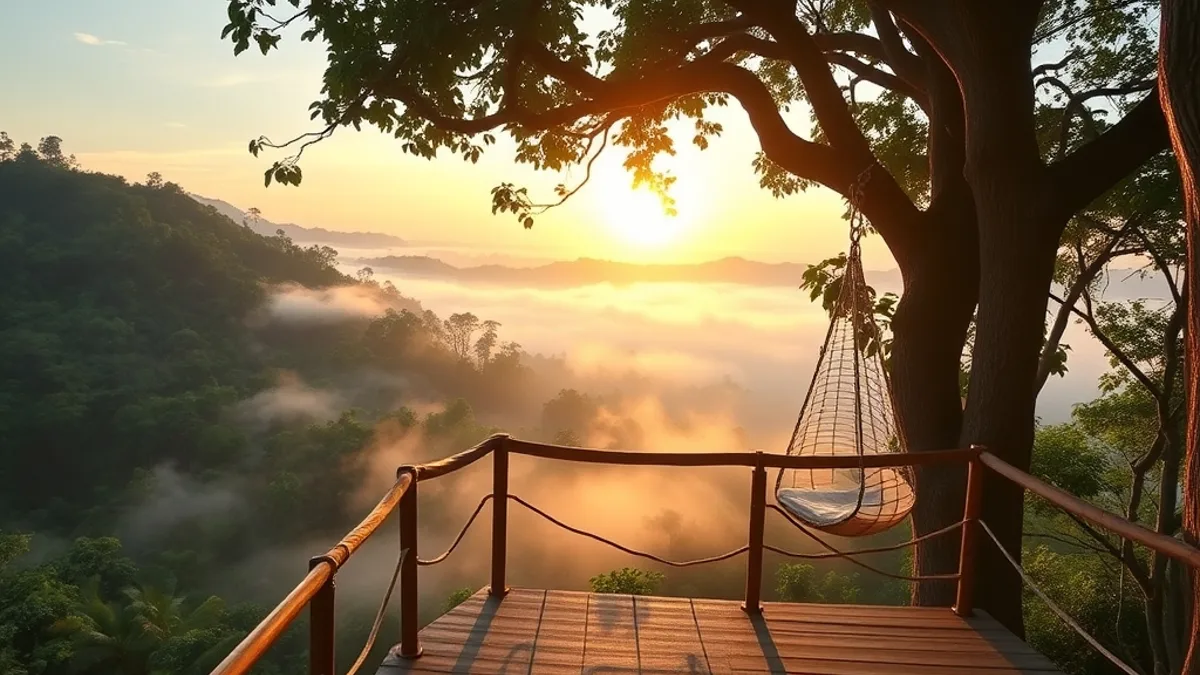
Eco-lodges in Costa Rica can be lovely, but most are solid buildings set beside the forest, with windows looking out onto greenery from ground level. Canopy glamping puts you up in the treetops instead, so wildlife, birdsong and mist pass at eye level rather than below your room. A toucan may land a few meters from your hammock, and troops of monkeys can cross through branches level with your deck. That proximity to the living forest, with only mesh or glass between you and it, is exactly what you are paying for. It also means sound travels differently: instead of distant jungle noise, you hear leaf rustling, insect calls and rain hitting the canopy fabric just above your head. If that idea excites you more than a hotel balcony does, this style of stay will suit you well.
Best Regions for Rainforest Canopy Stays
Canopy stays in Costa Rica cluster in four main regions, each with a very different feel. Before choosing, think about what matters more to you: cool air and cloud forest, volcano views and hot springs, raw wilderness, or beach access. It helps to know your travel style first, in the same way you would compare, say, slow countryside hideaways in Provence against a city break before booking a French trip. Families with young children often prefer regions with short, easy transfers, while couples celebrating something special may happily trade convenience for remoteness and richer wildlife.
Monteverde sits at roughly 1,400 meters, so expect a cool cloud forest with misty mornings and easy access to hanging bridge parks. La Fortuna and Arenal pair volcano views with hot springs and the easiest road access, around 3 hours from San José by car. The Osa Peninsula is the wildest and most wildlife-rich option, while Manuel Antonio suits travelers who want treetop mornings followed by beach afternoons near a compact national park.
One practical way to decide is to match the region to your trip length. If you only have a few days, choosing a region with straightforward logistics leaves more time actually enjoying your tent rather than traveling to it.
- Monteverde: the mist can roll in for hours, so bring a light jacket and plan hanging bridge visits for mid-morning when clouds often thin out.
- La Fortuna and Arenal: the paved route from San José makes this the simplest region for rental cars, families and shorter trips.
- Osa Peninsula: getting there takes a domestic flight of about 50 minutes plus a boat or 4×4 transfer, but the reward is the richest wildlife in the country, including scarlet macaws and all four Costa Rican monkey species.
- Manuel Antonio: canopy properties here are often a short drive from both the park entrance and swimmable beaches, ideal for mixing jungle and coast.
When to Book: Seasons, Prices and Lead Times
Timing shapes both the price and the feel of a canopy stay. December to April is the dry season on the Pacific side, with the highest demand of the year. For these dates, book 3 to 6 months ahead, since the best treetop platforms are few in number and fill first.
Green season value
May to November is the green season, and it is a smart window for flexible travelers. Rates drop, and 1 to 2 months of lead time is usually enough to secure a good property. Rain typically arrives as intense afternoon showers of 1 to 3 hours rather than all-day drizzle, leaving mornings clear for canopy walks and wildlife watching.
What you can expect to pay
Nightly rates for canopy glamping tents typically run from $150 to $450, with luxury treehouse lodges starting from $600 and climbing from there. Treat these as planning ranges rather than fixed prices, and confirm current rates directly with properties, since they shift with season and demand.
How to Judge a Canopy Glamping Property Before Booking
The single biggest difference between a true canopy stay and an ordinary tented room is elevation. Some properties market themselves as “canopy glamping” when the tent actually sits on a deck at ground level, or on a hillside terrace that merely looks out over the trees. A genuine treetop platform is raised among or above the foliage, often reached by stairs, a walkway or a suspension bridge. Ask the lodge directly how high the platform sits and how you reach it, and study the photo gallery for shots taken from the deck itself.
Next, look closely at how the tent is built. The best canopy designs use large sections of screened or mesh wall, which keeps mosquitoes and other insects outside while letting air move freely and letting you hear every bird call and rain shower. Solid canvas walls on all four sides can turn a jungle tent into a stuffy, dark box, especially during humid green-season nights.
Bathroom arrangements deserve a direct question before you pay. Many remote canopy sites share washroom blocks or rely on gravity-fed water, which means lukewarm showers. If a private bathroom and reliable hot water matter to you, confirm both in writing rather than assuming them from the price.
- Generator use: some off-grid properties run generators for a few hours daily, so check whether you will have power all evening or need to charge devices at the main lodge.
- Nearby noise: scan recent reviews for mentions of zipline circuits, restaurant music or group tours passing close to the tents, since sound carries far in open-sided structures.
- Rain-day handling: read what guests say about how staff respond during heavy downpours, whether covered walkways keep you dry and if activities are reorganized rather than canceled.
- Deck condition: look for comments on slippery boards, loose netting or gaps in railings, since platforms age quickly in a wet forest climate.
What a Canopy Stay Day Looks Like
Dawn is the reason to sleep in the treetops. As first light filters through the leaves, birds begin calling in waves and monkeys move through the branches, often at exactly eye level with your bed. Make a coffee, settle onto your deck and let the forest come to you; this hour consistently outperforms any paid tour for sheer immersion.
Mornings are also the practical window for activities. Guided walks, hanging bridge circuits and zipline runs are best done early, before the green-season showers roll in. Most rain in the wetter months arrives as intense afternoon downpours lasting one to three hours, so a solid morning plan keeps you dry and gives you the clearest wildlife viewing of the day.
Embracing the afternoon rain
When the showers arrive, treat them as part of the experience rather than an interruption. A covered deck, a hammock and a good book turn a downpour into one of the most relaxing hours of the trip. Watch the forest steam as the rain passes, and keep your camera ready: animals often become active again the moment the rain stops.
Evenings and cool nights
After dark, temperatures fall, and nowhere more noticeably than in Monteverde, where the cloud forest sits at roughly 1,400 meters and nights drop to around 15-18°C. Pack a fleece or light jacket even if days feel tropical, since you will want it for dinner, stargazing and sleeping with mesh walls open to the night air.
Packing and Practical Notes for Treetop Stays
Packing for a treetop stay is slightly different from packing for a standard hotel room. The combination of humidity, afternoon rain and unlit walkways means your gear choices directly affect how comfortable the stay feels. Quick-dry clothing is essential, since nothing dries fast in a rainforest climate, and a light rain shell will earn its place on every outing. Footwear should have real grip: boardwalks, deck stairs and suspension bridges stay wet and slick long after the rain stops, so flip-flops alone won’t cut it. Pack a pair of sturdy sandals or water shoes for around the tent, plus closed shoes with decent tread for walks.
Most canopy lodges also run on limited water and power systems, often solar or small hydro setups. That shapes both what you bring and how you use it. Refillable water bottles cut down on plastic waste that remote sites struggle to remove, and biodegradable toiletries protect the streams and soil around the property. Skip hair dryers and other high-draw appliances unless the lodge confirms it can handle them. Leave valuables and unnecessary electronics at home too, since humidity and damp storage are hard on gadgets.
A few smaller items make a noticeable difference. A compact daypack lets you carry rain shells, water and camera gear on guided walks without returning to your tent. Insect repellent and a basic first-aid kit belong in every bag, and a spare battery pack keeps phones charged between lodge power windows. Finally, pack a little patience with your wardrobe: with limited luggage space on boats and narrow walkways, one well-chosen duffel beats an overflowing suitcase every time.
- Headlamp with a red-light mode: many canopy sites keep lighting deliberately low to protect wildlife, and paths between tents and the main lodge are unlit at night, so hands-free light is a must.
- Soft-sided duffel bag: hard-shell suitcases are awkward on stairs, narrow suspension bridges and boat transfers, so a duffel you can shoulder is far easier.
- Dry bags or ziplock pouches: these keep electronics, passports and spare clothes dry inside your bag during humid storage and sudden downpours.
- Zip-off or lightweight long pants: useful for evening walks when mosquitoes are most active, without the weight of full hiking trousers.
- Small towel or travel towel: handy for wiping dew off deck chairs and camera gear in the cool early mornings.
Wrapping Up Your Rainforest Canopy Plan
Canopy glamping in Costa Rica is simpler than it first sounds: an elevated tent or treehouse suite built at treetop level, with a real bed, a private bathroom and the rainforest passing at eye level. The best concentrations of these stays sit around Monteverde, La Fortuna/Arenal, the Osa Peninsula and Manuel Antonio, so your choice of region shapes the whole experience, from misty cloud forest mornings to volcano views or remote wildlife-rich jungle.
Timing matters too. The dry season from December to April brings the highest demand and needs booking 3 to 6 months ahead, while the green season from May to November usually offers lower rates and shorter afternoon showers. Before you commit, judge each property on true elevation among the trees, screened walls, private facilities and recent guest reviews. Budget between $150 and $450 per night for a canopy tent, and expect luxury treehouse lodges to start at $600. If this helped you plan your treetop stay, leave a comment or share the article.