The idea is tempting: a dome or tent glowing under snow-covered stars, silence all around, no neighbors for miles. But most people hesitate at the same question. Will a canvas tent really stay warm at night, or will you wake up shivering at 3 a.m. with your breath frosting on the zipper? That doubt keeps a lot of curious travelers from trying winter glamping at all.
The good news is that modern cold-weather glamping is built around warmth. Insulated structures, wood stoves and underfloor heating work together to keep tents and domes genuinely cozy, even through freezing nights. In this article, we’ll look at how these structures actually beat the cold, which heat systems to expect, where to go, what a night costs, what to ask before booking, and how to pack so you stay comfortable from the parking lot to the pillow.
How Winter Glamping Structures Beat the Cold
The first surprise for most winter glamping first-timers is how engineered these structures are. A winter dome or four-season tent is not a summer festival tent with a heater thrown inside. These units are designed from the ground up to handle snow load, wind and sustained sub-zero nights.
Geodesic domes: snow slides right off
Geodesic domes are the workhorses of cold-weather glamping, and their shape is the reason. The sloped, spherical surface gives snow little to sit on, so it sheds rather than accumulates, while the reinforced triangular frame distributes weight evenly. Instead of fighting the weather, the dome’s geometry works with it, which is exactly why you’ll see this design everywhere from the Nordic countries to alpine valleys.
Four-season tents and insulated panels
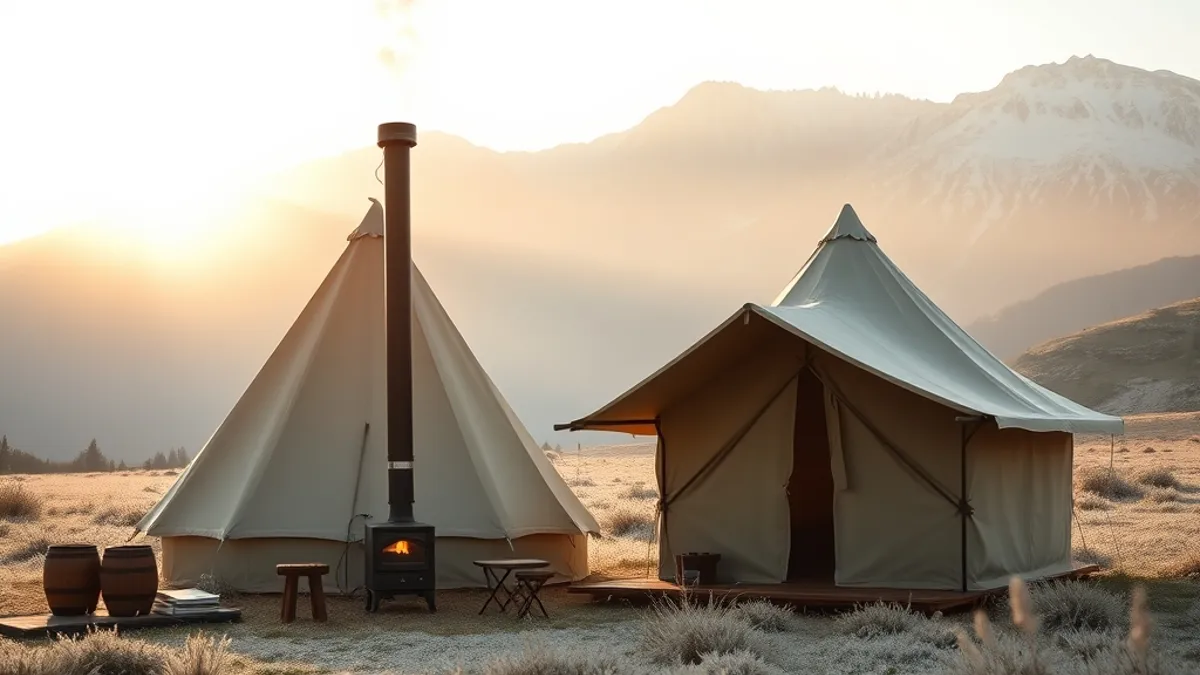
Four-season safari tents take a different approach: double-layer insulated canvas that traps an air buffer between the layers, plus a raised platform that keeps cold air from seeping in from below. That platform detail matters more than people expect, since the ground is often the coldest surface around. Transparent dome panels follow the same logic as modern windows. They’re usually double or triple glazed, so warmth stays in while the view stays clear. You can watch snow fall from under a duvet without a single draft on the back of your neck.
Heating Systems: Wood Stoves, Underfloor Heating and Backup Heat
Heat is what separates real winter glamping from an uncomfortable experiment, and most sites layer their systems rather than relying on a single source. The two most common heat sources in winter domes are wood stoves and underfloor heating, and they complement each other well.
Wood stoves are the classic solution. A good stove warms a 20-30 m² tent within an hour, and there’s a reason hosts love them: the crackle and glow do as much for the atmosphere as for the thermometer. Underfloor heating, common in premium domes, solves the overnight problem. When the stove burns down in the early hours, the warm floor keeps the interior comfortable so you’re not greeted by cold toes at sunrise. And on nights below -10°C, well-run sites don’t leave anything to chance. A good host will typically have:
- Backup electric heaters, either set on a thermostat or available on request, so a temperature drop never becomes an emergency
- Extra blankets and duvets stored on site, often wool or down, so you can add layers to the bed without asking
- Enough firewood supplied indoors, so you’re not chopping or hauling logs through the snow at midnight
Before booking, it’s fair to ask how these systems work together. A confident host will explain the setup in detail; hesitation is a useful signal.
Where Winter Glamping Works Best
Winter glamping works best where operators have real cold-weather experience, and three regions dominate for good reason.
The Nordic and alpine classics
Lapland and Iceland are the dream scenario: heated domes with transparent panels positioned for northern lights viewing from your bed, with the season running from November to March. Stepping outside at midnight to check the sky is optional when the aurora can appear right above your pillow. The Alps offer a different flavor. Valleys in Austria, Slovenia and the French Alps combine snow-covered dome stays with sauna access, which is hard to beat after a day on the slopes or the winter trails.
Milder options for first-timers
If deep freeze sounds intimidating, Portugal’s Serra da Estrela and the Scottish Highlands deliver frosty mornings, dusted landscapes and wood-stove evenings without the extreme cold of the far north. These destinations suit travelers who want the atmosphere of winter glamping and a gentle introduction to it. Our advice: start milder. If you love the experience, a Lapland dome under the aurora makes a perfect second trip.
What a Winter Glamping Night Actually Costs
Winter glamping costs more than a summer tent stay, and it helps to know why before you book. In high winter, expect to pay $150-$450 per night. Stove-heated safari tents sit at the lower end of that range, while glass domes with underfloor heating command the top prices. That gap makes sense once you look at what goes into a winter-ready unit: heavier materials, insulated canvas, extra fuel and far more maintenance between guest stays.
Timing matters as much as the structure you choose. December and January weekends are the peak of the season, and hosts know it. Many popular sites require a 2-night minimum stay over winter weekends, so a spontaneous Saturday night rarely works out. If your dates are flexible, aim for midweek nights in February or early March instead. Rates are typically lower than weekend pricing then, and you may get the sauna or hot tub to yourself.
Here is what usually drives the price up or down:
- Heating type: a simple wood stove is cheaper to run and book than electric underfloor heating, which is typically reserved for premium domes.
- Viewing panels: transparent or glazed roof sections add cost, since you are paying for the northern lights or star views from bed.
- Private facilities: units with an en-suite bathroom or a private hot tub sit above shared-bathroom sites in the same price band.
- Meals and extras: some hosts bundle breakfast, firewood or sauna sessions into the rate, so compare what is included rather than the nightly number alone.
Booking a Heated Dome: Timing and Questions to Ask
Heated domes are a scarce commodity. A site might run a dozen summer tents but only three or four winter-ready units, so the good December and January weekends disappear early. The winter season in most Alpine and Nordic regions runs from November to March, but demand is heavily concentrated around the holidays, and operators often list far fewer units than they do in summer. That gap between interest and availability is why preparation matters. A little planning makes the difference between a cozy night under a snowed-in canopy and a cold surprise at check-in.
- Book 3-6 months ahead for peak weekends. December and January dates, especially around holidays, are the first to go. Set a reminder and reserve as soon as your window opens.
- Ask about the heat source. Wood stoves and underfloor heating are the two most common systems, and they behave very differently overnight. Ask which one your unit has, or whether it uses both.
- Confirm heating runs all night. Some stoves need reloading every few hours. Ask whether someone tends the fire, or whether an electric system keeps the temperature up while you sleep.
- Have a backup plan. Ask what happens if the stove goes out: is there an electric heater in the unit, and can you reach staff during the night if something fails?
- Check road access. Ask whether the site is reachable by a regular car in snow, or whether you need winter tires, chains, or a shuttle from a meeting point.
Good hosts answer these questions without hesitation, because they hear them from every winter guest. If replies are vague about heating or winter access, treat that as useful information and look elsewhere. The same applies to cancellation policies: mountain weather can close roads, so a flexible rebooking option is worth more than a small discount. When you do find a site that answers clearly and quickly, that responsiveness is often the best sign of how well the whole stay will run.
Packing and Comfort Tips for Cold-Weather Glamping
Inside a heated dome or tent, you will be comfortable. Temperatures typically hold at 15-25°C even when it is freezing outside, so the tent itself is not the problem. The walk between your warm unit and the bathroom, sauna or car is where the cold gets you, and that is what your packing should focus on.
Merino base layers and wool socks are the core of a winter glamping kit. Wear them indoors if you like, but they really earn their keep on those short trips across frosty paths. Slip-on footwear by the door makes midnight bathroom runs far less painful than lacing up boots.
Remote dome sites often have limited outdoor lighting, so a headlamp is worth packing even if you never plan to leave your unit after dark. An insulated water bottle is the other quiet hero: water freezes fast in unheated tents and cars, and a warm drink at 2 a.m. is a small luxury. If mornings worry you, prioritize stays with a private bathroom or a sauna a short walk away, and browse options like a quiet Irish hideout built for wild weather to see how comfort-focused remote stays handle the elements.
- Slippers or camp shoes: hard floors stay chilly near the edges of the tent, and insulated slippers make evenings far more pleasant.
- Lip balm and hand cream: wood stove heat dries the air out noticeably over a multi-night stay.
- A book or downloaded entertainment: many remote sites have weak phone signal, and offline options beat staring at a dead battery bar.
- A small daypack: handy for carrying layers, snacks and your headlamp on sauna trips or short snowy walks.
The Warm Way to Try Winter Glamping
So, will a canvas tent turn into an icebox overnight? Not if you pick the right structure. Heated tents and domes combine insulated canvas, wood stoves and underfloor heating to hold a comfortable 15-25°C inside, even when temperatures outside drop well below freezing. You get the snow-covered stars without shivering through the night.
The options cover every comfort level, from stove-heated safari tents to glass domes where you can watch the northern lights from bed, across Lapland, the Alps and milder Highland sites throughout the November to March season. Budget $150-$450 per night and book 3-6 months ahead if you’re set on a December or January weekend. Winter glamping turns out to be less about enduring the cold and more about watching it from somewhere warm. Have you tried a heated dome yet? Share your experience in the comments or pass this article along to a friend who needs a winter plan.