Choosing between a hotel and a hostel is one of the most common travel dilemmas. You can pay for your own room with a private bathroom, or save serious money by sleeping in a shared dorm with five strangers. The right answer depends on your budget, your trip length, and honestly, how well you sleep.
This hotel vs hostel guide breaks the decision into the questions that actually matter: how much privacy you really get, what you pay per night once extras are counted, which facilities each option offers, and what your nights sound like after dark. We also look at when a hotel justifies the higher rate and when a hostel bed makes more sense, then finish with a quick recap to help you match your stay to your trip.
Hotel vs Hostel: How Privacy Really Compares
A hotel room is private by default. You get one key, one room, and no shared sleeping space. Whether you are traveling alone or with a partner, everything inside that door is yours, and nobody else has a reason to enter unless you invite housekeeping in.
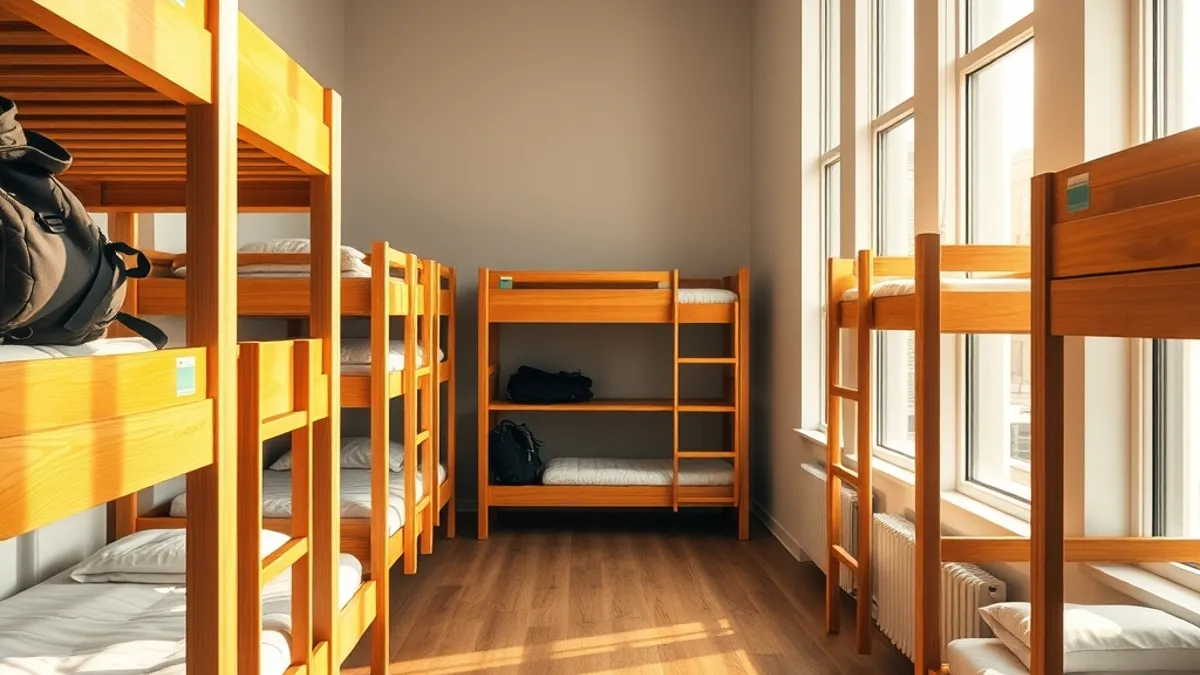
Hostel dorms work differently. A typical room holds anywhere from 4 to 12 beds, which means your personal space shrinks to the area around your mattress. Privacy depends on a few practical features: privacy curtains around bunks, a solid locker for your bag, and plain luck in who you share the room with. Some dorms feel calm and respectful; others have someone rustling plastic bags at midnight.
The bathroom factor
Bathrooms are the hidden privacy issue many travelers forget to compare. Hotels almost always include an en-suite bathroom, so you can shower and get ready without ever leaving your room. Hostels often rely on shared corridors of toilet stalls and shower cubicles, and during morning rush hours those corridors can get busy. Some hostels do offer en-suite options, but they usually cost extra.
If you want a middle ground, many hostels now offer private doubles at roughly $40–90 per night. You get a locking door and often a private bathroom while keeping the hostel atmosphere and common areas. For travelers who like the social side but need real privacy to sleep, this option is often the smartest compromise in the entire hotel vs hostel debate.
Price Breakdown: What You Actually Pay Per Night
Price is where the two options separate most clearly. Mid-range hotels typically run $80–250 per night in most city markets, while a hostel dorm bed costs around $15–50 in the same places. That difference adds up fast: over a week-long trip, the savings can cover flights, meals, or even another destination entirely.
The gap narrows when you look at hostel private rooms. They sit between dorm beds and standard hotel rooms on price, and for couples or friends who want a locking door without paying full hotel rates, they often hit the sweet spot. You give up some of the hotel polish, but you keep the door that closes. If you want to see what a bigger accommodation budget can buy at the higher end, browse a few luxury stays with private pools in Marbella for a sense of where hotel spending goes.
One more thing to compare is how each option structures its pricing. Hotels bundle most costs into the nightly rate, while hostels often charge separately for items you might assume are included:
- Towel rental: many hostels charge a small daily or per-stay fee if you do not bring your own
- Luggage storage: useful on checkout day, but some hostels bill it separately from your bed
- Breakfast: occasionally included, more often an add-on that costs less than a hotel buffet but still adds up
Before you book, add these extras to the base rate so you are comparing real totals rather than headline prices. A dorm that looked like a bargain can creep toward hotel money once the add-ons stack up, while a hotel rate that looked steep may already include towels, breakfast, and storage. Check the fine print on both sides, then decide which total actually fits your trip.
Facilities Compared: Kitchens, Pools, and Shared Spaces
Facilities are where hostels and hotels play very different games. Hostels almost always include a guest kitchen, and this single feature can transform a longer trip. Cooking a few dinners instead of eating out every night cuts food costs substantially, and hostel kitchens double as social spaces where travelers swap tips over shared pasta.
Hotels counter with facilities hostels rarely match. Pools, gyms, spas, and room service are standard at mid-range properties in many markets, and even modest hotels usually offer extras like in-room coffee makers and laundry service. If your idea of a good trip includes a swim before breakfast or a late meal delivered to your door, a hotel is typically the only realistic choice.
Service and shared spaces
Hostels win on social facilities. Common rooms, rooftop bars, organized walking tours, and family-style dinners make it easy to meet people, which matters a lot when you arrive in an unfamiliar city alone. Hotels rarely offer anything comparable beyond a quiet lobby bar.
Service levels differ just as much. Hotels provide daily housekeeping and staff a front desk around the clock, so a delayed flight or a 2 am arrival is rarely a problem. Hostels often run a reduced daytime reception, with fewer staff hours and no daily room cleaning in shared dorms. Check what time reception closes before booking a late arrival, since some hostels handle after-hours check-in differently or ask you to arrange it in advance.
Noise, Sleep Quality, and House Rules
Sleep is where the hotel vs hostel comparison gets personal. Hotels are built to insulate: thicker walls, solid doors, and no bunk frames creaking every time someone rolls over. Nobody is fumbling for a zipper bag in the dark two feet from your pillow, and there are no 2 am door slams from a late arrival wandering in with a headlamp on.
Hostels do try to manage this. Most enforce quiet hours from around 10 pm to 7 am, and many post the rules on the dorm door. The catch is enforcement, which varies widely. In a party-oriented hostel, quiet hours may exist on paper but be treated as a suggestion, especially on weekends.
The good news is that you can stack the odds in your favor at check-in. A few specific requests make a real difference to how you sleep:
- Ask for a lower bunk. You avoid climbing a ladder in the dark, and top bunks tend to wobble every time the person above shifts position.
- Request a room away from the stairwell and kitchen. Corridor traffic and early coffee makers are the two loudest neighbors you can have.
- Check whether the front door locks overnight. Some hostels lock doors or switch off dorm lights after a set hour, which matters if you have a late bus or an early flight.
- Pack earplugs and an eye mask regardless. Even the quietest dorm has zippers, plastic bags, and phone screens, and these two items cost almost nothing.
Hotels rarely impose curfews at all. Your key works at 3 am, housekeeping stays out until you hang the sign, and the only schedule you follow is your own. If uninterrupted sleep drives your trip more than your budget does, that difference alone can decide the choice.
When a Hotel Is Worth the Extra Money
Short trips are the clearest case for a hotel. On a stay of 2–3 nights, setup time outweighs the savings. In a hostel you are choosing a bunk, finding a locker, learning the kitchen rules, and adjusting to roommates. By the time you are settled, you are checking out. A hotel lets you drop your bag, hang one towel, and start enjoying the city within minutes of arrival.
Work trips and romantic getaways
Business travel justifies the hotel rate for a simple reason: reliability. You need a quiet room for calls, a desk, consistent Wi-Fi, and a front desk that can handle an early checkout or a late arrival. A dorm with six roommates on different time zones is not a place to prepare a presentation. Add the standard 3–4 pm check-in and 11 am checkout, and hotels are simply built around predictable schedules.
Romantic getaways follow the same logic. A private room, an en-suite bathroom, and the ability to close a door and not talk to strangers is the entire point of the trip. A hostel private room can work on a tight budget, but the hotel experience is what most couples are actually paying for.
Narrowing the price gap
Price is the one argument for hostels that hotels can partially answer. Booking 2–3 months ahead secures the best hotel rates in high season, and discounted rates in that window can bring a solid hotel close to what you would pay for a hostel private room plus a few extras. If your dates are fixed, early booking is worth an hour of research before you default to the cheapest dorm bed.
Family travel almost always tips toward hotels, too. One hotel room fits parents and kids without splitting up, and many properties add connecting rooms or family rooms. In a hostel, a family would need to book a private room anyway, and shared kitchens and dorm rules are rarely designed with children in mind.
When a Hostel Makes More Sense
Long trips are where hostels earn their place. A solo traveler staying more than a week can save hundreds compared with a nightly hotel rate, and those savings compound fast. Over two weeks, the difference can cover days of food, a couple of tours, or your next transport ticket.
Hostels are also the easiest way to meet people in an unfamiliar city. The guest kitchen turns cooking into conversation, and organized social events give you a ready-made group for the day. If you have ever arrived somewhere alone and felt unsure where to start, a common room with other travelers asking the same questions is a genuine advantage, not just a cheap perk.
Backpackers hopping between destinations lose little sleep quality on short one-night stays. When you are checking in late and leaving early, the trade-offs matter less, and the money saved per night adds up across a multi-stop route.
Before you book, a few choices shape the experience more than the price tag does:
- Pick smaller dorms of 4–6 beds. You keep the low price while cutting noise and crowding compared with the larger rooms some hostels run, and there are fewer people sharing one bathroom schedule.
- Read recent reviews for the vibe. A hostel can skew social, quiet, or party-oriented, and reviews from the last few months tell you which one you are actually getting.
- Look for included storage. A secure locker big enough for a full backpack means you can explore the city on checkout day instead of hauling your bag around.
- Check whether breakfast or linen is included. Some hostels charge small extras for these, and knowing before you book avoids surprises at check-in.
Match the stay to the trip, and the hostel stops being a compromise. For solo travelers with time on their hands, it is often the smarter pick on both budget and experience.
Choosing Your Stay: The Quick Recap
So, is paying more for a hotel worth it? It comes down to what you are actually buying. Hotels deliver privacy, facilities, and consistency at $80–250 per night, while hostels trade that privacy for a $15–50 bed, shared kitchens, and social energy. Neither option is better in general—only better for a specific trip.
The gap between them is also smaller than it first appears. Hostel private rooms at $40–90 give couples a door without hotel prices, and travelers who reserve hotel rooms a couple of months before a high-season trip often land noticeably lower rates. Match the stay type to your trip length, your companions, and how much sleep matters to you, and the choice usually makes itself. If this helped you decide, leave a comment or share the article with a fellow traveler.