Planning glamping for multi-generational trips sounds simple until you actually try to book one. Grandparents need real beds, warm nights and bathrooms they can reach without a trek, while grandkids want space to run and parents want everyone to get along. Juggling accessibility, comfort levels and daily pacing is where most families underestimate the work involved.
This guide walks through the decisions that make or break the trip: why glamping suits older travelers in the first place, how to vet a site’s accessibility before you pay, which seasons treat older guests best, realistic booking timelines and budgets, a daily rhythm that works for three generations, and the comfort extras worth packing. By the end, you’ll have a plan everyone from age seven to seventy-seven can enjoy.
Why Glamping Suits Multi-Generational Trips with Grandparents
The biggest reason grandparents skip traditional camping is physical strain, and glamping removes almost all of it. A proper bed with a real mattress means no sleeping bag on hard ground, no waking up stiff and sore. Heating keeps the tent or cabin comfortable through the night, which matters more as we age, and a private bathroom eliminates the midnight walk across a dark campsite that many older travelers simply refuse to do.
One site, one unpack
Single-site stays are quietly the most important feature for older travelers. Nobody has to pack and unpack suitcases, fold tents or move between hotels. Grandparents can set up their space on day one and settle in, which reduces both physical effort and the disorientation that comes with constant change of scene.
Time together, space apart
Glamping also solves the togetherness problem. Shared decks and communal fire pits create natural gathering spots for morning coffee or evening stories, so connection happens without forcing it. At the same time, everyone gets their own sleeping quarters, so nobody is crammed into one room with snoring teenagers and early-rising toddlers. Privacy and family time coexist, which is exactly what a successful multi-generational trip needs.
Choosing Glamping Sites with Grandparent-Friendly Accessibility
Not all glamping sites are equally friendly to older legs, so accessibility should be your first filter when shortlisting options. Hosts vary enormously in how they design and maintain their grounds, and photos rarely show the details that matter most. Start with the unit itself: look for level or ramped entry and fewer than 5 steps from parking to the door. Inside, grab rails in the bathroom make a genuine difference for balance and confidence, especially on wet floors at night. A stable, non-slip surface at the entrance matters too, since muddy thresholds are one of the most common complaints from older guests.
Walking distances matter just as much as the unit design. A tent that looks lovely in photos can sit 200 meters from the toilet block across uneven grass, which turns every bathroom trip into an expedition, particularly after dark or in rain. Ask for a tent-to-toilet distance under 50 meters, and request a site map before booking so you can see the layout for yourself rather than relying on vague descriptions. A good host will happily answer these questions; hesitation is itself a useful signal.
- Ask about terrain underfoot: gravel paths, tree roots and sloped ground are the main hazards; a site with compacted, level pathways between units and facilities is far safer for walking sticks or unsteady gait.
- Confirm luggage transport: some sites carry bags from the parking area to your unit by cart or staff help; on gravel or sloped terrain this is often the decisive factor between two otherwise similar sites.
- Check lighting after dark: ask whether paths and the bathroom route are lit at night, since a headlamp is not a realistic solution for many older guests.
- Verify parking proximity: ask exactly how far the designated parking spot is from the unit, not just whether parking exists on site.
Picking the Right Season and Climate for Older Guests
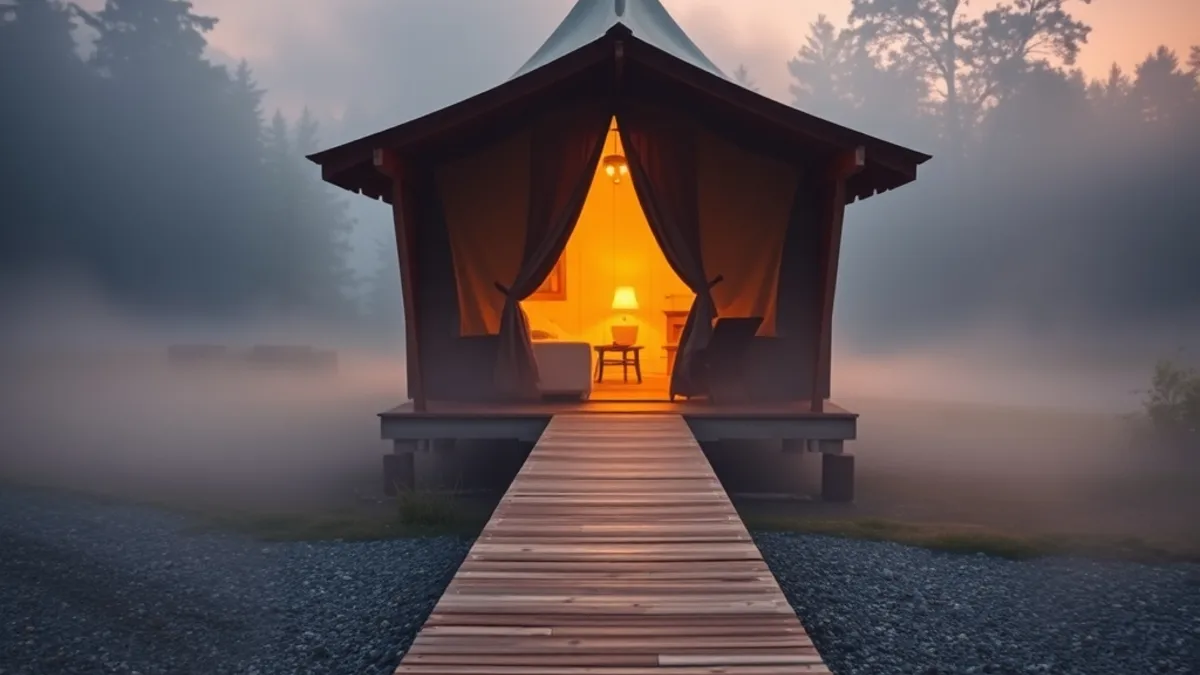
Season choice can make or break a trip with older guests, because temperature extremes hit hardest at both ends of the age spectrum. Aim for May–June or September–October, when mild 15–25°C days avoid both heat stress and cold nights. Grandparents stay comfortable without constant thermostat management, and kids can still play outside all day.
Sites to approach with caution
Avoid high-summer sites that have no shade or air conditioning, since a heatwave in a canvas tent is miserable for everyone and genuinely risky for older guests. At the other end of the calendar, be wary of shoulder-season sites with unheated tents — a bargain price means little if nights drop cold enough to keep grandparents awake. Always ask hosts directly how the unit is heated and cooled before you commit.
Why location type matters
Coastal and lowland sites moderate temperature swings far better than mountain or desert locations. Near the ocean, evenings cool gently rather than plunging, and daytime peaks stay reasonable. Mountain sites can swing from hot afternoons to near-freezing nights even in summer, and desert locations amplify both extremes. If grandparents are in your group, favour water-influenced climates and check typical conditions for your exact dates rather than trusting seasonal averages alone.
Booking Timelines and Budgets for Family Glamping
Multi-bedroom glamping units are the scarcest inventory on any site, and peak summer dates make that scarcity worse. If your family wants a two- or three-bedroom tent in July or August, reserve 6–9 months ahead. Shoulder season trips are far more forgiving, and 2–3 months of lead time is usually enough, though popular weekend slots still go early.
Budgeting matters just as much as timing. Family-sized glamping tents typically run $250–$600 per night, and units with private bathrooms add roughly $75–$150 per night over shared-facility sites. Those bathrooms are often worth the premium for older guests, so build them into the plan from the start rather than treating them as a luxury add-on.
The most common money mistake in multi-generational trips is silence. If costs are never discussed, grandparents frequently end up quietly covering more than their share. Agree on the split before anyone pays a deposit, and put it in writing in the family group chat.
- Ask who covers the deposit. Some hosts require full payment months ahead, so decide early which family member fronts the money and when others reimburse them.
- Confirm the cancellation policy in writing. With three generations involved, one illness can change the plan, and flexible terms protect everyone’s contribution.
- Check whether the nightly rate includes linens and heating. Some sites charge these as extras, which can shift the real cost per night noticeably.
- Agree on a shared fund for groceries and activities. Collecting an equal amount from each adult household upfront avoids awkward daily requests for cash.
Building a Daily Pace That Works for Three Generations
The fastest way to exhaust grandparents on a glamping trip is to pack every day with activity. It is an easy mistake to make: everyone arrives enthusiastic, the itinerary looks thin on paper, and so you add a second outing, then a third. By day three, the older members of the family are running on empty while the grandchildren are still full of energy. A better structure gives each day a single focus and protects the hours around it, so energy is spread evenly across the whole stay rather than spent in the first two days. The steps below build that rhythm into your plan before you leave home, when it is still easy to cut things out.
- Plan one anchor activity per day. A morning boat trip, a short nature walk or a town visit gives the day shape without draining anyone, especially when it finishes before lunch. One solid outing a day is enough for a trip of 4–6 nights.
- Keep afternoons free. Unstructured time at the site lets older guests rest, nap or read while grandchildren play, and it absorbs delays without derailing the schedule.
- Cap excursions at 2 hours of active walking. Track the actual time on foot, not the total outing, and split longer visits with a long sit-down meal or bench break in the middle.
- Choose a site within a 2-hour drive of medical facilities. This matters even for healthy travelers, since a fall or a flare-up is far less stressful when a hospital is reachable quickly.
- Share emergency contacts with everyone. A simple printed card in each tent with doctors, insurers and family phone numbers saves scrambling if phones are dead or out of signal.
- Rotate who chooses the day’s plan. Give grandparents their own planning days so they can pick low-effort options, rather than defaulting them into babysitting while others hike.
Families who follow this structure often find the trip feels longer and more restful than a packed itinerary of the same length. The free afternoons become the moments people remember: card games on the deck, a slow walk to the fire pit, grandchildren showing grandparents how to toast the perfect marshmallow. Nobody starts a day already tired, and nobody quietly wishes they had stayed home. Build the rhythm in advance, then let each day breathe around its single anchor, and all three generations will finish the trip glad they came.
Packing and Comfort Extras for Grandparents
Even in warm months, canvas cools fast after sunset, and evening temperature drops of around 10°C are common in many glamping regions. Layered clothing is the simplest fix: a t-shirt, a fleece and a light jacket let each person adjust without needing the heater. A favorite pillow and a small reading light also make canvas walls feel far more like home.
Before arrival, message your host with a short list of comfort requests. Extra blankets, a kettle for tea and a firm mattress topper are items most glamping operators provide free when asked in advance, but they may not appear in the tent by default. Asking a week ahead beats discovering the gap at ten at night.
Medication needs the most careful planning of all. Pack prescriptions in a carry-on style bag that stays with the grandparents, never in a trunk or a shared duffel, and include a printed list of each medication with its dosage in case a refill or emergency visit is needed.
- Add a headlamp or clip-on book light per person. Site lighting is often dim by design, and fumbling for a path in the dark is a genuine fall risk for older guests.
- Bring slip-on shoes with grip for around the tent. Dew-covered decking and gravel paths are slick in the morning, and laces are awkward on a cot or low bed.
- Pack a small thermos if a kettle isn’t confirmed. A hot drink at bedtime is a small comfort that matters more in a tent than it ever does at a hotel.
- Include spare glasses and a charger for hearing aids. Replacements are hard to find near rural glamping sites, so duplicates remove the risk entirely.
Wrapping Up Your Multi-Generational Glamping Plan
Planning a glamping trip that works for both grandparents and grandkids comes down to three things: an accessible unit with level or ramped entry, mild shoulder-season dates in May–June or September–October, and a stay of 4–6 nights that leaves room to rest. Book 6–9 months ahead for peak summer and budget $250–$600 per night so expectations stay realistic from the start.
Just as important is the rhythm of the trip. One anchor activity per day, gentle afternoons and a few comfort extras like extra blankets and a kettle turn a good trip into one all three generations actually remember. If you have planned a multi-generational glamping trip yourself, share what worked in the comments below.