You love the idea of sleeping in a round canvas tent under open sky, but when you start researching, the details get fuzzy. What actually happens inside a yurt at night? Does it get cold? What do you pack, and how early do you need to book? Yurt glamping promises a real bed with the sounds of the outdoors, yet the reality has a few surprises that catch first-timers off guard.
This guide walks you through the whole experience, step by step. We explain what a yurt actually is and how it differs from other tent accommodations, where the format works best, and how far ahead to book for summer weekends. You will also learn what a night in a yurt is really like, from dawn birdsong to midnight stove-tending, plus a practical packing list and advice on weather, mud and walk-in sites. By the end, you will know exactly what to expect and how to prepare for your first night under canvas.
What Yurt Glamping Actually Is
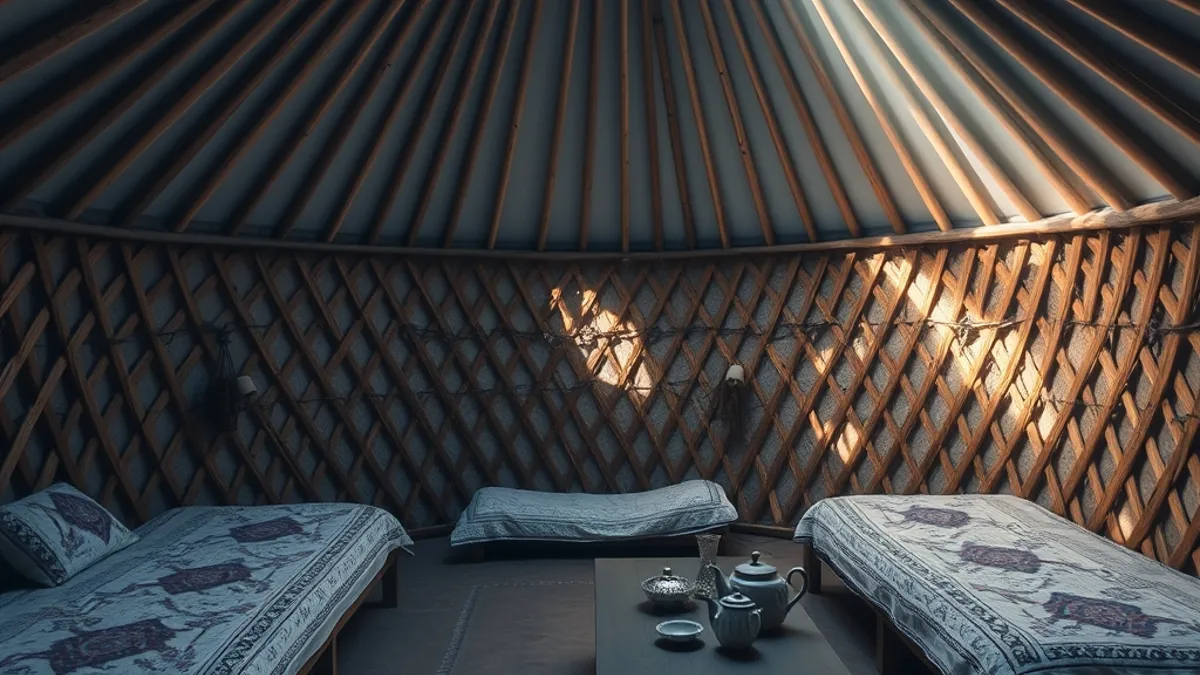
A yurt is a circular tent built around a lattice wall frame, traditionally covered in canvas and insulated with felt. At the center of the roof sits a clear crown, a round skylight that lets you watch stars from your bed on clear nights. The structure feels surprisingly solid for a tent: the tension between the frame, the roof poles and the canvas cover creates a stable, weather-resistant shell.
Most glamping yurts measure between 100 and 400 square feet, with typical diameters of 4 to 7 meters. That is enough floor space to sleep 2 to 5 guests on real beds with mattresses, not sleeping bags on the ground. Family models can stretch to 6 guests. You get standing headroom throughout, so nobody is crawling around like in a dome tent.
From nomad dwelling to glamping structure
Yurts originated as dwellings for Central Asian nomads, engineered for quick assembly, warmth and portability across the steppe. Modern glamping yurts borrow the shape but are purpose-built as seasonal structures, often anchored on wooden platforms with proper doors and lockable windows.
Furnishing levels vary widely, so look closely at listings. Bare-bones yurts offer little more than beds and access to shared washrooms, while en-suite models can include a private bathroom, a wood stove and even a small kitchen. Neither is better; they simply suit different budgets and comfort expectations. Check the description carefully so you know which end of the spectrum you are booking.
Where Yurt Glamping Works Best
The setting shapes your yurt stay more than almost anything else. Open grassland and steppe sites deliver the classic experience: wide horizons, huge skies and a real sense of remoteness. The trade-off is exposure, and these open settings tend to bring the coldest nights of any yurt location. If stargazing is your priority, this is the terrain to look for.
Forest sites work differently. Trees block the wind and give you genuine privacy between yurts, which matters in busier camps. The downside is that your sightlines shrink to whatever the canopy allows, so expect dappled light and fewer big-sky views.
Views versus shelter
Coastal and hilltop yurts flip the equation. You get dramatic views and often the best sunsets, but you give up natural shelter, and wind can be a constant companion. Pack extra windproof layers and secure anything loose outside, because gear left on a deck can disappear down a hillside.
For the format at its most authentic, look to remote, open-sky destinations such as Mongolia’s lake regions, where the landscape itself explains why the yurt was invented. If that idea appeals, our guide to remote hideaways around Lake Khuvsgul shows what open-sky stillness looks like in practice.
Booking a Yurt Stay: Timing and Rates
Yurt glamping has a booking rhythm, and summer weekends sit at the center of it. Popular sites sell out fast for July and August, so reserve 2 to 3 months ahead, and earlier than that for the busiest midsummer weekends. Midweek dates and shoulder-season stays are far easier to find, sometimes with just a few weeks’ notice.
What you can expect to pay
In peak season, expect rates of roughly $120 to $350 per night, depending on location, size and amenities. Shoulder-season discounts of 20 to 40 percent are common, which makes late spring and early fall attractive if you can handle cooler nights. Prices vary a lot between regions, so treat these figures as a starting point rather than a rule.
Minimum stays and what is included
Before you fix your dates, check the booking terms. Many sites enforce a 2-night minimum on weekends, which rules out quick overnight trips and affects how you plan around travel days. Reading the fine print first saves disappointment later.
Also confirm exactly which amenities are included in the rate. En-suite yurts with private bathrooms, wood stoves and kitchens price very differently from bare-bones models that rely on shared washrooms. Some sites bundle linens, firewood or cooking gear into the price; others charge separately. A short email to the host before booking usually settles every question in one go.
What a Night in a Yurt Is Really Like
Here’s the part most first-timers underestimate: a yurt is canvas, not concrete. Sound travels straight through it. That means birdsong starting well before you’d choose to wake, wind rattling the cover on gusty nights, and, in busy camps, the muffled conversation and footsteps of neighboring guests. If you sleep lightly, this is the single biggest adjustment from a hotel room.
Temperature is the second surprise. A warm afternoon that hits 25°C can easily give way to a night in the 10 to 15°C range inside the yurt, because canvas holds little heat once the sun goes down. Many yurts run 5 to 10°C cooler at night than the daytime high, so the difference between a cozy sleep and a shivery one often comes down to how well you use the bedding and stove you’re given.
Wood stoves change the picture in cooler months, but they need tending. A fire loaded at bedtime will typically burn down by the early hours, so someone may need to get up around 2 a.m. to reload it, unless the site staffs nightly fires or supplies long-burning logs. Ask about this when you book; it shapes whether you’ll actually stay warm at 4 a.m.
Light is the final factor. The clear roof crown and mesh windows that make yurts so charming also let dawn in early, and the crown glows long before sunrise on bright mornings. Pack accordingly:
- An eye mask blocks the roof crown’s early glow, which on clear summer mornings can wake you a full hour or more before you planned.
- Earplugs handle both the wind noise flapping the canvas and the carry of voices between closely spaced yurts in a full camp.
- Layered bedding strategy matters: ask whether extra blankets are stored in the yurt or on request, because the gap between a 25°C afternoon and a 12°C night is real.
- A small thermometer or simply checking the forecast helps you decide whether to run the stove overnight or trust the provided duvet.
- Ask the host about stove protocol before dark, including where the firewood is stored and how to damper the flue, so you’re not troubleshooting by flashlight at 2 a.m.
How to Pack for Yurt Glamping
Packing for a yurt is a middle ground between camping and a hotel stay. You don’t need sleeping bags or a tent, but you do need to think like a camper, because canvas walls handle neither cold, light, nor noise the way a solid building does. The core challenge is the temperature swing: shoulder-season trips can easily move between 10°C nights and 25°C days, so single heavy clothing won’t cut it.
Think in layers you can add and shed across one day. A t-shirt for the afternoon, a fleece for the evening, and an insulated jacket for sitting outside after dark covers most situations. A warm hat earns its place in your bag too, because shoulder-season nights are when heat loss through your head actually matters, especially if the stove burns low toward morning.
The other packing theme is light management and convenience. Canvas lets dawn in early, and yurt life involves constant stepping in and out over a threshold, often in the dark or in dew. Small items make a big difference here:
- An eye mask and earplugs together solve the twin problems of pre-dawn light through the roof crown and thin walls that carry wind and neighboring voices.
- A headlamp beats a phone flashlight because it leaves your hands free for stove loading, late-night trips to the washroom, and unpacking in a dim interior.
- Slip-on footwear, like clogs or slide sandals, saves you from lacing boots every time you step over the yurt threshold, which you’ll do far more often than you expect.
- A dry bag keeps spare clothes and electronics safe in damp weather, since canvas can let humidity in during long rain and gear left on the floor sits close to the ground.
- A reusable water bottle and a small daypack cover the walk to shared washrooms and the day’s outings without cluttering the yurt’s limited floor space.
Finally, verify what’s provided before you pack duplicates. Most sites supply bedding and towels, but linen quality, cooking equipment, and firewood supplies vary widely between operators. A two-minute email asking exactly what’s in the yurt prevents both overpacking and arriving to find there’s no kettle, no pots, or no log supply for the stove.
Preparing for Weather and Terrain
Yurt glamping runs through the warmer months, roughly April to October in most temperate regions, but a booking inside that window is no guarantee of gentle weather. Spring and early fall can deliver proper storms, with heavy rain and gusts that make the canvas sing all night. Before you commit to dates, check the site’s cancellation window and what happens if the forecast turns ugly. Some operators offer rebooking or partial refunds for severe weather; others hold firm the moment you’re inside their policy period. Knowing this before you pay matters far more than hoping the sky cooperates.
Terrain is the other thing to plan around. Many yurts sit a 5 to 15 minutes’ walk from the parking area, sometimes over grass, gravel, or a rooty path. That walk is part of the charm, but it changes how you should pack. Hard-sided suitcases with tiny wheels are miserable on a muddy track, so use duffel bags or backpacks you can carry comfortably, and pack so you can manage everything in one trip if possible.
Site conditions worth asking about
Setting shapes the experience more than most travelers expect. Forest and mountain sites bring shade, shelter, and atmosphere, but also mud after rain and insects on still evenings, so insect repellent and waterproof footwear belong on the list. Latvia’s Gauja valley is a good example of this kind of setting, where forest houses and yurt-style stays sit in deep green countryside; our article Gauja Forest Houses hidden in Latvian Green Stillness gives a feel for what that landscape offers.
Two practical questions to ask any host before arrival: how water access works, whether that’s a tap outside, a shared washhouse, or water delivered to the yurt, and how food storage is handled. In sites shared with wildlife, leaving food loose in a canvas structure is an invitation you don’t want to extend, so confirm whether there’s a lockable box, a communal kitchen, or a bear-proof storage option where relevant. A short message to the host covering water, food, and the walk from parking will answer most of the surprises before they happen.
Ready for Your First Night Under Canvas
Yurt glamping answers a simple question: can you sleep outdoors without giving up comfort? The answer is yes. You get a real bed, a wood stove on cooler nights and solid shelter overhead, while canvas walls keep the birdsong, wind and early morning light right there with you. It is camping with the hard edges removed, not a hotel in the wilderness.
Preparation makes the difference. Reserve summer weekends 2 to 3 months out, and budget for nightly prices that can run anywhere from $120 at the low end to $350 at the top in peak season. Pack layers for big temperature swings, bring an eye mask and earplugs, and use duffel bags if your yurt sits a short walk from parking. Do that, and your first night under canvas should be pure comfort.
If you have stayed in a yurt before, share your experience or tips in the comments below. Your notes might be exactly what a first-timer needs to book with confidence.