Glamping in Big Sur has become one of the hardest coastal stays to book in California. The handful of ocean-view tents, Airstreams and cabins along Highway 1 often sell out months ahead, leaving travelers unsure when to reserve and which stay type is actually worth the price.
This guide breaks down why availability disappears so fast, compares canvas tents, trailers and cabins, and explains which season gives you the clearest skies for your money. You’ll also find realistic booking windows, advice on where to base yourself along the coast, packing tips for foggy mornings, and a quick summary plan to pull it all together.
Why Glamping in Big Sur Sells Out So Fast
Big Sur looks like a long coastline on the map, but the glamping inventory is surprisingly small. Only a handful of coastal properties operate along the roughly 70-mile stretch of Highway 1, and each one has a limited number of tents, trailers or cabins. Unlike Carmel-by-the-Sea, which sits about 30 miles north and offers dozens of hotels, Big Sur has no large-scale lodging at all. When a few dozen units serve travelers arriving from all over the world, weekends vanish quickly, and even midweek dates in summer can be gone months in advance.
Minimum stays shrink the calendar
During peak season, most sites require weekend minimum stays of 2-3 nights. That means a single Saturday night booking often isn’t possible, so one family’s weekend takes two or three nights off the calendar. Available dates for everyone else shrink further with every reservation. The math compounds fast: a property with ten units and a two-night weekend minimum effectively removes twenty bookable nights every weekend, even though only ten guests parties are actually staying. If you can travel midweek, you’ll find far more openings, since minimum stays typically apply only to Friday and Saturday nights.
One road in, one road out
Highway 1 is the only access route through Big Sur. When a closure occurs, all demand concentrates into the open windows, and travelers rush to rebook dates on either side. This squeeze effect makes already-scarce openings disappear even faster, especially around holidays and summer weekends. Closures occasionally happen in winter due to landslides, which is why October tends to be the most reliable driving month. Before finalizing any reservation, check current highway conditions with Caltrans, and consider building a flexible arrival date into your plans so a closure doesn’t derail the whole trip.
Coastal Stay Types: Tents, Airstreams and Cabins
Not all Big Sur glamping is the same, and the differences show up quickly in both price and comfort. Safari-style canvas tents with ocean views sit at the top of the range, typically $250-$450 per night. You’re paying for the view and the feeling of waking up to the sound of surf, but canvas is still canvas: cool mornings and wind are part of the deal. These tents usually sit on wooden platforms on the bluff side of the property, so the most sought-after units face the water directly and get claimed first.
Airstream and vintage trailer stays typically run $150-$300 and offer more weather protection, with solid walls, real insulation and often a small heater. That makes them a smart pick for shoulder-season trips when nights turn chilly. Redwood-edge cabins and yurts trade ocean views for shelter, sitting around $150-$250 per night in forested settings a short drive from the coast. They’re also the quietest option, since most sit away from the road noise that echoes along Highway 1.
- Ocean-view tents: expect shared or semi-private bathhouses at many properties, so check whether your unit has a private bathroom before booking.
- Airstreams and trailers: fixed beds and compact kitchens make these a good fit for longer stays or travelers who want to skip camping gear entirely.
- Cabins and yurts: redwood settings mean shade and cooler daytime temps, plus better shelter from coastal wind than clifftop sites.
Choosing the Right Season for Your Dates
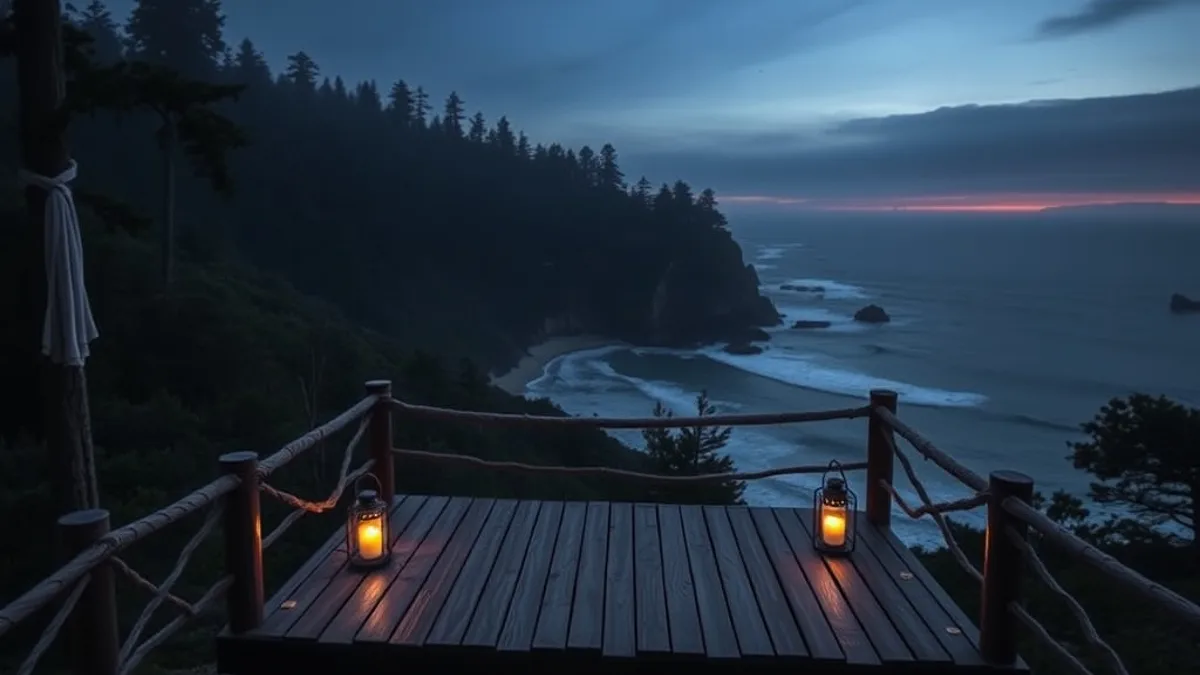
Timing shapes your entire Big Sur experience, from what you pay to what you actually see out your tent flap. June through August delivers the warmest days, but it also brings daily morning fog and peak prices. Summer is when the coast is most photogenic in the afternoon and most gray at breakfast.
The sweet spot: September and October
September and October offer the clearest coastal skies of the year and the most reliable Highway 1 driving conditions. Fog fades, rates ease down from summer peaks, and the road is at its most dependable. If your schedule allows any flexibility, these two months deliver the best trade-off between weather, crowds and price. For a different kind of slow, scenic escape, consider a trip inspired by lavender-scented hideaways in the French countryside.
Winter: cheap but unpredictable
November through April brings storm drama and the lowest rates of the year. Watching waves crash from a snug cabin can be memorable, but landslide risk can close Highway 1, sometimes for extended periods. If you book a winter stay, keep an eye on road conditions before you leave and build flexibility into your plans.
Booking Windows That Actually Work
Big Sur glamping is not a book-it-the-week-before kind of trip. With only a small number of coastal properties and heavy summer demand, the travelers who score the best sites are the ones who work the calendar deliberately. A safari tent facing the ocean or a quiet trailer spot under the redwoods can be gone months before your arrival date, so treating the reservation like a planned event rather than an impulse decision makes a real difference. Here is a simple timeline that works.
- Count back 4-6 months for a June-August trip. If you want a summer weekend, start looking in January or February. This gives you the widest choice of sites and stay lengths before the prime slots disappear, and it leaves room to compare layouts, views and minimum-stay requirements instead of grabbing whatever is left.
- Book shoulder-season trips 2-3 months out. May, September and October are far easier to snag, and you can often be flexible on exact dates. Still, don’t wait until the last minute if you need a specific weekend, since popular fall dates fill steadily too.
- Set release-date reminders. Many booking platforms open their calendars 12 months ahead, and popular weekend slots can vanish within days of release. Mark the release date on your phone and check the morning calendars go live.
- Have a backup date range ready. If your first-choice weekend is gone, a nearby midweek window or an adjacent month often has availability at similar rates. Midweek stays also tend to come with fewer minimum-night requirements.
One more practical tip: read the cancellation policy before you commit. Summer plans sometimes shift, and knowing the terms makes it easier to book early with confidence rather than hesitating and losing the slot. Check whether deposits are refundable, how far in advance you must cancel, and whether date changes are allowed for a fee. A few minutes reviewing the fine print protects both your budget and your spot on the coast.
Where to Base Yourself Along the Coast
Big Sur is not one destination but a roughly 70-mile stretch of coastline, and where you base yourself changes the whole feel of your trip. Think about how much driving you want to do each day before you book.
The northern stretch
Staying near Andrew Molera State Park puts you about 30 minutes from Carmel-by-the-Sea, which is handy for groceries, restaurants and gas. You are also close to several trailheads, so you can be on a coastal hike within minutes of rolling out of your tent. The trade-off is that this zone feels the busiest, since day trippers from Carmel pass through regularly.
Central Big Sur and the south
The central zone around Pfeiffer Big Sur offers redwood-shaded settings and easy access to river beaches, a nice change from the bluffs and coves further north. You are well positioned between the main sights, though you will still drive for dinner reservations and supplies.
Head south toward Lucia and things quiet down considerably. Nights are darker, stars are brighter, and you will hear more ocean than traffic. The trade-off is real: restaurants, fuel and groceries are all longer drives away, so plan your arrivals and departures with a full tank and a stocked cooler.
What to Pack and How to Plan Days
A little preparation goes a long way in Big Sur, mostly because services along Highway 1 are sparse and pricey. The coast sits roughly 30 miles south of Carmel-by-the-Sea, and once you pass the last shops there, options thin out fast. Pack for temperature swings, plan your sightseeing around the fog pattern, and arrive self-sufficient so you can settle in without backtracking for basics.
Layered clothing is the single most important packing decision. Coastal mornings can sit 20 degrees cooler than inland afternoons, so a day that starts with a fleece and beanie can end in a t-shirt. Think in thin layers you can add and shed rather than one heavy jacket, and toss in a light rain shell just in case, especially if your trip falls outside the clearest months.
Timing matters just as much. The classic Big Sur mistake is heading to the beach at 9 a.m., finding a wall of gray, and assuming the coast is always like this. Morning fog is most common from June through August, while September and October bring the clearest skies. Instead of fighting it, structure your days around the fog.
- Save beaches and viewpoints for the afternoon. Morning fog typically burns off by midday, so Pfeiffer Beach and coastal lookouts are far more rewarding after lunch.
- Use mornings for redwood hikes. Trails under the canopy are pleasant in the cool gray hours, and you avoid hiking in the afternoon sun.
- Download offline maps before you leave Carmel. Cell service along much of Highway 1 is unreliable, and a dead zone with no map is a real problem, not an inconvenience.
- Fill the gas tank in Carmel. Stations along the coast are few and expensive, and you do not want to be hunting for fuel on a winding two-lane road.
Stock up on snacks and water in Carmel as well. If you are driving in winter, check Highway 1 conditions before you set out, since landslides occasionally close sections of the road. A little extra planning up front means more time enjoying the coast and less time dealing with logistics once you arrive.
Your Big Sur Glamping Plan at a Glance
Big Sur’s coastal glamping sites sell out months ahead, but the fix is simple: pick your stay type first, then lock your dates. For a June through August trip, reserve 4-6 months out; for September or October, 2-3 months is usually enough. Whether you want an ocean-view tent or a quieter redwood cabin, rates across the board run roughly $150-$450 a night, so there’s a fit for most budgets.
If you can travel anytime, aim for September or October. You’ll get the clearest coastal skies and the most reliable Highway 1 driving conditions of the year. Book early, set a calendar reminder, and your Big Sur glamping trip will come together without the last-minute scramble. Have a question or a tip of your own? Leave a comment or share this article with a friend planning the same trip.