Imagine checking your credit card statement a few days after a hotel stay and finding a $300 charge you never authorized. It happens to travelers who smoke or vape more often than you might think. The fee is usually a deep-cleaning penalty from a smoke-free hotel, applied after housekeeping detects smoke residue in the room. The surprise is the point: many guests never read the policy they agreed to at check-in.
Smoke-free hotels are now the norm at most major chains, and their rules go well beyond the room you sleep in. This article walks through what these policies actually cover, how penalties work, where designated smoking areas are typically located, and how vaping and cannabis fit into the picture. You will also find practical steps to verify the rules before you book, plus alternatives like private rentals if hotel restrictions feel too tight for your trip.
Smoke-Free Hotels: What the Policy Actually Covers
A smoke-free policy is much broader than many guests assume. It typically covers guest rooms, corridors, lobbies, restaurants, meeting rooms and most other indoor public spaces. Lighting up in a stairwell or a back hallway is not a loophole; it counts just as much as smoking in bed.
The rules also apply to everyone on the property, not only to guests. Staff are held to the same standard, and visitors attending an event or conference are as well. At most chains, these policies are brand-level standards, which means they usually survive a change in ownership or management. If a hotel flies a major brand’s flag, expect the brand’s smoke-free rules to apply.
The scope differs by property
Not every hotel draws the line in the same place. Some properties are fully smoke-free, including outdoor grounds, pool decks and parking lots. Others only restrict indoor areas and provide designated smoking zones outside. The exact scope is set by each hotel, so it pays to check rather than assume.
Here is what makes the fee enforceable: you agree to the policy at check-in. This often happens through a signed registration card or a checkbox in the digital booking terms. That agreement is the legal foundation hotels rely on when they charge a cleaning fee after your stay.
Penalties: Cleaning Fees, Room Recovery and Other Consequences
The most common consequence of smoking in a smoke-free room is a deep-cleaning fee. These typically range from $150 to $500, and some luxury resorts charge up to $1,000 to restore a smoked-in room. The cost reflects real work: carpets and drapes treated, linens replaced, and air handling systems cleaned. Housekeepers do not simply air out the space and move on; specialized equipment and extra labor hours go into making the room bookable again.
A flagged room usually sits out of service for 24-48 hours while housekeeping does that work. The hotel loses revenue on that room the entire time, which is part of why the fees are steep. Charges can also appear days after checkout, because the fee is applied only once housekeeping inspects the room or a sensor reading confirms smoke residue. That is why the surprise often shows up on your statement long after you have flown home. If you believe a fee was charged in error, contact the property directly with your booking details and ask for the inspection record before disputing it with your card issuer.
Beyond the fee itself, consequences can escalate:
- Eviction without a refund. Guests who ignore warnings or smoke repeatedly during a stay can be removed from the property, with no reimbursement for unused nights.
- Loyalty profile notes. Some hotel loyalty programs record the incident on the guest profile, which can affect future stays, upgrades or dispute outcomes with that brand.
- Third-party disputes. If you booked through a platform, contested fees may be routed through the hotel first, adding weeks to any resolution.
The practical takeaway is that these charges are rarely waived once documentation exists. A signed check-in agreement gives the hotel solid ground to enforce the fee, so prevention beats arguing after the fact. If you smoke, plan your breaks around the property’s rules rather than testing how far you can bend them.
Designated Smoking Areas: Where You Can and Cannot Light Up
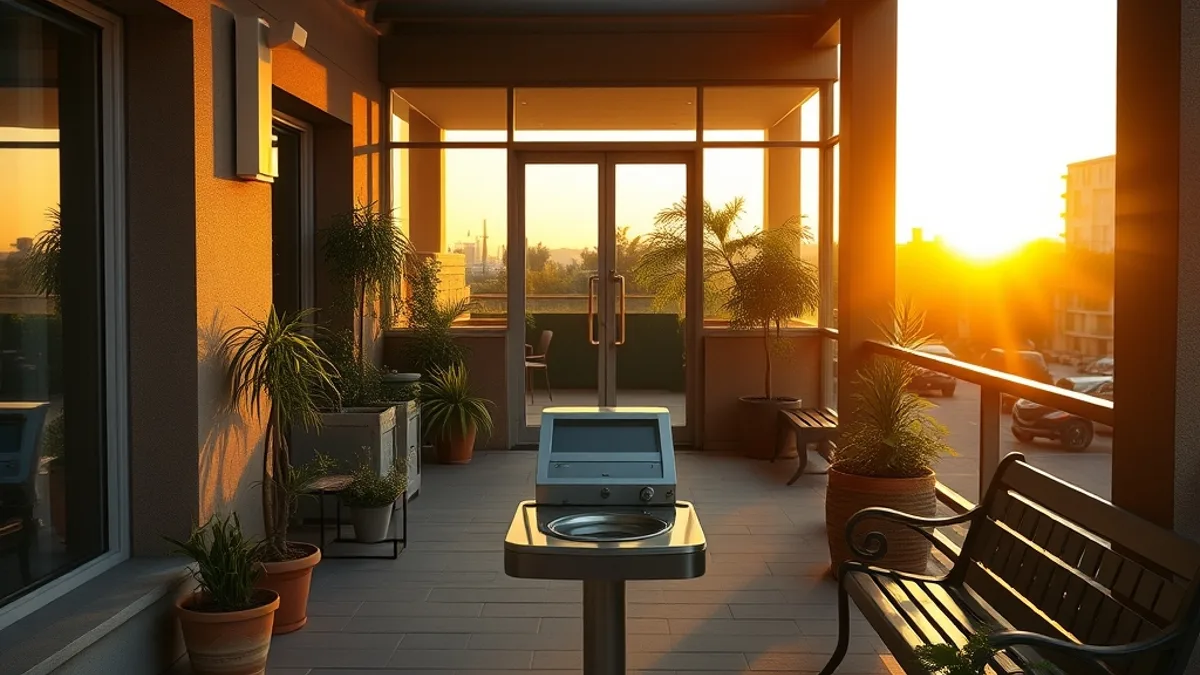
If a hotel allows smoking at all, it will usually confine it to designated areas positioned 3-7 meters (10-25 feet) from entrances, open windows and ventilation intakes. That distance is deliberate: it keeps smoke from drifting into the lobby or being pulled into the air system that serves guest rooms.
Common designated spots include side terraces, rear courtyards and marked sections of pool decks. Larger resort properties often have more generous outdoor zones than compact city hotels, and the setting can make a real difference. At seaside resorts, a shaded terrace near the gardens can be a genuinely pleasant place to smoke, and some properties pair their outdoor zones with the kind of calm, open-air layout you can read more about in Marbella sanctuaries with sea breezes and private poolside calm. The front desk usually has a map showing exactly where these zones are, so ask for it when you check in.
Balconies are a gray zone
Balconies are where guests most often get it wrong. Some properties permit smoking on private balconies, while others ban it entirely, and there is no universal rule that covers every hotel. Confirm the policy at check-in rather than assuming, because a balcony ban is enforced exactly like a room ban.
One more detail matters: ashtrays and receptacles exist only inside designated zones. Using your room’s cup, a hallway trash bin or a planter as an improvised ashtray still counts as a violation, and housekeeping will notice the residue or the smell long before you expect it.
Vaping, E-Cigarettes and Cannabis Under Hotel Rules
Many travelers assume e-cigarettes sit in a legal gray area at hotels, but at most major chains the answer is simple: vaping and e-cigarettes fall under the same policy as cigarettes, and the cleaning fees are identical. If you vape in a non-smoking room, expect the same deep-cleaning charge that a cigarette smoker would face, along with the same room recovery process while housekeeping deals with the residue.
Cannabis is a separate matter entirely. Even in destinations where recreational or medical use is legal under local law, most hotels prohibit it on the premises. This usually comes down to federal rules or brand-level standards that override what the destination allows. A dispensary down the street does not change what your hotel permits, so check the policy before assuming anything.
The most common misconception is that vapor is somehow invisible to hotel staff and equipment. It is not. Vapor can still trigger smoke detectors, and it leaves a detectable scent on curtains, bedding and upholstery. When housekeeping inspects the room, “it is only vapor” carries no weight at checkout.
- Sensor-based detection: Some hotels use dedicated in-room sensors that distinguish between cigarette smoke and vapor, so both can be flagged automatically without a housekeeping visit.
- Outdoor vaping rules: A property may allow vaping in the designated smoking area but ban it on indoor balconies, so the rules can differ by location within the same hotel.
- Medical cannabis exceptions: A few properties handle documented medical use differently, but you should ask the front desk directly and get the answer in writing before your stay.
How to Verify the Rules Before You Book
Verifying a hotel’s smoking rules takes about ten minutes and can save you a multi-hundred-dollar cleaning fee, which is a small price compared to the deep-cleaning penalties some properties apply after checkout. The key is to rely on the hotel’s own words rather than a booking site’s summary, which may be outdated, simplified, or translated loosely from the original policy. Policies also vary more than most travelers expect: some properties are fully smoke-free including their grounds, while others only restrict indoor areas, so the exact scope differs from hotel to hotel. A short verification routine before you pay removes most of that uncertainty. Here is a practical sequence to follow before you commit to a reservation.
- Check the hotel’s own policy page. Go to the property’s website and search for the words “smoke-free” or “non-smoking” rather than trusting the booking platform’s short description. The hotel’s page usually contains the full wording, including balcony rules and designated area details, and it is the version that governs your stay.
- Use booking platform filters if you need a smoking room. Many platforms let you filter for smoking-permitted rooms, or you can flag a smoking preference before paying. This is the fastest route if you smoke and want to avoid a property where you will be restricted to outdoor areas only.
- Call or message the property directly. Confirm two specifics: whether balconies count as smoking areas, and where the nearest designated zone is relative to your room. Front desk answers are usually accurate, and you can ask them to note it on your reservation.
- Screenshot the written policy at booking time. Save a screenshot of the policy as it appeared when you booked. If a disputed fee appears later, this gives you proof of exactly what was disclosed when you made the reservation.
Doing this before payment matters more than doing it after. Once you have paid, changing or canceling a reservation over a smoking policy dispute is far more difficult than simply choosing a different property in the first place, and cancellation terms often get stricter closer to your arrival date. It also protects you from the most common complaint travelers report: a charge appearing on the folio days after checkout, once housekeeping inspects the room. A few minutes of verification is the cheapest insurance you can buy.
Alternatives: Private Rentals and Flexible Stay Types
If a hotel’s smoking rules feel too restrictive for your stay, private rentals and certain property types offer a workable alternative. The trade-off is that you trade a hotel’s standardized policy for a host’s individual house rules, which means the details vary more but are often more generous for smokers.
Private villas and holiday homes
Standalone villas and holiday homes often come with outdoor spaces such as gardens, patios or terraces where smoking is far less restricted than at a hotel. That said, house rules still apply, and many hosts explicitly ban smoking indoors or on furnished terraces. Read the house rules section of the listing before booking rather than assuming the outdoor space is fair game.
One important difference in how fees work: private rentals typically enforce smoking violations through the security deposit rather than a fixed cleaning fee. That means the host can claim a portion of your deposit based on the actual cost of cleaning or damage, which in some cases can exceed what a hotel would charge.
Resorts and smoke-sensitive stays
Resort-style properties with large grounds tend to have more generous outdoor designated areas than compact city hotels, simply because there is more space to work with. If smoking matters to you, a sprawling resort is usually a better fit than a downtown tower where the designated area might be a single corner of the street level.
On the other side, travelers who are sensitive to smoke should look for stays with private entrances and open-air layouts. These reduce exposure to shared indoor air, which matters more than any policy on paper. When comparing options, always check whether the listing mentions smoking in the house rules section, since that is where private rentals spell out what is allowed and what the deposit consequences are.
Staying Comfortable and Fee-Free
That surprise line on your folio days after checkout is exactly what this guide set out to prevent. Smoke-free hotels enforce their rules through signed check-in agreements, cleaning fees that typically run $150-$500, and room recovery times of 24-48 hours, so a single careless cigarette can cost far more than the night itself. The good news is that the rules are rarely hidden: they are disclosed at booking and confirmed when you sign in.
The practical habits are simple. Use designated smoking areas, which usually sit 3-7 meters from entrances and marked on a map at the front desk, and remember that vaping is treated the same as smoking at most chains. Verify balcony rules and the exact policy wording before you book, or choose a private rental with clear house rules if you want more flexibility outdoors. Do that, and you can travel smoke-free in both senses of the word. Have you ever been charged a cleaning fee you did not expect? Share your story in the comments or pass this article along to a fellow traveler.