You love the idea of glamping: a proper bed, a wood stove, a canopy of stars instead of a hotel ceiling. But there’s a nagging worry in the back of your mind. What if the mattress is rock hard, the sheets are freezing by midnight, and some enthusiastic robin starts up at 5 a.m. right outside the canvas? A bad night can undo the whole point of an escape.
The good news is that sleeping well while glamping is mostly a matter of planning, not luck. This guide walks you through the decisions that matter most: picking a tent with a genuine bed setup, layering bedding for nights that can drop 10-15°C below the afternoon, and handling the wind, wildlife, and early birdsong that come with canvas walls. We’ll also cover temperature control inside the tent, how to book the quietest sites, and a few simple evening rituals that help you drift off under the stars.
How to Sleep Well While Glamping Starts with Picking the Right Bed Setup
The single biggest factor in how you sleep is what you’re actually sleeping on, and glamping listings vary wildly here. Some tents come with a proper bed frame topped with a memory foam or hybrid mattress, which are the most common premium options in quality glamping units. Others make do with an air mattress that slowly deflates overnight or a futon that offers little support. When you browse listings, prioritize those that clearly advertise a real bed frame and a memory foam or hybrid mattress. If the description is vague about the bed, treat that as a warning sign rather than an oversight.
Questions to ask before you book
Don’t be shy about messaging the host directly. Ask how thick the mattress is, because anything under 15 cm tends to let you feel the ground through the platform, no matter how premium the tent looks in photos. Ask whether the bed is a fixed platform or a fold-out. Fold-out beds often creak every time you roll over and tend to sag noticeably by midweek of a longer stay. For couples, this is the moment to confirm the bed is a true king or queen. Many safari tents squeeze in a double, which sounds fine until two adults spend a week bumping elbows on a narrow frame. A couple of direct questions take five minutes and can be the difference between a restful week and a stiff-necked one.
Bedding Layers That Handle 10-15°C Overnight Drops
Canvas is a poor insulator, and even a warm summer day can end with a surprisingly cold tent. Nighttime temperatures can drop 10-15°C below daytime highs, so the shorts and t-shirt weather you enjoyed at dinner can feel very different at 2 a.m. The solution is layers, packed deliberately rather than thrown in at the last minute. Even for a July trip, tuck a thermal liner or fleece blanket into your bag; you may not need it, but you’ll be grateful it’s there when the temperature slides after sunset.
For the sheets themselves, think seasonally. Breathable cotton or linen works well in the warm months, letting your skin breathe instead of trapping heat. If you’re traveling in the shoulder season, in May or September, add a wool throw on top. Wool handles damp, chilly air far better than synthetic fills and keeps insulating even if condensation settles overnight. If you’re particular about pillows, bring your own: canvas tents often come with firm synthetic pillows that suit some sleepers and frustrate others.
- Hot water bottle: Fill it at the camp kitchen before lights out and slide it under the duvet ten minutes early. It warms the foot of the bed, which is where cold sleepers feel the chill first, and it costs nothing to run.
- Heated throw: A low-voltage heated throw is worth the packing space on shoulder-season trips when the tent has no heating. Drape it over the mattress before you get in rather than sleeping under it at full power.
- Extra flat sheet: A spare cotton sheet doubles as a barrier between you and bedding you’re unsure about, and it gives you a lighter option for the first warm hours of the night before the cold sets in.
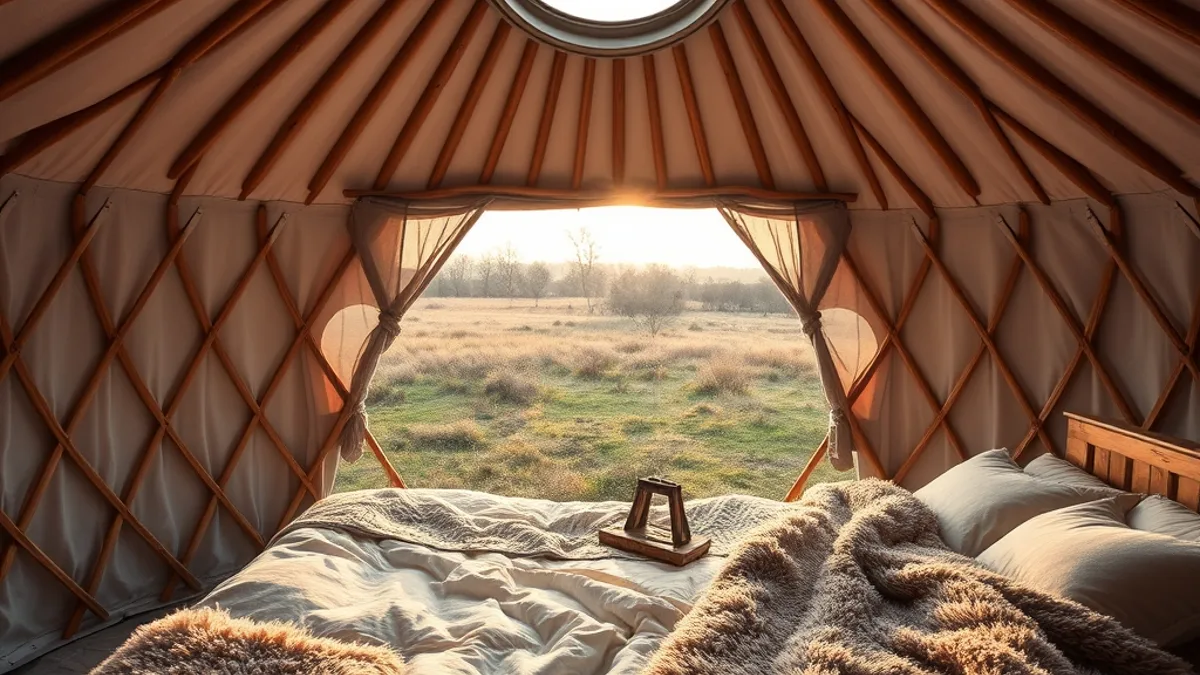
Beating Noise: Wind, Wildlife, and 5 a.m. Birdsong
Canvas walls block light, not sound. Wind flapping is the most common all-night disturbance in canvas lodgings, and even a light breeze can turn a taut tent into a slow, rhythmic drumming that keeps you half awake for hours. Add rustling wildlife, distant conversation from the fire pit, and the famously early dawn chorus, and noise becomes the reason many first-time glampers sleep badly. The fix is a mix of smart booking and a few small items in your bag.
Start before you arrive. When you book, request a tent positioned away from the communal fire pit and kitchen area, since those spots stay lively late into the evening and get foot traffic from early risers too. Check the site’s map at the booking stage, not on arrival: avoid sites sitting adjacent to main roads or festival grounds, because there’s nothing you can do about a highway hum once you’ve unpacked.
- Foam or silicone earplugs: These cut perceived noise by roughly 15-30 decibels, enough to mute birdsong and the rustle of canvas in a breeze. Silicone putty styles seal the ear canal better than foam for side sleepers, who tend to work foam plugs loose against the pillow.
- White noise app or small portable speaker: A steady sound layer masks the irregular flapping and snapping that your brain instinctively flags as something to investigate. Run it at low volume all night rather than waiting until you’re already wide awake at 3 a.m.
- A downloaded playlist or soundscape: Cell coverage at rural sites can be patchy, so download your masking audio before you leave home. A speaker with a long battery life means you aren’t waking at dawn to a dead device and sudden silence.
Temperature Control Inside the Tent
Temperature swings are the biggest sleep disruptor in canvas accommodation, and the fix starts before you climb into bed. Aim to keep the sleeping area near the ideal 16-19°C, which sounds ambitious in a tent but is achievable with a bit of airflow management. Open the mesh panels fully an hour or two before bedtime to let the day’s heat escape, then close them once temperatures fall. This simple routine keeps the tent from turning into a stuffy oven at sunset and a damp fridge by morning.
Heating for shoulder-season stays
If you are traveling outside the core May-September season, heating becomes non-negotiable. Prioritize tents with wood stoves or electric heaters when browsing listings, and ask the host how the stove performs overnight, since some burn out within a couple of hours and need refueling. A well-managed wood stove can hold a comfortable temperature well past midnight, but you will want to know the routine before your first cold night.
Where you position your bedding matters more than most first-time glampers expect. Place sleeping bags or duvets away from the tent walls, where condensation forms overnight and can leave sheets and sleeping bag shells damp by morning. In sealed structures like yurts and domes, crack a window or vent slightly instead. These designs trap warm air efficiently, which is great for warmth but can leave the air feeling heavy and stale without a small trickle of fresh airflow.
Booking the Quietest, Most Comfortable Sites
The best glamping nights are usually decided weeks before you arrive, at the booking stage rather than the packing stage. For peak summer weekends, reserve 3-6 months ahead, because the best-insulated and best-located units sell out first. Late bookers are often left with the tents closest to shared facilities or the ones with the thinnest canvas, and no amount of earplugs fully fixes that.
Budget realistically as well. Expect $150-400 per night for quality tents with real beds, and treat prices far below that range with healthy suspicion. Cheaper options often cut corners on mattresses, and a thin futon on a wooden platform will undo every other comfort you planned for. When you browse listings, skip the overall star rating and read reviews specifically for mentions of ‘comfortable bed’ and ‘quiet’. Those two phrases tell you far more about how you will actually sleep than a generic “amazing stay!” ever will.
Site size matters too. Favor small sites with fewer than 15 units to reduce foot traffic past your tent at night. Beyond headcount, here is what else to look for when comparing sites:
- Layout and spacing: Look for sites that show a map with generous gaps between units; tightly packed rows mean you hear neighbors’ conversations and zip doors all evening.
- Shared facility placement: Check whether bathrooms and the kitchen are clustered near certain units, and email the host to ask which tents are farthest from them.
- Ground surface: Grassy or gravel-surfaced sites absorb footsteps far better than hard-packed dirt, which carries every late-night trip to the bathroom straight through your tent floor.
- Adults-only or quiet policies: Some sites enforce quiet hours or restrict groups, which dramatically lowers the chance of a loud party two tents over.
Pre-Sleep Rituals for Outdoor Settings
A good night under canvas starts well before you zip yourself into bed. Outdoor settings come with bright lanterns, rich campfire dinners, and a tent full of small rattles, all of which can quietly sabotage your sleep. The good news is that most of these problems are within your control. A short, predictable evening routine solves most of this, and it takes barely half an hour from dinner to lights out. Think of it as the same wind-down you would follow at home, just adapted to a smaller space where light, noise, and heat all behave differently.
- Dim the lights an hour before bed. Switch lanterns to their lowest setting and use red-light mode on headlamps to protect melatonin production. Harsh white LED light in a small tent is far more disruptive than it would be in a large bedroom, because the light source sits close to your face.
- Keep dinner and drinks early. Avoid heavy campfire meals and alcohol close to bedtime, both of which fragment sleep in warm tents. A big late barbecue plus a couple of beers is a classic recipe for a restless, overheated night, so aim to finish eating well before you turn in.
- Do a 10-minute tent check. Zip all flaps fully so insects and drafts stay out, secure guy lines so nothing flaps against the canvas in the night breeze, and silence rattling cookware by stacking plates and stowing metal utensils in a bag rather than leaving them loose on the table.
Once the routine is done, resist the temptation to scroll on your phone inside the tent. The glow sits inches from your eyes in a dark space, which is far worse for winding down than it would be on your sofa at home. If you want something to do instead, try a paper book, a card game by a dim lantern, or simply stepping outside for a few minutes to look at the stars before climbing in. The combination of a dark, quiet, securely zipped space and a body that is not still digesting dinner does most of the work for you. Travelers who stick to this sequence consistently report falling asleep faster and waking up without that groggy, half-slept feeling that too often comes with a night outdoors. Give it two nights in a row and it will start to feel automatic, which is exactly what you want on a longer trip.
Your Restful Night Under Canvas, Wrapped Up
Sleeping well while glamping comes down to three basics: a real mattress, layered bedding that handles those 10-15°C overnight drops, and a pair of foam earplugs to mute the birdsong. Get those right, and the stiff back, cold sheets, and 5 a.m. dawn chorus you were dreading lose most of their power.
The rest is planning. Booking 3-6 months ahead for peak summer weekends and choosing small, quiet sites locks in comfort before you ever zip open the tent door. Add simple evening rituals like dimming the lanterns and doing a quick tent check, and a stylish canvas retreat becomes a genuinely restful one. Have a favorite trick for sleeping well under canvas? Leave a comment or share this article with a friend who needs a proper glamping getaway.