Oaxaca is one of the few places in Mexico where you can watch a Pacific sunset from a beachfront tent and, a few days later, fall asleep in a heated dome surrounded by pine forest. The catch is that combining the two takes planning. Most travelers know they want both the coast and the highlands, but they are not sure where to find comfortable glamping in Oaxaca, which season suits each region, or how to split the days between surf towns and mountain villages.
This guide walks through the whole decision: why Oaxaca works so well for a coast-and-highlands trip, the best months to go, how Puerto Escondido and Huatulco compare as coastal bases, what to expect from community-run stays in the Sierra Norte, how to vet and book the best sites, and how to build a route that covers both worlds without rushing. By the end, you should be able to sketch a trip that ends with beach downtime and starts with crisp mountain air.
Why Glamping in Oaxaca Works for a Coast and Highlands Trip
Few states in Mexico pack this much variety into one trip. On one side you have the Pacific shoreline: surf towns with beach bars and board rentals, plus calm, swimmable bays further east. On the other, the Sierra Norte rises into a cool highland region of pine and oak forest, where mist drifts through the trees and nights get genuinely cold. Most destinations force you to choose between beach and mountains. Oaxaca gives you both, often within a single week.
One trip, two climates
Glamping is what makes the combination practical. Tented suites and eco-domes are now well established along the coast, where you can sleep a short walk from the sand with a proper bed, fan and outdoor shower. In the mountain villages, dome-style and cabin stays are newer but growing fast, many run by the communities themselves and set right on forest trails.
The contrast is the whole appeal. You can swim and surf by day, then drive up into the hills and sleep under thick wool blankets at altitude a few hours away. Waking up to birdsong in a cloud forest after a week of salty skin and sunset swims feels like two vacations stitched into one, and glamping keeps both halves close to nature instead of sealing you behind hotel walls.
When to Go: Seasons for Oaxaca Glamping
The prime window for glamping in Oaxaca runs from November to April. This is the dry season, when the coast gets reliable sunshine, humidity drops, and the Sierra Norte delivers clear, crisp nights under star-heavy skies. Trails in the highlands stay dry and firm, ocean conditions on the coast are typically calmer, and every glamping site from beachfront tents to mountain domes operates at full capacity. It is also when availability tightens the most, so the booking advice later in this guide matters especially for these months. If you want the easiest combination of surf mornings and highland evenings, plan around this window.
From June to October the picture changes. Afternoon rain returns, the highlands turn lush and green, and the coast gets hot and humid. The heaviest rain falls between July and September, and hurricane risk on the Oaxacan coast peaks from August to October, which makes late-season coastal trips riskier and more likely to bring last-minute disruptions. That said, the rainy season has its appeal: rates tend to be lower, sites are quieter, and the mountain landscapes are at their most dramatic. If you travel in this window, keep plans flexible, check forecasts regularly, and favor sites with covered decks and solid drainage.
- May: the tail end of dry season, with hot coastal days and landscape still drying out; rates start to dip before the rains arrive, making it a good value month for coastal stays.
- Late October: the rains are tapering off, the highlands are at their greenest, and you may catch the tail of Día de Muertos preparations in the region.
- Shoulder-month trade-off: expect lower rates and fewer crowds, with only occasional showers rather than the steady afternoon downpours of peak rainy season.
Coastal Bases: Puerto Escondido vs Huatulco
For most travelers, the coast means choosing between two hubs. Puerto Escondido and Huatulco both have solid glamping options, but they attract very different crowds, and since they sit roughly 250 km apart by road, trying to cover both in one trip eats time you are better off spending in the water or the mountains.
Puerto Escondido: surf and social energy
Puerto Escondido suits travelers who want surf culture and a lively scene. The famous break at Zicatela draws surfers from around the world, and beachfront tents and eco-lodges cluster nearby, putting you steps from sand and sunset bars. If you would rather sleep quietly, look toward Carrizalillo, a smaller cove with calmer water and a more relaxed pace.
Huatulco: calm bays and polished stays
Huatulco is built around nine bays, and that geography shapes the experience: calmer water, cleaner swimming and snorkeling, and more polished glamping sites sitting near resort infrastructure. It is the better pick for families or anyone prioritizing easy swimming over waves.
There is a middle path too. Smaller coves like Mazunte and San Agustinillo sit between the two hubs and offer low-key tented stays with a bohemian, slow-travel feel. If you cannot decide between surf and calm bays, one of these villages makes a comfortable compromise without committing to either hub.
Highland Stays in the Sierra Norte
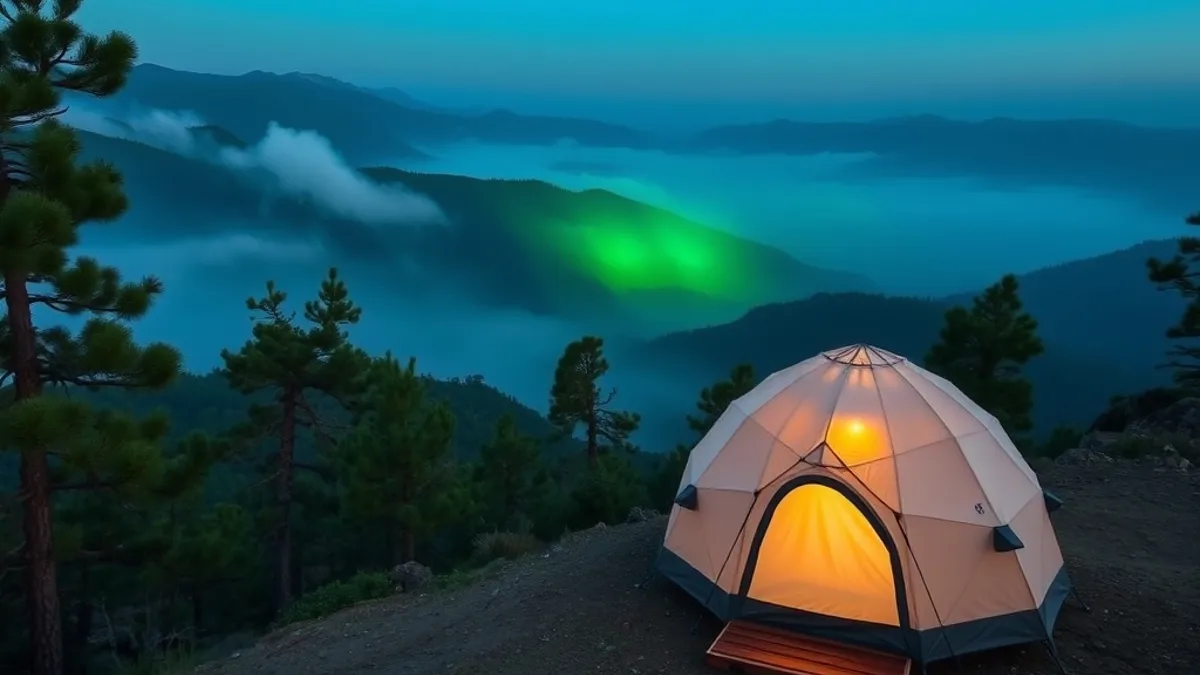
Head up into the Sierra Norte and the whole character of your trip changes. The Pueblos Mancomunados, a network of villages that includes Benito Juárez and Cuajimoloyas, run their own tourism through community assemblies, which means your money goes directly to the people who maintain the trails and forests. Accommodation here has traditionally meant simple cabins, but dome-style glamping has started appearing along the forest trails, often with views over cloud forest and pine ridges.
Do not underestimate the cold. These villages sit high in the mountains, and winter nights can drop to 5-10°C even when days feel mild. A thin pop-up tent will not cut it, so look closely at how each site handles warmth and comfort before you book.
- Ask specifically whether the dome or tent includes a wood stove, and whether firewood is provided or charged separately each night.
- Confirm that hot water is available in the morning, since some community-run sites heat water on demand rather than around the clock.
- Look for insulated dome construction or thick canvas, not lightweight festival-style tents, if you are visiting between December and February.
- Check whether meals are served on site, because village restaurants may close early and the nearest food option can be a walk away.
- Ask about guided hikes run by the community, since local guides know which trails are open and where the best cloud forest sections lie.
Pricing here works in your favor. Highland glamping typically runs $80-$150 per night, noticeably less than premium beachfront sites on the coast. Use the savings to build out your days: hiking trails link many of the villages, cloud forest walks are often a short drive or walk from your dome, and mezcal-country day trips down toward the valleys pair well with a mountain base. Give yourself at least three nights so the altitude, the silence and the evening fires actually register.
How to Spot the Best Glamping Sites and Book Them
The gap between a great glamping site and a disappointing one usually comes down to details that photos hide. On the coast, the non-negotiables are insect protection and heat management: proper screened windows and doors, plus fans or air conditioning, because a beautiful tent without airflow turns miserable by mid-afternoon. In the highlands, the priorities flip: you want a wood stove or reliable heating, genuinely hot showers and an insulated structure that holds warmth once the sun drops.
Location and access deserve equal scrutiny. Some coastal sites sit at the end of rough dirt tracks where a regular rental car will struggle, especially after rain. Message the host before booking and ask exactly where the property sits, what the final approach is like, and whether they arrange transfers or recommend a 4×4. A stunning site you cannot comfortably reach is not a bargain.
- Read recent reviews specifically for mentions of mosquitoes and bugs at night, not just general praise for views.
- Ask whether the quoted rate includes breakfast, since remote sites may have no food options within walking distance.
- Confirm bathroom arrangements: private en-suite bathrooms justify higher rates far more than shared facilities down a dark path.
- Check the cancellation policy carefully if you are traveling during hurricane season months on the coast.
- Ask what happens in a downpour, since well-built sites have covered walkways and raised decks rather than open mud between tent and bathroom.
Timing and budget round out the picture. For regular dry season stays, booking a couple of months ahead is usually enough; for Christmas, Easter and Semana Santa, push that to four to six months, when demand and rates spike hard. At the top end of the price spectrum, the rate should be self-explanatory: look for included meals, airport or trailhead transfers, or guided activities built in. If a top-rate site offers none of those, keep looking.
Building the Route: Splitting Coast and Highlands
Oaxaca rewards travelers who plan a real route rather than treating the state as one destination. A classic 10-14 day split works beautifully: 4-5 nights in the Sierra Norte, 2-3 nights in Oaxaca City to break up the journey and eat well, then 5-6 nights on the coast. That rhythm gives each landscape enough time to register instead of becoming a blur of transfers.
Getting between the two worlds
The drive from Oaxaca City to the coast takes roughly 6-10 hours depending on your route and final destination, winding through mountain roads that are scenic but slow. If you would rather skip the haul, flights from Oaxaca City to Puerto Escondido or Huatulco take under an hour, and many travelers do the drive one way and fly the other. Compare both options against your dates before committing, since flight schedules can be limited.
Packing for two climates
Pack as if you are visiting two different countries, because in practical terms you are. Swimwear, reef-safe sunscreen, a hat and sandals cover the coast, while the highlands demand warm layers, a fleece, socks for cold nights and possibly a beanie. One duffel can handle both if you pack deliberately; a small daypack for hiking stays useful in both halves of the trip.
Finally, sequence the trip highlands-first. Hiking and cold nights are easier to face at the start of a vacation than the end, and finishing with beach downtime means you fly home relaxed from the coast rather than rushing back to the city for a departure. Land in Oaxaca City, head for the mountains, then let the Pacific close out the trip.
Your Oaxaca Glamping Trip at a Glance
Oaxaca solves the two-worlds problem in a single trip. For the easiest combination of Pacific beach and cool mountain forest, aim for the November to April dry season, when the coast stays sunny and Sierra Norte nights turn crisp. Choose Puerto Escondido if you want surf energy, or Huatulco for calm bays, and pair either base with the highland villages for dome and tented stays under the pines.
Timing and budget are straightforward. Book 2-3 months out for regular high season, or 4-6 months ahead for Christmas, Easter and Semana Santa, and budget roughly $80-$250 per night. The smartest route is highlands-first: hike the Sierra Norte, pause in Oaxaca City, then finish with beach downtime before flying home from the coast. If this guide helped you plan your trip, leave a comment or share it with a fellow traveler.