You want a desert night under open skies without giving up comfort, but you are unsure where Rajasthan’s camps actually are and which months make or break the trip. That is a fair worry. Glamping in Rajasthan sounds dreamy in photos, yet the difference between a magical dune evening and a disappointing one often comes down to two things: picking the right camp zone and timing your visit to the right weeks.
This guide walks through both. We look at why the Thar Desert suits tented stays in the first place, where the camps cluster around Jaisalmer, Osian, Pushkar and Bikaner, and how the months from October to March differ once you break them down. You will also find a clear breakdown of tent types and price bands, practical tips for spotting a genuinely good camp, and advice on booking windows and route planning so your camp night fits neatly into a wider Rajasthan trip.
Why the Thar Desert Suits Glamping in Rajasthan
Rajasthan did not borrow the idea of sleeping in comfort under canvas. It grew up with it. The tented camps you book today descend directly from the royal shikar safaris, when maharajas and their guests moved through the countryside with fully furnished tents, staffed kitchens and cots carried ahead of the hunting party. Canvas luxury is therefore a local tradition here, not an imported trend grafted onto the desert for tourists. Camp operators lean into that heritage, and it shows in details like hand-block-printed linings, carved wooden furniture and staff who have served safari-style hospitality for generations.
The landscape does half the work
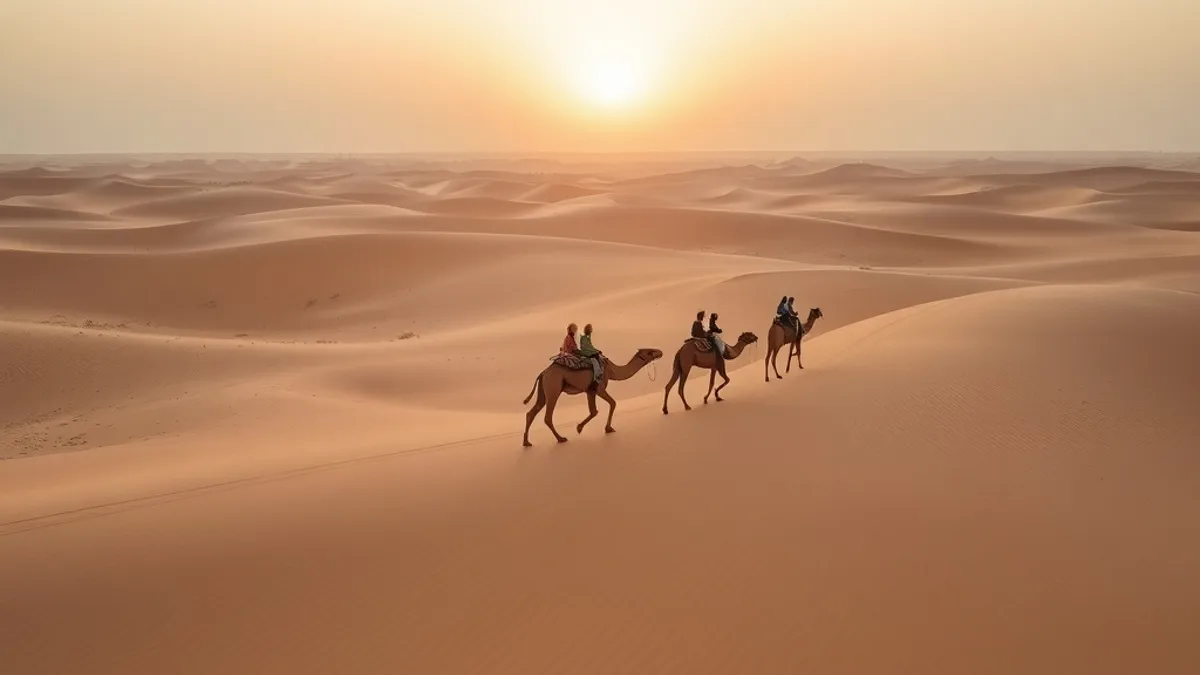
The Thar’s dune belts around Jaisalmer, Osian and Khuri deliver the classic desert combination travelers come for: wide open skies, sculpted dunes and genuinely cool nights once the sun drops. Days can be warm and bright, but evenings turn crisp, which is exactly what makes a campfire and a rooftop bed of cushions feel earned rather than staged.
Easy to fold into a bigger route
Transfer distances are short, which is the practical bonus. You can pair a single camp night with heritage cities like Jodhpur, Jaisalmer and Udaipur in one route without long, tiring drives. Many travelers treat the camp as a one- or two-night interlude between forts and palaces, arriving by late afternoon for the dune views and moving on the next morning. That flexibility is rare in other desert destinations and makes glamping in Rajasthan easy to build into a first-time itinerary.
Where the Desert Camps Cluster: Jaisalmer, Osian, Pushkar and Bikaner
Rajasthan’s desert camps are not spread evenly across the state. They cluster in a handful of zones, each with a different character, price level and landscape. Knowing which cluster matches your expectations saves a lot of disappointment later, because a camp that sounds “near Jaisalmer” online can sit anywhere from a dune’s edge to an hour of scrubland away.
The most developed zone is around Sam Sand Dunes and Khuri, both roughly 40-60 km from Jaisalmer. Sam is where the big, photogenic dunes live, and camps there trade on sunset spectacle and easy access. Khuri sits nearby with a quieter feel and its own stretch of dunes. Both areas have the widest choice of tented camps in the state, from simple Swiss tents to full luxury suites.
Osian works differently. About 65 km from Jodhpur, it trades big-dune drama for quieter scrub desert and ancient temple backdrops. The landscape is softer and more atmospheric than the towering dunes near Jaisalmer, and the Sachiya Mata and Mahavira temple complexes give you something cultural to see besides sand.
- Sam Sand Dunes: expect the busiest sunset hours, with jeep convoys and camel lines converging on the main dune ridge; book a camp slightly back from the reserve if you want calm after dark.
- Khuri: village-adjacent camps with sand dunes a short walk away, often run by local families, which tends to mean more personal service and simpler setups.
- Osian: the best pick if you are based in Jodhpur and want a camp night without a long detour, plus temple visits folded into the same afternoon.
- Pushkar and Bikaner: both offer budget-to-mid camps and work well as stopovers on a wider Rajasthan circuit rather than destinations chosen for dunes alone; Pushkar adds lakeside town charm, Bikaner adds a fort and camel research center.
The Best Months for Glamping in Rajasthan, Month by Month
Timing decides more about a desert camp stay than the tent you book. The Thar has a short comfortable season, and picking the wrong weeks can turn a romantic dune night into an endurance test.
The shoulder sweet spot
October-November and February-March are the sweet spot for most travelers. Days stay warm enough for shorts and sunscreen, nights are manageable with a light layer, and crowds are noticeably thinner than in peak winter. Camps run their full program of dune rides, folk music and dinners, but you share the sunset ridge with dozens of people instead of hundreds. If your dates are flexible, aim here first.
Peak winter: beautiful but cold at night
December and January are the classic desert months, and they deliver crisp, sunny days around 20-25°C. The catch is the nights, which can fall to 5-10°C in the Thar. Tents cool down fast after dark, so pack real layers: a fleece, a proper jacket, warm socks and something for your head if you plan to sit outside stargazing. Ask whether the camp provides extra quilts or room heaters before you book rather than assuming.
When to stay away
Avoid April through September. Daytime heat climbs to levels most visitors find punishing, and the July-September monsoon pushes most camps to close entirely or run at reduced service with limited facilities. The few that stay open cater mainly to hardcore travelers, not holidaymakers.
One exception worth planning around: the Pushkar Camel Fair in November sends regional demand and prices sharply upward. Time your trip around it only if you genuinely want the spectacle, and expect sold-out camps and sharp price spikes across the region during fair dates.
Camp Types and What Each Price Band Buys You
Desert camps in Rajasthan fall into two broad price bands, and knowing what each one buys makes comparing quotes much easier. Rates shift with season and inclusions, so treat these figures as typical starting points and confirm details with each camp before you book.
Basic Swiss tents
At the lower end, basic Swiss tents typically run roughly INR 8,000-15,000 a night. These are proper canvas tents on solid frames, and most camps bundle in meals plus a camel or jeep dune ride, so the headline price covers more than just the bed. The trade-offs are comfort: walls are thin, sound carries between tents, and bathrooms are usually simple, sometimes in a shared block rather than attached to your tent.
Luxury suites and deluxe tents
Step up to luxury suites and deluxe tents, generally INR 15,000-40,000 a night, and the experience changes noticeably. You get a proper en-suite bathroom with hot water, a lounge area inside the tent, better dining, and evening folk music or dance performances around a common fire. Some properties in this band feel closer to a boutique hotel than a camp.
Location also drives much of the price gap around Jaisalmer. Camps positioned right on the dune edge charge for the sunset view and the walk-out-from-your-tent convenience, while camps set back from the dunes cost less and ask you to take a short transfer for the classic dune moment. Decide which matters more to you before paying a premium.
How to Spot a Genuinely Good Desert Camp
Not all desert camps deliver the same experience, and glossy photos hide the differences that matter. A few practical checks before booking will tell you more than any brochure, starting with how the camp is actually built and where it sits.
The single most revealing detail is the bathroom situation. Fixed en-suite bathrooms inside the tent mark one tier of camp; shared bathroom blocks mark another. This one feature separates the tiers more reliably than star ratings or marketing labels, so ask directly and get the answer in writing.
Setting matters just as much. Camps inside the Sam reserve sit close to the famous dunes but share sunset with a crowd of visitors and vehicles, while camps around Khuri and Osian trade that convenience for genuine stillness after dark. Neither choice is wrong; it depends on whether you want spectacle or quiet.
Finally, read recent reviews with three recurring complaints in mind:
- Night temperatures: reviewers often mention whether tents stay warm enough in December and January or whether the blankets provided are adequate for the coldest hours.
- Generator hours: power is usually time-limited at desert camps, so check when electricity and fans or heaters switch off, and whether charging devices overnight is possible.
- Meal quality: since most rates include all meals, recurring complaints about repetitive or poorly kept food signal a camp that cuts corners elsewhere too.
Booking Windows and How to Build the Trip Around Your Camp
Desert camps in Rajasthan sell out faster than most city hotels, and the crunch is worst in the weeks around the Pushkar Camel Fair, so timing your reservation matters nearly as much as choosing the camp itself. The good news is that the process is predictable: demand follows the season, and the best-located tents are always the first to go. Once you have your dates fixed, a little route planning also saves you long, unnecessary drives across the desert. Work through the steps below in order, and you will avoid the two most common mistakes, booking too late and doubling back over roads you have already traveled.
- Book early for peak winter. For December-January stays, reserve 2-3 months ahead; camps in the popular zones fill steadily as the season approaches, and the best-located tents go first.
- Move faster for fair dates. If your trip overlaps the November Pushkar Camel Fair, book at the earliest opportunity, since those dates sell out before the rest of the season and prices climb sharply.
- Use a shorter window for shoulder months. October-November and February-March dates typically need about 4-6 weeks of lead time, which gives you flexibility to wait for good weather forecasts or better rates.
- Confirm exactly what the rate covers. Desert camps quote inconsistently, so check whether transfers from Jaisalmer or Jodhpur, all meals, and activities like dune rides are included before comparing prices.
- Place the camp night between city legs. Structure the route so the camp falls naturally in the middle, for example Jodhpur to Osian to Jaisalmer, so you never backtrack over the same road twice.
Follow this order and the booking process becomes straightforward. Lock in peak dates first, then fair dates, then shoulder-season windows, and confirm every inclusion in writing before you pay a deposit. When you email the camp, ask specifically about transfers, meal plans and activity schedules, since verbal promises at booking time are easy to lose track of months later. Finally, let the camp night anchor a one-way route through the desert cities rather than treating it as a detour. The result is a trip that flows in a single direction, with no wasted kilometers and your night under canvas sitting at the center of the itinerary, exactly where it belongs.
Wrapping Up Your Rajasthan Desert Camp Plan
So the answer to that opening question is simple: glamping in Rajasthan comes down to three choices. Pick a camp zone, pick a month between October and March, and pick a tent tier within your budget. Get those three right and a night under open desert skies comes with a proper bed, an en-suite bathroom and dinner by the fire, no compromise needed.
The timing matters as much as the tent. Shoulder months like October-November and February-March reward flexible travelers with warm days and thinner crowds, while peak December-January demands early booking and warm layers for the nights. Match the camp to the experience you want, whether that is the dune spectacle at Sam or the quiet of Khuri and Osian, and the rest of your itinerary tends to fall into place. If this helped you plan your desert night, leave a comment or share the article with a fellow traveler.