If you’ve ever lain awake at midnight listening to a delivery truck idle outside your window, you know the problem well. Hotel rooms promise rest, but street noise, thin curtains that glow at every seam, and a bed that feels nothing like your own can leave you staring at the ceiling instead of sleeping. The good news is that you don’t have to accept a bad night as part of the price of travel.
This guide shows you how to sleep better in hotels with practical fixes that work from the very first night. You’ll learn how to choose the right room before you even arrive, deal with noise using earplugs and white noise, block out stray light, improve an unfamiliar mattress, get the temperature and air right, and fight jet lag and first-night restlessness. A short packing checklist at the end ties it all together.
Choose the Right Room Before You Even Arrive
The single biggest factor in how well you sleep often comes down to which room you’re assigned, and that’s decided before you ever set foot in the hotel. A few minutes of planning when you book can save you a night of hallway chatter and elevator dings.
Location within the building matters
Start by requesting a room on a higher floor. You’ll generally be further from street-level noise like buses, deliveries and late-night conversations spilling out of bars. Just as important is what your room sits next to. Ask for one away from the elevator bank, the ice machine and the housekeeping closet, since all three generate steady foot traffic and mechanical noise well into the night.
How and when to make your request
Use the special requests field when booking to ask for a room facing an interior courtyard or garden rather than a main street. A quiet-side room can make the difference between hearing traffic hum and hearing nothing at all. Don’t stop there, though. Add a follow-up request for a quiet, away-from-elevator room 48 to 72 hours before arrival. This timing matters because it gives your note a chance to reach the housekeeping and room-assignment planning before the day’s arrivals are mapped out, rather than landing as a last-minute plea at the front desk.
Dealing With Noise: Walls, Windows and White Noise
Even a well-chosen room lets some noise through, because hotel walls and doors are built to a budget. The trick is to layer a few cheap, portable solutions so that no single sound source ruins your night.
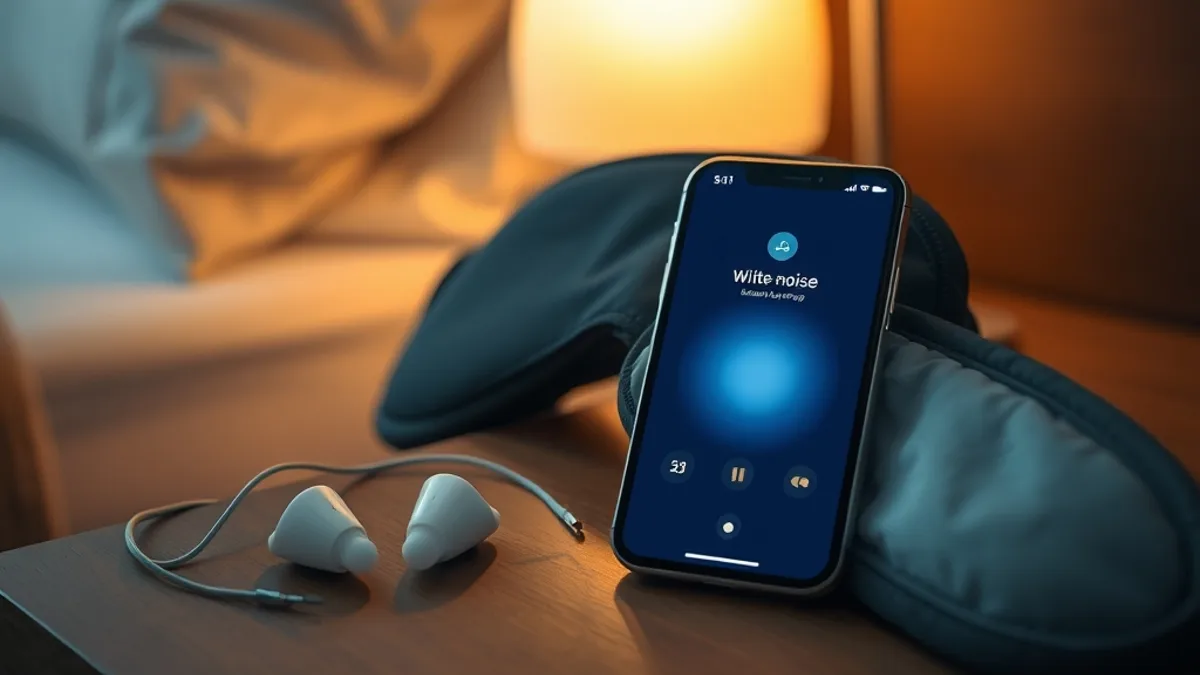
Soft foam earplugs are the backbone of any hotel sleep strategy. A good pair typically reduces noise by 25-33 decibels, which is enough to mute most city street traffic, and they cost just a few dollars. Pair them with an app playing white noise or brown noise, and you’ve covered both the sounds earplugs miss and the sudden noises they can’t prevent.
Before bed, roll a bath towel and press it along the gap at the base of the door. Corridor sound, especially voices and luggage wheels, bleeds in through that gap more than through the walls. If the room is still loud despite all this, call the front desk and ask to move. Most hotels will oblige, particularly if you raise the issue within the first 15-30 minutes of check-in, while plenty of rooms are still free.
- Choose low-tech foam earplugs over silicone or wax versions for hotel use: foam expands to fill the ear canal, stays put if you roll over, and is cheap enough to toss if one disappears under the bed.
- Set your white-noise app on a timer that runs all night rather than shutting off after an hour, since a sudden return to silence can wake you just as easily as a door slam.
- Place the towel roll on the inside of the door, pressed firmly against the floor, and check the gap from a kneeling height, because light and sound often enter through a gap you can’t see standing up.
Blocking Out Light for Deeper Sleep
Light is the sneakiest sleep thief in a hotel room. Even a thin strip of brightness across the ceiling can be enough to keep your brain from settling into deep sleep, so it pays to hunt down every source before you get into bed.
Hotel blackout curtains often do a decent job on the glass but fail where the two panels meet, leaving a bright seam of light down the middle of the room. Clip or pin the curtain edges shut over that seam. A travel clip, a trouser hanger from the closet or even a safety pin will do, and the difference on a street with lamp posts or early sunrise is dramatic.
Then turn your attention to the room itself. Dim or switch off every LED, clock display and standby light before bed. Modern hotel rooms are full of small glowing dots on telephones, kettles, televisions and climate panels, and each one is bright enough to notice in a dark room. A contoured blackout sleep mask is your final layer of defense, since it covers your eyes completely no matter where light leaks in.
- Pick a contoured mask with molded eye cups rather than a flat one, so it presses against your cheekbones and forehead instead of your eyelids, letting you blink naturally while blocking streetlamps and sunrise gaps.
- Keep two clothespins or binder clips in your toiletry bag specifically for curtains; they weigh almost nothing and work on nearly every curtain style, including grommet tops that resist pinning.
- For LEDs you can’t switch off, such as a television standby dot or a smoke detector indicator, pull a dark sock over the source or tape a folded piece of the hotel notepad paper over it.
Fixing the Bed: Pillows, Mattress and Bedding Tricks
Even the quietest room in the hotel won’t help much if the bed itself fights you all night. The good news is that most mid-range and upscale properties can fix a bad bed within minutes of you picking up the phone. Housekeeping and front desk teams handle these requests every day, so don’t be shy about asking.
The most common complaint is a pillow that’s wrong for your sleeping style. If yours is too flat, too puffy, or too firm, don’t just fold it in half and suffer. Most 4- and 5-star hotels keep a pillow menu on hand, and swapping one out is usually free of charge. A quick call before you even unpack means the replacement often arrives while you’re still settling in.
Mattresses are harder to change, but not impossible to improve. If the bed feels like a slab of concrete, a topper can soften it considerably. Here’s what to ask for:
- A foam or feather topper if the mattress feels too hard — these are commonly available on request at 4- and 5-star hotels, usually at no extra cost, and they add a cushioning layer that takes the pressure off hips and shoulders.
- Extra blankets if the duvet is thin or the air conditioning runs cold — layered blankets let you fine-tune warmth through the night instead of choosing between freezing and sweating.
- Two or three additional pillows to wedge under your knees if you sleep on your back, or between them if you sleep on your side — this keeps your spine aligned and takes strain off your lower back and hips.
- A body pillow or a second standard pillow hugged lengthwise if you tend to roll onto your stomach, which strains your neck — hugging a pillow discourages the habit without you noticing.
Make all of these requests in one call rather than three separate ones. A single, specific list gets handled faster, and you’ll have everything in place well before lights out.
Room Temperature and Air
Temperature is one of the most underrated factors in hotel sleep quality. Sleep researchers generally consider 16-19°C (60-67°F) the ideal range for sleeping, because your core body temperature naturally drops as you fall asleep. A warm, stuffy room works directly against that process, which is why so many hotel nights end in tossing, kicking off covers, and waking at 3 a.m.
The first thing to do when you walk into your room is find the thermostat. Many hotel units default to an energy-saving mode or a temperature set for the previous guest. Set it to somewhere in that 16-19°C range before you head down to dinner, so the room has time to cool properly before bed.
Make the HVAC work for you, not against you
Hotel air conditioning units often cycle on and off, and that sudden roar at 2 a.m. can jolt you awake. A simple trick: turn the fan setting up to high or continuous. The steady hum doubles as white noise, masking hallway sounds and street traffic, and it stops the jarring on-off cycling entirely.
If the outdoor air is fresh and the street below is quiet, crack the window for ten or fifteen minutes before bed. This cools the room naturally and flushes out that stale, recycled-air smell that so many sealed hotel rooms have. Just close it before you sleep if you’re anywhere near a road, a bar district, or early-morning deliveries. In cool, quiet destinations — the kind of place you find at a green ridge retreat with crisp highland air — sleeping with the window open can be a genuine pleasure rather than a gamble.
One last check before bed: make sure the unit isn’t blowing directly onto your face or neck. Cold air aimed at your head all night is a one-way ticket to a morning sore throat, so adjust the louvers upward or shift the bed’s position if you can.
Fighting Jet Lag and First-Night Restlessness
Your body doesn’t care that you paid for a nice room — it still runs on home time. Crossing several time zones means your internal clock is telling you it’s midnight when the local clock says dinner, or noon when you desperately want to sleep. The fix starts before you leave home, not when you land.
Human bodies generally adjust to a new time zone at a rate of about one hour per day. That means a seven-hour difference can take close to a week to fully settle. For long-haul trips, start shifting your sleep and wake times gradually in the days before departure — even moving bedtime by 30-60 minutes in the right direction gives you a head start.
Arrival day: chase the sun, skip the nap
The single most effective thing you can do on arrival day is get outside into morning or midday daylight. Natural light is the strongest signal for resetting your body clock, so resist the urge to draw the blackout curtains and sleep the afternoon away. A long nap can feel heroic in the moment, but it often leaves you wide awake at 2 a.m. local time, starting the whole cycle over. If you’re exhausted, cap any nap at 20-30 minutes and set an alarm.
Bring your bedtime routine with you
Your brain falls asleep partly through habit and cues, and those cues travel. If you always listen to a particular podcast, do a short meditation, or read a few chapters before bed at home, do exactly the same in the hotel. Familiar audio is especially useful — the same voices and sounds you fall asleep to at home give your brain something recognizable in an unfamiliar room.
Pair the routine with your earlier light and temperature work — a cool, dark, quiet room plus familiar cues is about as close to a first-night guarantee as hotels get. Give yourself a few days of consistency and most jet lag fades faster than you’d expect.
Your Hotel Sleep Kit, Wrapped Up
A bad night in a hotel comes down to three things: noise, light and an unfamiliar bed. The good news is that every one of them has a fix you can apply from the first night, without any special gear beyond a few dollars’ worth of earplugs and a decent sleep mask.
Start before you arrive by picking the right room: aim for a high floor away from the elevator and send your quiet-side request 48-72 hours ahead so it reaches housekeeping planning. Once in the room, block noise and light with foam earplugs that cut 25-33 decibels, a white-noise app, a contoured sleep mask and blackout curtains clipped shut at the edges. Then dial in the bed and the air: swap pillows from the menu, ask for a topper if the mattress feels hard, and set the thermostat to 16-19°C (60-67°F) so the room works with you instead of against you. Do these things and your hotel nights can be as restful as the ones at home. If you have a trick that works for you, share it in the comments below.