Choosing between a lodge vs camp is the decision most safari travelers struggle with, and it is easy to see why. Photos online blur the line: some “tents” look more luxurious than hotel rooms, while some lodges feel rustic. The result is that travelers book a stay without really knowing whether they will get the comfort, service and price they actually want.
This guide breaks the choice down into its real building blocks. We start with what the structures actually are, then compare service levels and staff ratios, price ranges, the comfort trade-offs you feel every night, where each type wins on location and season, and how to time your booking. By the end, you will be able to match the stay type to your trip instead of guessing. Whether you end up under canvas or behind solid walls, you will know exactly what you are paying for.
Lodge vs Camp: What the Structures Really Are
The word “lodge” describes a permanent building: stone, timber or thatch construction with solid walls, en-suite bathrooms and fixed plumbing. Water arrives through pipes, electricity runs on a proper grid or generator, and the structure stands in the same spot year after year. This is what most people picture when they think of a safari hotel.
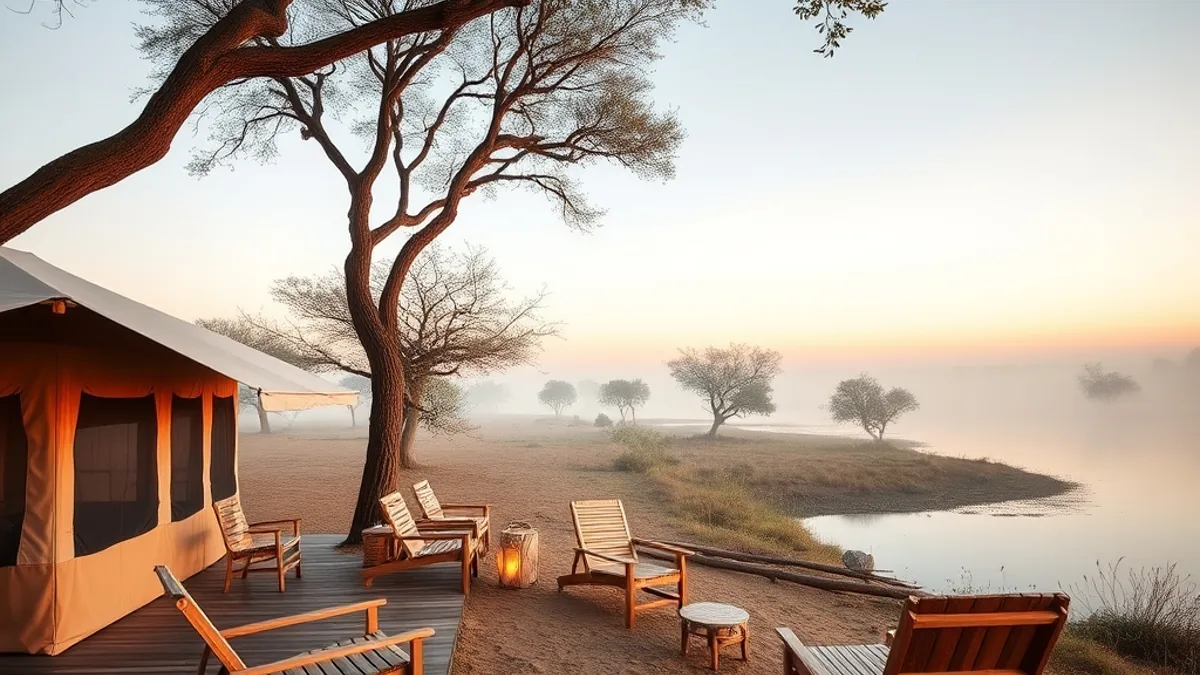
A classic tented camp is a different animal. Canvas stretches over fixed wooden platforms, but inside you find real beds, furniture and bathrooms with flushing toilets and hot showers. Mobile camps take the concept further: the entire camp packs up and relocates with the wildlife seasons, following herds across the plains.
Where the line blurs
Many properties now sit somewhere in between. Lodges increasingly offer “tented suites” — canvas walls on concrete floors with full air conditioning, minibars and sometimes private pools. These give you the safari feel of canvas with the infrastructure of a building, and they often cost more than either a standard lodge room or a classic tent.
Why the structure matters for climate
The building type determines how you control temperature. Lodges almost always have air conditioning or heating, so a hot afternoon or a cold night is simply a thermostat adjustment. Camps often rely on design instead: high ceilings, shade positioning and open mesh panels that let breezes through. That works well in mild months, but expect more temperature swing in camps than in lodges, especially between a hot midday and a cool dawn.
Service Levels: Staff Ratios and What’s Included
Service is where camps and lodges diverge most clearly, and it comes down to staff ratios. A small tented camp with 6 to 12 tents typically assigns one guide and one butler-style host per tent. In practice that means your guide drives your vehicle, learns your interests, and takes you out when you want rather than when the schedule says. Game drives feel near-private, and the same faces look after you from dawn to dinner.
Lodges with 30 or more rooms work differently. They run on set game-drive schedules with shared vehicles, which means you may share a row of seats with strangers and follow a fixed departure time. In exchange, you get far more dining and activity options: several restaurants, a bar scene, and choices beyond the standard morning-and-afternoon drive formula.
Facilities versus focus
High-end lodges add spas, gyms, kids’ clubs and multiple restaurants — a resort experience in the bush. Camps concentrate their budget on guiding quality and campfire intimacy instead. If your priority is the wildlife experience itself, the camp model usually delivers more of it per dollar.
What the rate actually includes
All-inclusive rates at both types usually cover meals, drinks and two daily game drives. Before booking, verify two items separately: laundry service and park or conservation fees. These are the most common extras that surprise travelers on the final bill, and they vary by property even within the same price bracket.
What You’ll Pay: Lodge vs Camp Price Ranges
Price is the clearest difference between the two stay types, and the ranges are wide. Permanent lodges typically run $250-$1,500 per person per night, with the top end fully inclusive of everything from premium drinks to private guides. Seasonal tented camps sit around $150-$700 per person per night, usually covering meals and game drives. At the bottom of the market, budget mobile camping safaris — dome tents, shared facilities, a cook and a driver — run roughly $100-$250 per person per day.
Timing changes these numbers significantly. Green-season travel from November to March can cut rates 20-40% at both property types, and camps in particular often drop their prices during the rains. If you want a mid-range camp experience at a fraction of the peak price, the green season is where you find it.
- Ask what “fully inclusive” covers at the top end. A high-end lodge rate should include premium drinks, park fees and private vehicles — if any of those are billed separately, the real cost jumps well beyond the quoted figure.
- Check whether camp rates include park and conservation fees. Some tented camps quote their nightly rate excluding these fees, which are charged per person per day in many reserves. The amounts change from year to year, so ask each property or your operator for the current rate before you compare quotes.
- Factor transfers into budget mobile safaris. The per-day rate usually covers camping, meals and guiding, but road transfers between parks are sometimes billed as a separate package.
- Compare single-supplement policies. Solo travelers often pay a noticeable premium at lodges, while some small camps waive the supplement in the green season — worth asking before you commit.
And if your safari plans extend toward the coast, bluewater resorts in South Africa pair safari elegance with coastal release, often at rates that sit comfortably alongside mid-range lodges.
Comfort Trade-Offs You Feel Nightly
The comfort gap between lodge and camp shows up most clearly after dark. In a tented camp, canvas is the only barrier between you and the savanna, so expect to hear hyenas whooping, lions calling and hippos grunting through the mesh walls. Temperatures swing more too — tents warm up quickly in the afternoon and cool down fast at night, and the zip-open mesh windows that let in the breeze also let in any chill. If you’re a light sleeper, pack earplugs and accept that some nights will be loud in the best possible way.
What a lodge gives back
Lodges answer with the things you notice at 5 a.m. Blackout curtains make pre-dawn wake-up calls less jarring, hot water pressure is reliable for a proper shower, and air conditioning or heating takes the edge off after a cold dawn drive in an open vehicle. Solid walls also mean less noise transfer and fewer uninvited insects at your bedside.
Camps, though, offer experiences lodges rarely match. An outdoor bucket shower under the stars becomes a highlight rather than a hardship, some properties set up star beds where you sleep on a platform with nothing but a mosquito net above you, and dinner by lantern and firelight has an atmosphere no hotel restaurant can copy.
Who suits which? Families with young children generally find lodge layouts and facilities easier — solid rooms, fenced paths in some cases, and space for kids to be kids. Couples and honeymooners often prefer camp exclusivity, where the intimacy of a small tented property becomes part of the romance. Neither choice is wrong; it comes down to how much rough-edged atmosphere you want versus how much predictability you need each night.
Location and Season: Where Each Type Wins
Location is where camps show their biggest advantage. Mobile camps are built to move: operators pack up canvas and reposition throughout the June-October dry season to follow the Great Migration as herds cross the Serengeti and push into the Maasai Mara. Staying in one means you wake up close to the action, sometimes within a short drive of major river crossings, rather than commuting for hours from a fixed base.
Lodges, on the other hand, cluster near park gates, airstrips and permanent water sources. That permanence is their strength: rain or shine, high season or low, a lodge can receive guests year-round because it doesn’t depend on where the herds happen to be. If your travel dates fall outside the dry season, a lodge near a reliable waterhole or river can still deliver consistent game viewing.
Check the calendar before you commit
Most tented camps are seasonal, and many relocate or close for 1-3 months a year — often during the heaviest rains when tracks become impassable. Before you book, confirm the camp’s exact operating dates and what happens if it moves mid-itinerary. A camp that was perfectly positioned for the migration in August may be closed or in a different region by November.
Concessions: the quiet camp advantage
Many camps sit inside private concessions rather than public parks, and this changes what you can do on game drives. In a concession, guides can typically drive off-road to approach sightings and run night drives after sundown — both usually prohibited in national parks where lodges operate under stricter rules. If night drives and flexible tracking matter to you, ask whether a property sits in a concession and what activities its permits allow, as rules vary by reserve.
How to Book: Timing and Matching Stay to Trip
Booking well is less about speed and more about matching your stay type to your season and priorities. The best properties in the most popular parks sell out long before the dry season begins, while green-season travelers have far more flexibility and room to negotiate. Work through the steps below before you commit a deposit.
- Count back from your travel dates. For peak-season travel (June-October), reserve lodges and the most sought-after camps 9-12 months ahead — small camps with only a handful of tents fill first. In the green season (November-March), 3-6 months of lead time is usually enough, and you may find better availability across the board.
- Match the property type to what you value. If pools, spas and flexible dining matter to your group, lean toward a lodge. If near-private guiding and small-group intimacy are the point of the trip, a camp is the better fit.
- Mix both on one itinerary. Many travelers start with a lodge for the first nights to settle in, then move to a tented camp for the heart of the safari. This gives you comfort at the start and immersion where it counts.
- Compare rates on the same inclusion basis. Before judging value, check that each quote covers all meals, drinks and game drives. A cheaper nightly rate that excludes drinks and drives can end up costing more in total.
Whichever route you take, confirm operating dates, inclusions and current park fees directly with your operator before paying, since these change from year to year. For a sense of how a well-paced, comfort-focused safari stay can look in practice, this guide to resorts in Botswana for safari serenity is a useful starting point.
The Takeaway: Lodge or Camp for Your Trip
So which should you book? If comfort, facilities and reliable year-round access top your list, a lodge is the safer bet. If you want intimacy, outstanding guiding and better value at the mid-range, a tented camp will usually deliver more of what you came for.
The decision really comes down to three levers: the structure itself, the staff-to-guest ratios, and the price spread between roughly $150 and $1,500 per person per night. Weigh those against your travel season, your group and your own comfort threshold, rather than following any fixed rule. If this helped you plan your safari, leave a comment or share the article with a fellow traveler.